Fall Forward
"Serenade", "Grazioso", "The Four Seasons"
New York City Ballet
David H. Koch Theater
Lincoln Center, New York
September 14, 2010
The first, presumably of many, fall season for the New York City Ballet (made possible in part by the unfortunate financial problems of the New York City Opera) opened with a festive note. The theater opened an hour early, there was a jazz trio on the promenade serenading the audience enjoying the new seating arrangements, and free champagne was flowing during the intermission. Peter Martins' gracious opening remarks honored the principal dancers, and reminded the audience that will the New York City Ballet has always featured choreography, it also depends on its principals, and the program featured a number of them. The opening bars of "Serenade" with it plangent and everblue atmosphere, seemed to sweep the audience away.
Janie Taylor made her debut as the so-called waltz girl, accompanied by Megan Fairchild as the Russian girl and Sara Mearns as the Dark Angel, supported by Charles Askegard and Ask La Cour, a fine and elegant cast. The opening corps seemed careful, and the magnificent geometry was clear, but some of the emotional urgency was missing; the arms and legs were elegantly flung but the push and pull from the core was a bit perfunctory. However, when Janie Taylor streaked on like a flash of lightening, the ballet got all the emotion it could handle. She is a dancer that can turn any stage into a haunted ballroom and the waltz (with the generous Askegard) was hypnotic. She emphasized the distance between the dancers, barely touching him, leading him on, but reaching back with a desperate intensity. Mearns, her rival, was more earthbound and stable, and seemed to carve through the air. La Cour, as Askegard's alter ego, who leaves, or is taken from, the waltz girl, was sympathetic but implacable, leaving Taylor in an almost fetal position. She was then lifted up into the light, as if returning to the air where she belonged, a creature whose heart could be broken but never owned.
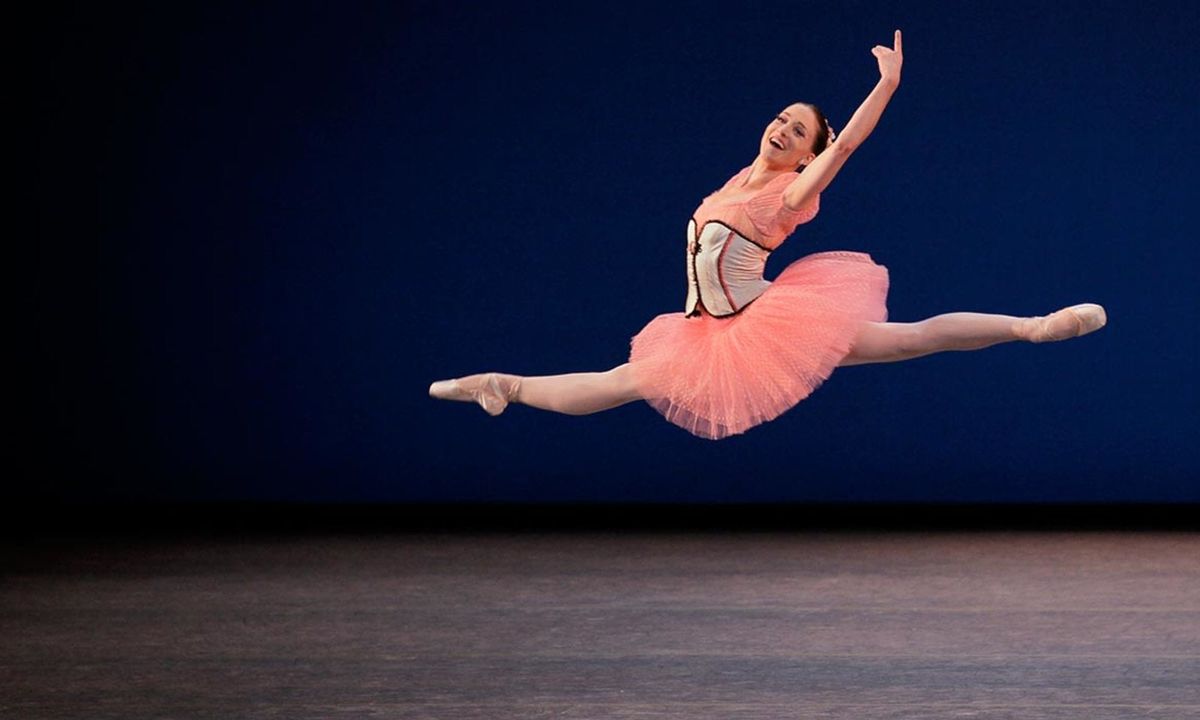
This emotionally draining performance was followed by Peter Martins' 2007 lighthearted "Grazioso", set to bouncy music by Glinka, which was draining in another way, since it requires non-stop virtuosity. It seemed to be a combination of Danish charm with Russian bravura, with three men (Gonzalo Garcia, Daniel Ulbricht, and Andrew Veyette) competing for Ashley Bouder, no stranger to both charm and bravura. Unlike many Martins' ballets, this was straightforward classicism, with no knotty partnering, and no over-supported ballerina, so Bouder got to show off her impeccable skills. The men got lots of little beaten steps, interspersed with some corkscrew jumps; if it had been a real competition, Ulbricht would have won on points. It was a charming bauble.
Jerome Robbins' "The Four Seasons" is also charming, and works well as a thrilling closing ballet. The Verdi music is infectious, and the seasons colorful--if white is a color. Erica Pereira was the little snowflake. She has legs of steel, but a somewhat expressionless face and a shapeless upper body, but didn't make the role over-cute. Jenifer Ringer and Jared Angle were the Spring couple; Ringer has apparently discovered the fountain of youth because she looks as fresh and lovely as she did in 1990, when she joined the company. But she now has a radiant confidence, and her Spring was both serene and playful, hinting at the warmth to come, and she can light up the stage just by looking at her partner.
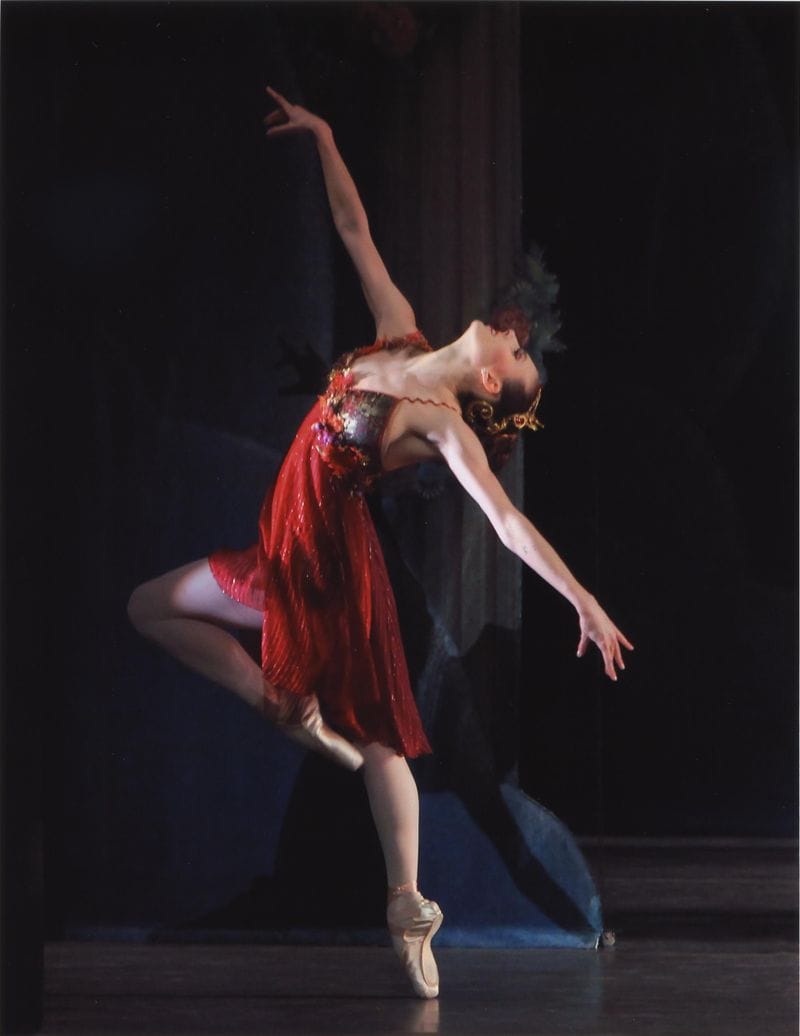
Rebecca Krohn and Amar Ramasar oozed through summer's gloriously kitchy Orientalist music, and winter, with Tiler Peck, Joaquin De Luz and Antonio Carmena as the jaunty faun, is a thrilling take-off of/homage to the Soviet bacchanals of yore. Tiler Peck goes from strength to strength; though she is not a visual knockout, she manages to both get inside the music and to explode out of it, and dominates the stage. De Luz, though a bit short for the role, is a joy to watch as he barrels through the choreography with his tongue only partially in his cheek, and deserved all the applause the awed and grateful audience showered on the work.
copyright © 2010 by Mary Cargill



