Express Train
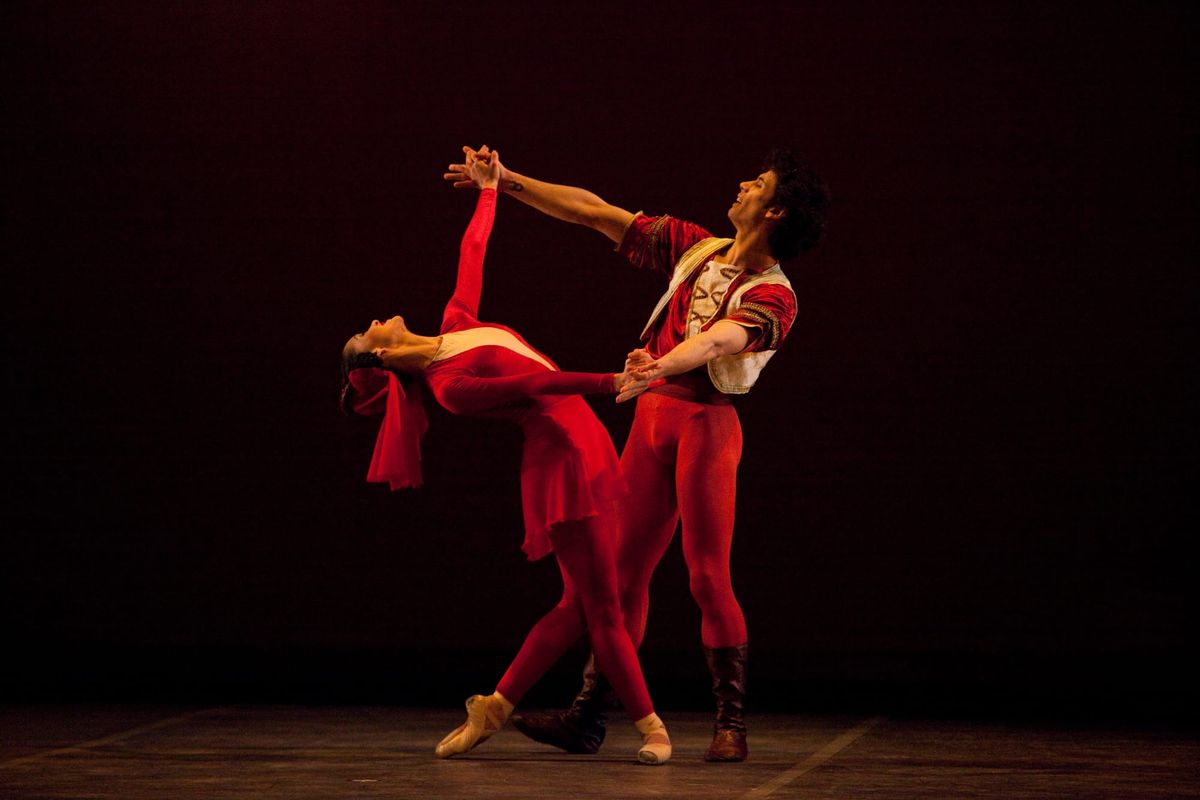
"String Sextet", "Walpurgisnacht", "Sunny Duet", "Solea", "DGV:Dance A Grand Vitesse"
Corella Ballet Castilla y Leon
New York City Center
New York, NY
March 17, 2010
This very young company (the first rehearsal was in April 2008) made an impressive debut at City Center. Angel Corella, one of ABT's most popular male phenoms, founded it to develop classical ballet in Spain, and there are many Latins in the company, along with a number of Slavic dancers, and some American and Japanese-trained ones. This amalgam of nationalities and styles must have been a challenge, but the group has turned into a company in what must be record time. Like all companies today, there is the issue of choreography, and the Corella Ballet seems to be aiming for a mixture of old and new; they have danced traditional works such as "La Bayadere", and their City Center season included some interesting older novelties, as well as comparatively new works.
The evening opened with Corella's ambitious "String Sextet", to Tchaikovsky's lovely "Souvenir of Florence". This was apparently designed to introduce many of the company, and while not especially musical, it had many interesting moments, and showed a fine grasp of structure. The uncredited costumes were flattering and unusually cut classical tutus, with a slightly 1950's feel to the bodices. Kazuko Omori and Yevgen Uzlenkov were the first couple; she was a bit presentational, focused firmly on the audience (it may have been nerves but many of the women danced with somewhat fixed grins). The pas de deux, therefore, was more about steps than secrets, though Uzlenkov has a fine and understated presence. The second couple, Ashley Ellis and Yerlan Andagulov, were more interesting, primarily because Ellis, a statuesque and regal blond, had a mysterious reserve.
The second movement was an interesting take on the traditional vision scene, as a line of men in white surrounded a solitary man in black, joined by a darting woman. Sergey D'yachlov was very impressive, as he dominated the stage by simply moving his arms. (Corella doesn't fall into the trap of over-choreographing, and his work for the men, especially, was smooth and elegant.) The third movement was a mirror image, with the corps of women surrounding the bounding Joseph Gatti.
The second act was a series of short works. Lavrosky's take on Gounod's lilting "Walpurgisnacht", with its nymphs and satyrs with scanty costumes and gloriously vulgar butt lifts featured Omori as the spinning demon of a nymph, with Gatti and Kirill Radev as men competing in the corkscrew competition. This souffle of iron was great fun, and was roundly cheered. "Sunny Duet" was another Russian novelty, a pas de deux for Adiarys Almeida and Herman Cornejo, originally choreographed in 1973 by Vladimir Vasiliov and Natalia Kasatkina. A program insert said the music would be composer Arno Babajanian's archival recording, since the score no longer exists. Whoever saved the recording did us all a favor, since the folk-inspired rhythms were infectious. Would that the choreography had followed them more closely. There were a few self-consciously folk elements in the flexed feet, but generally the piece looked like a particularly elegant form of Soviet ice-dancing, with lots and lots of lifts. Cornejo, though, did get a chance to break loose, and this stylish dancer looked like he was having as much fun as the audience.
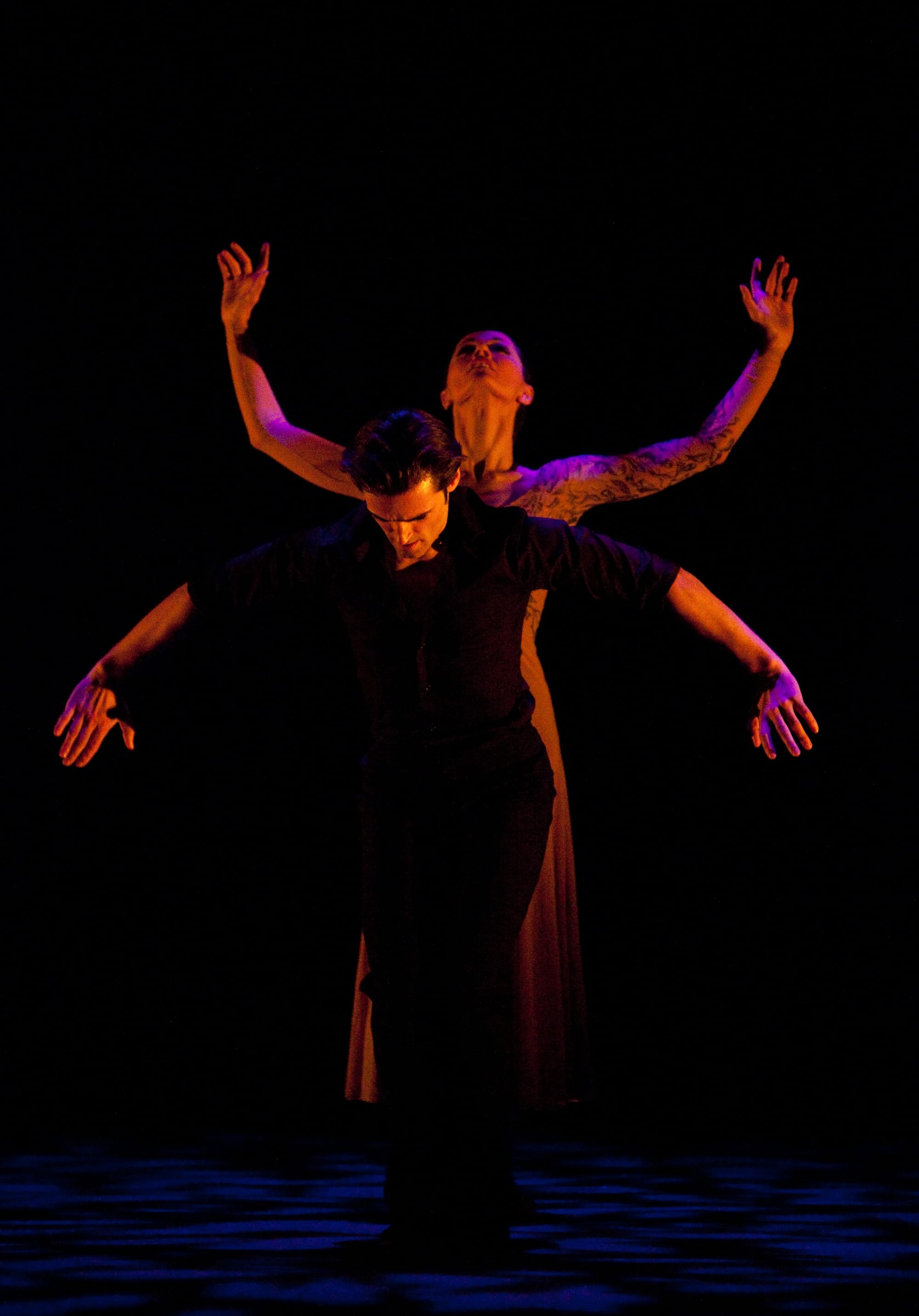
The most interesting work was a premiere, "Solea", by the flamenco dancer Maria Pages, choreographed for Corella and his sister Carmen, late of ABT. At ABT, she was a reliable soloist, who rarely got an opportunity for dramatic roles, though she made an unforgettable impact as the Woman in "The Green Table". "Solea" is a blending of flamenco and ballet; Carmen Corella is on point, but the arms and the atmosphere say smokey campfire. Angel Corella gets a splashy melange of turns and spins which he manages to combine with a haughty and taut carriage. He is a performer of dynamic intensity, and he submerged his easy and irresistible charm; it seems like a salute both to his art and to his Spanish heritage.
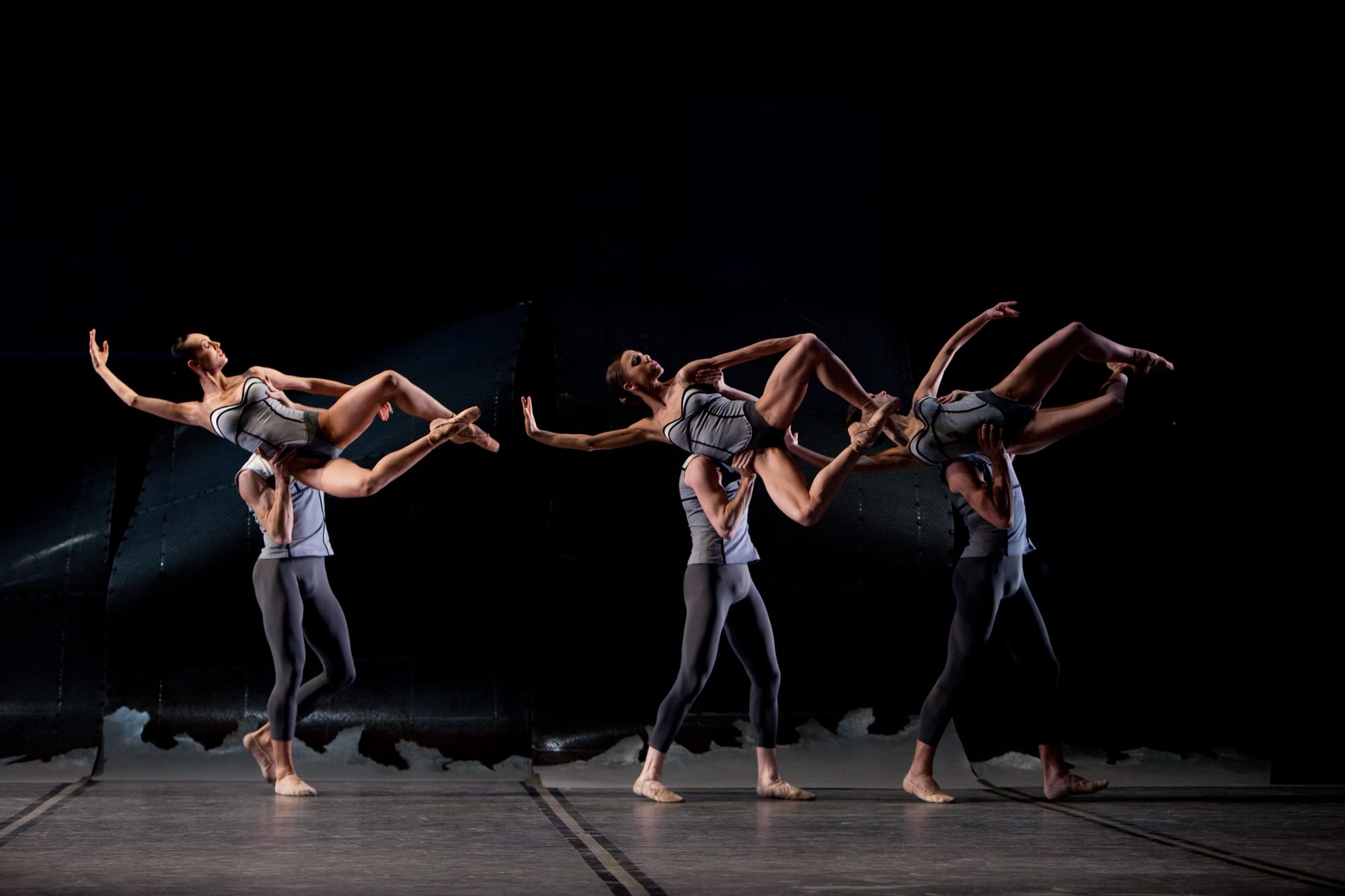
"DGV:Dance a Grand Vitesse" is a salute, as well. The music "MGV: Musique a Grande Vitesse" was commissioned from composer Michael Nyman in 1993 by the TGV to salute the French high-speed trains, and Christopher Wheeldon used this music for his 2006 ballet for Britain's Royal Ballet. The minimalist, propulsive music lacks variety, and while the train may be express, but the choreography is definitely local, with many stops along the way for earlier ideas. The main idea seems to be the slow movement in Jerome Robbins' "Glass Pieces", and there are several sets of corps slinking across the background while the soloists perform very slowly in the front. The choreography is the "I am pretzel, you are taffy, my butt is cuter than yours" variety, and the series of remarkable dancers including both Corellas, Cornejo, Ellis, D'yachkov, and others, made no individual impression, and the steps seemed designed to make the women look as awkward as possible, alternating scooped back positions with jerky arabesques. The company is welcome anytime, but next time, one hopes, they will take a different train.
Copyright 2010 by Mary Cargill



