Excel and Exhilarate
“Airslice,” “Spring,” “Monotones II,” “Mi Soledad (Solea)”
Streb Extreme Action, Dada Masilo/The Dance Factory, American Ballet Theatre, Farruquito
Fall For Dance Festival: Program 1
New York City Center
New York, NY
September 26, 2016
The 2016 Fall for Dance festival began with a dynamic statement piece in the form of commissioned new work, and hardly let up throughout the night with its offering of energy and different styles. Elizabeth Streb’s exhilarating “Airslice” was followed by another world premiere, Dada Masilo’s “Spring,” and these works, together with the predictably fiery solo performance by Farruquito that closed the evening, carried the night. If nothing else, the uneven performance of Frederick Ashton’s “Monotones II” by American Ballet Theatre, which completed the bill, provided some balance in the program, even if not offering enough of it on stage.
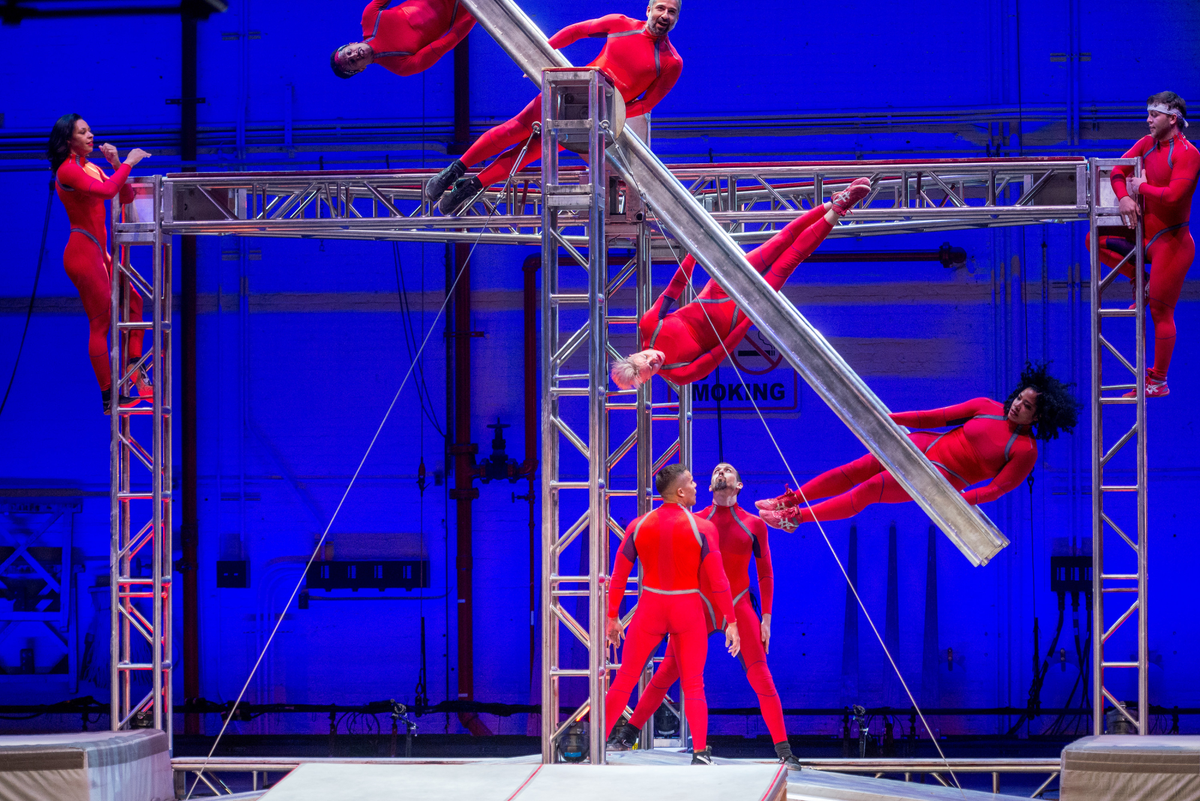
Opening the festival and the night with Streb’s untraditional piece was a risky move. “Airslice” was a jam-packed, highly impactful work of as much acrobatics and showmanship as dance, and in that was destined to set a high bar for the rest of the night’s pieces if, as it did, it hit its execution goals. On the other hand, the complex logistics of wheeling in multiple structures that allowed Streb’s dancers to perform in the fullness of three-dimensional space, flying through the air and making gravity their artistic ally as they let their bodies hit the floor, could have seemed like too much effort had the work flopped instead of soared.
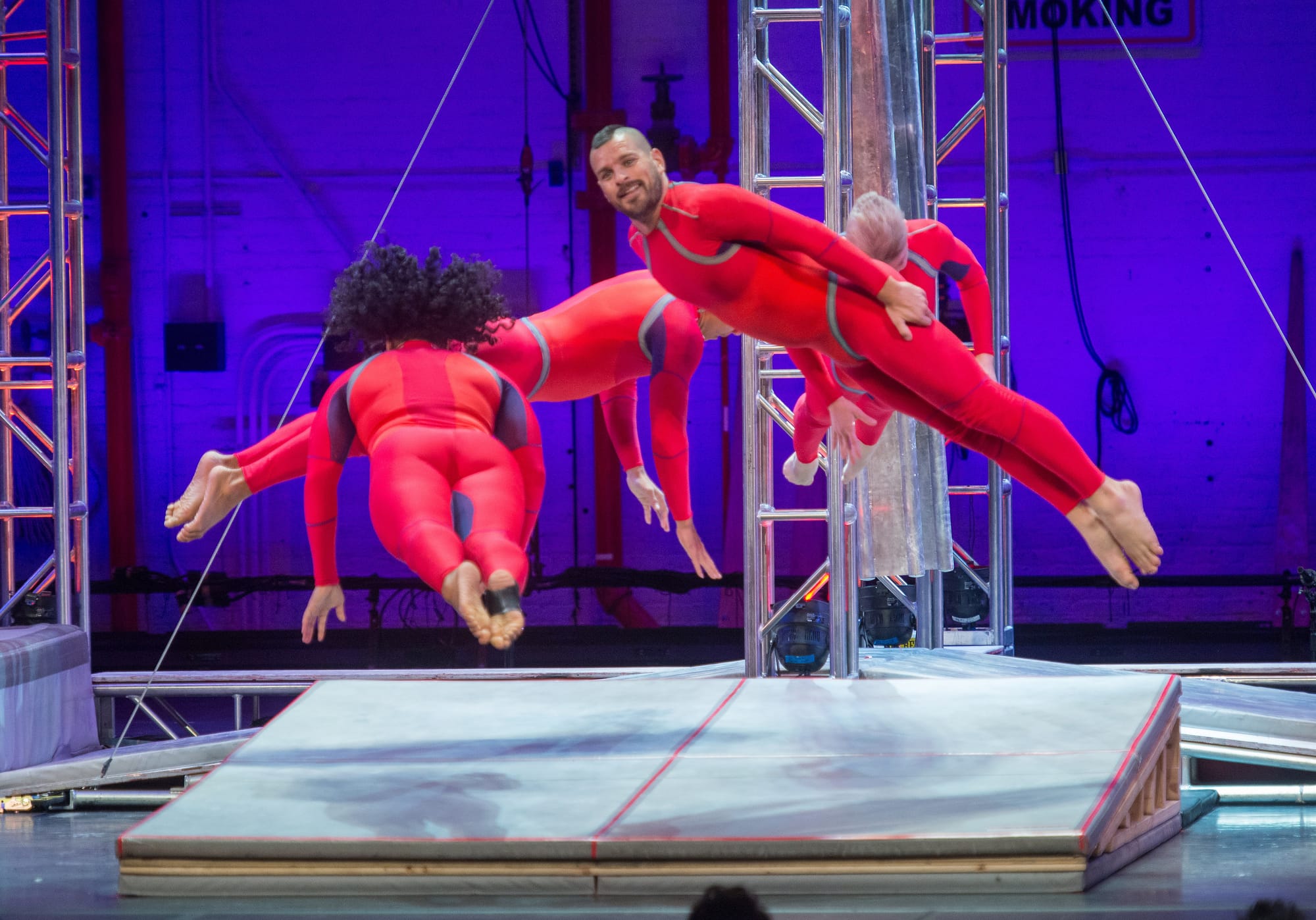
The piece itself, to dance-pop music mixed on stage by DJ Zaire Baptiste, was designed to push the boundaries by Steb’s “action-hero” dancer style and explore the dancers’ relationship to architecture, according to the program notes, but the actual performance offered more. The work’s main calling card was the dancers’ bold interaction with space, which started from the very outset with the cast, in an admittedly previously done way, warming up in front of the gathering audience and breaking that audience-performer barrier that is always reinforced by the stage curtain, and continued with the actual choreography.
“Airslice” contained two parts. The first one was presented with no music and a slew of geometric patterns formed by four of the nine dancers falling onto the microphoned (and padded) wooden platform. The performers would assemble themselves vertically, balance, and then fall flat to the ground creating squares, lines and angles both in the air and on the floor. Each of their falls was projected by the sound of their bodies hitting the ground – a sonic experience that at first was jarring, and only with time grew to enhance the overall effect. The performance then advanced with pumps of power to the second and most compelling aspect of the piece, which featured a rotating ladder that the dancers used to swing, balance and ultimately leap down from, to music by contemporary pop culture greats like Major Lazer. It was an exhilarating 30 minutes of a kind of freedom and power rarely displayed so casually and cordially. To be fair, the work straddled the lines between dance and acrobatics, and art and pure entertainment too, so carefully, that at times it felt like it could almost not belong on that stage; thankfully though, it did.
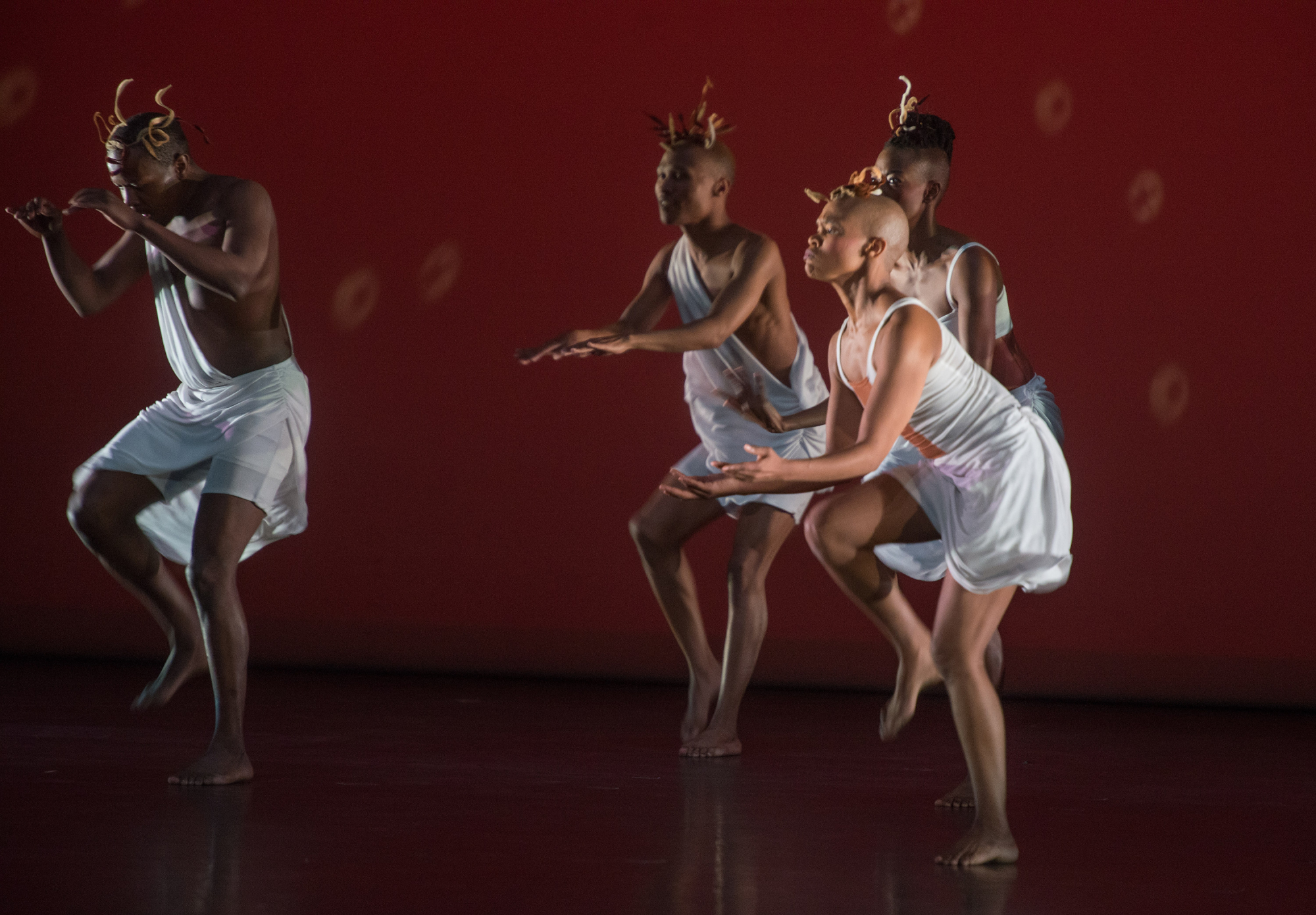
Another world premiere, Masilo’s “Spring,” was equally inventive, if in a radically different key. Inspired by African dance of the people of Botswana, Masilo’s work was largely about human sacrifice, but the theme was transmitted mostly through animalistic movements, with many jerking motions and conspicuous stillness showcased through frequent stops and poses. The somewhat Egyptian-looking tunics that the five dancers were costumed in were about the only thing that took away from the animal theme, which was set, at first, to Igor Stravinsky’s “Rite of Spring.” If the piece was to be faulted, it would be for the lingering and at a point repetitive way it tried to convey its message. By the time Stravinsky was replaced by animal and bird sounds coming through the speaker system, with Masilo’s “chosen” maiden appearing nude to repeat some of the same movement from earlier in the choreography, this otherwise shocking shift had a near anti-climactic feel. Even the beautiful way in which the synthetic sounds – essentially noise – was echoed by the equally erratic movements was almost lost to the eye after so much repetition.
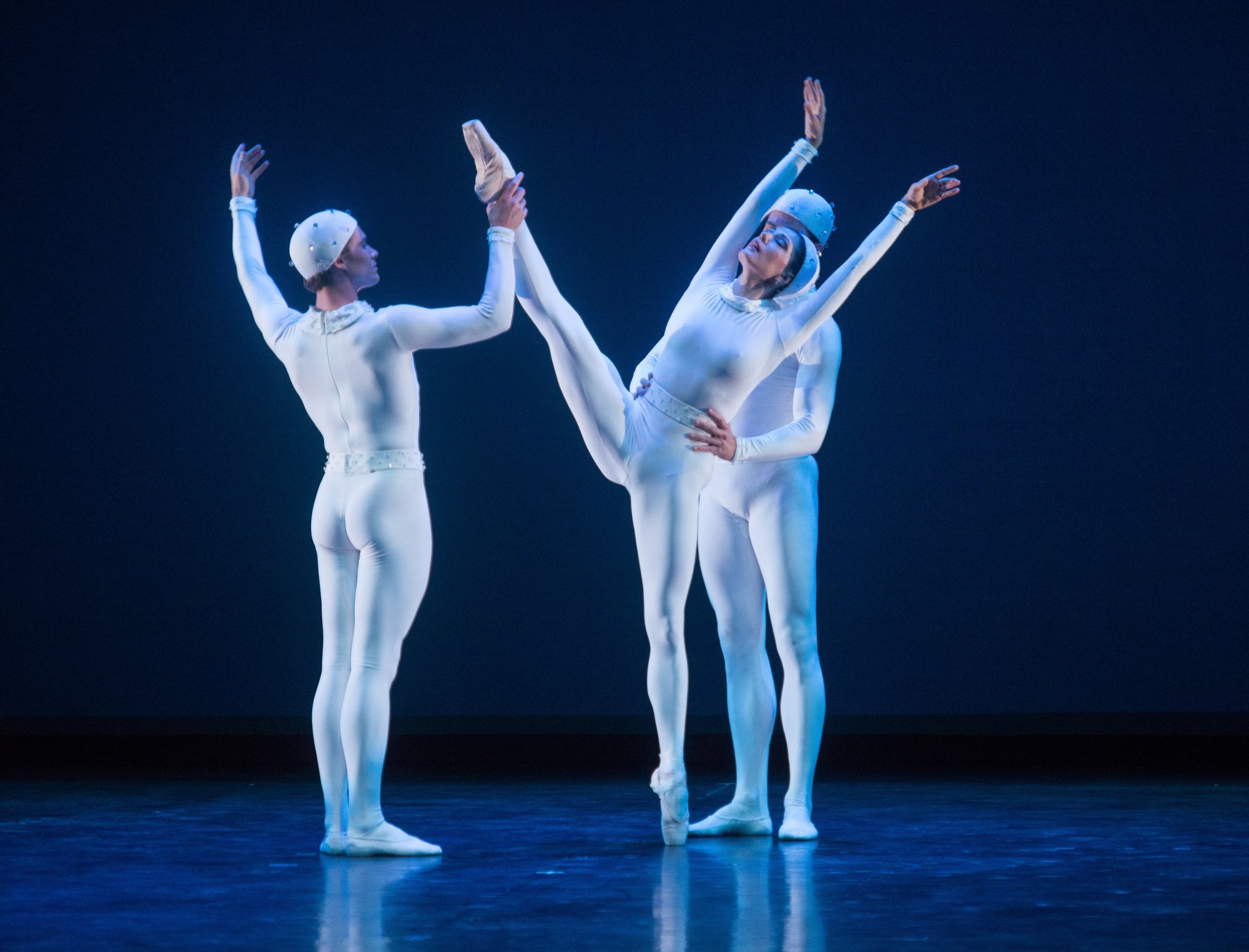
ABT and Ashton’s “Monotones II” followed after an intermission, with Cory Stearns, Thomas Forster and Veronika Part, all three of ABT’s original cast when the company had its recent premiere of this 1965 ballet last fall, doing their best to present the mesmerizing seamlessness of the ballet and Erik Satie’s “Gymnopedies” score. Unfortunately, the dancing was shaky from the very outset, with the men cautiously lifting Part from the floor for the rotation in the split position, and continued almost to the point of ruining the articulation of the lovely work with frequent stops between the dancing phrases. That lack of continuity left too much room to attune the audience to the other flaws in the dancing, such as the peculiar and vexing way in which Part would lift her foot and then return the point of her shoe to the ground, before elevating a leg in a developpé. Even if toward the end of the ballet the performance improved, particularly in the attitude turns with Part in the middle that looped Stearns and Forster standing on her sides into the motion, the overall image they presented was more human than celestial.
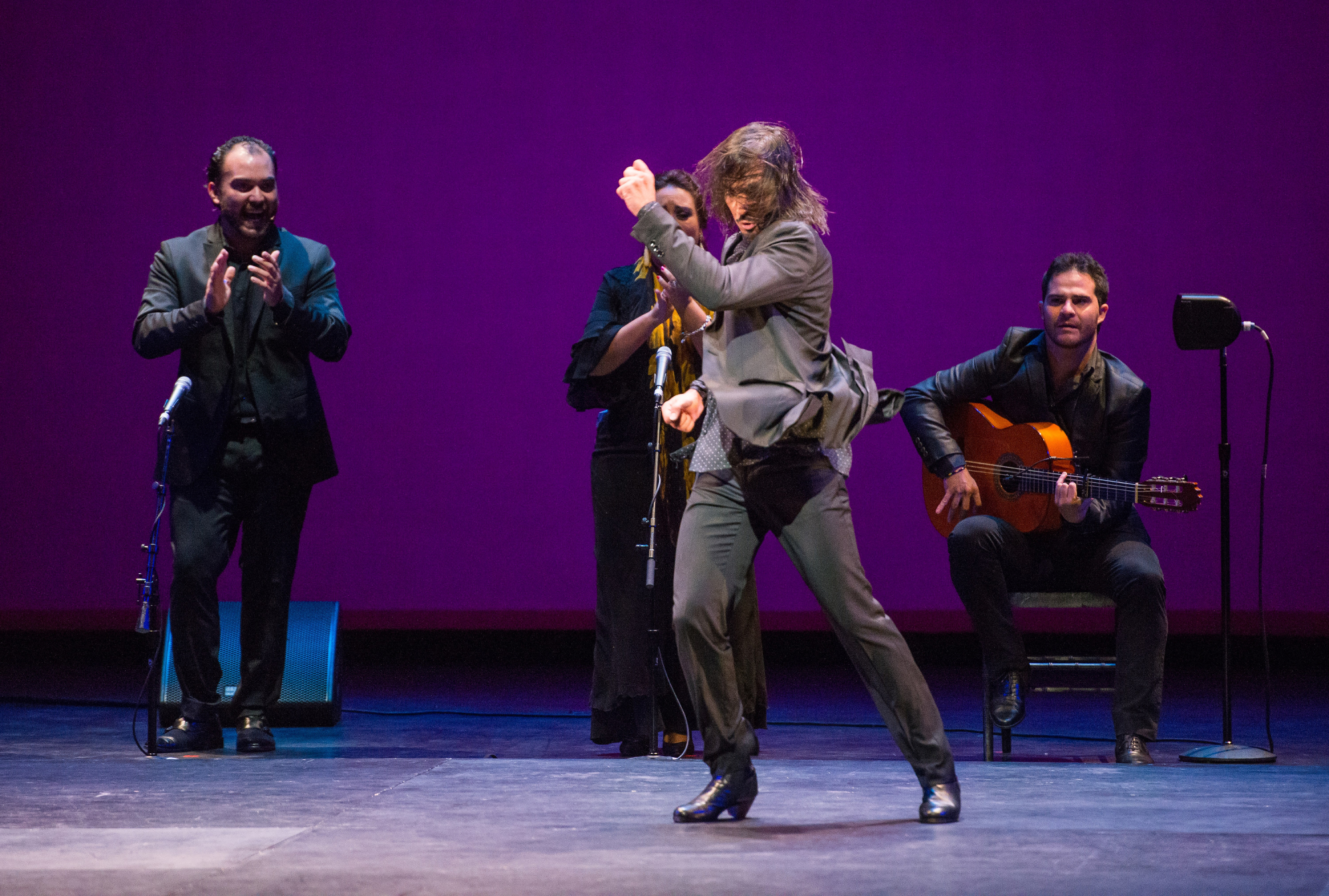
Farruquito, in his second City Center performance in a year after a 13-year absence from New York stages, ended the evening as the only performer to dance to live music. His “Mi Soledad” solo felt like a dialogue, with sentences, stops, phrases, and dares, even if he was the only dancer on stage. At one point he stared into the back of the audience, jerked up his chin, then splashed his hands up in a further dare to an unseen companion or competitor. The dance was designed as a presentation of the legacies of Farruquito's ancestors,and in the way he would step and click his fingers to a silence he created an eerie sense of searching, feeling, and dialogues, until he’d change the mood by erupting into choppy and determined footwork. When it comes to flamenco, you don’t go wrong with Farruquito, and when it comes to excellent and diverse dancing, you don’t go wrong with Fall For Dance.
copyright © 2016 by Marianne Adams



