Endings and Beginnings
“Rite of Spring,” “The Word,” “Promethean Fire”
Paul Taylor’s American Modern Dance
David H. Koch Theater
New York, NY
March 17, 2015
A key facet to Paul Taylor’s new vision for his renamed and retooled company was presenting works by other important American choreographers. But the program, featuring two Taylor classics, “The Word” and “Promethean Fire,” and Shen Wei’s 2003 illustration of Stravinsky's "Rite of Spring,” instead of merely showing dance by different American greats also worked to underscore Taylor’s unique genius. The ballets of the two choreographers could not be more different, and neither could Shen’s and Taylor’s dancers.
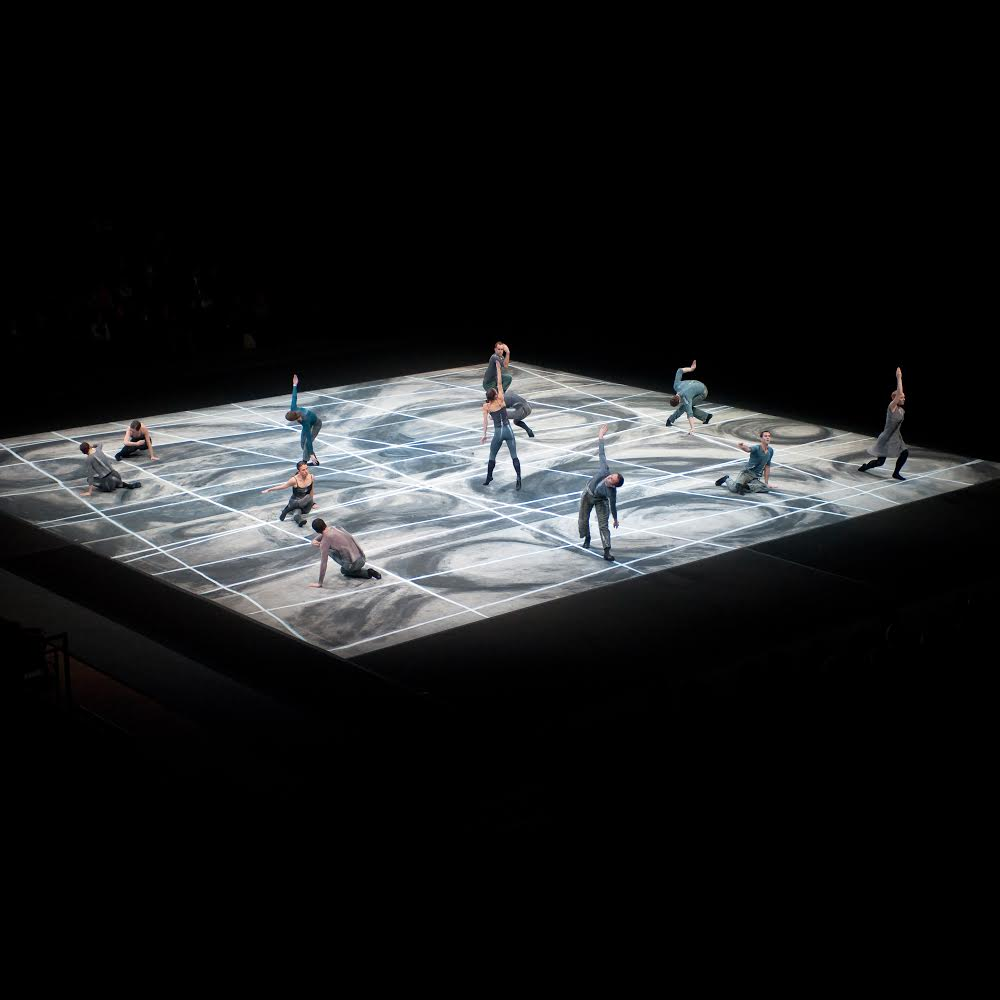
Shen’s “Rite of Spring” opened the evening with the lights still on and the dancers streaming on stage while the audience was still getting settled. The elastic and dynamic work curved the geometric lines that Shen perceived in Stravinsky’s score on the abstractly painted stage, and at times had its moments of interpretive greatness. The melting descents to the floor through the pointed feet, the earthbound body spirals reaching up, as though trying to sprout from the ground in a spring-like rebirth, and the infinite limb loops of certain dancers juxtaposed against running in straight lines by others, as well as the point in the piece where 15 of the 16 dancers stood facing the audience, letting the music flow, while making small tacit adjustments to their bodies, possessed real visual power. The Shen Wei Dance Arts dancers’ admirable athleticism, much more pronounced than that of the Taylor company dancers, and keen ability to lose their bodies to the music and Shen’s vision were also a gratifying sight.
But as much as the ballet wasn't lacking for the impressive, its presentation wasn't without its flaws. Instead of live music, Shen’s work was performed to an imperfectly amplified recording of the brilliant four-hand piano version of the score by Fazil Say, arguably an understandable move given the difficulty of the arrangement and the potential challenges of having it performed live, but nonetheless detracting. The work also seemed maladjusted to the Koch Theater space, as its geometrically creative composition seemed not fully revealed from the level viewing vantage point of orchestra level seating; but giving up closeness to the details of the dancers’ intricate but contained moves in favor of seeing the work’s patterns from a higher seating level would hardly have been a good trade-off.
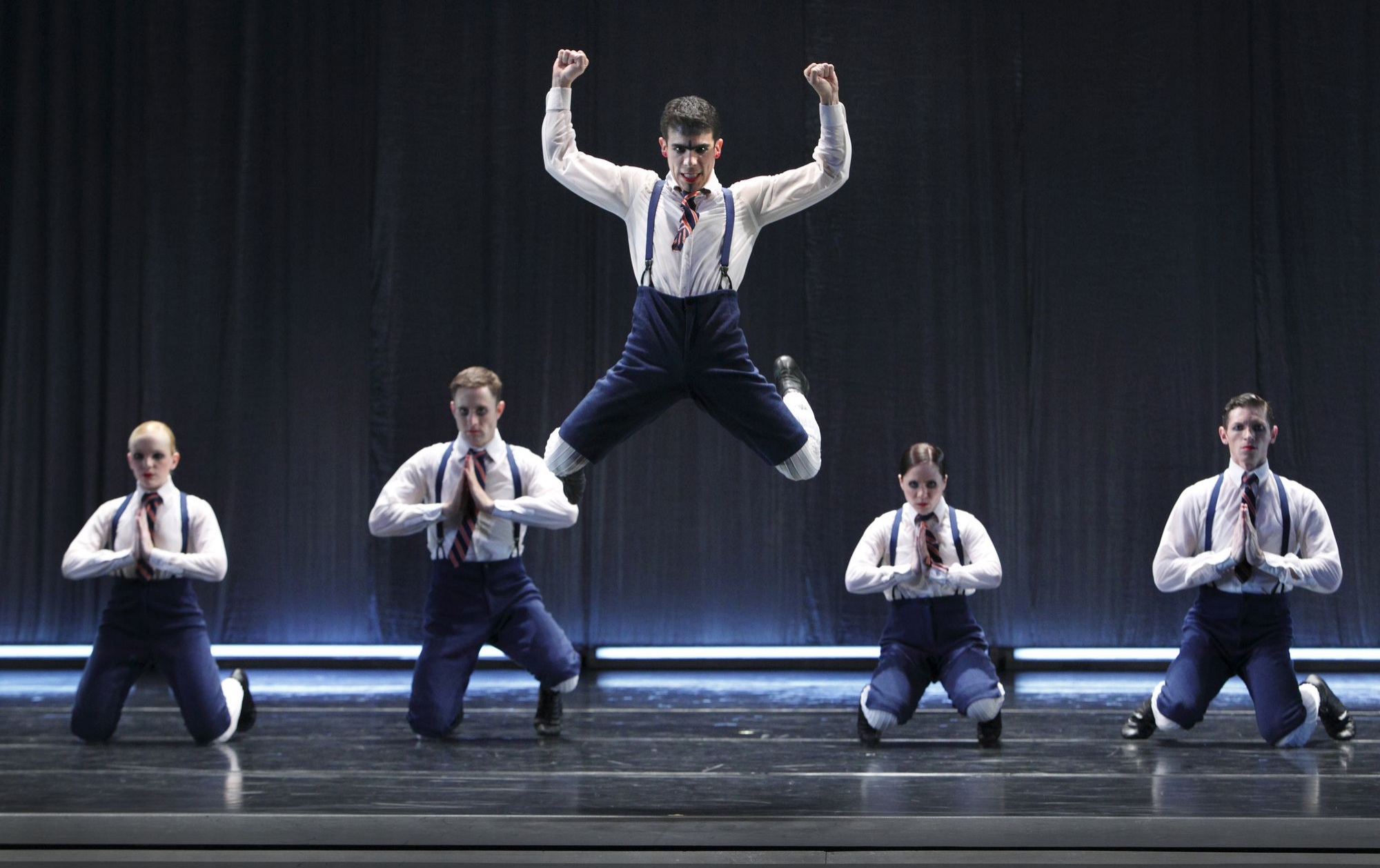
By contrast, Taylor’s works and dancers seemed capable of revealing and projecting themselves to all corners of the hall, and all the way to the other side of Lincoln Center Plaza if need be. “The Word,” a critique of conforming society and its ease of submission to subversion and reconformity to new orders, almost overwhelmed with its assertive resonance when it followed Shen’s ballet. The dancers, dressed in school-students’ outfits, walked in formation, dropped to their knees to pray, and otherwise conformed. But interspersed among these behaviors were jerks of instinct, and when two sets of men and women carried a dancer of the opposite sex on their backs in a cross form, you knew their sexuality was one of the biggest crosses they bore. The interjected force upsetting this order, Parisa Kohbdeh, entered the stage in a flesh colored unitard with painted-on nipples, and, despite not ever directly interacting with the others, was clearly bound to shake up this mind-locked world. Her chaotic presence was both flux-inducing and liberating, and somehow made the dancers appear more at ease. Their jerks receded, their old mores abandoned, as three dancers mimed the see no evil, hear no evil, speak no evil signs and then dropped their hands away from their faces; they seemed to embrace new, instinct-guided rules, even if at the end the price of it all was summed up in gesture of ripping their hearts from their chests. While Shen’s dancers expertly performed Shen’s choreography, the Taylor company inhabited their maestro’s piece, and the work was theater in movement form, of a type that only Taylor could present.
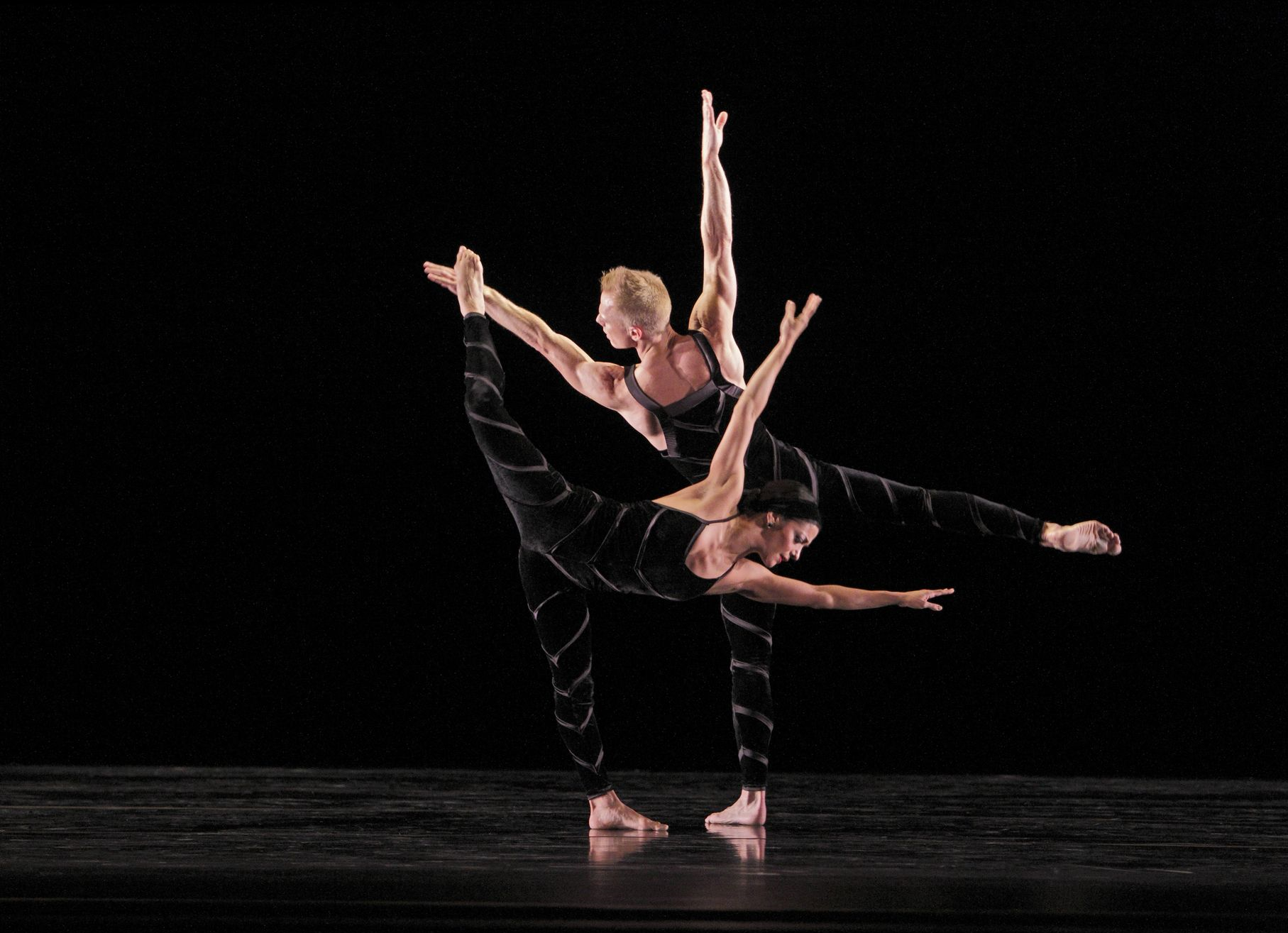
Taylor’s 2002 post-9/11 work, “Promethean Fire,” ended the night echoing Shen’s opening work with its own rebirth theme, but its mode of delivery was darker and richer. The boom of the opening notes of the Leopold Stokowski arrangement of Bach’s Toccata & Fugue in D minor, played potently by the Orchestra of St. Luke’s, set the slowly burning tone of this gripping work against which the dancers’ projection of loss, lamentation and ultimate resurgence gave the ballet surreal magnitude. The beauty of this expression through symmetrical patterns and the organic flow of sequences was surpassed only by the moving duet between Kohbdeh and James Samson. After emerging from a pile of bodies (the other dancers), Kohbdeh and Samson appeared to be the only two people left in their world, and their dancing was at first infused with great tenderness in the isolation and suffering they portrayed as they struggled to grieve, reconnect, and rebuild. But when their embraces kept failing, as their rigid, outstretched arms failed to accommodate closeness, and their chests hit against each other first in futility then frustration, the duet went from lyrical to insistent until they found harmony and slowly were joined by one and then another new couple. To go on this Promethean journey with these dancers, and to so well performed live music, was a special gift, and the whole night was a reminder of what great and unique talent Taylor brings and breeds for his audiences.
copyright © 2015 by Marianne Adams



