Drums and Bells and Hoops
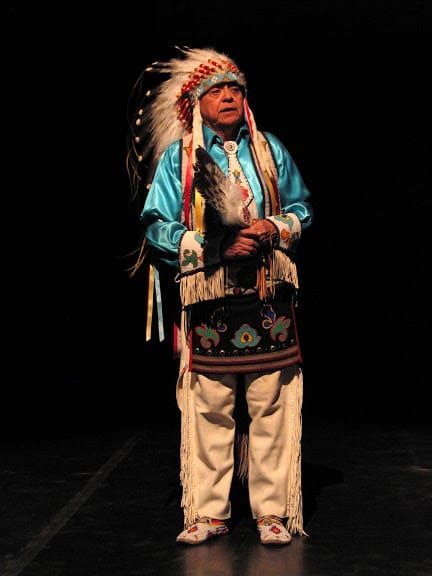
Thunderbird American Indian Dancers
Theater for The New City
New York, New York
January 26, 2013, matinee
Folk dance is by definition participatory, so presenting it on a stage raises several issues--should it be performed as theater, or presented as is, and if the decision is "just do it", how can the audience be engaged. The Thunderbird American Indian Dancers, founded in 1963 by New York-based Native Americans from several tribes, took the "just do it" approach for their annual fund-raising concert (the admission fees go to scholarships). The various dancers were introduced by the founder Louis Mofsie, who gave a description of the original purpose of the dances, and then members gave tantalizingly brief demonstrations, wearing colorful and distinctive costumes. This wasn't an anthropological exploration, of course, but I would have liked more information about these costumes. The sequins on some of the women's looked a bit anachronistic, and the dancers wore the same clothing no matter what tribe's dances they were performing. But the dancing was the focus, and it was wonderful.
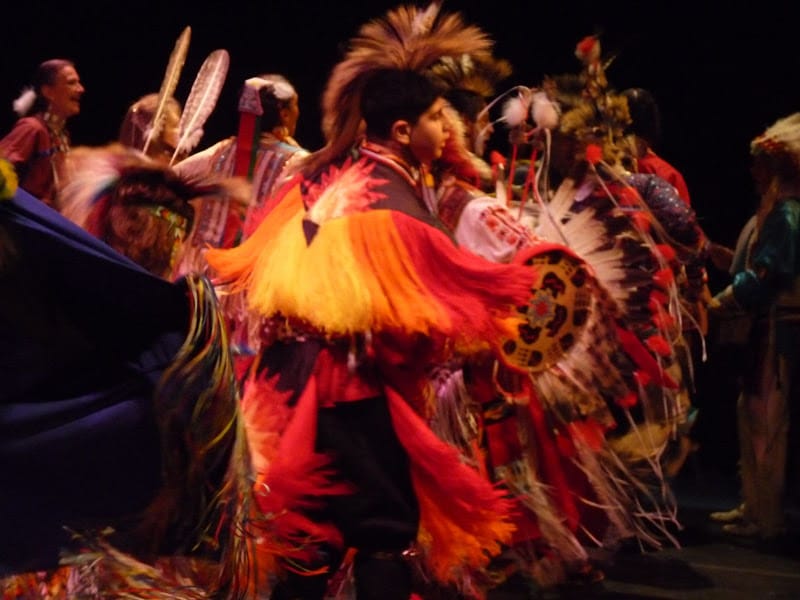
There were some war dances, of course, with men stomping in time to drums, but the variety and individuality, even with only drums and bells for music, was a revelation. The performance opened with an Iroquois robin dance to celebrate spring, full of little hopping moves. There were other animal dances, most distinctively a deer dance from southern Arizona, where a dancer, with a deer head, was felled by an arrow and died with a harrowing nobility.
The narrator was able to create a mood with his straightforward explanations, and without sets or lighting, the atmosphere ranged from a smokey lodge to prairie grassland. The smokey lodge had Iroquois women swirling around to send the fire's smoke out of the lodge on a cold day, a utilitarian reason, yes, but obviously work could be fun and decorative. The grass dance of the Great Plains was another work dance, as men flattened the prairie grass so the tents could be pitched--a process, the narrator explained, that could go on for several days. We just saw a few minutes, but the lilting, rhythmic shuffles were hypnotic.
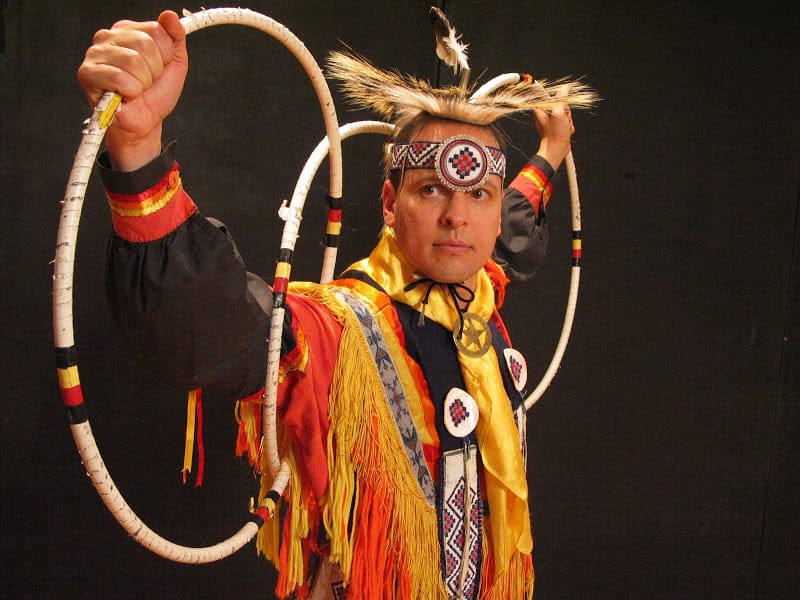
There was spectacle too, as the Pueblo hoop dance (a solo by Michael Taylor) used six hoops, picked up (look ma, no hands!) and manipulated with impeccable musicality, forming and reforming shapes. The other dances looked like fun but this one looked like magic.
copyright © 2013 by Mary Cargill



