Doubleheader
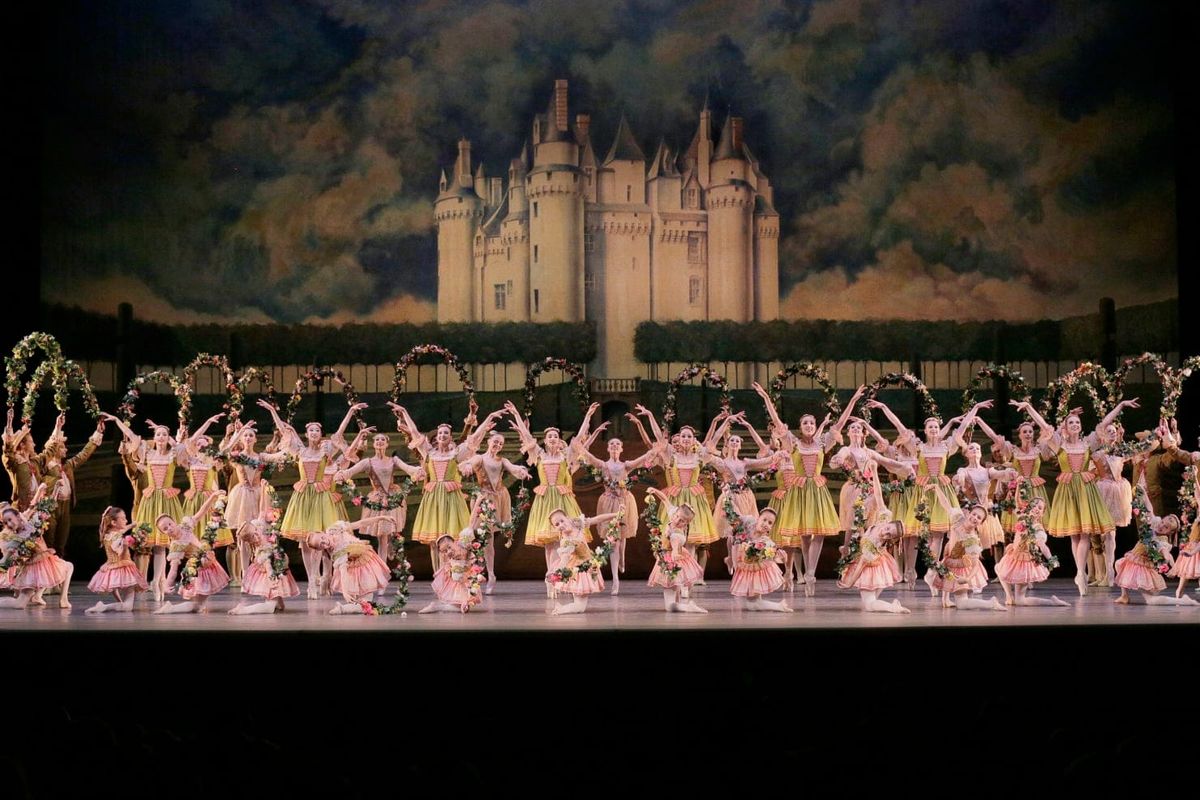
"The Sleeping Beauty"
New York City Ballet
David H. Koch Theater
New York, NY
February 21, 2026, matinee and evening
Two “Sleeping Beauties” in one day may seem like too much a good thing, but as Mae West said “Too much of a good thing is wonderful”. Two very different couples, Mira Nadon with Peter Walker (matinee) and Emma von Enck with David Gabriel (evening), were each dancing their second “The Sleeping Beauty” after debuting earlier in the week. Nadon, tall and elegant, has previously danced the Lilac Fairy with a gracious authority, and von Enck is a natural soubrette (she was a charming Princess Florine), but both perform with intelligence and imagination and were fine and distinctive Auroras, combining clear, controlled dancing with warmth and generosity.
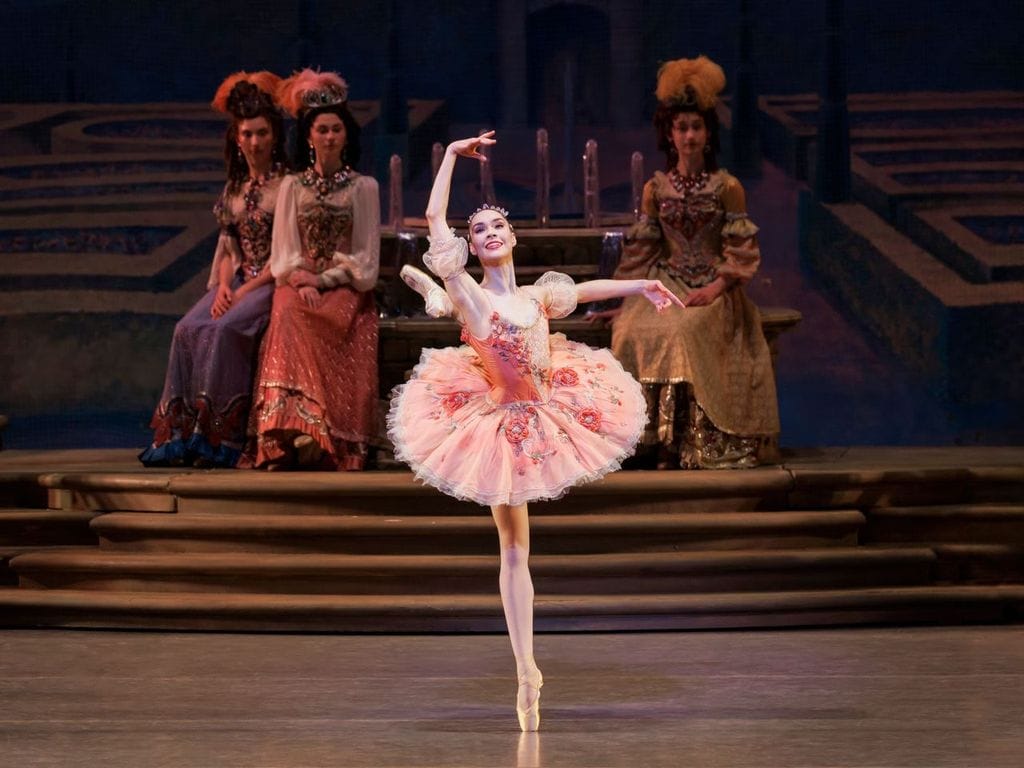
Nadon rushed on to celebrate her birthday, looking at her guests with an explosive happiness—she couldn’t wait to meet the princes. She did have a slight mishap with an over-rotated turn, but her balances, if not effortless, were not fraught, and the second series was especially lovely, as she seemed to be looking only at the princes with a growing excitement. Her calm control in the diagonal as she rolled through her foot into the unsupported arabesques was breathtaking and she danced her solo with a quiet eloquence, letting the music flow through her arms and into her arabesque. Her technique, though impressive, was never flashy; she was gloriously unmannered yet extraordinarily expressive as her dancing seemed to emerge from her emotions.
One unfortunate change Martins has made over the years is to basically ignore the spindle. We barely see the king ban them and since Martins got rid of the knitting ladies, starting Act I with the garland dance, there is no hint of the tragedy to come. Carabosse now just offers Aurora another boring bouquet rather than a spindle, so there is not tension building up. Originally Aurora, never having seen one, was childishly intrigued by the spindle while her family tried in vain to get it from her; it’s all in the music. Of course, it may be that Martins figured someone could have easily grabbed it from her, but that kind of logic isn’t necessary for a fairy tale. After all, no one ever seems to question how the 17th-century courtiers were able to wake up and find their 18th-century wardrobe.
The lyrical vision scene is probably the easiest act for City Ballet trained dancers to inhabit since so many Balanchine ballets are variations on the theme of a misty, idealized woman wandering through beautiful corps patterns, and Nadon drifted dreamily yet enticingly through the act. She was magnificent in the final act, both warm and regal, moving with a quiet yet distinctive confidence. Her supple backbend seemed to relax into the music, her open arms seemed to embrace the audience, and her solo, with the feminine little wrist twists (based on a Russian fold dance), looked like it grew from the music.
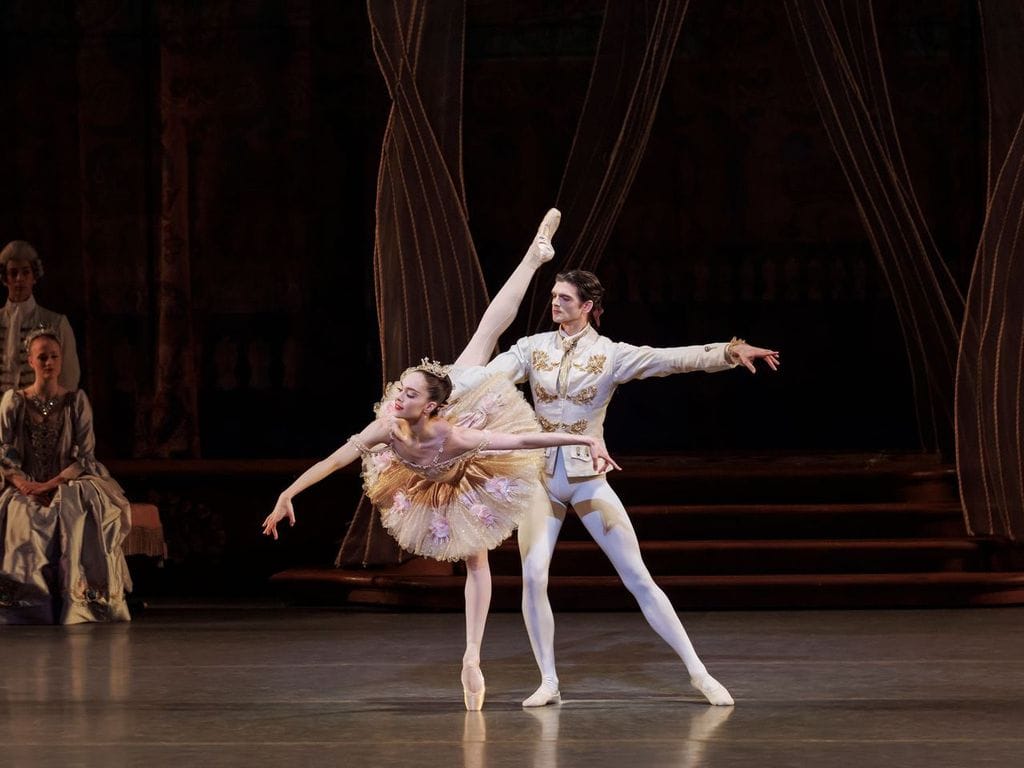
Of course, she didn’t dance alone, and though the fish dives were a bit deliberate, with very careful pirouettes, Walker was a gracious partner. He did make the rapid mood swings in Martins’ abbreviated hunt scene seem like he might need a few tranquilizers and, despite the Lilac Fairy’s prophesy, the Princes now avoid wearing their fancy feathered hat and they do still toss their sword and cape down and bundle them up like so much laundry before boarding the magical boat, a most unprincely move. But Walker’s dancing was thrilling, with precise landings in fifth, exciting entrechats, and solid turns. His steady, straightforward presence made it seem natural that the court would want him as king and the apotheosis, as Aurora and Désiré assumed their responsibilities, was so uplifting.
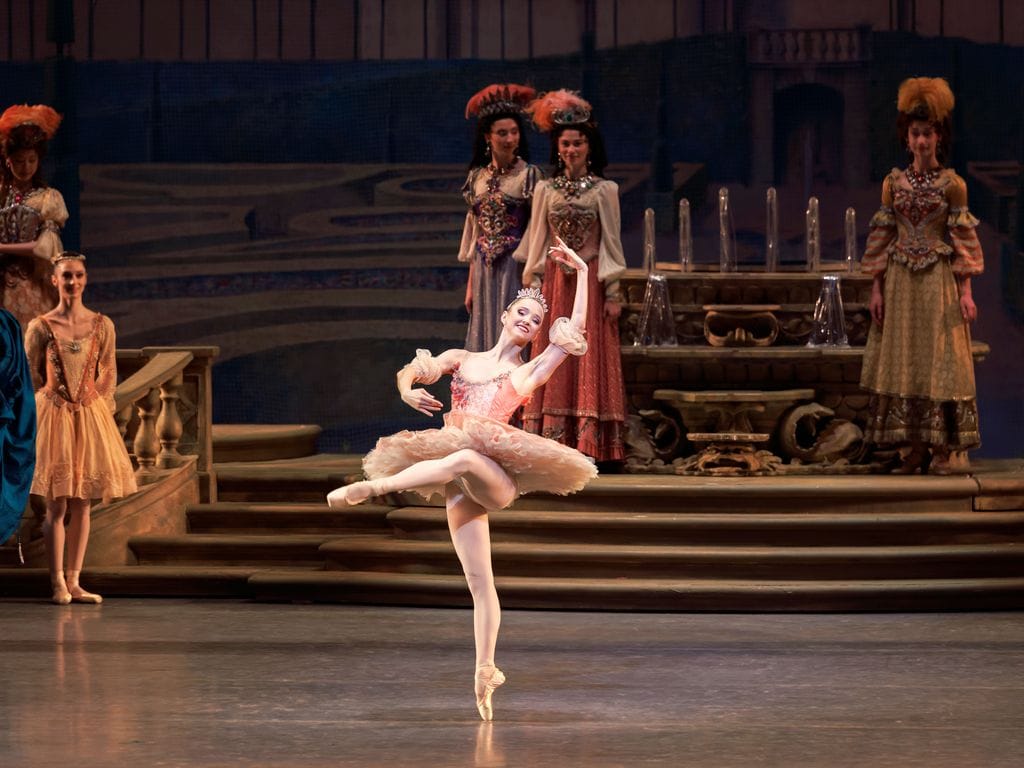
Von Enck is a small blonde, so doesn’t have Nadon’s ability, with her dark hair and eyes, to draw the audience’s eyes, but she, too, was a fine Aurora. She entered like a fragile porcelain statue come to life, approaching the Rose Adagio like a slightly shy young girl determined to make her parents proud, and had the audience on her side from her first “hello”. She didn’t try for extra long balances and did seem extremely grateful to get the Princes’ hands but the beautifully held attitude remained perfectly steady. Her solo, especially the bouncing final diagonal, was both lyrical and sparkling. Like Nadon, her dancing seemed to reflect her thoughts and feelings, and the audience could almost hear her say “I am young and the world is beautiful.”
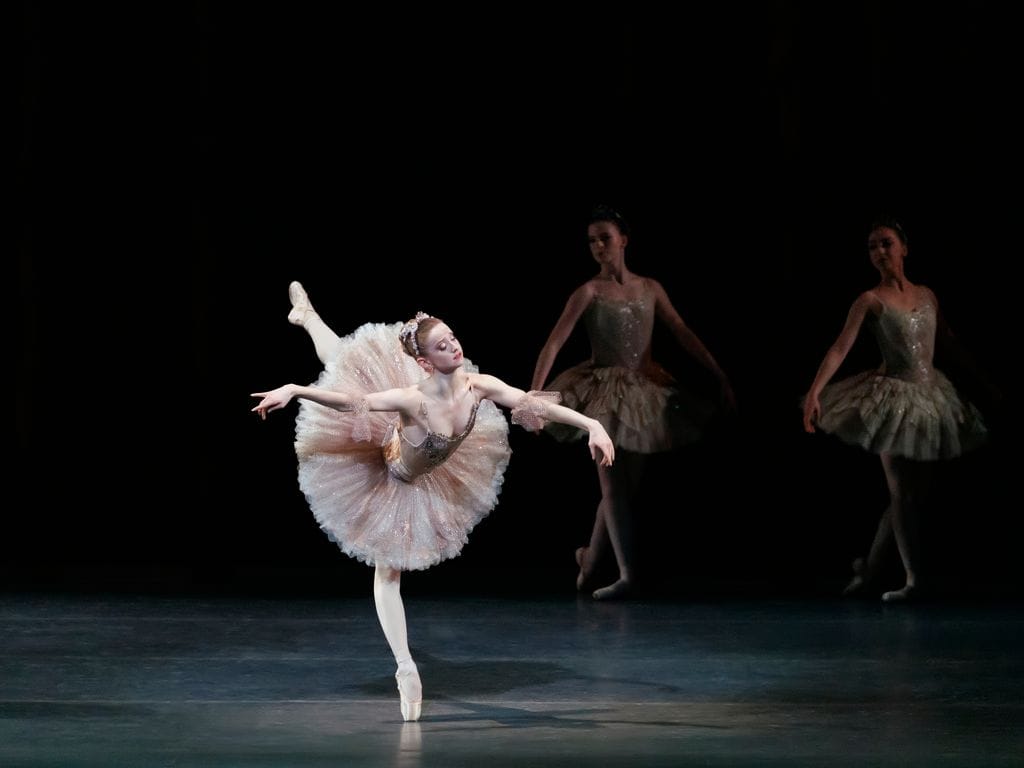
She got to show off her lyrical side in the vision scene, and as her “Scotch Symphony” showed, she can dance with an eloquent luminosity. Her airy backbends and floating arms were truly dreamlike and she did seem to vanish in the middle of her final fast menage.
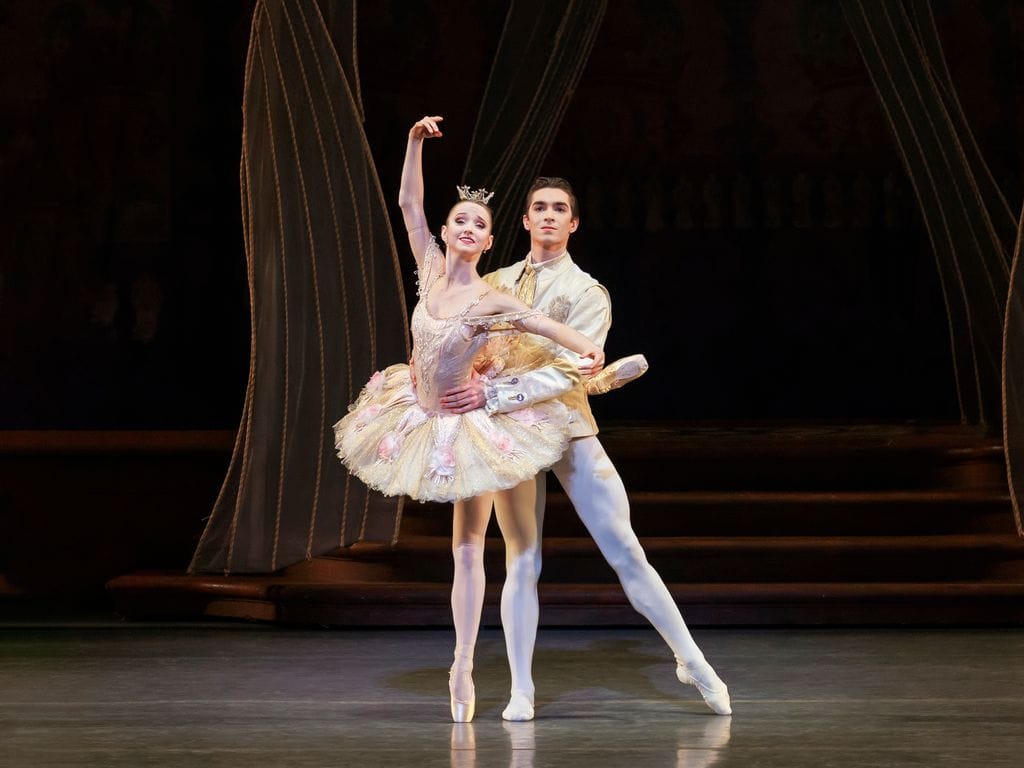
The wedding pas de deux was, as yet, not quite as grand as Nadon’s and Walker’s. It was a more private affair (Gabriel was so protective as he cradled her in his arms), but they danced with a quiet confidence, whisking through some very fast pirouettes before the fish dives. Von Enck’s solo was especially musical, as her arms floated through the melody.
Gabriel made the most of the hunting scene, making Désiré melancholy and solitary from the beginng, and was almost apologetic as he rejected the Countess. This gave his bouncy solo at the end of the vision scene and his pleading with the Lilac Fairy an impressive dramatic urgency and he attacked those brambles with vigor. His Act II solo was very strong, with sharp, clear cabrioles and solid fifth positions. His final menage grew faster and faster, building the excitement; it was very accomplished performance.
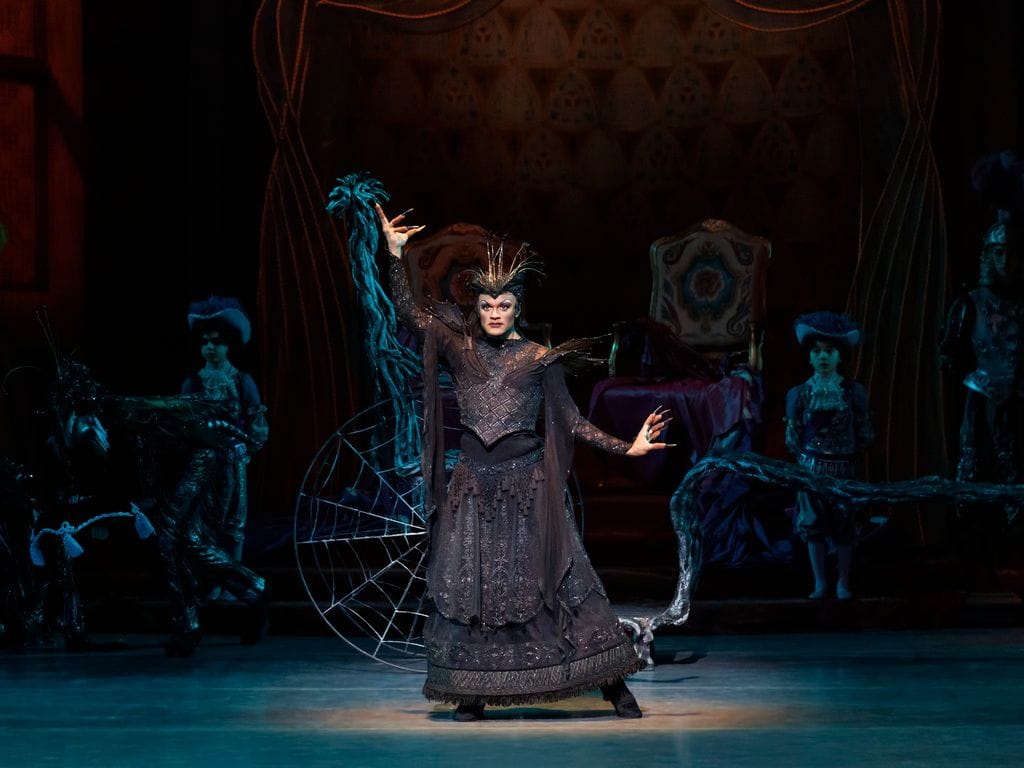
Taylor Stanley danced Carabosse at the Nadon/Walker performance; thanks to the “New York Times” article, he got a nice round of applause at his entrance. For all the publicity, however, there is nothing new about a male Carabosse; Enrico Cecchetti was the original Carabosse and many men have portrayed the evil fairy over the years, including, very memorably, Craig Salstein, now a ballet master at NYCB. Stanley, to me, was disappointing, as he gave a rather flouncy, campy performance, flamboyant rather than menacing. “The Sleeping Beauty” is not a solemn ballet, but it is a serious one, and Carabosse is more than long eyelashes and a snarling face. She represents pettiness, spite, and vengeance, all very human vices. Meaghan Dutton-O’Hara’s icy, calculating approach in the evening performance was much more effective. I loved her little pause to think before ripping poor Catalabutte’s wig off.
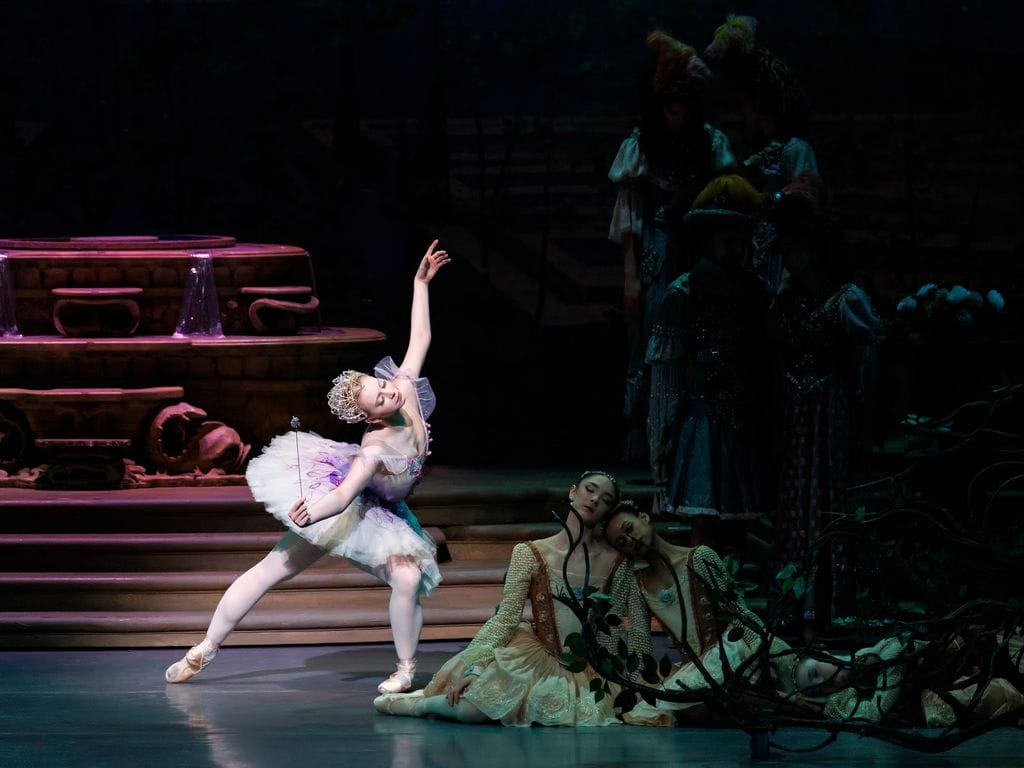
Ashley Hod (matinee) and Dominika Afanasenkov (evening) were warm and generous Lilac Fairies. Though she did have some trouble with the turns in her Prologue solo, Hod’s mime was especially clear, and she had a commanding presence. Afanasenkov was a rapturous Lilac Fairy, with a soft, rounded upper body which bent into the music. She had a lovely sculptural quality to her dancing. Her mime was clear and detailed, marshaling the other fairies to guard the crib, watching Carabosse carefully, and sending him off with a triumphant flourish. Like Sara Mearns (an unforgettable Lilac), she really seemed to question the Prince when she met him, wondering if he really was the one she had foretold, a very telling dramatic touch.
Both Kloe Walker (matinee) and Gabriella Domini (evening) danced the first fairy (Tenderness in this production) with a caressing expansiveness; Domini especially looked like she was wrapped in the music. Nieve Corrigan (matinee) was both lyrical and powerful as the fifth fairy (Courage), luxuriating in the bouncy emboîtés. Fortunately the tempos for their solos were slower this year, allowing the fairies to pause in their final poses, and they didn’t have to enter so quickly that they looked like they were elbowing the previous fairy off the stage.
Peter Martins’ jewels quartet in the last act, too, was taken a bit more slowly, and the choreography, especially the after-Petipa Emerald and Ruby variations, had more chances to shine. Andres Zuniga (Gold in the matinee) was able to give a welcome smoothness to Martins’ often jerky choreography, and showed off some impressively secure turns a la seconde. Both Emeralds (Rommie Tomasini in the matinee and Olivia MacKinnon in the evening) were sharp and clear, with crisp hops on point and elegant little pauses, and Alexa Maxwell’s Ruby (evening) had especially sparking footwork. Anna Snellgrove’s Diamond (matinee) gave Martins’ brusque choreography with its many sharp and unmusical changes of direction a rare and distinctive grace.
Davide Riccardo and Claire von Enck and Davide Riccardo (evening) seemed to be having a lot of fun as the cats, and Riccardo’s deadpan timing was very funny. And it was great to see Daniel Ulbricht as the lead jester (matinee), selling the bouncy jumps with all his might. Though NYCB's artistic bread and butter is its triple bills, there is clearly something absorbing and magical about a full-length ballet and "The Sleeping Beauty", with its many different types of roles, (classical, character, and mime), is a unique challenge; it was a privilege to see Nadon and von Enck, so wonderful in their individual ways.
© 2026 Mary Cargill



