Debuts New and Old
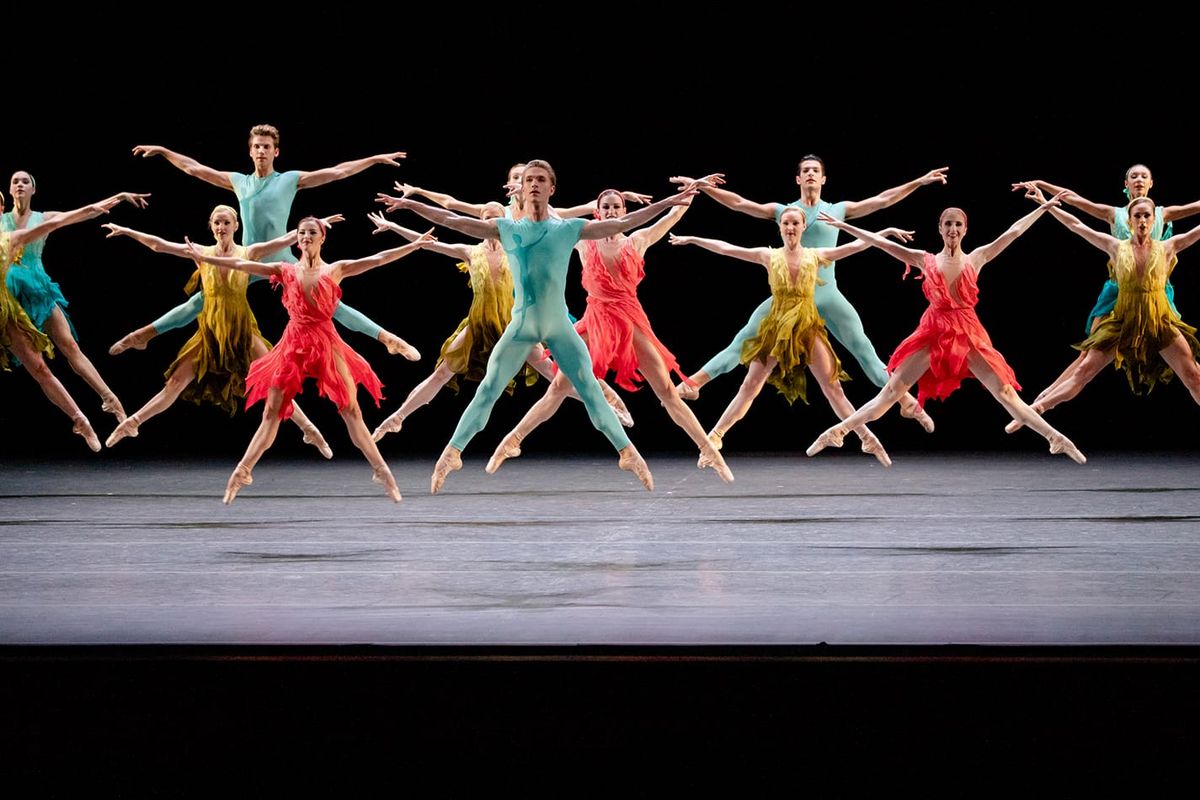
“Judah,” “Dances at a Gathering,” "Stars and Stripes"
New York City Ballet
David H. Koch Theater
New York, New York
May 17, 2019
The New York City Ballet presented a program that was simultaneously overstuffed and undercooked. The evening lasted more than two and a half hours, with a generous helping of dance, including four local debuts in "Dances at a Gathering", but underpowered, and leaving one peckish at its end.
The evening began with "Judah" intended presumably as a tasty appetizer: nineteen minutes, two short staircases to nowhere, and a pointlessly purloined skirt. This is a pity on two counts. First, Alberta Ferretti's costumes are among the best of those made for an NYCB fall fashion gala (in 2018) and all this extra stuff detracts from choreographer Gianna Reisen's ability to move groups in space and from her sense of rhythm. One after another, three women stand in arabesque flat-footed, the rise on pointe to be lifted by their partners, like fall leaves in a breeze, light weight, fleet, momentarily defying gravity. In that moment, the ballet and the audience breathed free, after several movements of the dance and the music (by John Adams) locked in dissonant antagonism, and the power of the classical vocabulary, even at its simplest, shone through. All of the dancers served the ballet well with Megan LeCrone, often severe in her facial expression and tight in the shoulders looking reborn – relaxed, happy and fluid, in here element In Reisen's world.
Anthony Huxley's entrance in his local debut as the dancer in brown in "Dances at a Gathering" gave rise to hopes that his would be a "Dances" for the ages. With each turn of the head and shift of his gaze, he defined the stage space as the repository of memories, some frightening, some just out of reach. . The spell was strained though not quite broken by some rather harsh extensions of the legs and by the mistiming his upraised arms, the reaction to seeing a ghost, at the end of the solo.
Like Huxley, Unity Phelan, in mauve, extended her legs too sharply, but also too high. “Dances at a Gathering”, now fifty years old, antedates leg to the ear flexibility; how the leg descends is as important as how high it can go. At this point, Phelan is also too extroverted for her part. She's dancing for the audience rather than, as Robbins wished, for herself. . Phelan also seemed mismatched with her partner, Joseph Gordon (another debut). She moves big and bold. He is more reticent, and, given the force of her dancing, almost too small a partner for her.
There were many moments when one became all too aware of the many lifts in “Dances at a Gathering”, their complexity and their risks, though not when Russell Janzen, the fourth debutant of the night, was on stage. Everyone seemed more confident and more at ease in his arms (even Anthony Huxley in their competitive duet). He in turn got the tone of the ballet, from the inside out. Nonetheless, this performance as a whole never quite gelled.
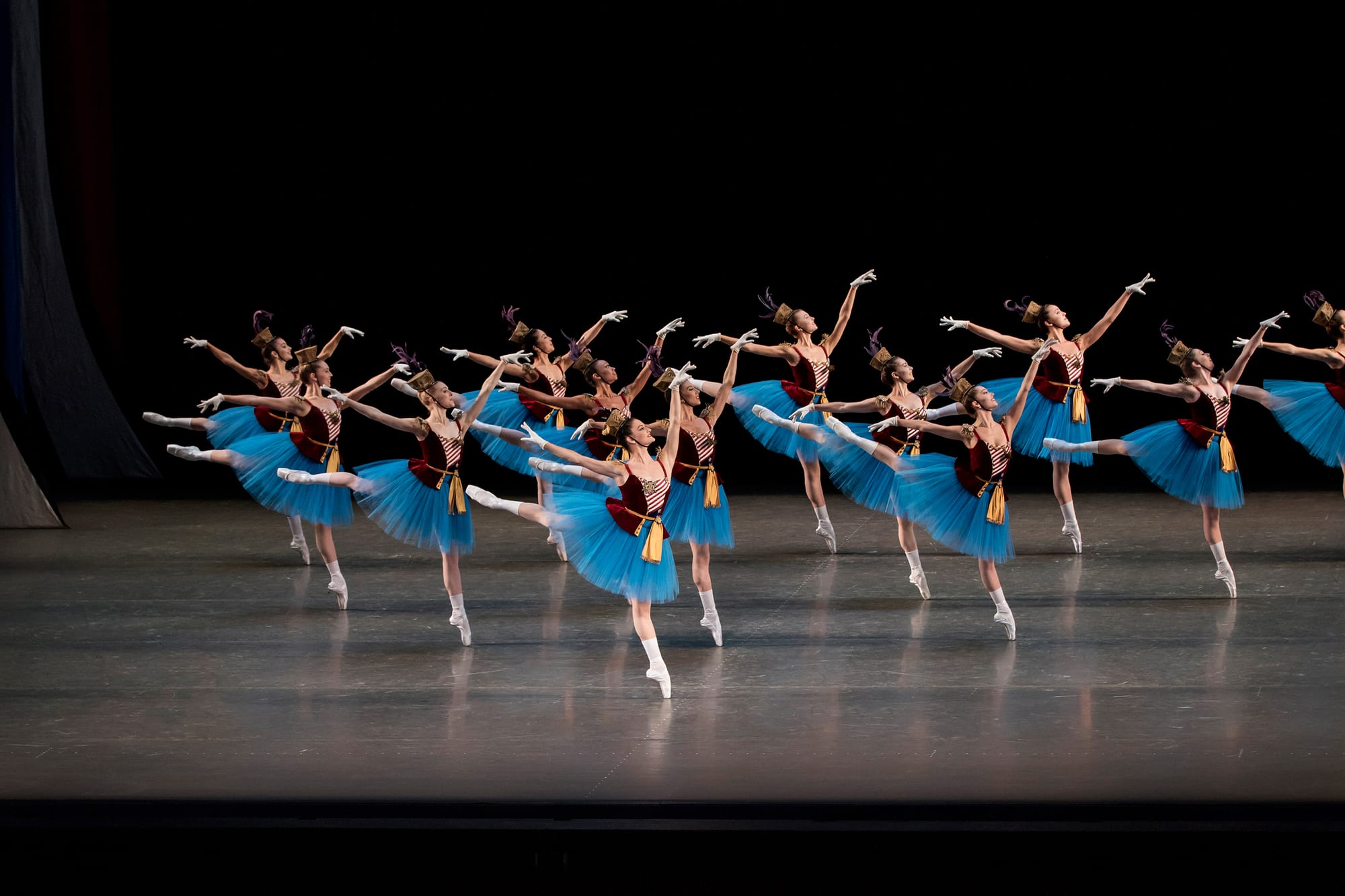
So it was a relief to have the curtain rise on "Stars and Stripes" one of Balanchine's most exquisitely wrought – and most reliable – applause machines. Here again, the quality of the performances varied. Both Erica Pereira and Daniel Ulbricht are veterans of their parts and danced them respectably. Perhaps they need a break or perhaps age has blunted some of their spark. Ulbricht can still reel off double air turns like nobody's business (as could the dozen guys behind him) but the glee of being able to do so was missing here. Emily Kikta was newer to her role leading the 'Rifle Regiment'. She danced big and had fun, but phrased beautifully, revealing the rock solid base of the humor and, as in "Judah" though at greater length, the expressive potential of classical ballet.
Like Kikta, Teresa Reichlen made the steps speak, every one of them clearly, cleanly, securely executed, providing an unobstructed view of Balanchine the craftsman at work. As in "Dances at a Gathering" she was too tall for her partner, Andrew Veyette. He looked stretched, almost to the limit, and ended his solo noticeably early. But "Stars and Stripes" prevailed; the flag flew over the finale and the audience went home happy.
copyright © 2019 by Carol Pardo



