Dance, (Un)interrupted
“Mapping Out A Sky,” “38109,” “Each In His Own Time,” “Meet Ella”
BalletX, Lil Buck, Lar Lubovitch Dance Company, Caleb Teicher & Company
New York City Center
New York, NY
October 22, 2021
The Fall For Dance Festival never really left, considering the two programs it offered in a digital streaming format last year, but still its return to a live audience felt like a homecoming. A bonus on the second night of Program 4 was the unscheduled appearance by Caleb Teicher and his dancers, rounding out the programming to the traditional four work count that each festival night usually offers. (This year the billing was tweaked to only include three works, and no intermissions.)
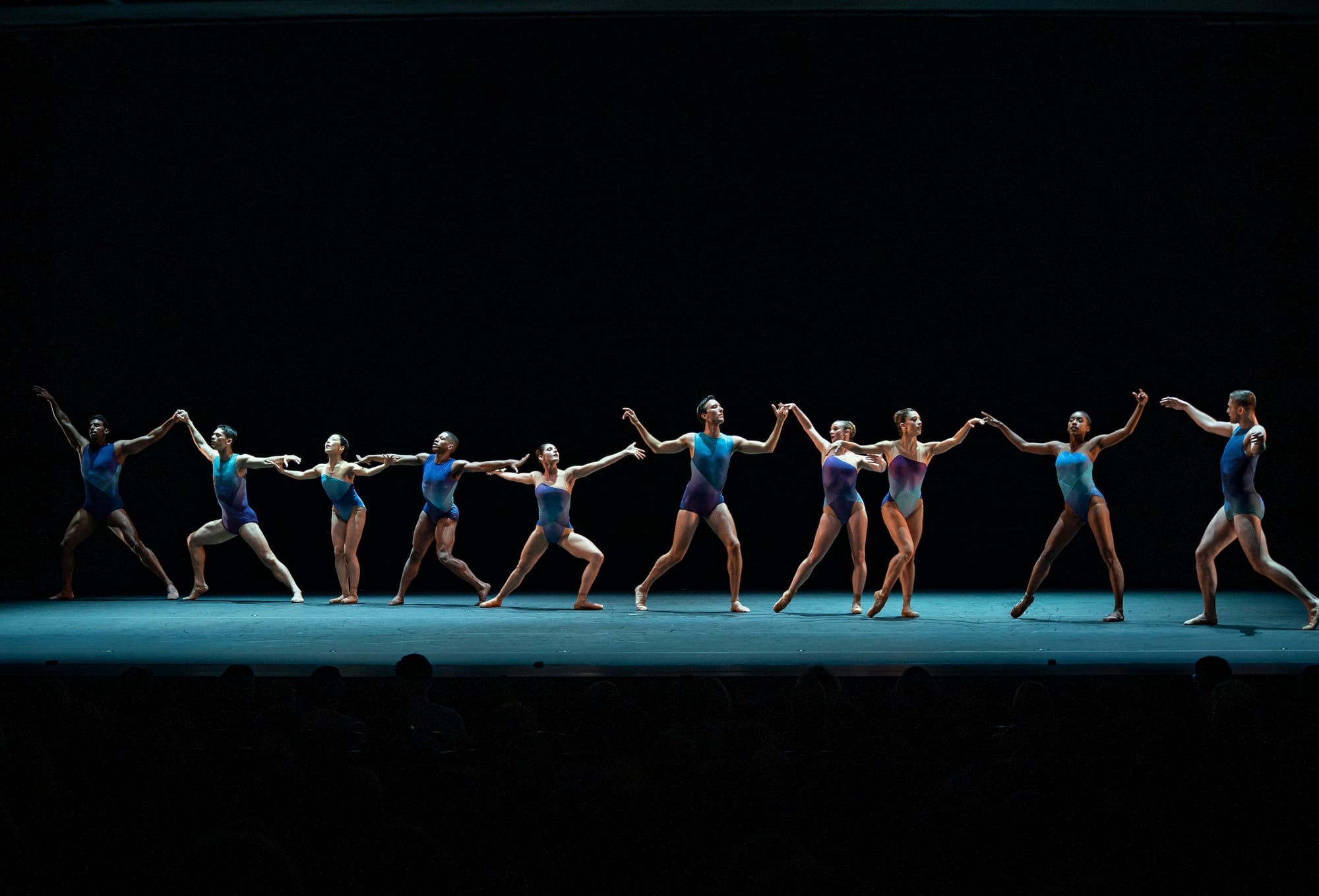
As is always the case with FFD programming, there’s something for everyone to savor, to ponder and to just politely applaud, and of course, many premieres. With the adjusted Program 4, the lead-off ballet became the New York premiere of Matthew Neenan’s 2021 creation “Mapping Out A Sky,” and was the night’s weakest. Starting with linear disarrangement and BalletX dancers twisting and turning in a line, the choreography had a mantra: move, move, stop, repeat.
It seemed promising at first, but the composition quickly began to feel more like an athletic field than celestial cartography, with dancers moving from formations to discord as though in a football game. The work’s only meaningful engagement, among the dancers or with the audience, came in a slowed down duet that actually flowed, casting emotional reflection between the dancers, and then bled into a secondary duet that echoed the steps of the first couple. But even here, as elsewhere, the work seemed to be taking its cues from a handful of Wayne McGregor’s classics (both “Chroma” and “Infra” came to my mind, and not just once), all just without the plasticity and off-axis dynamics that typically characterize and appeal to the fans of that choreographer. While this ballet was one to use a generous amount of time and number of dancers, its offerings were minimal both in substance and in service it did to the misfit Stephen Sondheim music.
By contrast, Lil Buck’s single appearance during the festival – he had to skip the first night of Program 4 and was replaced then by Teicher – was brief but bountiful. To watch this artist dance is to witness skill pushed to the limit, and a dialogue of a creator and performer with his craft. The piece, a solo titled “38109,” so named after the artist’s zip code in Memphis, is a few years old but was new to the New York audience, and from the first moments when the jookin star sauntered to his shoes placed at center stage it was clear the crowd was in for a treat. Each of this dancer’s movements was in tension between plasticity and precision, like in the fluid turns that spiraled vertically onto the floor, but then right back up, jagged-then-soft arm isolations and precarious balances. If there can be one complaint about this piece, it is that it was far too short – this artist clearly had more to say.
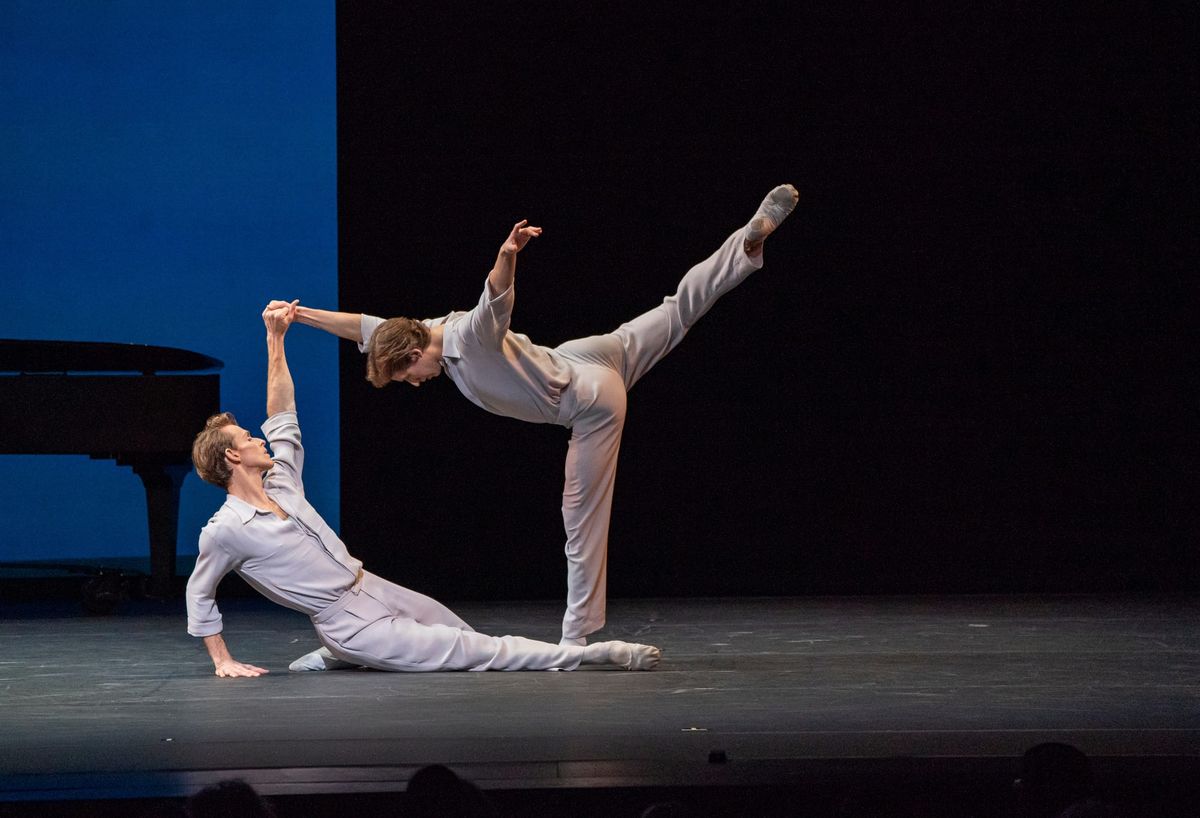
The night’s New York City Center commission and festival’s world premiere came in the form of Lar Lubovitch’s “Each in His Own Time,” set to Johannes Brahms music aptly played on the piano by Susan Walters. The dancing was done by New York City Ballet’s Adrian Danchig-Waring and Joseph Gordon, and in at least that way felt like an extension of last year’s performance by these two men of Lubovitch’s iconic “Concerto Six Twenty-Two.” This performance and this work however felt like the day-after of the tender and fragile existence they represented in Lubovitch’s 1986 duet – the “what comes next” of it all: conscientious, aware, grateful and endlessly alive.
The ballet started with the two artists respectfully watching the pianist. It was a rare moment of active acknowledgement and quiet appreciation of the music that fuels dance and dancers’ world. When the movements started, they rippled against the score, with the partnering fluidly moving from transition to transition, one interconnected step into the next. There was an everydayness in that flow, and a light elegance brought forth by dancers at easily the peak of their form.
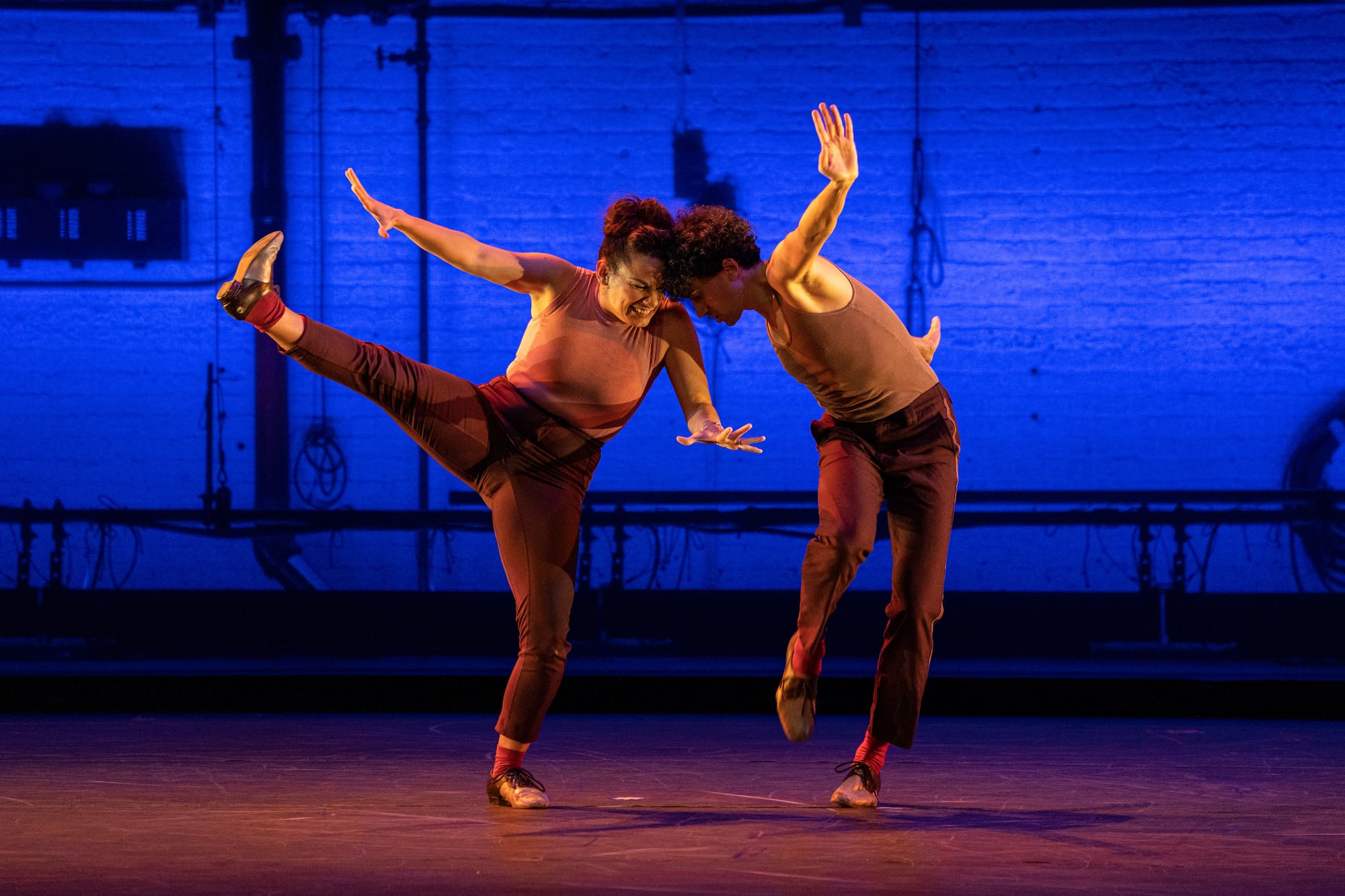
The evening ending with a treat and a lighthearted performance in the form of Teicher’s 2016 “Meet Ella,” to music by Ella Fitzgerald, brought memories of those traditional FFD nights that end with a buzz-worthy, high-energy splash. Teicher and three dancers breezed across the stage in a mix of complex swing, jazz and tap steps, and that uniquely Teicher flair. As is always the case with this festival, there are works you wish could fill entire programs, and this certainly was one of them. In all, the premieres, novelties, and verve made this four-work night feel like business as usual at the autumnal dance staple.
copyright © 2021 by Marianne Adams



