Dance Is a Latina
“Línea Recta,” “Con Brazos Abiertos,” “3.Catorce Dieciséis”
Ballet Hispánico
The Joyce Theater
New York, NY
April 20, 2017
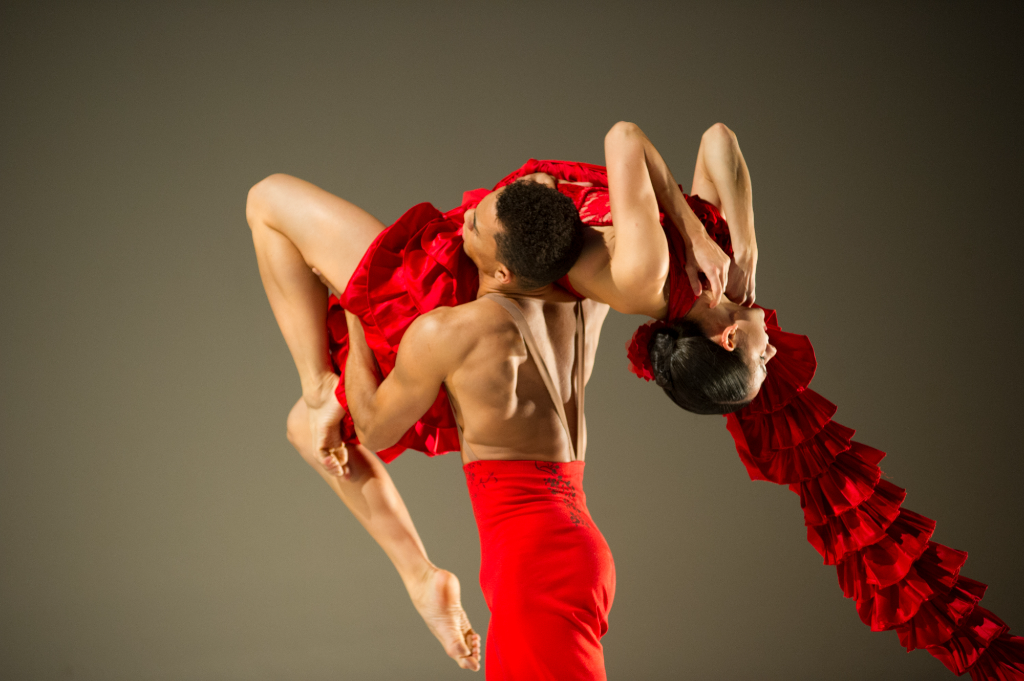
The sole woman in a red dress stood in the middle of the stage with her back to the audience. She flicked her wrists, resonating the motion in her elbows and then all through her arms, curved her spine and twisted her body, with these spiraling movements echoing the flamenco beats of the music. Her body bended to the side, with fingers moving as though on a Spanish guitar, she grabbed the long trail of her red ruffled dress and faced the viewers with a piercing gaze that was both daring and inviting. That was how Ballet Hispánico’s program of three works by female Latina choreographers at the Joyce Theater began: with femininity, resolve and emboldened beauty.
The opening scenes belonged to a 2016 work by Belgo-Colombian choreographer Annabelle Lopez Ochoa called “Línea Recta” (“Straight Line”) that was set to flamenco-flavored music by Eric Vaarzon Morel and drew most of its inspiration from the flamenco dance form. In the moments that followed, the lead, Melissa Fernandez, manipulated the long trail of her dress while dancing with four men, with the garment changing character along with her dancing and interactions – at times it was a rope, at times a shawl, at times an extension of her body, a welcome prop or a burden.
“Línea Recta” went on to present a variety of different scenes, all of them in some ways remained grounded in the flamenco spirit and anchored by a strong but unassuming presentation of the power of female dance. In one section three women danced while each holding a Spanish fan, appearing independent and flirtatious. But then they were partnered with just two men, forming many relationship triangles through dance, none of which were straightforward, and all of which were just like the flamenco thread connecting the work’s scenes –- endlessly changing and fascinating. Other sections did more to highlight the male-female differences rather than dynamics. There was a dance for four women, then four men, with the men dancing passionately but moving more slowly and somehow less resolutely than the women, yet possessing more expressed uniformity and unity as compared to the breadth and free spiritedness of the women’s dancing.
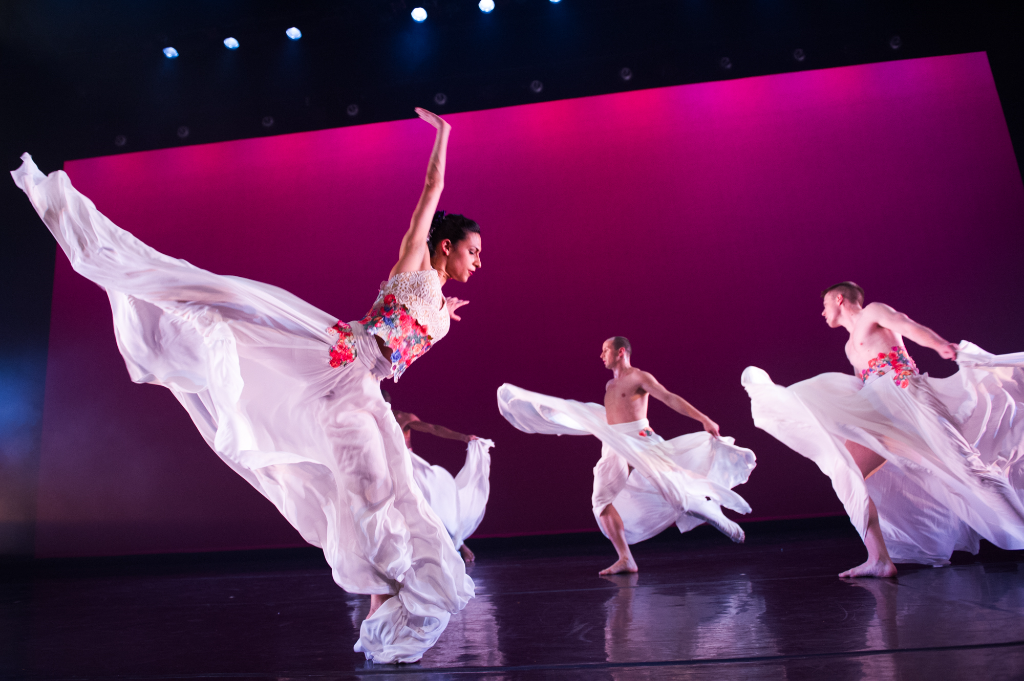
The world premiere of the night, Michelle Manzanales’s earnest “Con Brazos Abiertos” (“With Open Arms”), with its ethnic rooting and focus on the female, followed Ochoa’s work quite logically. With her ballet set to soundscapes and music by a variety of artists, Manzanales aimed to portray the struggles of living with the dual Mexican-American identity, and did so with an open heart and also some humor. The first scenes features women in baring, flesh-colored costumes with one of them ultimately walking down the stage, and looking at the audience earnestly as the voiceover spoke and came to invite the audience to explore this identity deeper: “miráis” said the voice – “look.”
As the work progressed, the dancers appeared in different costumes and social scenarios, starting with the stage flooded with happy men and women in sombreros performing a combination of folk and modern-inspired steps. There was courtship and love, but somehow the woman still ended up alone, with a sombrero, on a dimly lit stage. In her solo dance, she would extend the hat away and bring it closer to her, sometimes placing it on her foot and reaching it as far away from her body as her impressive flexibility would let her, then bring it closer still. Later, she clutched it to her heart, laying on the floor, then crawled and twisted from under it, both embracing and eschewing this Mexican symbol.
Later scenes of this ballet depicted a sense of community with men and women dancing jovially in more pedestrian clothing and the work zeroed in in on a modern, romantic duet of a man and a woman, connected and in love. Alongside the struggles of cultural self-placement, in this work the most fundamental human experiences and love transcended it all. Then, the ballet’s finale showed all the dancers, male and female, wearing long, white, flowing skirts as they danced to thumping Mexican modern music. All else aside, here cultural identity also had a transcendent quality.
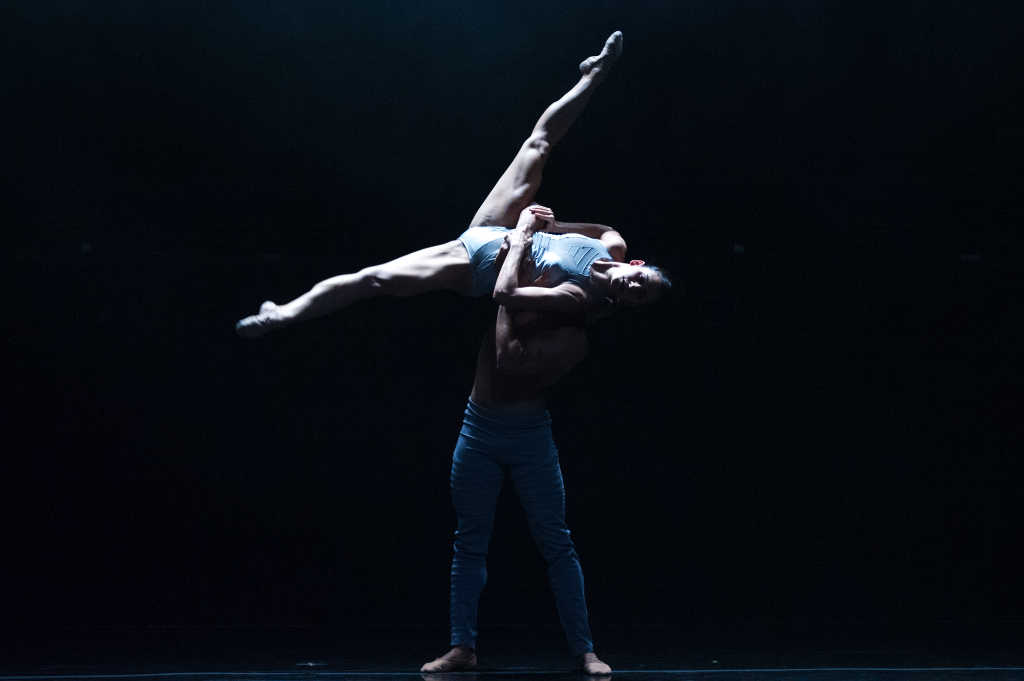
Tania Pérez-Salas’s 2002 work inspired by the number Pi and titled “3. Catorce Dieciséis” (“3. Fourteen Sixteen”) closed the evening on a more abstract note that really highlighted the attractiveness of the company's dancers and their well-honed, and not just well-trained, approach to dancing. The ballet's structure offered a variety of segments of modern dance that on first blush seemed unconnected, yet through the movement vocabulary that was used were still of the same cloth and tale. From streams of moving dancers forming various irrational patterns through their progression on stage, to back-to-back duets by two separate couples in similar emotional keys but different movements and costuming, the work presented eloquence of expression focused on motion rather than particular ethnic or gender content. Still in this work the females dominated, and had the more memorable scenes and presence.
The night's works were by women and of women, and the passion of this company’s female dancers and the presenting choreographers kept bringing to mind George Balanchine’s famous phrase: “Ballet is Woman.” With its program, Ballet Hispánico suggested that passionate, compelling, liberated dance is also a Latina.
copyright © 2017 by Marianne Adams



