Dance About Art, Book About Maxwell
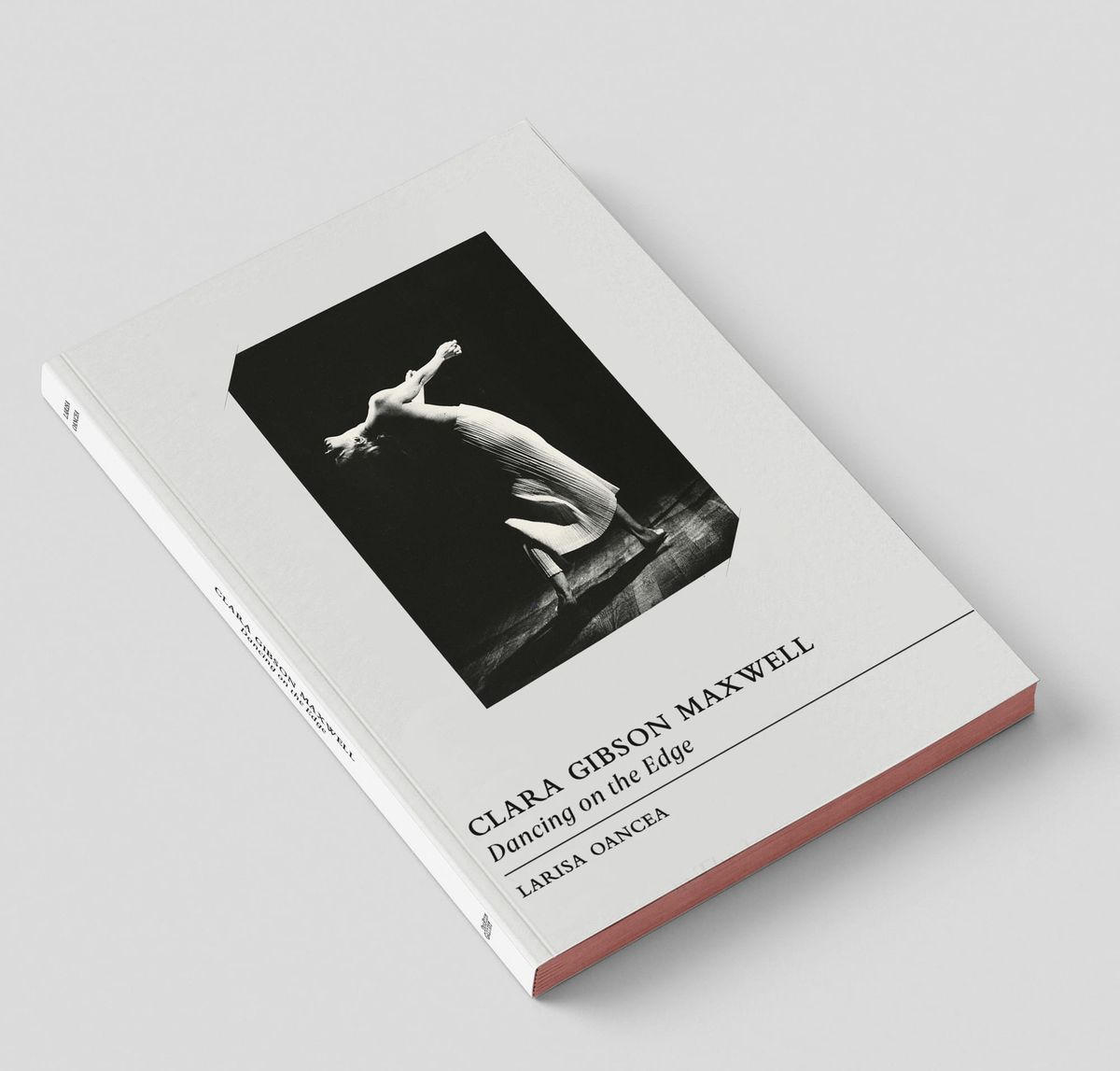
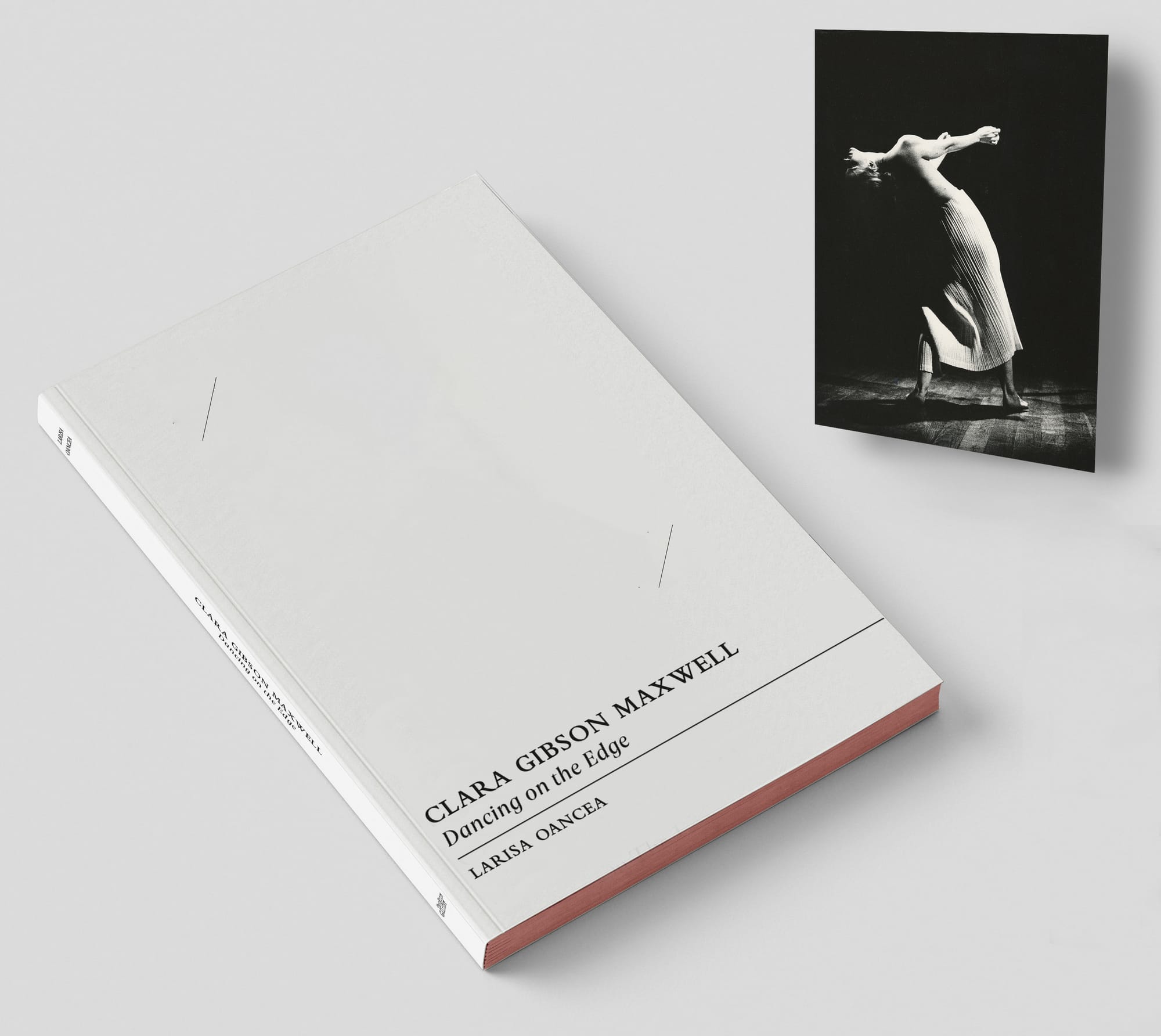
Book: "Clara Gibson Maxwell: Dancing on the Edge"
By Larisa Oancea
The Film Gallery, 2026
Somewhere in the middle of "Clara Gibson Maxwell: Dancing on the Edge," Larisa Oancea quotes her subject's guiding principle: "Context is content." It happens to be a fitting motto for a book that traces a choreographer who has spent decades in conversation with philosophy, architecture, jazz, literature, and somatic practice — and it sets the tone for a biography as restless and wide-ranging as its subject. Rare is the dance book that asks its reader to keep pace with Descartes and Ornette Coleman, but Oancea manages it without ever losing the thread back to Maxwell's body and her work.
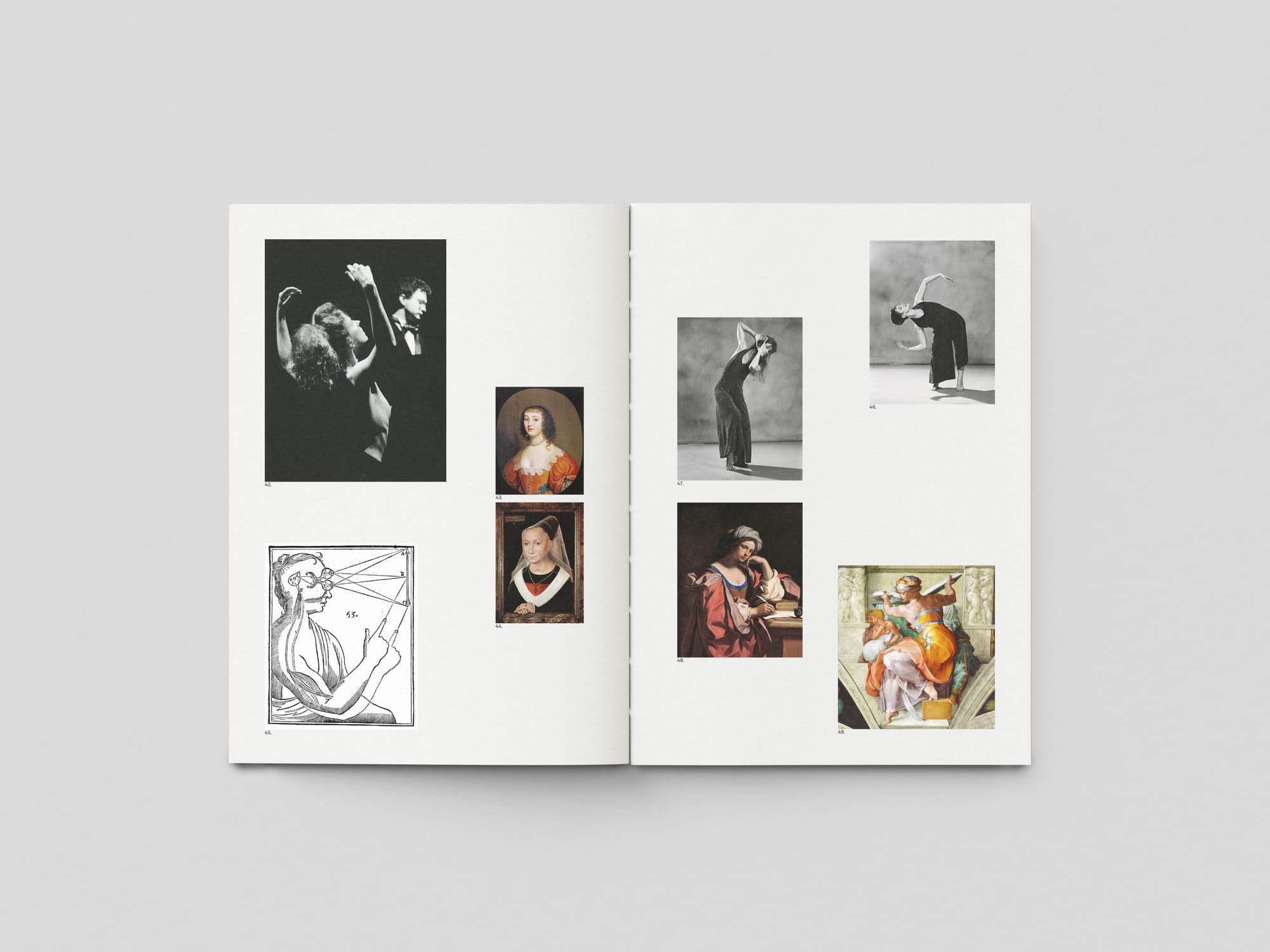
The monograph, the first dedicated to Maxwell, is a striking piece of book-making in its own right: the text is accompanied by sets of Warburgian plate depictions juxtaposing Maxwell's choreography against the varied art, all assembled with the rigor of an art historian. The images give the reader almost as much to look at as to read, but importantly, they do real interpretive work rather than simply illustrate the text around them.
Embarking upon the substance, some of Maxwell's themes are easy to trace once you learn that the choreographer, before launching into her life's work, arrived at Harvard in 1976 to study philosophy under Stanley Cavell. She left before finishing, eventually earning a BFA in dance at Juilliard, but that intellectual grounding never left her — it surfaces in a trilogy of Cartesian dances and later dance form critiques of Plato, Henry David Thoreau's naturalistic political philosophy, and even Karl Marx.
Architecture left its own mark: Maxwell's "site-responsive" performances at Le Corbusier's La Tourette monastery and Frank Lloyd Wright's Taliesin West suggest a choreographer as engaged with built space as with the body moving through it. She found context most directly, though, in the "harmolodic" theory of Ornette Coleman — responding intuitively to sound, awareness, and the courage to commit to choice. "Harmolodic principles serpentine through her choreographic philosophy like a feathered serpent of mythical origin, folding endlessly upon itself," writes Oancea, and when reading the work and its presentation of the varied influences, it is clear that that was but one of many forces pulling relentlessly at this choreographer.
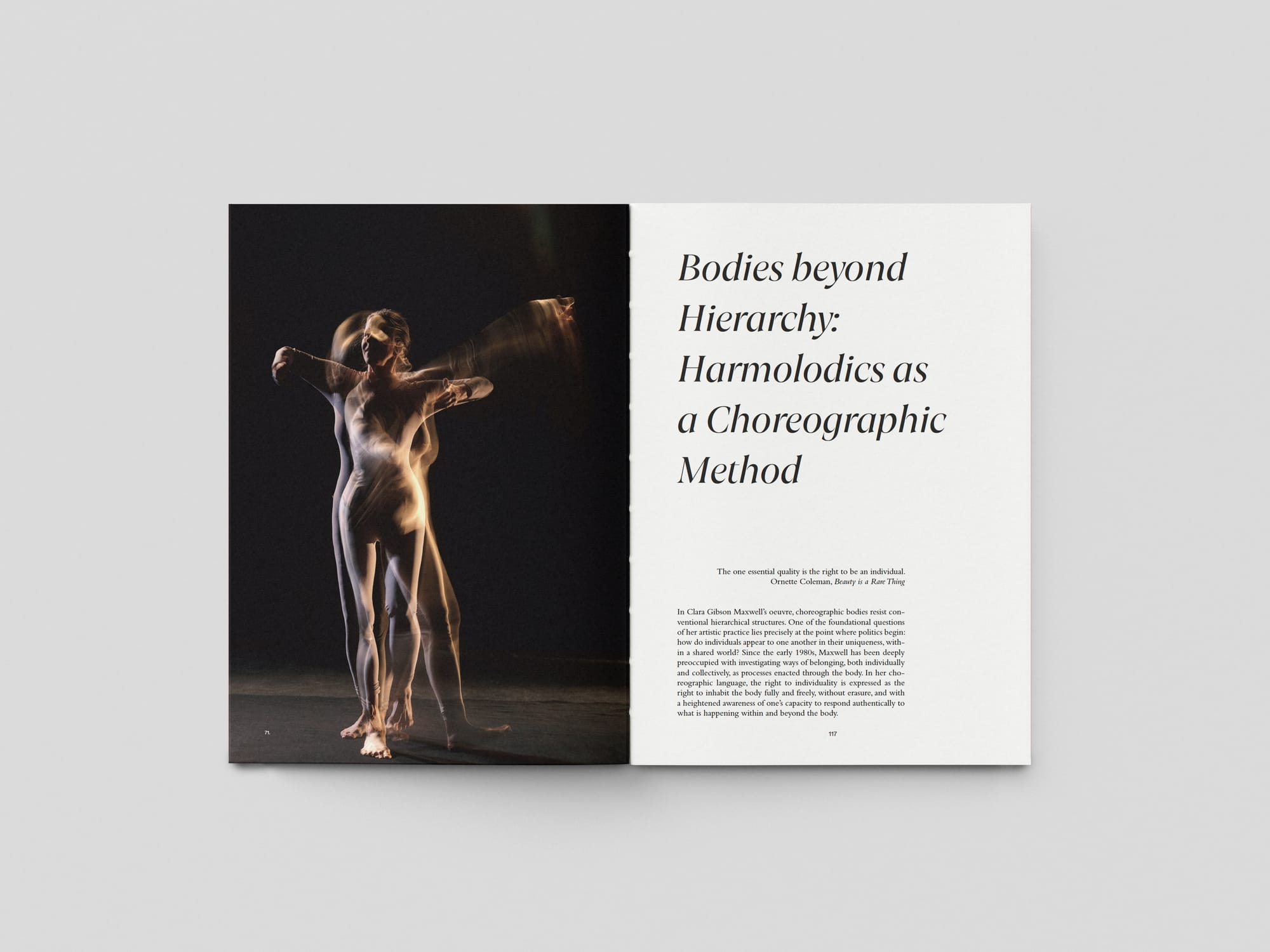
Of her dance-world influences, the book lingers longest on Antony Tudor, whom Maxwell met at a morning meditation class in New York — an encounter that opened onto a lasting interest in the body and mind's shared limits, and eventually a meditation on the mind's capacity to manifest itself through movement. "Challenging a society privileging verbal expression and dry rationalism, her choreographic work explores the logic of the body as a wellspring for deeper insight," Oancea writes. "Thoughtful doing," as Maxwell calls it: thinking and acting simultaneously.
In many ways, to Maxwell dance is the contemporary art form — both in what it represents and in the fact that it embodies the very moment in which it is performed. But it is also clear that her focus on on physicality and bodily autonomy goes beyond her philosophical roots. It is less Cartesian so much as rooted in her study of the Alexander Technique and a relationship with Joseph Pilates, one close enough that she came to own several of his vintage customized machines. Inevitably, that inquiry finds its clearest expression in “Ophélie Song,” her reimagining of Hamlet's Ophelia — not as a victim of hysteria, but as an aesthetic representation of the female breakdown, something innately beautiful and complex.
In all, the book is a delightfully cerebral pursuit, as the author places Maxwell's work in the context of infinite examples of other art and philosophical writing, making for both a richer exposition of the significance of Maxwell's work and a studied exploration of art par excellence. And ultimately, Oancea presents Maxwell as an eternal student, consistently absorbing more of other disciplines. So often a passionate student is herself the best study subject and teacher, and so a book about her, is undeniably inspiring read.
copyright © 2026 by Marianne Adams



