Choices, Choices
"Monotones I & II", "Symphony of Sorrows", "There Where She Loved"
Sarasota Ballet
Joyce Theater
New York, New York
August 14, 2018
The Sarasota Ballet, a small company run by the British dancer Iain Webb, has a rich and varied repertoire and is especially known for its commitment to the works of Sir Frederick Ashton, which they dance with admirable style and elegance. But a company cannot exist solely on a historical legacy, and Webb has the same issues all directors face -- how to develop and balance the repertoire -- and, for the New York season, he needed both a varied repertoire and one that showed off as many of his fine dancers as possible. The selection was also complicated by the Joyce's stage, since there is no room for an orchestra and Webb has an admirable commitment to live music. The opening night program met the challenges well, with two ballets accompanied by live piano, and a ballet by Ricardo Graziano, the company's resident choreographer ("Symphony of Sorrows") and Christopher Wheeldon's "There Where She Loved", both of which had a number of featured roles.
The program opened with Ashton's luminous, musical and rigorous "Monotones I & II", set to Erik Satie's "Trois Gnossiennes" and "Trois Gymnopédies", which was danced to the original piano scores (played by Cameron Grant) rather that to a recording of the more familiar orchestral versions. The piano, combined with the small stage, gave the pieces an unusual intimacy, making all the little ripples and waves of music clear; Ashton's choreography embeds the dancers in the meandering, discursive, and hypnotic music.
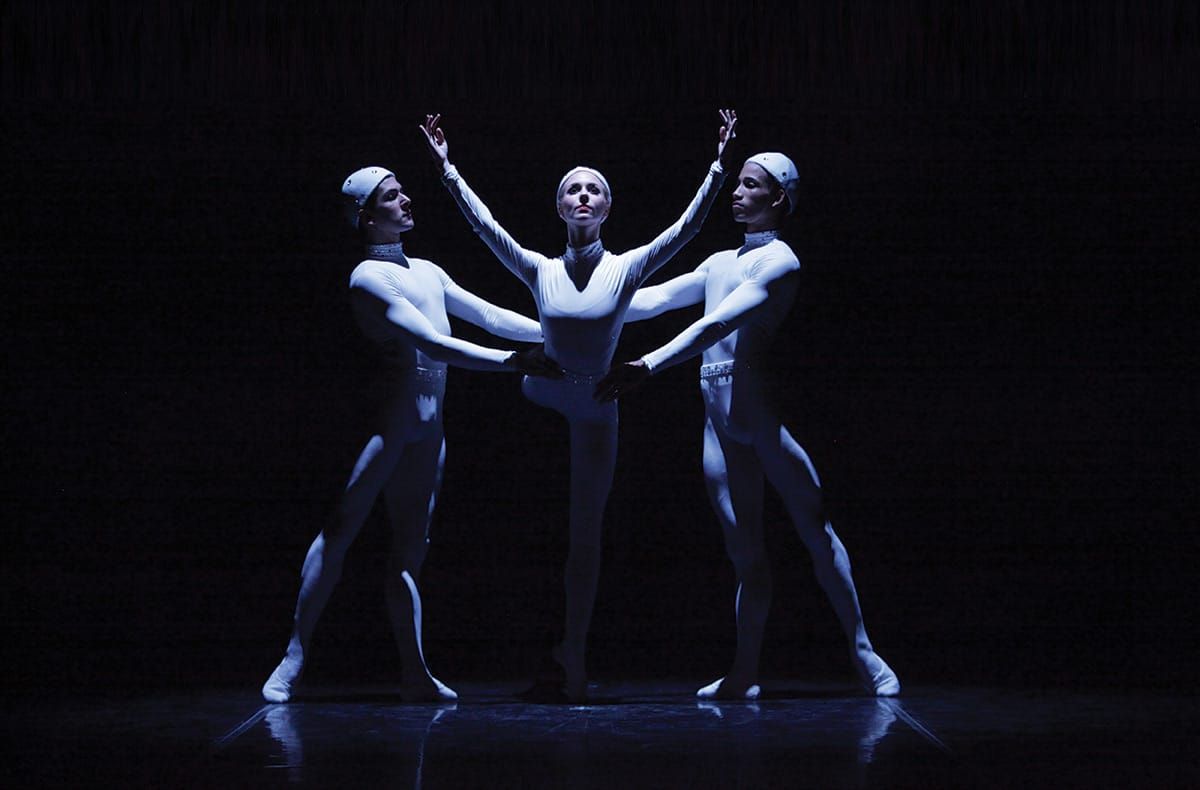
The dancers in "Monotones I" (often known for clarity's sake as the green one, since it was choreographed after "Monotones II") have switched to beanies, dropping the oddly shaped headdresses which gave the piece an earthy, archaic air, but the sense of space and feeling of an expanse of desert remained. The dancers (Ryoko Sadoshima, Thomas Giugovaz, and Samantha Benoit) negotiated the exposed balances and tricky moves with a flowing, effortless confidence.
Victoria Hulland, Ricardo Graziano, and Ricardo Rhodes were equally confident in "Monotones II", the white one. They danced with an impersonal warmth and nobility, aware of each other and of the audience without courting them. Their movements flowed through the music with subtle changes of emphasis and their white bodies against the dark background looked as mysterious and exalted as beams of light.
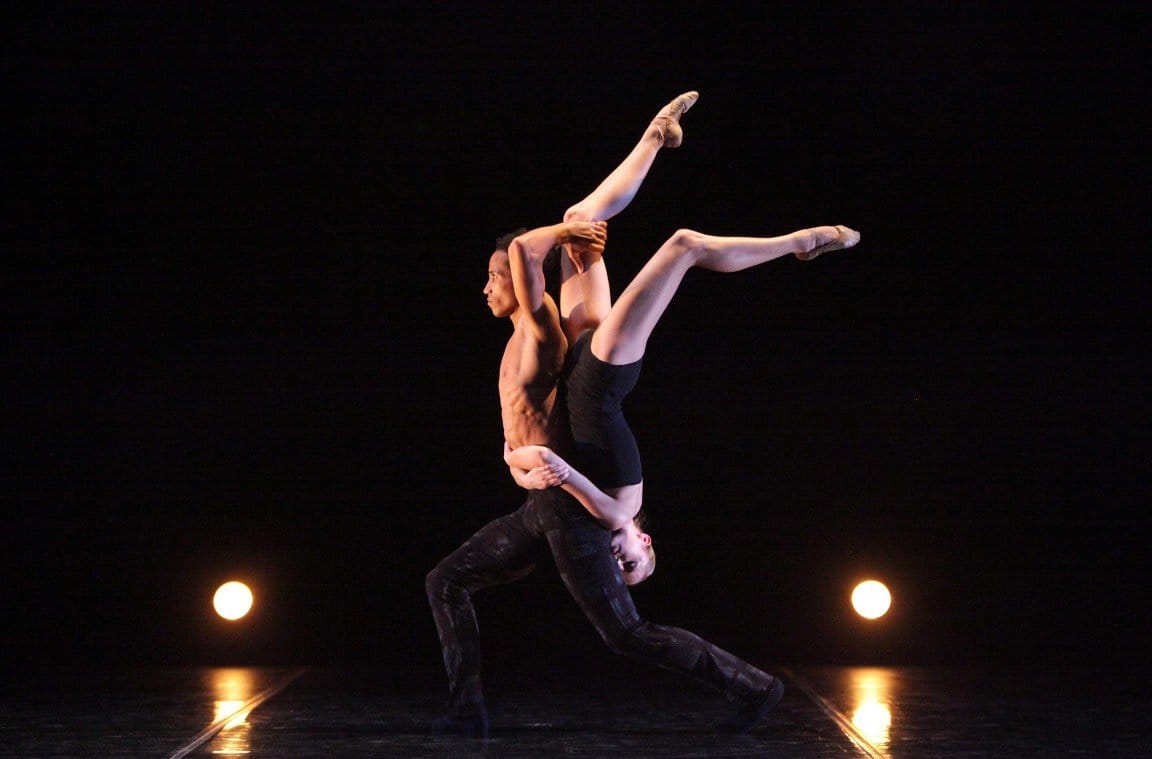
"Symphony of Sorrows", set to the third movement of Henryk Gorecki's "Symphony No. 3" also had beams of light, with the stark but striking design (by Bill Fenner) of random lights glowing against a black background which allowed the ten dancers to emerge and disappear; Graziano moved his dancers with confidence. Though there was no narrative, the ballet explored human emotions, as the music incorporated a folk song about a mother grieving for a lost child.
The dance opened with the dancers in a huddled group which gradually dispersed as the women peeled off forming various mournful poses, accented by some slightly fussy realistic little gestures (there were several hand wringing and eye shading motifs) accompanied by the ethereal soprano's soaring melodies. (Unfortunately, the recording was not identified.) The men joined them, and each couple got a pas de deux. These did have different characteristics. Kate Honea was feisty, pushing against something, Amy Wood, with her long, pliant legs, projected a certain serenity, and Christine Windsor was a helpless, limp rag doll, though the women seemed unable to stand on their own and were constantly pushed, pulled, manipulated, and hoisted by their partners.
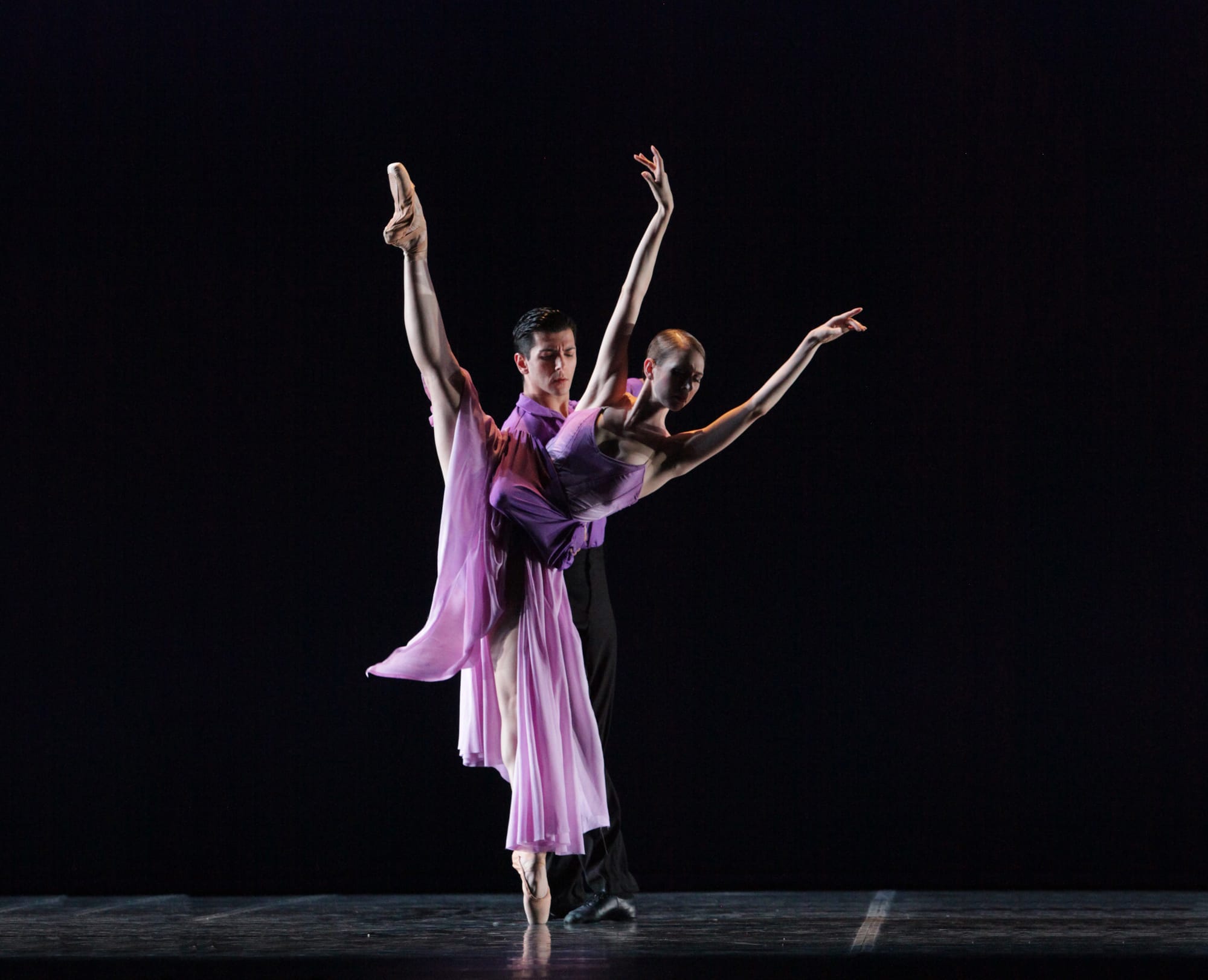
Christopher Wheeldon's "There Where She Loved" carried this over-partnering even further, which made much of his choreography look difficult and awkward as well as emotionally inert. The work was set to alternating songs by Chopin and Kurt Weill, played and sung with great sensitivity by Grant on the piano and sopranos Michelle Giglio and Stella Zambalis. The arch-romantic Chopin and the gritty Weill are not natural soulmates and the work seemed like a series of unconnected vignettes with no arc or through line. The Chopin songs were danced with a faux folk flair against a projected sky. Wheeldon in his dancing days was a notable boy in brick in Jerome Robbins' Chopin ballet "Dances at a Gathering" and clearly Wheeldon had absorbed those lessons. There was a great deal of youthful whimsy, though fortunately no somersaults.
Wheeldon, though, was over matched by the bitter, sour, songs of Kurt Weill and his choreography was decorative and just tiptoed around the emotions. "Surabaya Johnny", a haunting tale of desperation marinated in gin and loneliness set in the Dutch East Indies, became a generic dance for one man and three women who flung themselves at him over and over. "Nanna's Lied" was an elegiac meditation for a glamorous long-legged beauty (Christine Windsor) floating over the heads of four stalwart men, leaving Weill's fierce, bitter, resigned prostitute to the snows of yesteryear, quoted so ironically in the song. Wheeldon's choreography added nothing to Weill's songs and they towered over his efforts; he might have been sprinkling powdered sugar on top of the Matterhorn.
The dancers, though, with their unmannered, generous professionalism and honesty gave the work a straightforward dignity. Katelyn May was especially joyous in her bouncy solo and Amy Wood and Ricardo Graziano gave the purple sentimentality of "I do not love you" a restrained nobility.
Copyright © 2018 by Mary Cargill