Cheers To That
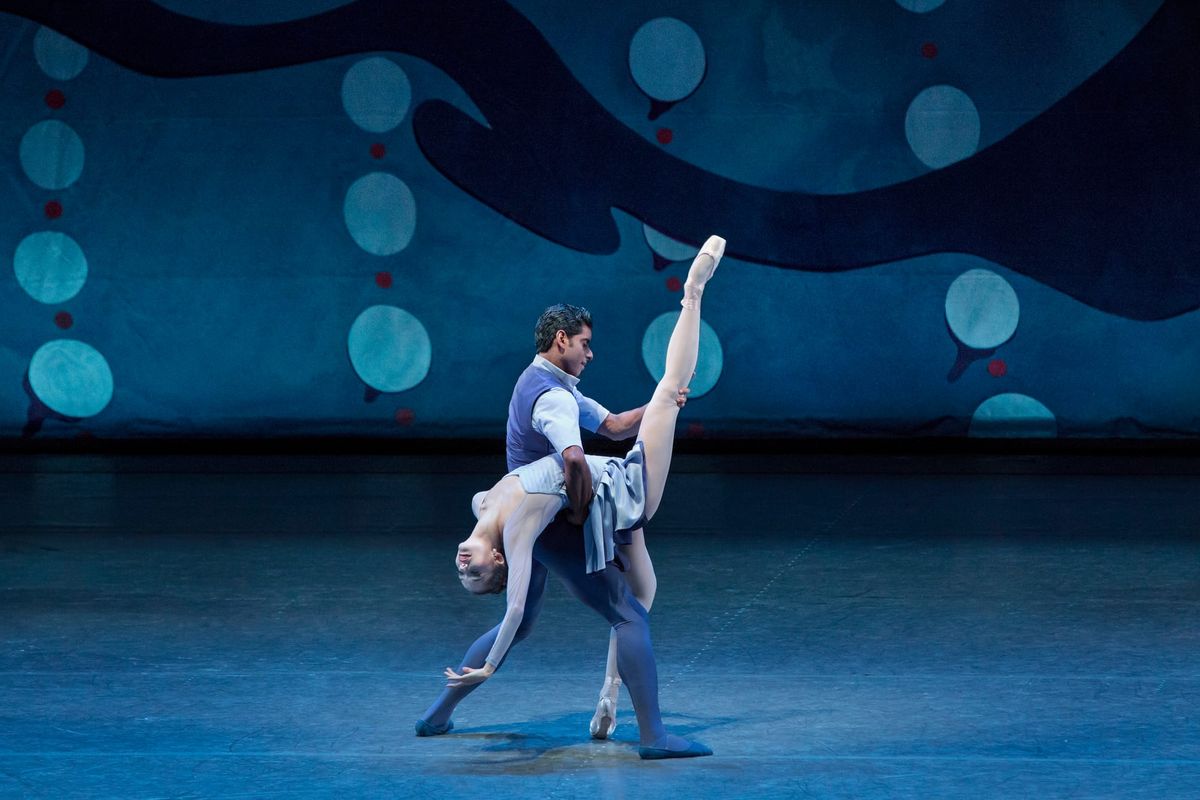
“Mercurial Manoeuvres,” “Polyphonia,” “Liturgy,” “American Rhapsody”
New York City Ballet
David H. Koch Theater
New York, NY
April 25, 2017
A program of works by just one choreo- grapher can do wonders at revealing that creator’s weaknesses and strengths. With no one else’s craft for the works to be compared to, hide behind or shine over, the creator is presented to the audience as all they are, and for his part, Christopher Wheeldon really let his talent glow throughout the evening.
The occasion was the start of NYCB’s “Here/Now” festival designed to honor and showcase contemporary choreographers, all of whom have created many ballets over the past few decades for the troupe. With Wheeldon’s role as former NYCB dancer and the company’s first resident choreographer, leading off the festival with his repertory was a logical choice, and the night started and ended with different sorts of cheers. To honor the choreographer, as part of his opening remarks introducing the festival and the night's works, the company’s artistic director Peter Martins brought Wheeldon on stage and thanked him for his achievements, and then, in a nod to the late George Balanchine and his tradition of doing so starting with the 1972 Stravinsky Celebration, offered Wheeldon a celebratory vodka toast in front of the curtain.
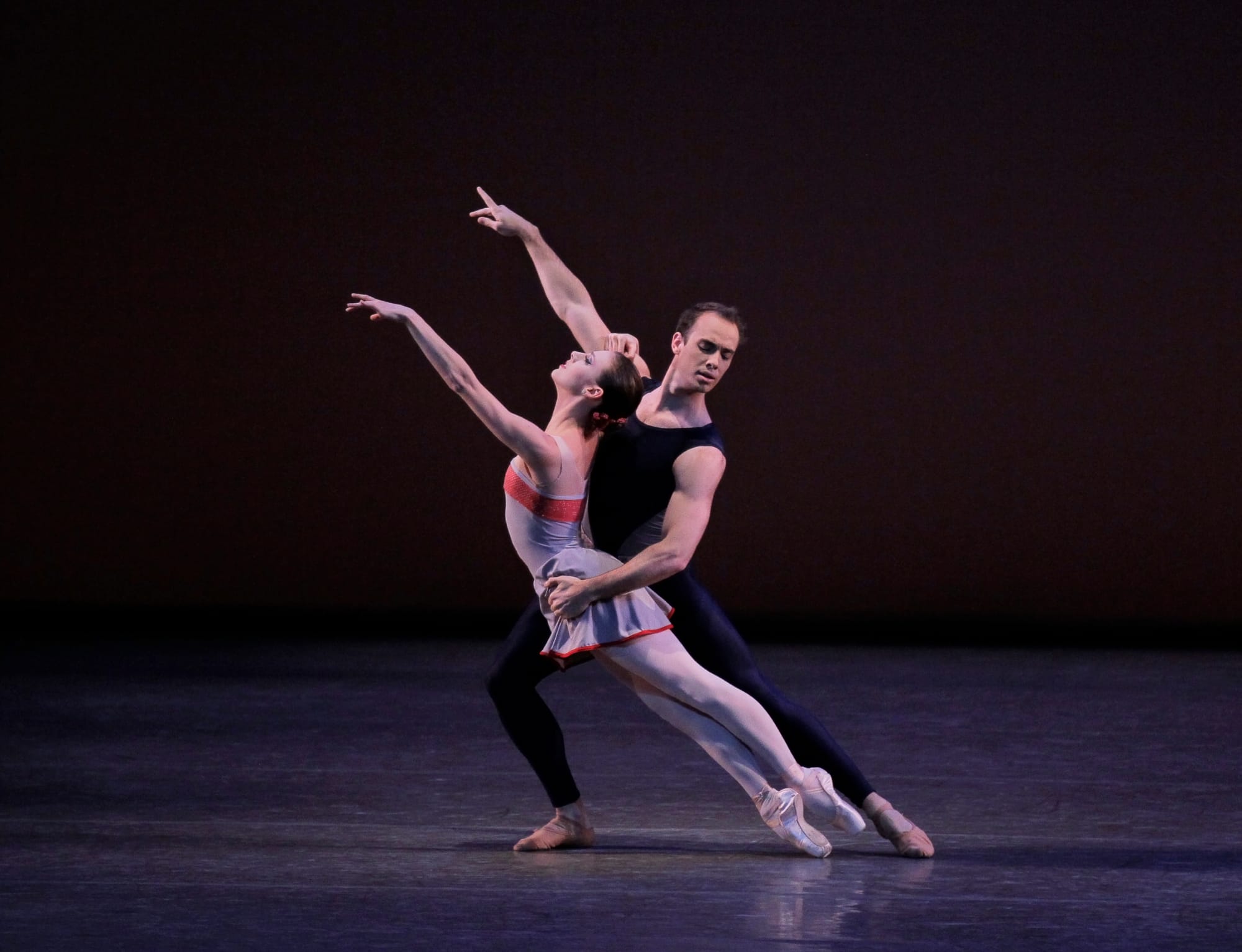
The ballet that opened the program after this brief moment of introduction and celebration, the 2000 work to Dmitri Shosta- kovich’s multilayered Piano Concerto No. 1 called “Mercurial Manoeuvres,” was equally the right lead-off choice, as the work presented the best of Wheeldon: musicality, modernism and just the right mix of theater. The cast was mostly old hands, with one notable and noteworthy debut by Harrison Ball who led the audience through the ballet with aplomb but also with careful respect for the work – quite wisely, he didn’t try to give the ballet a new feel in this evening’s performance.
While the wear of having to rehearse 43 ballets for the festival definitely showed on the dancers, with a few weak spots here and there in the dancing, it didn’t detract from the overall performance. Setting aside the misses, the hits were hits: Ball gave the dancing many emphasis points that resonated with the music, particularly in the ports de bras, and the lead duet of Tiler Peck and Tyler Angle completely stole the show. These two dancers handled the composition of the work exquisitely, showing perfect synchronicity in the turns, and many carefully detailed moments. Her gentle arm drop toward the audience in one moment, for example, was lovely and touching, and a fouetté that ended in a leaning arabesque and a kiss for Angle even more so. Elsewhere a beautiful sequence of multiple partnered turns called to mind petals layered over a rose stem. For his part, Angle’s dancing, which focused on accenting, provided contrast to Ball’s efforts to give more exposure and breadth to the steps and music.
The company’s treatment of 2001’s “Polyphonia,” which followed, similarly gave the audience memorable moments. Debutants Unity Phelan and Zachary Catazaro excelled in the first duet, with her lending the beauty of her lines to the choreography’s long arabesques, and him providing the romantic treatment. A moment where his head dipped low after her arabesque and then he gently carried her forward perfectly resonated the lilting music. In another debut, Sterling Hyltin danced the valse section with a lot of lightness and refinement in the footwork, even if at times she overbent her body, giving the section unnecessary flourish. Predictably, dancing a duet with Chase Finlay, Sara Mearns brought drama by first looking stern, but then added to the work by knowing when to shift their gaze down to the floor on certain turns and otherwise pepper the dancing with tight footwork. Elsewhere, Taylor Stanley dazzled with high jumps that seem to be getting higher, more powerful and more impressive with each season.
After an intermission it was time to showcase Wheeldon’s talent at crafting stand-alone duets. Surprisingly, it wasn’t “After the Rain” that occupied this slot on the bill, but the 2003 work “Liturgy.” Danced gorgeously by Maria Kawrowski and Jared Angle, the duet really couldn’t have been better cast with the mesmerizing extensions that this ballerina wields. Better yet, the dancing wasn’t all physicality, as the duo managed to reflect some of the hum of the Arvo Pärt music in the tension they added to the choreography with many suspended gazes and brooding moment. It would be interesting to see what the ballet could look like with that added emotional quality explored even more boldly by the dancers.
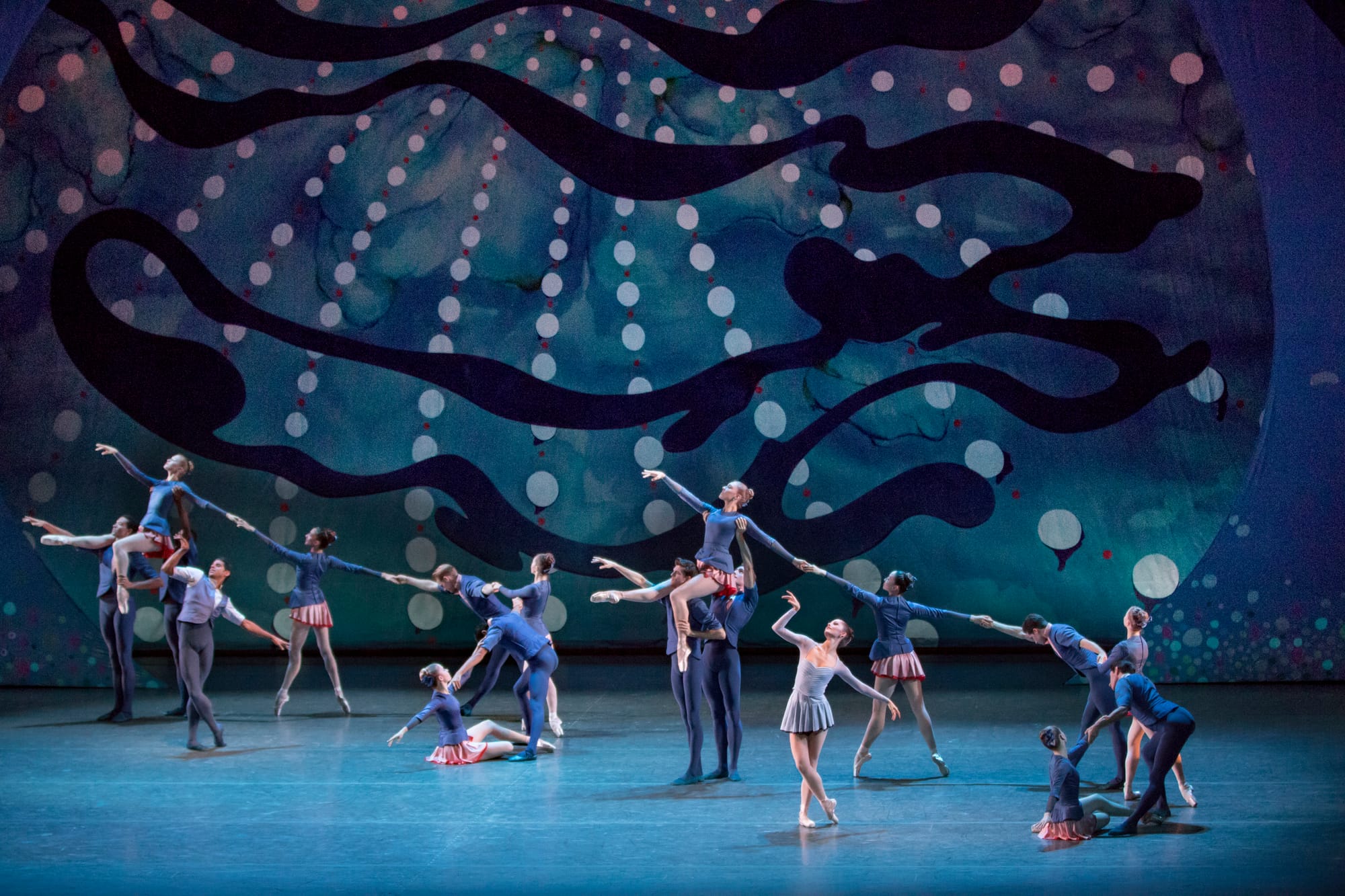
Wheeldon’s most recent contribution to NYCB’s repertory, the 2016 “American Rhapsody,” closed the evening with a debut by Lauren Lovette and Russell Janzen among the cast. It was perhaps the weakest of the evening’s works, which focused too much on dance theater, somehow too often conjured up scenes from the 2016 film “La La Land,” and even on the purely execution side, fared the worst with much uncertainty in the steps. Lovette and Janzen faced off against the veteran couple of Phelan and Amar Ramasar, and while the latter couple solidly danced the work to conclusion, Lovette consistently looked uncomfortable and inelegant next to Phelan, either as a result of their stark physical differences, or real discomfort with the steps. Still, the ballet did invite enthusiastic applause, and, if anything, reminded the audience of Wheeldon’s range and success as a choreographer beyond the ballet stage. That’s something to cheer to.
copyright © 2017 by Marianne Adams



