Change, One Dance Step At a Time
“Ará,” “Network,” “Toujours,” “Monarcas,” “Moss Anthology: Variation #5,” “This Bitter Earth,” “The Golden Turtle,” “Divinity in Paradox”
vildwerk.: “Time To Protect Our Planet” Program
Theatre of Museo del Barrio
New York, NY
October 15, 2024
Can dance save the world? The question feels rhetorical, but vildwerk., a new foundation that seeks to raise global environmental awareness through dance, is on a mission to have it at least help. Featuring commissions from noteworthy choreographers of our time, such as Joshua Beamish and Gianna Reisen, the program titled “Time to Protect Our Planet” delivered a powerful message through movement. Not all eight works were timeless pieces, but all deserve mention, and maybe, just hopefully, the emotional charge they brought with them can help ignite a deeper passion for the conservation cause.
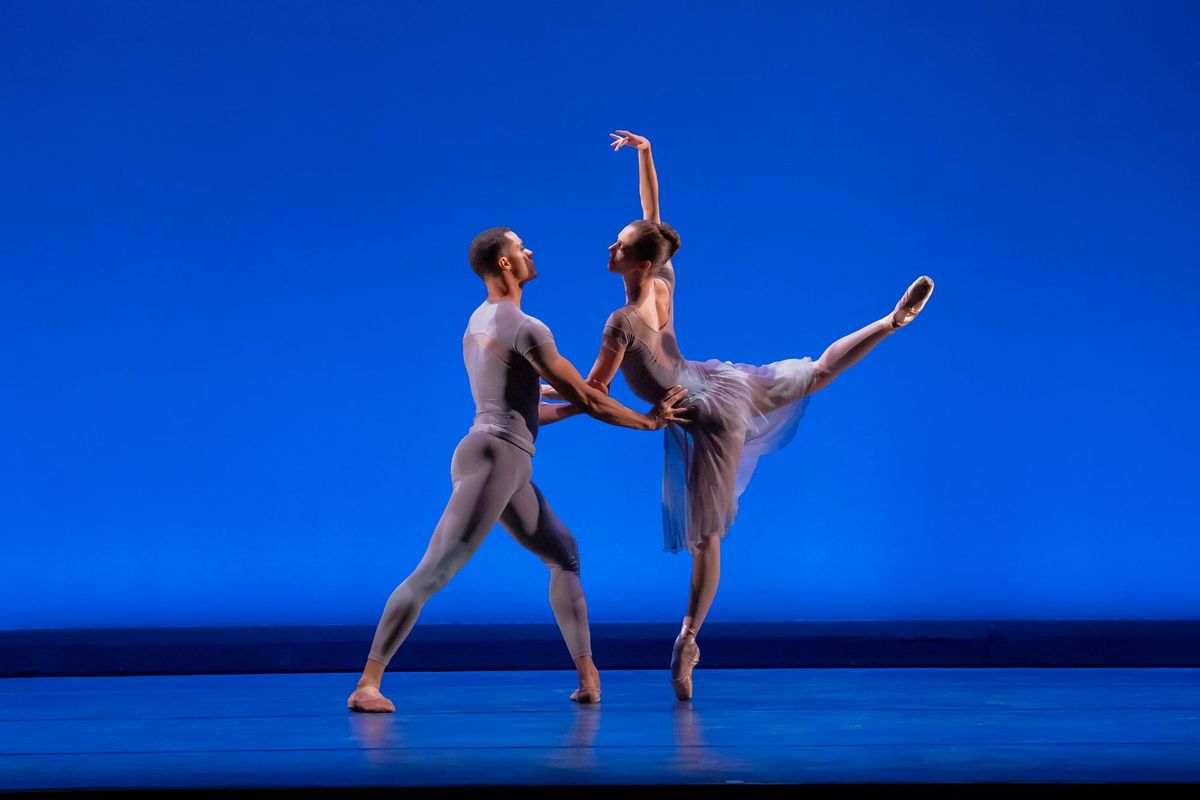
Spanning representations of fauna and flora, and mixing in some reflection of the resulting human experience, each dance drew inspiration from a particular element of the environmental challenges of today. In “Ará,” a work by Beamish inspired by macaws and need to preserve the migratory corridors of this beautiful bird species, Luciana Paris, Lloyd Knight and Benjamin Freemantle moved in swirling patterns with switching dynamics between fluid transitions and interspersed static elements. The many split lifts of Paris gave her a frequent airborne quality, adding to the appearance of the birds’ bright-hued flights.
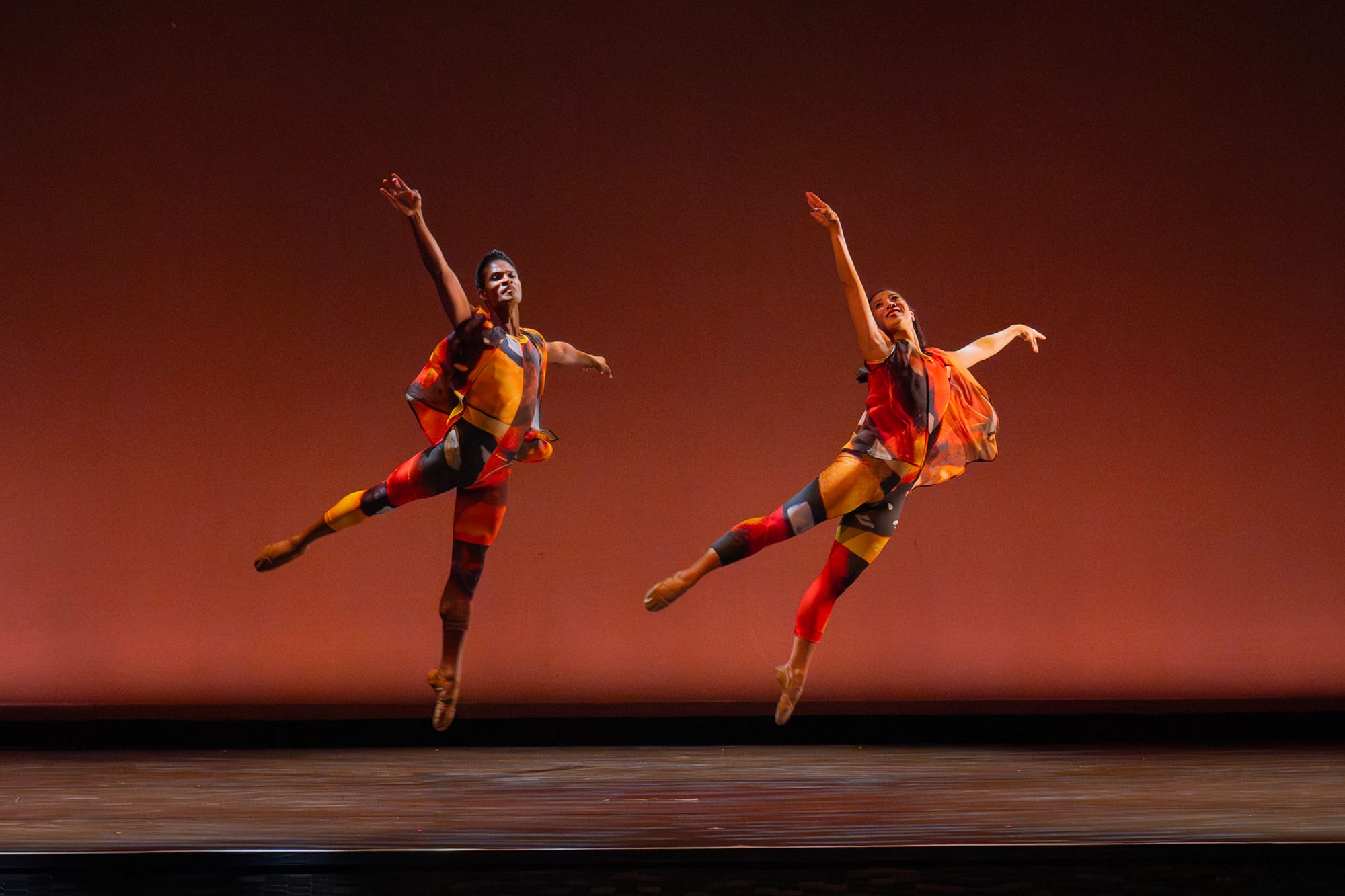
A similar display of colorful migration was the subject of Henning Rübsam’s “Monarcas” later in the program, but with a twist. Rübsam himself was part of the dance, appearing in the corner of the stage as though stumbling upon the beautiful kaleidoscope of butterflies (the program notes indicated it was precisely this event in real life, while he was on a trip to Mexico, that inspired the work). The ballet for ten dancers featured many pas de chats, sissonnes and cabrioles, which called to mind the fluttering of wings. The whimsical formations, jumps, cartwheels and colors were captivating enough that Rübsam trailed the last dancer as the group slowly moved offstage, mimicking their arm movements. The audience could relate.
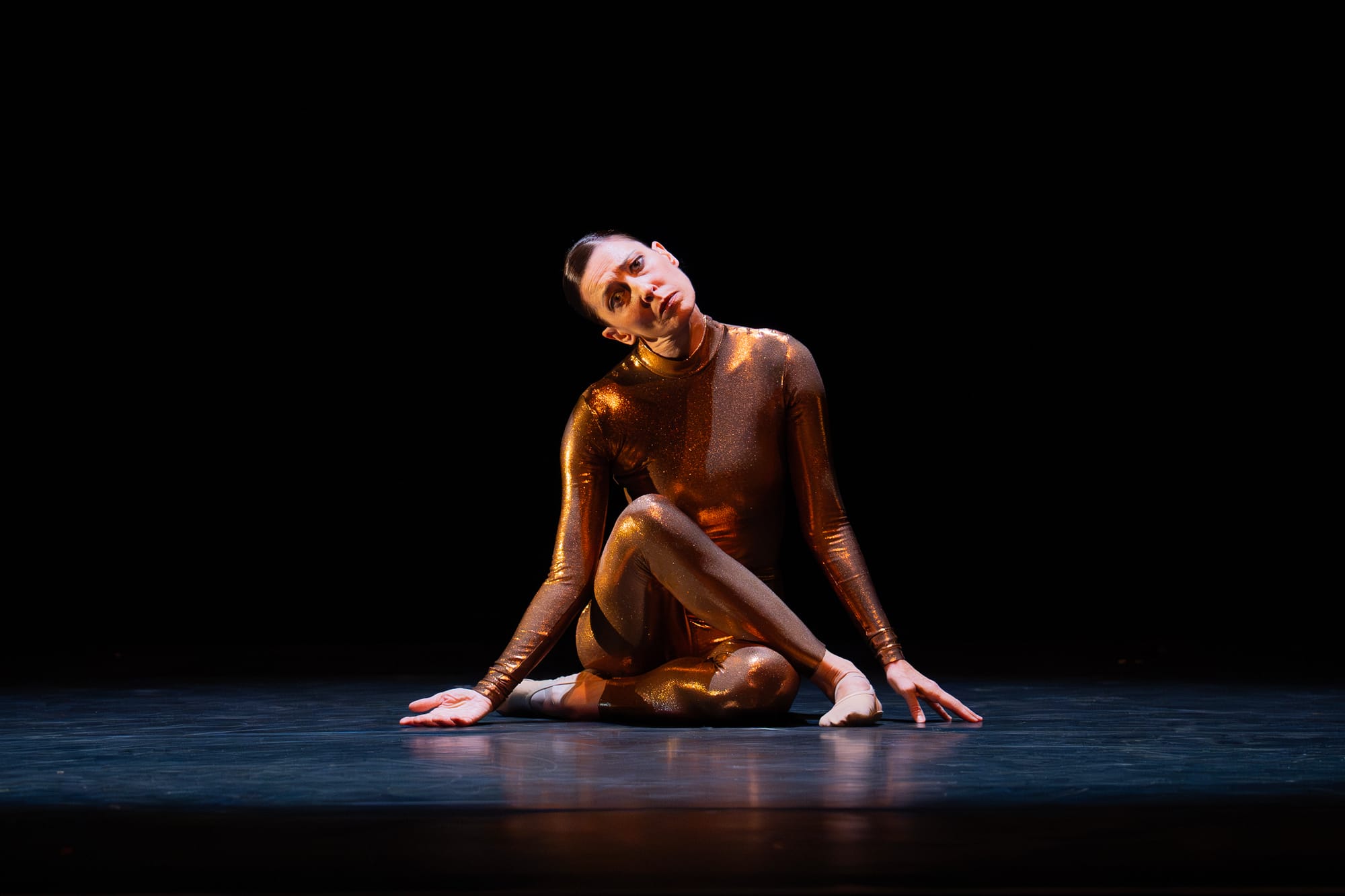
But not all the animal themes were happy ones. Beamish’s “The Golden Turtle” was about the “inner turmoil of species experiencing habitat devastation and poaching as part of the illegal turtle trade,” and was dedicated to the Burmese roofed turtle species which is near extinction and which vildwerk. works to save. Dancing a solo, Mara Galeazzi expressed a dizzying array of emotion that could not leave one indifferent. There was joy, but also so much confusion and fear, like in the moment where she covered her face with one hand to hide, just barely peaking out at the audience. Galeazzi’s beautiful plasticity conveyed a happy, but also curious existence. Drenched in a gold, conspicuous shell of a unitard, she looked too beautiful, too alluring, and also so fragile.
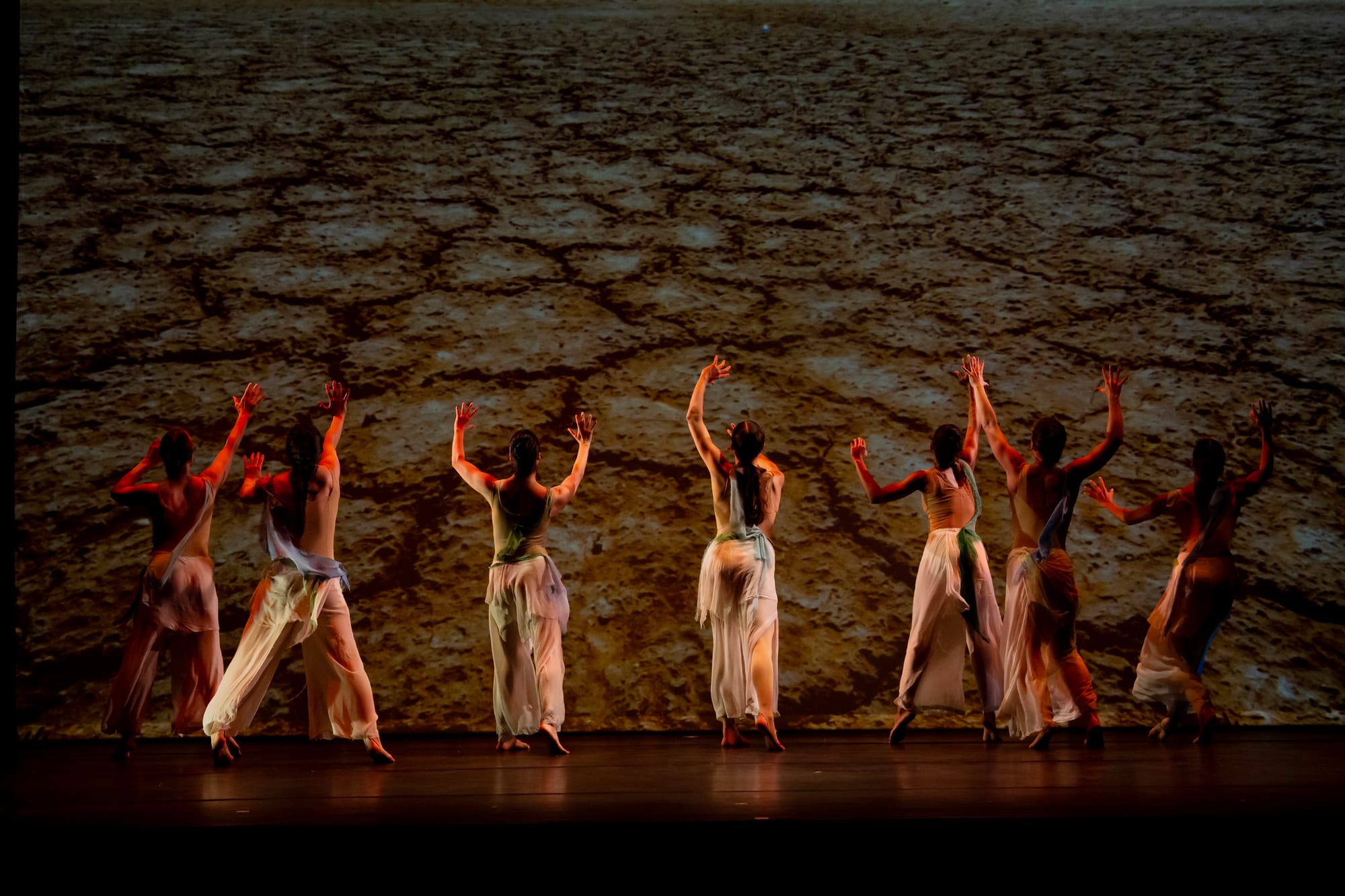
An even more heartbreaking work of the evening was among those dealing with plants. Jacqulyn Buglisi’s “Moss Anthology: Variation #5” for eight dancers with stunning projections of various images of earth – roots, moss, grass and all – was a lament for what is and what is fading. A dance full of earthiness, with crouching moves, floor spins and tapping steps, the work had an almost tactile quality to it that changed as the projected visuals took the audience to a tragic depiction of dry lands and fires.
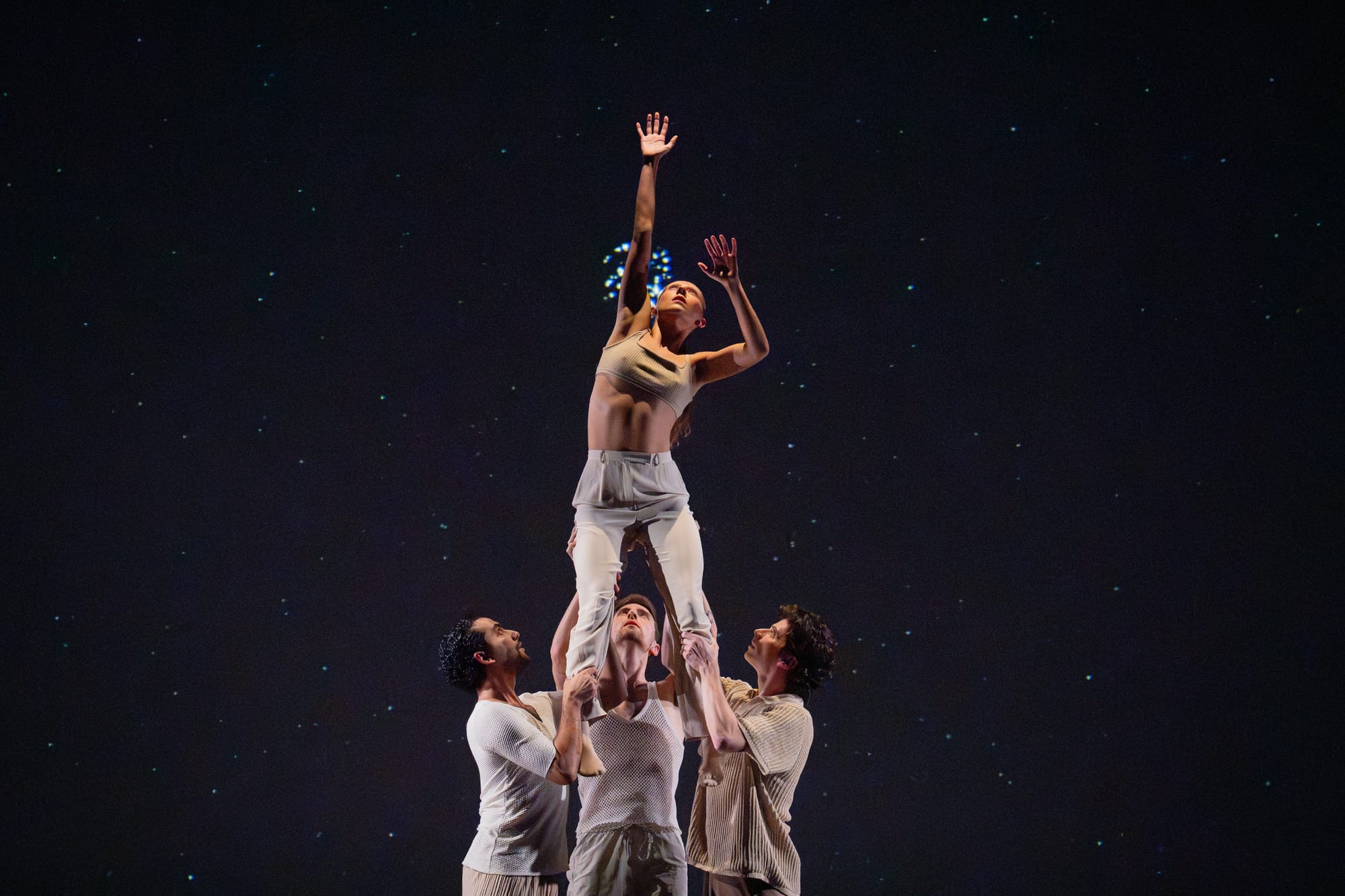
A different ballet dedicated to flora, Reisen’s “Network,” about mycorrhizal fungi and their symbiotic relationship with plant life, offered synchronized movements that at times felt primordial. The many supported lifts with dancers reaching up to the sky like sprouts or acts of prayer with almost celestial-looking graphics in the background climaxed in a silent hug for the two couples of the cast. A tender disintegration and vulnerability followed as one partner would drop down to the ground. The sadness here was more subtle.
At least as represented on stage, the human reaction to this beauty and the risks it faces was not indifference. Galeazzi’s “Toujours” was a melancholy duet reflecting on loss and extinction of being. Dancing with Jason Kittelberger, the couple could not seem lonelier onstage, even if they had each other. The dance was one of interdependence, with Kittelberger supporting Galeazzi in a multitude of intricate lifts, and desperation, as in moments like where she ran and leapt to wrap her body around him, only to slide down to the ground in grief. There were no pretty graphic projections here, and the costumes were black. It was a quiet elegy.
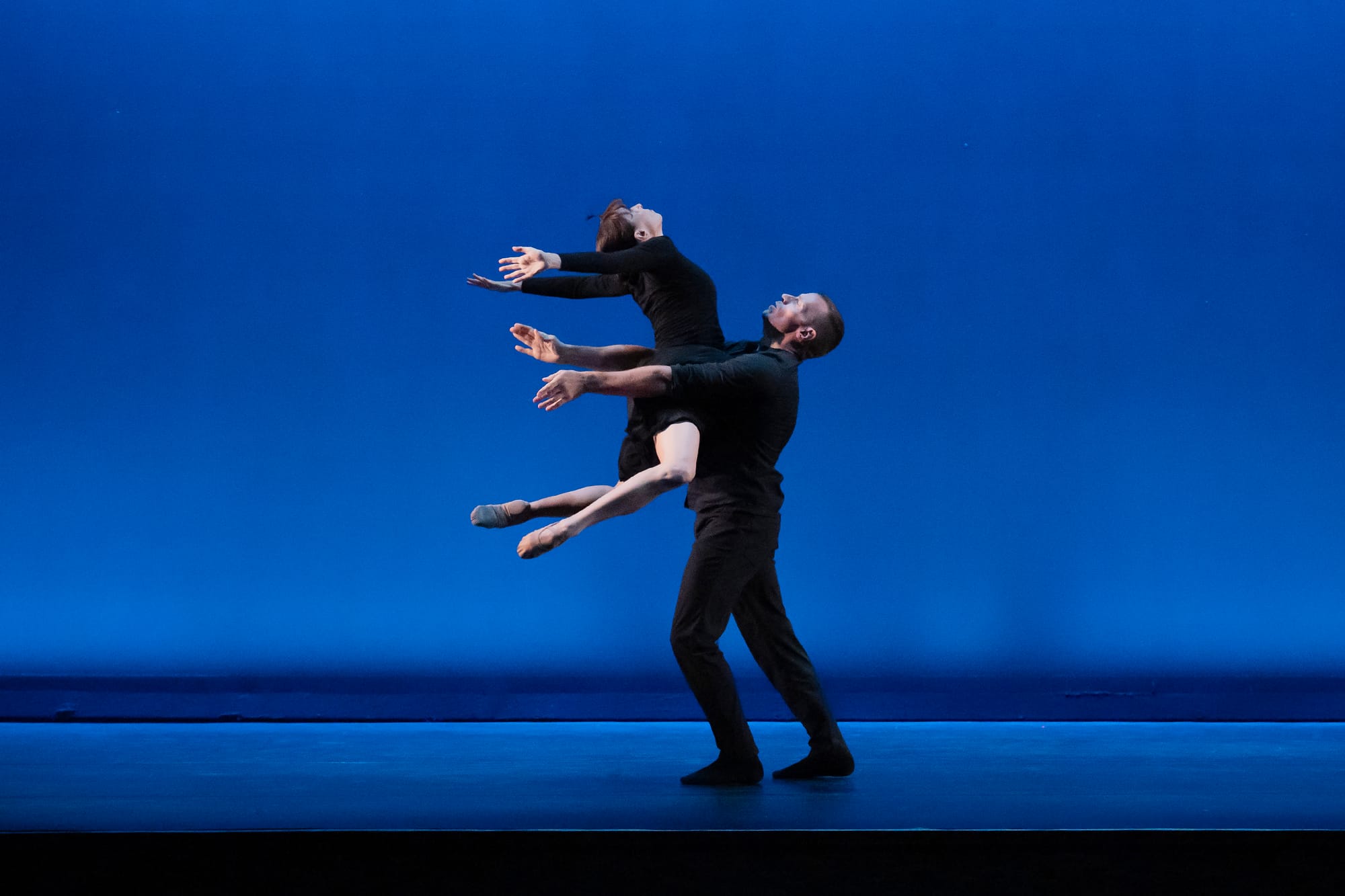
A similar sentiment echoed in Christopher Wheeldon’s timeless “This Better Earth” – a program substitution in place of a planned new work about the Mexican cenotes that wasn’t completed because of scheduling reasons. Unity Phelan, expertly partnered by Preston Chamblee, was in a class of her own dancing this classic and infused it with depth and unique identity I do not recall seeing in the role since Wendy Whelan. While it was a shame the audience did not get a Wheeldon premiere this time around, the ballet was thematically a perfect fit.
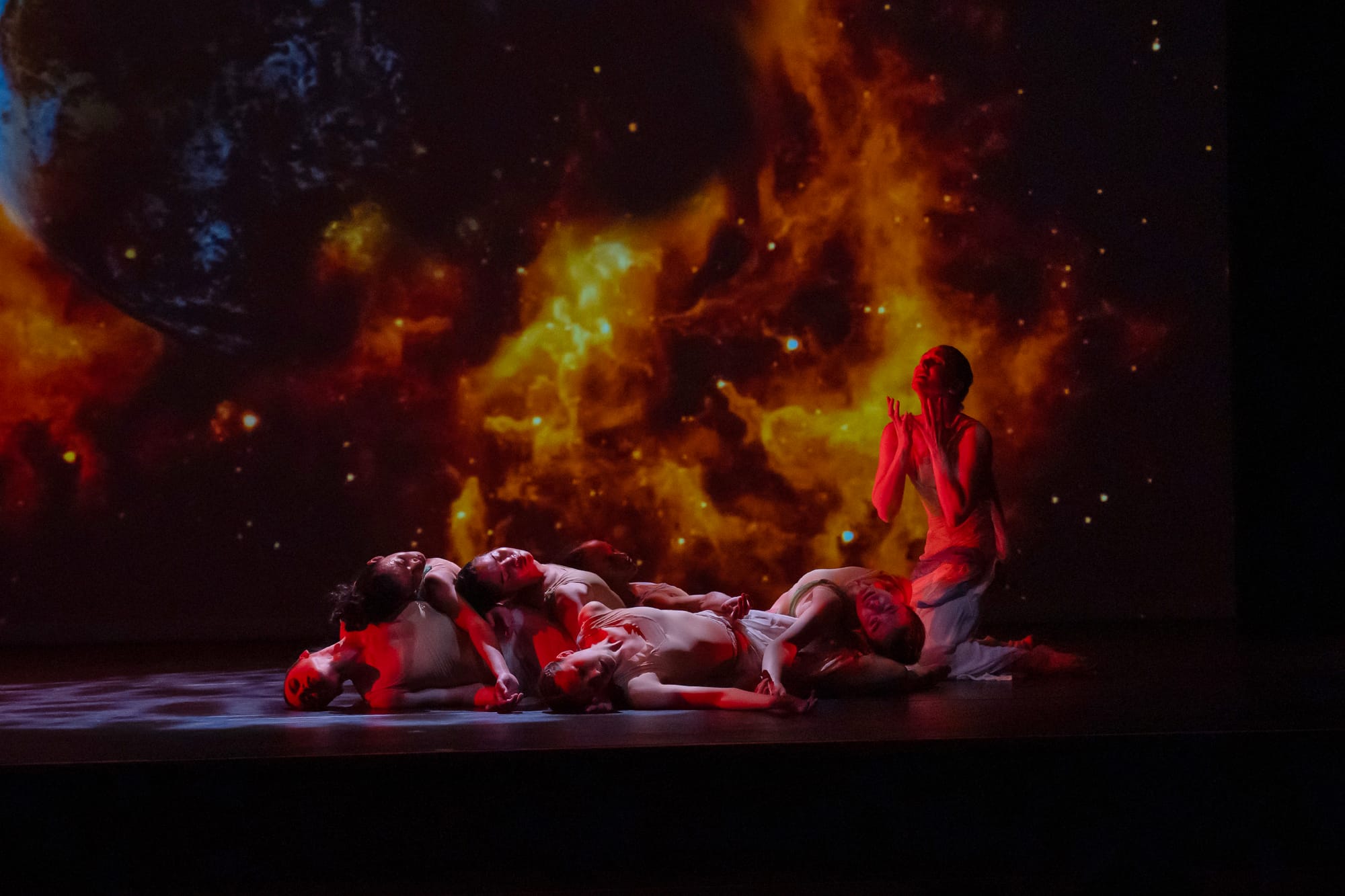
The only dance that reached too far and missed was Briana J. Reed’s “Divinity in Paradox.” The story several dancers, including Amar Ramasar, attempted to tell was of divine forces and their wishes for the planet amid climate change, and attempts to heal the world. But trying to embrace that narrative, and weave a three-act arc with themes of faith, hope and love was simply too tall of a mountain to climb in the limited time of the dance. Still, it did not detract from the night, and though an imperfect voice, still added to the conversation. “What is an ocean, but a multitude of drops?” wrote David Mitchell in his book “Cloud Atlas” – and what is a movement, but a multitude of steps? As the night proved, if they are dance steps, they are all the more compelling.
copyright © 2024 by Marianne Adams



