Celebrating Choreography with Fine Dancing
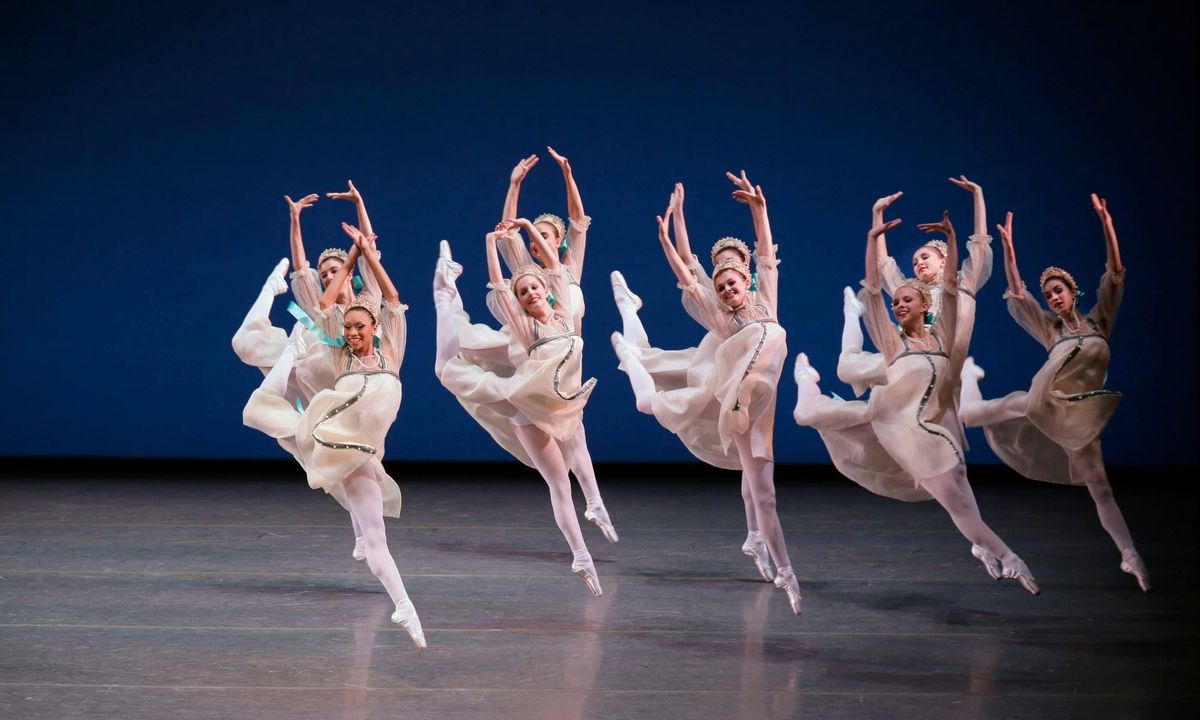
"Allegro Brillante", "Scherzo a la Russe", "Duo Concertant", "Tschaikovsly Suite No. 3"
New York City Ballet
New York State Theater
New York, NY
Sunday June 20, 2004
This all-Balanchine program promised to be a refreshing affirmation of the virtues of choreography, and in many cases, it was. Kyra Nichols danced Allegro Brillante; though she certainly does not have the ease or the power of earlier years, she still enters like a clipper ship parting the waves, blown on by the music. The nuances, the musicality, the pure dance intelligence that can make every gesture resonate, are all there in glorious form. Allegro Brillante is really a twenty-minute exercise in classical vocabulary, rather like a gloss on Balanchine’s earlier glosses on Petipa. It does not have the dramatic or emotional resonance of some of his other classical pieces, but it is a declarative statement—form, shape, and clarity are necessary. It should be required dancing for everyone in the company, even if, as happened this afternoon, someone in the corps took an awkward spill.
The future turned up in Scherzo a la Russe, danced by SAB students. The charming little exercise in the Russian folk style, with its complicated rhythms and delicate upper body movements, looked very well rehearsed, and is always a joy to see.
Duo Concertant, too, danced by Yvonne Borree and Peter Boal, looked very good. Borree does not have the sculptural form or majesty that Darci Kistler brings, but it is one of her most successful roles, and she has a bright, skittery quality that works well in the faster moments. Peter Boal is lighter too than some others in the role, but his nobility, his responsiveness to the music (just watching his face while he stands at the piano can bring me to tears), and his innate grace are unmatched.
Tschaikovsky Suite No. 3 is a compound work, which can seem like four different ballets. But since they are four wonderful works, this is not a complaint. Carla Körbes, bare-footed and hair loose, danced the Élégie with Stephen Hanna. It is one of the most beautiful things that beautiful dancer has done, sweeping and soaring, and ultimately heartbreaking. Of course, the fact that she has the most beautiful golden river of hair does help, but the passionate intensity, the final gesture “No” that seemed to originate in her spine had nothing to do with physical beauty.
Rachel Rutherford, another blond beauty, danced the Valse Mélancholique. This mysterious and slightly sinister movement is fascinating, and has mysterious little clues scattered throughout—what is really happening during the corps girls’ conspiratorial whispering? The woman seems at times to be the Dark Angel of Serenade, and at times the sleepwalker of La Sonnambula, and at all times hypnotic and dangerous. The Scherzo that follows, while full of wonderful patterns, seems more straightforwardly sunny. Ashley Bouder, with Joaquin de Luz, was in her element, using her strong center and control.
Theme and Variations was originally choreographed for American Ballet Theatre, so it was appropriate for ABT to send a guest over to dance it, and many in the audience seemed to have made their way across the plaza to cheer Angel Corella. He is certainly worth cheering for, and danced with a warmth and expressive grace. He doesn’t really have the sharp, clear turns and beats that we see in the Youskevitch film, but his jumps are juicy and thrilling. Miranda Weese, his elegant partner, was having something of an off performance, struggling through some of the turns, though the excessively fast tempo of conductor Andrea Quinn might be partly to blame. Still great choreography is something to cherish, even if it is a challenge.
copyright © 2004 by Mary Cargill



