Can't Rain on Her Parade
"Coppélia"
New York City Ballet
David H. Koch Theater
New York, NY
May 24, 2026
Though the dreary, rainy Memorial Day weekend weather didn’t cooperate, the theatre was warm and sunny, as Megan Fairchild said goodbye to NYCB dancing a bright, confident, and luscious Swanilda. As I was leaving, I overheard a man saying this was his first ballet and why on earth was she retiring—a question anyone in the audience might have asked, as Fairchild sailed through the three acts with seemingly effortless ease. It was a glorious afternoon, but a sad one too, and when the Burgomaster (Lars Nelson) mimed so clearly, “I have watched you grow up from a little child to a beautiful woman” it struck me that I had watched her from her student days and now she too was grown up and leaving. It seemed like such a short time ago that I saw her first, when she sparkled through her “Divertimento No. 15” solo at the 2001 SAB performance, dancing with a pristine and fearless clarity and a wide-eyed, guileless charm.
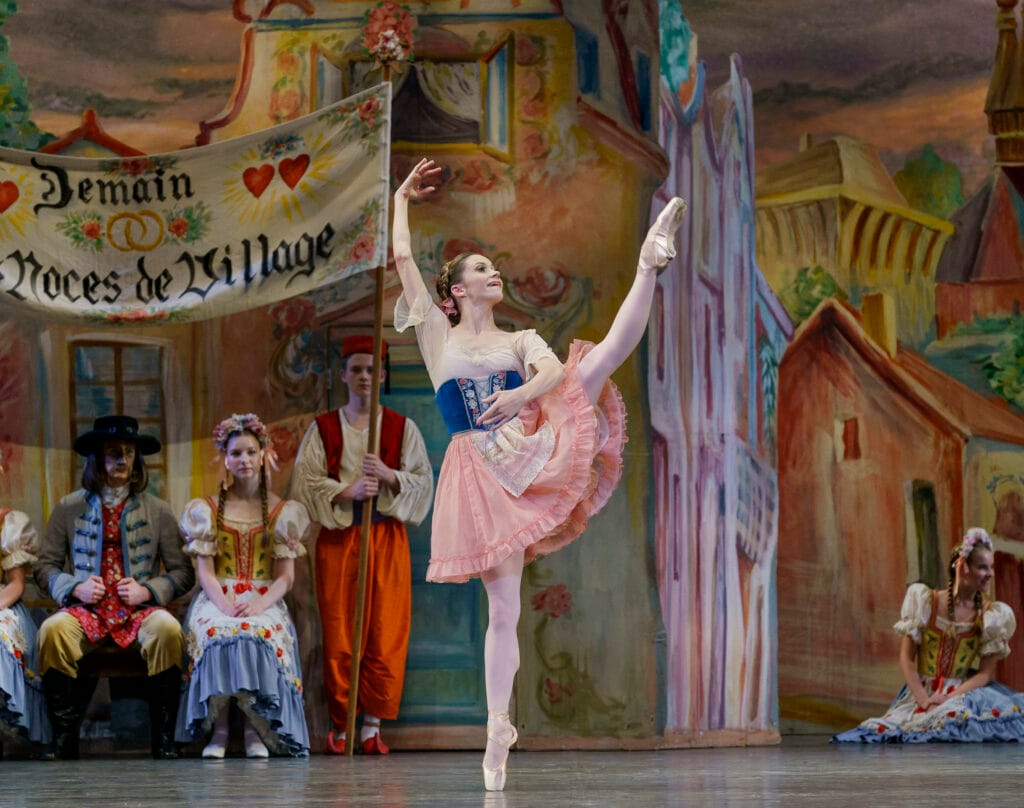
She kept that charm throughout her career, and during the wild ovation that greeted her quiet entrance in “Coppélia” as she crept on stage, looking around, begging the stranger on the balcony to come play with her, she looked incredibly young and fragile. The gentle pathos of the wheat dance, when she feared that Frantz (Joseph Gordon) wasn’t in love with her, had a singing lyrical quality as if she were being pulled by the music which was tied to her heart. The final pas de deux was radiant—she, like Aurora, had grown up, though she was still fun loving, playing with her skirt and breaking into a breathtaking series of turns.
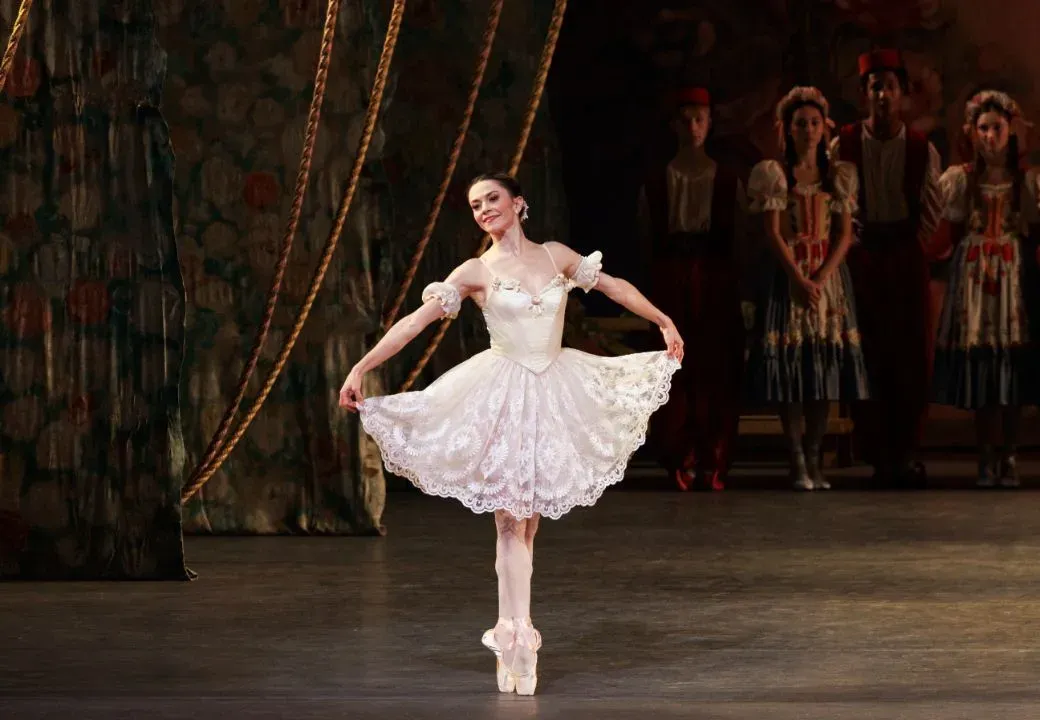
The couple danced the adagio like it was a declaration of trust, softly leaning into Frantz and reaching her hand out knowing he would catch her. The lovely and complicated series of lifts were looked effortless and the lyrical little grace notes of the slow descent made a picture of perfect partnership and a statement of their happy future life. (Which fortunately will have plenty of money, thanks to the Burgomaster’s generosity—those old stories were quite clear eyed about the problems of love in a cottage.)
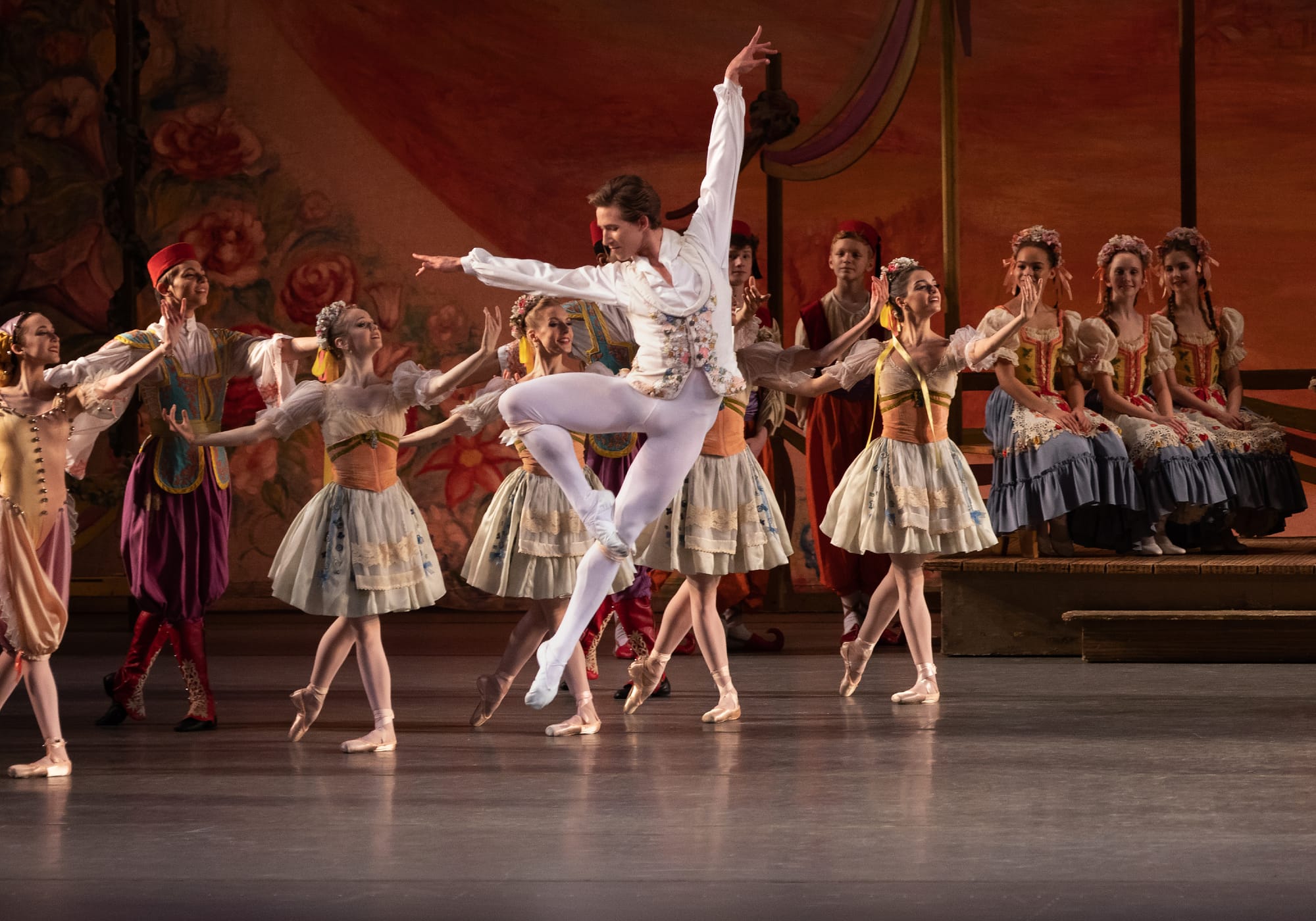
They were also unsentimental about men, and Frantz is really a bit of a jerk. This production has softened him a bit; he now seems to be asking Dr. Coppélius for some money rather than simply mugging him, and he doesn’t stab the butterfly with exceptional vigor. Gordon’s Frantz had all the appeal of a good natured high school football captain and his honesty about loving two women at once was very funny. His dancing, full of jumps and impressive spins, was both elegant and carefree.
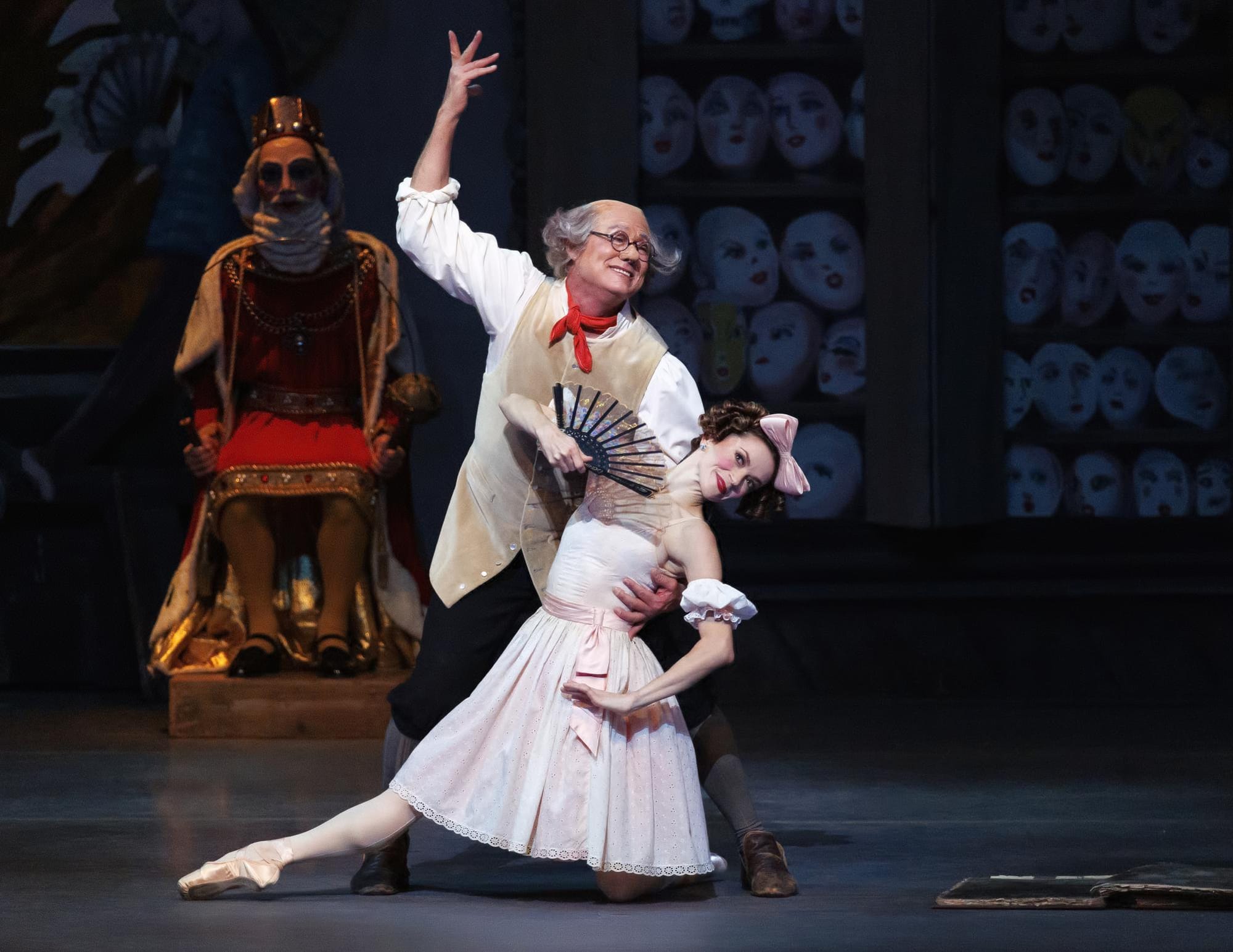
Poor Dr. Coppélius (Robert LaFosse) was neither elegant nor carefree, but LaFosse gave him a pathetic, if sometimes sinister, dignity. He was fussy and persnickety, walking in set lines, fussing about his key, losing his temper at the raucous boys, and completely believable. His pathetic rapture in the second act, his blind worship of his own creation, and his shattered disillusion when he realized what Swanilda had done were brilliantly done, an echo of the Gothic darkness of original story. I do wish Balanchine had given Swanilda a chance to apologize in Act III, as some other versions do, but the Doctor did seem happy with his financial compensation, though he could have stayed around for the celebrations—he missed some fine dancing as the company pulled out all the stops for Fairchild’s farewell.
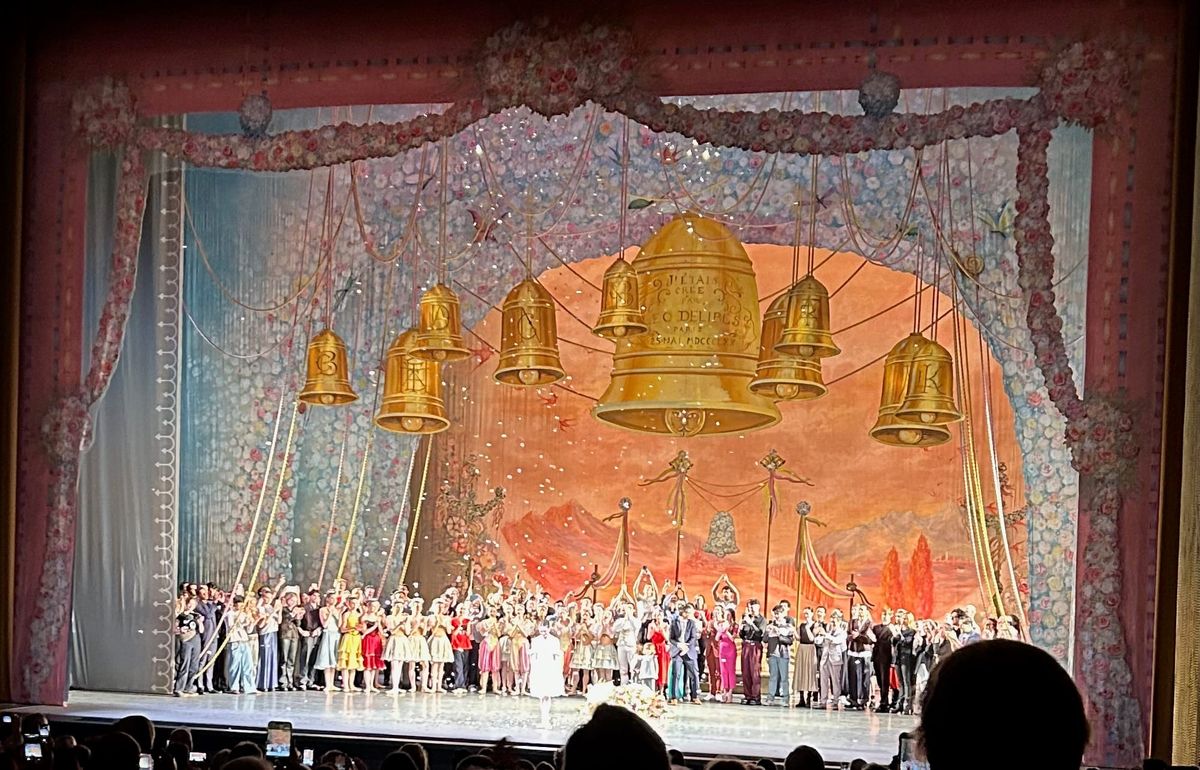
LaFosse did return for the curtain calls, though, bowing low to honor his Swanilda. There was a genuine sense of celebration, as dancers, retired dancers, and family (Fairchild’s daughters were enraptured by the confetti) walked on with bouquets. Daniel Ulbricht even brought a tambourine to celebrate their many sparkling “Tarantellas”. Her brother Robert Fairchild and her frequent partner Joachim de Luz both got a big round of applause as the audience recognized them, and Fairchild even got to dance a very abbreviated Rose Adagio with three men bearing single roses. And then it was over, the thanks and the tears and the beauty a happy memory.
© 2026 Mary Cargill



