Broken China
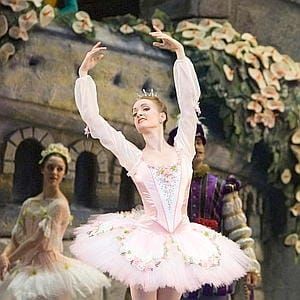
"The Sleeping Beauty"
American Ballet Theatre
Metropolitan Opera House
New York, NY
July 9, 2011, Matinee
"The Sleeping Beauty", the grandest of ballets, is the final program of ABT's summer season. The much-maligned production has improved markedly since its 2007 premier, but it is still profoundly flawed. The sets and most of the costumes tend to minimize the production; the sets by their general tackiness and boxiness, which limits on the dancing space, and the costumes by their garish colors and peculiar faux-medieval style. The worst aspect, though, is the chopped-up choreography. Most of the set-pieces are there--the Rose Adagio, most of the fairy variations and the final pas de deux, but the serene architecture of the prologue has disappeared, and the 1952 Soviet version has been substituted, with lots of ungainly lifts. It is like watching a set of china being smashed--parts of the pattern are recognizable but the pieces don't fit together.
Fortunately, the pieces included some elegant dancing. The Prologue is a company effort--Aurora and her prince don't come on until later in the evening. The various fairies, encapsulating Petipa's ideas of feminine beauty, were elegantly danced, especially by Isabella Boylston in the second variation, and Simone Messmer in the final, the so-called finger, variation, where she kept the often accusatory gestures to a minimum. It was wonderful to see the luminous Zhong-Jing Fang back on stage (she danced the fourth variation) but this version has the poor girl fluttering for all she is worth every time she is on stage (even unto the third act), and the Fairy Ants-in-Your-Pants approach grew tiresome. Veronika Part's Lilac Fairy, I expect, could never grow tiresome, even with the extraneous third act solo. It is a rare and glorious privilege to see someone dance a role for which she seems to have been born; her movie star beauty, her lush and generous quality of movement, and her radiance made her Lilac the epitome of goodness. She even made the silly moment in the first act where she has to cradle the baby and avoid tripping over the christening gown warm and lyrical. It is too bad that the Prologue's drama is so muddy--the production doesn't let the fairies give the Princess gifts, they all (including Lilac) just gesture aimlessly at the crib before their solos, so the idea that the Lilac Fairy has a gift to spare, saving the Princess, disappears.
The baby grew up to be Gillian Murphy. Her natural authority and command worked against her first act Aurora, and the rose adagio, while well-danced, seemed a bit dry, and she didn't seem very interested in her prospective husbands. Her vision scene, though, was radiant; it is such a shame she doesn't have the opportunity to dance the more familiar choreography with the magical reverse devloppes. She was completely at home in the final act, where she embodied the grandeur and majesty of the choreography (though the sequined toe shoes were an unfortunate touch, since her dancing glows without needing any artificial glitter).
Marcelo Gomes was her Prince. His dancing is at that magical moment when technical ability and emotional maturity meet, and his Désiré was warm, detailed, and impeccably danced. The production does him no favors, but he did manage to convey Désiré's fundamental character despite having to prance around with his friends during the overture and leap around during the hunting scene. This production has him playing blind man's buff, and, while blindfolded, see a particularly unappealing vision of Aurora's castle. The traditional version has the disaffected Prince rejecting the Countess's invitation and mime his loneliness while the courtiers frolic, setting up his decision to remain behind while everyone else goes a hunting.
This makes his meeting with the Lilac Fairy, where she asks him why he is so sad, and he says "Because I have no one to love" one of the emotional high points of all of ballet. It is to Gomes' credit that, despite having to jump around happily during the hunt scene, he and Part made the conversation so moving--if only she could show him a real vision of Aurora, instead of that tacky castle. Désiré still gets caught in the spider web and stabs Carabosse in a hokey effort to create some pretend drama. The destroys the true dramatic high point, Aurora's awakening, which is a metaphor for love triumphing over a narrow, blinkered justice. But since Carabosse is already a corpse, it really doesn't matter if Aurora continues her snooze or not. But despite the best efforts of this production, these dancers did triumph, but then their dancing would make even a paper plate look elegant.
copyright © 2011 by Mary Cargill



