Blessed
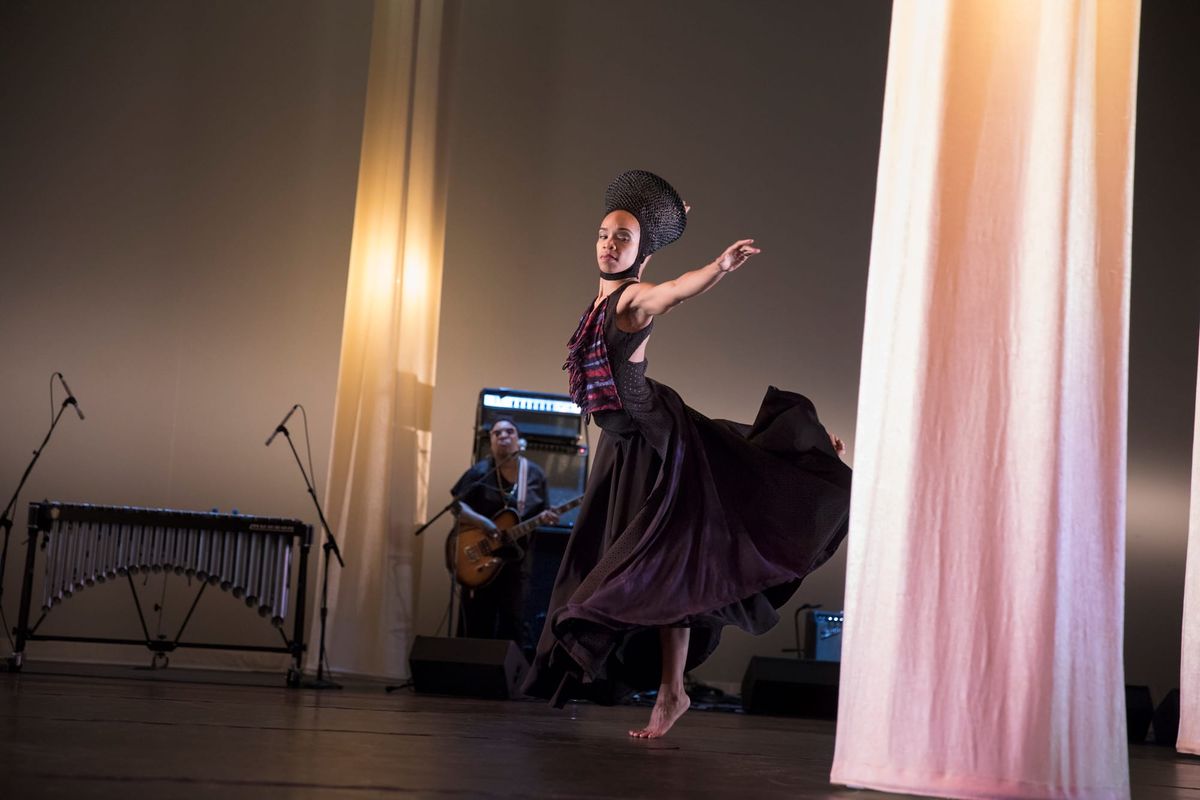
“Grace and Mercy”
Ronald K. Brown/EVIDENCE
Sosoff Theater, Fisher Center at Bard College
Annandale-on-Hudson, NY
July 5, 2019
What follows “Grace,” for Ronald K. Brown? Mercy, of course. In the world premiere of a well-balanced two-part performance at Bard College’s Fisher Center, Brown and his company, EVIDENCE, combined the 20-year old classic “Grace” with a new work, and added live music, to make for a beautiful full-evening length combination. Brown’s original work, choreographed for the Alvin Ailey Company in 1999, is part of that company’s core repertoire, and has retained all of its power over the years. EVIDENCE, though, does it just as much service, with their fluid execution of Brown’s characteristic mix of modern and African-inflected dance, using musical rhythms to both punch and flow.
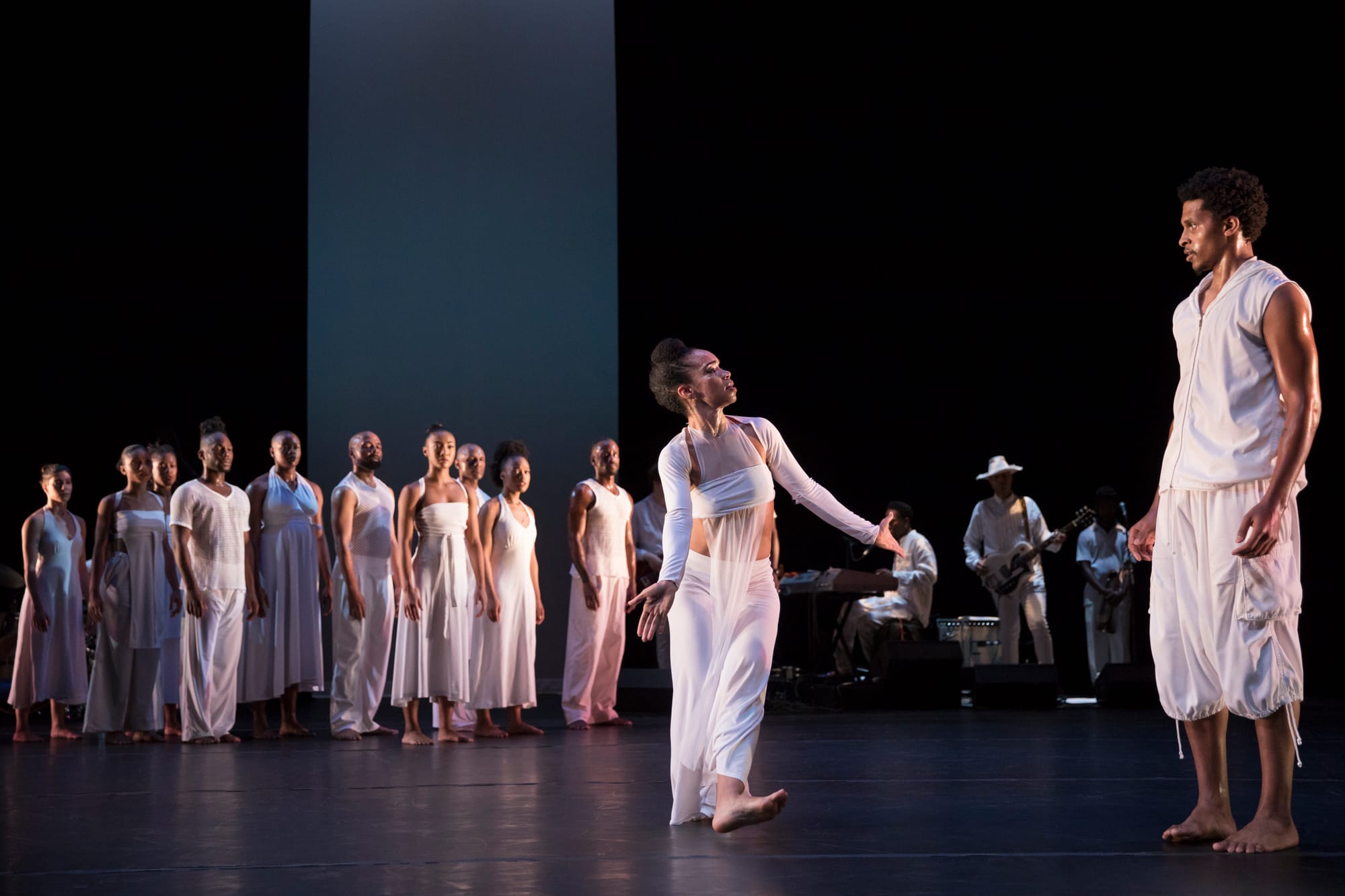
Combining the titles of these two independently choreo- graphed works added a layer of responsibility for Brown, and for the composer of the “Mercy,” Meshell Ndegeocello. The phrase suggests a Christian ethic, and the paired work embraced that ethic. The original “Grace” did as well, but there, Brown combined the sense of the religious state with the physicality of gracefulness. When the supremely elegant Annique Roberts entered in a flowing white costume and stood, tall and still in the center of the stage at the work’s opening, she was grace’s personification; and throughout the work she – and the company who danced with and around her – inhabited the quality. Roberts opened “Mercy,” as well, but it took some time to frame the second work as its meaning.
The addition of live music in this program was powerful on every level. In “Grace,” the terrific original (recorded) score included work by Duke Ellington, Roy Davis Jr., and Fela Anikulapo Kuti. Here, that same score was beautifully performed and reinterpreted by Peven Everett and Gordon Chambers, and the energy of live performers on stage added a new depth and connection between the movement and the music. The musicians were arrayed upstage on either side of a large stage opening, framed by a pair of tall flowing curtains. That single central opening was where Roberts and all of the performers entered and exited. Couched between the tall curtains and two sides of musical instruments, the dancers’ bodies looked small – but it made the grace and elegance of their movement seem even more majestic.
In “Mercy,” the stage was split with five tall fabric columns, and Ndegeocello and her band were arrayed across the entire upstage area, but were seen through those columns as if through a forest. Instead of the centered entrances the dancers of “Mercy” came from the wings downstage, horizontally presented. Roberts also entered first, now in a black costume and a tall black crown of cloth making her appear taller. To the soft opening of the music, her movement was slow and haunting. The lyrics of Ndegeocello’s breathy song wafted in with literal accompaniment (“have mercy on me,” “look at all the light I bring.”)
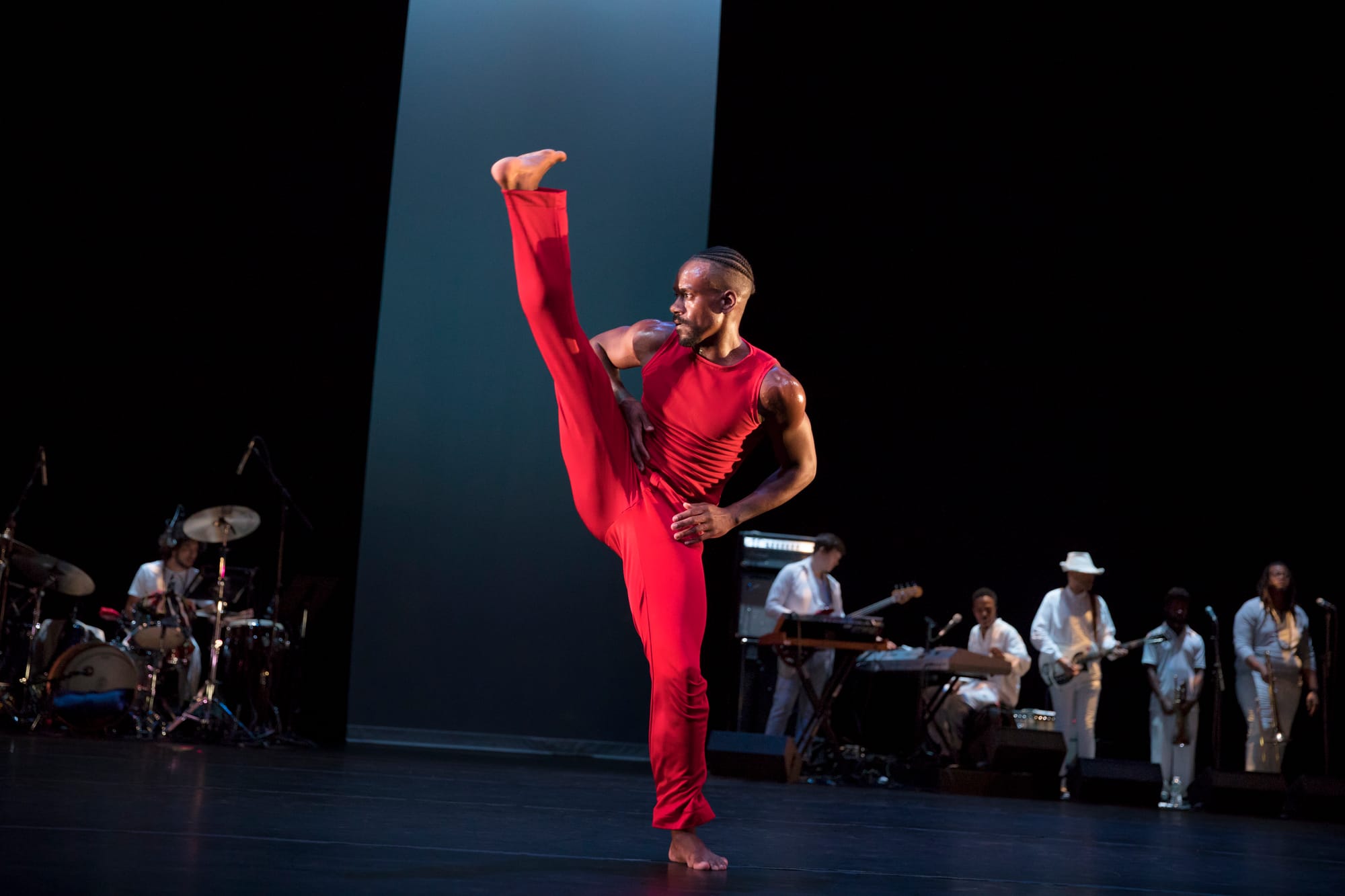
The other dancers entered in singles and pairs, and wound around the forest of columns, their turns and leaps lighter, more like levitation than the bounding movement of “Grace.” As lines formed diagonally on the stage, their movement transformed from solo combinations into parallel dances, each twirl and swivel echoed along the line. Just as quickly, the lines melted. They were a tribe of dancers wholly in community, but also each alone.
In a subtle visual trick, the staging of the paired works offered the most deeply Christian image of all. The shape of the stage and dancers in “Grace” was primarily vertical – the entrance down the single center line of the stage, and the ending, as the full company paraded majestically back through that center opening. With that vertical image still in our minds, the shape of “Mercy” – almost entirely horizontal – suggested an enormous cross on the stage, linking the two works and the two ideas, with their traditional religious root.
Brown’s movement vocabulary is familiar, comfortably and smoothly shifting between the African movement his dancers inhabit so fully, and rigorous modern Western vocabulary. The leaps, kicks, and twirls meld with smoothly swiveled hips and endless variations of hands and arms, lifted or rotated. Many of the movements looked like prayer – wrists twisted and fingers up stretched, at the end of graceful arm movements in any direction. Brown’s dancers also used their necks and backs with a kind of fluidity that changed the way their limbs presented – the same raised arms or tall posture took on an entirely different effect, when combined with their undulating, graceful spines. Watching this company is often mesmerizing; sometimes breath-taking — as was “Grace and Mercy.”
In this riven political moment, “Grace and Mercy” are particularly welcome in any form, and certainly as offered so generously by Brown and EVIDENCE. This smoothly integrated movement, weaving such different traditions with power and fortitude, was as artful a gift as we could wish.
copyright © 2019 by Martha Sherman



