Black and White and Red All Over
Fall Gala
"Capricious Maneuvers", "Neverwhere", "Spectral Evidence", "Western Symphony" (4th movement)
New York City Ballet
David H. Koch Theater
New York, New York
September 17, 2013
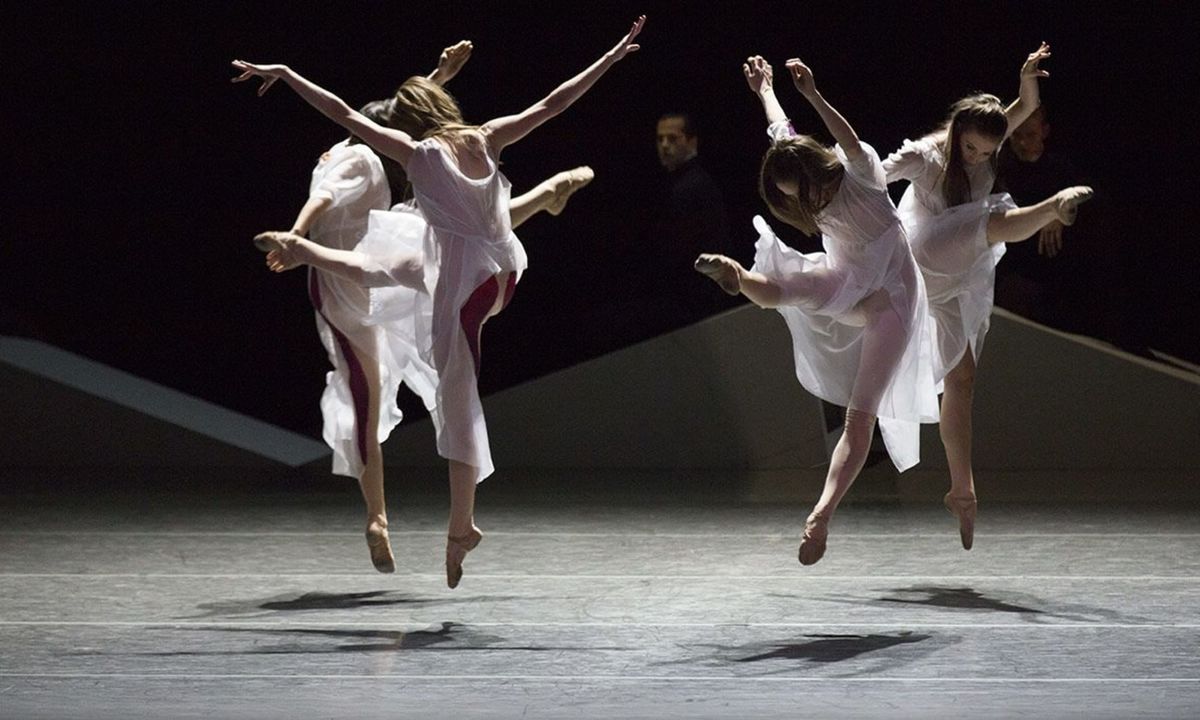
NYCB's fall gala focused on new works, with costumes by fashion designers, presumably to pull in a fashion-conscious audience with lots of money. Each new work was introduced by a short film of the designer talking about his/her process, very "Project Runwayish". Black, white and red were the colors du jour, which made a change from last year's Valentino red excursion. After saluting the orchestra with John Adams "Short Ride in a Fast Machine", the intermissionless evening began in earnest with Justin Peck's "Capricious Maneuvers". The costumes (black, white and red) were designed by Prabal Gurung and the music was Lukas Foss. Peck was in his Robbins' mood, with the musicians on stage, an odd number of dancers (three women, two men), and lots of youthful frolicking. The dresses were quite attractive, knee-length and sassy, and moved beautifully. The choreography was lighthearted and musical, but rather anonymous. Even Taylor Stanley and Britanny Pollack, two of the most intensely individual of NYCB's young dancers, couldn't make their pas de deux look like a conversation.
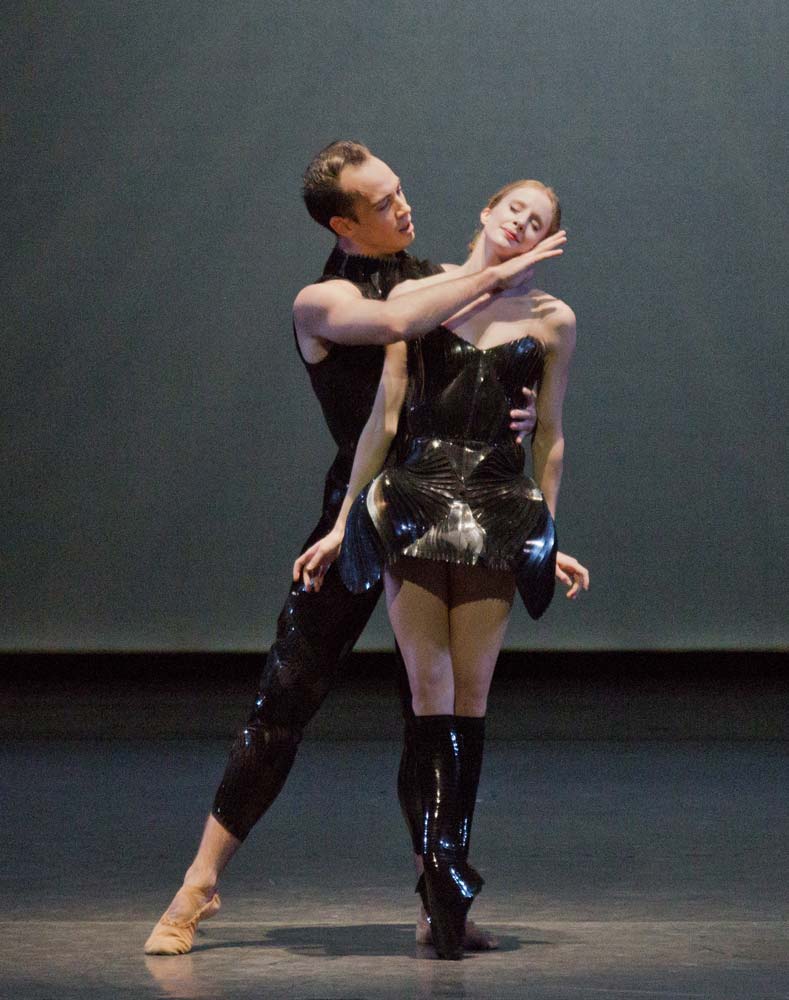
Benjamin Millepied's "Neverwhere" (one of his overly-cute titles) had designs by Iris Van Herpen, black, short, and shiny. The introductory film made much of the problems of adapting the black plastic three-dimensional shapes she came up with to dancewear, but the final result looked like black sequined spandex, with the girls in short panniers and black boots, which looked quite striking when the lights hit them. The lighting (by Mark Stanley) was also striking, making a triangle of light to introduce the different movements. The choreography wasn't as memorable, as the six dancers ambled through it with stony faces. Tyler Angle and Sterling Hyltin had a rather lengthy pas de deux, which showed off her delicate floating quality, but ended inconsequentially.
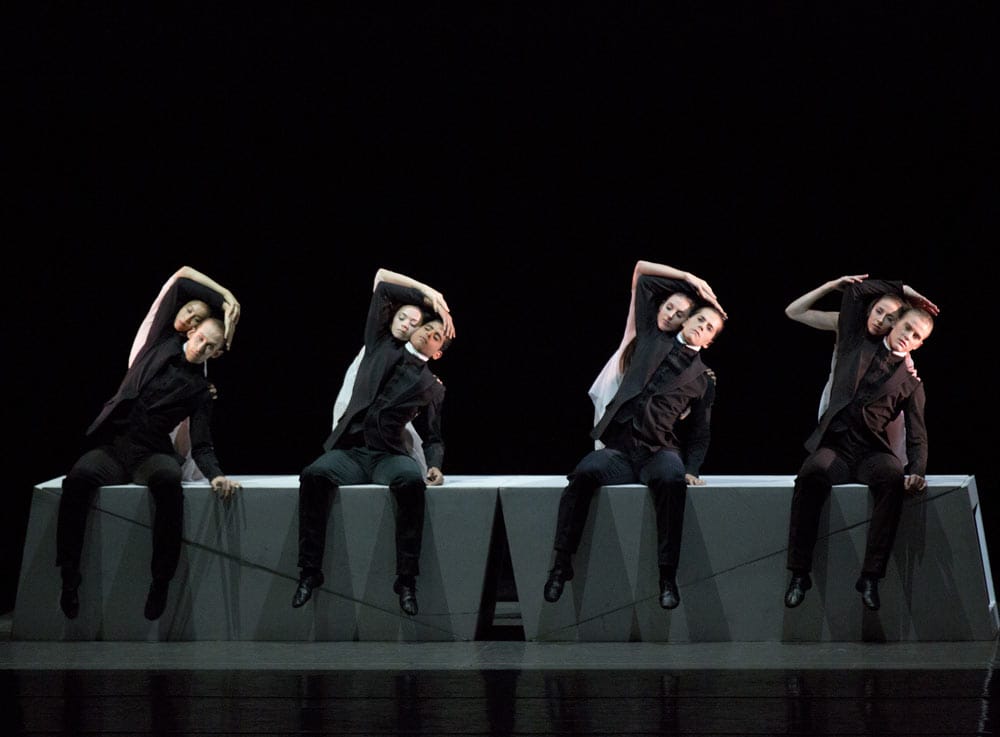
Angelin Preljocaj's "Spectral Evidance", on the other hand, was full of meaning, not all of it clear. The introductory film mentioned the Salem witch trials, and the four men (in black with slicked back hair) looked quite severe and judgemental. The four women wore white nightgowns with bloody skeleton's etched on them, and seemed to be variously victims and aggressors. The setting, four white boxes, was stunning, as they moved around, reflecting the light, suggesting at various times, a barrier, a pulpit, or a coffin.
One of the men, Robert Fairchild, seemed to try to break free from the general male severity, dancing with Tiler Peck, but the effort apparently unhinged him, and he had a complete breakdown, mouthing the words of the recorded music (by John Cage) while flailing uncontrollably. Fairchild was absolutely chilling. Then the four women returned, the white boxes became their shrouds as they were burned at the stake. The lighting, red and yellow flames, consumed them very effectively, and it was an unforgettable image, if not entirely uplifting. Their souls, though, returned at the end, to haunt their judges.
This was followed immediately by the finale of Balanchine's "Western Symphony", with Maria Kowroski at her daffy best, courted by Zachary Catazaro in a spirited debut. Balanchine's rigorous craftmanship and witty musicality was almost too much of a shock after the dark, trendy despair of the Preljocaj, and the audience seemed a bit stunned, though certainly glad to see something in technicolor. But presumably the gala generated a lot of green, along with the red, white, and black.
copyright © 2013 by Mary Cargill



