Bits and Pieces
"The Kingdom of the Shades", "Rhapsody Pas de Deux", "Grand Pas Classique", "The Sleeping Beauty, Act III"
American Ballet Theatre
New York City Ballet
David H. Koch Theater
New York, NY
October 25, 2025, evening
The program, entitled “Classics to the Contemporary”, had selections from three works ranging from the Shades scene from Marius Petipa’s “La Bayadère” (1877), the final act of his “The Sleeping Beauty” (1890), and a brief pas de deux from Sir Frederick Ashton’s “Rhapsody” (1980). The only complete work was Victor Gsovsky’s “Grand Pas Classique” (1949), a monument to virtuosity—if gladiators danced ballet, this is surely what they would perform. Without context and framing, the excerpts, no matter how well-danced, seemed a bit limited emotionally, and the evening had a bit of a variety show feel, as dancers appeared, performed their piece, bowed, and were followed by yet another unrelated dance.
Even out of context though, the Petipa’s Shades scene was luminous, as those pearl-like dancers showed off arabesque after arabesque, with a few small pauses and wobbles. The opening choreography is always stunning, showing the magical simplicity of repetition and shimmering straight lines. Léa Fleytoux, Fangqi Li, and Elisabeth Beyer danced the three solos. Fleytoux sparkled in the hoppy first solo and her relevés across the stage looked like they were strong and steady enough to climb back up the Himalayas, Li was heroic in the painfully slow second solo, holding her leg up steadily while waiting for the music to catch up, and Beyer’s elegant upper body made the third solo gleam.
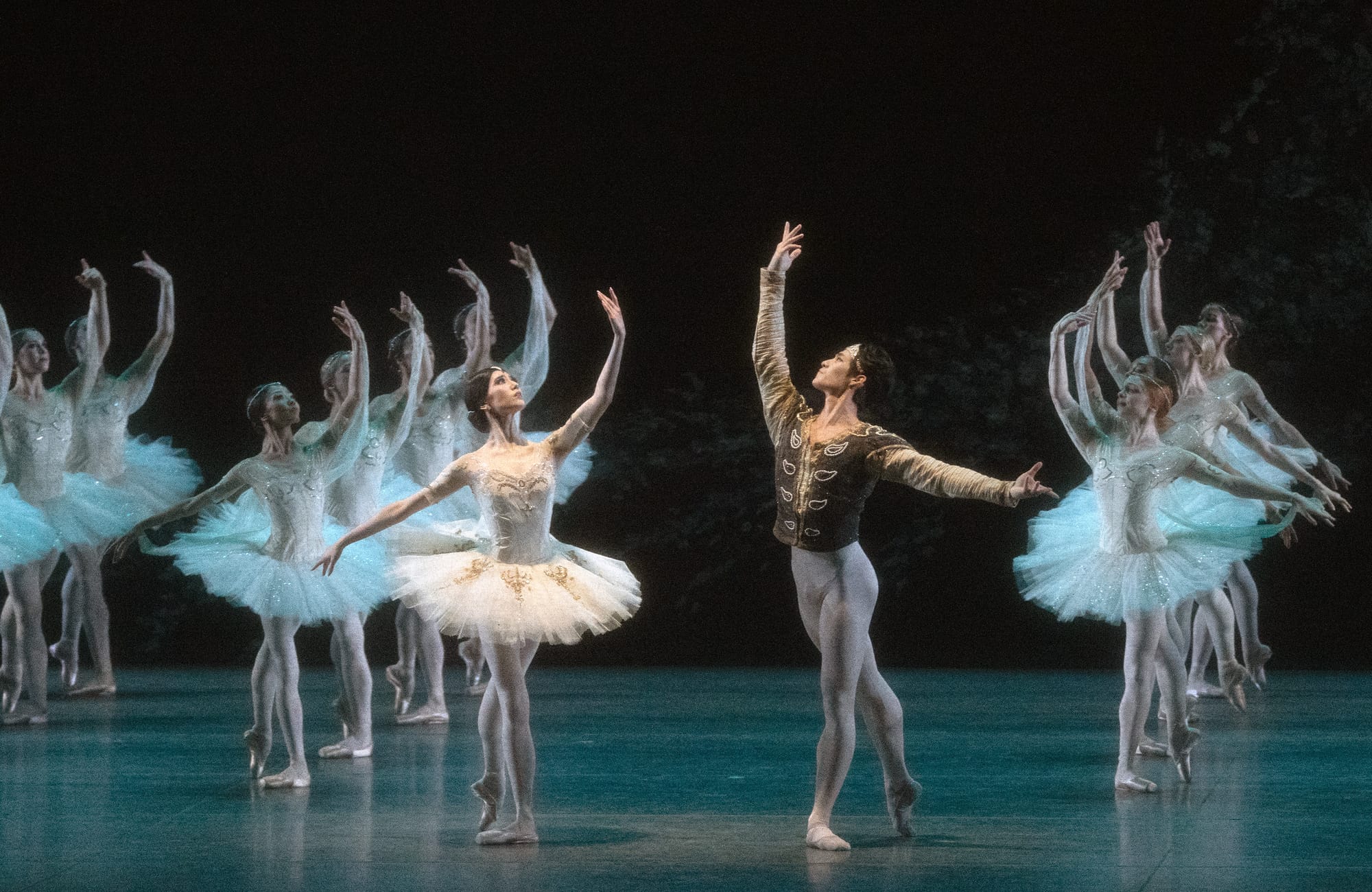
Chloe Misseldine and Joo Won Ahn danced the couple formerly known as Nikiya and Solor; Ahn has danced the complete “La Bayadère” before, but this was Misseldine’s debut. Ahn’s experience showed, as he rushed on in a desperate frenzy; he clearly understood the back story and he had left his sometimes impassive demeanor behind with that tiger. His solos were vigorous and his jumps clear and powerful, with thrilling double tour assembles. Misseldine was a warm and loving Nikiya—the lack of context would have made the traditional distant ghostly vision difficult to understand. She gave her dancing a lovely moonlit flow with flowing arms and, though she did struggle a bit with pirouettes in the scarf dance, ended with a flourish of turns. The tacked-on ending with its echos of “Swan Lake”, as the two posed for eternity in a leafy grotto, was a bit of a let-down, and made little sense because the audience had no way of knowing who they really were; besides the corps deserved the final word.
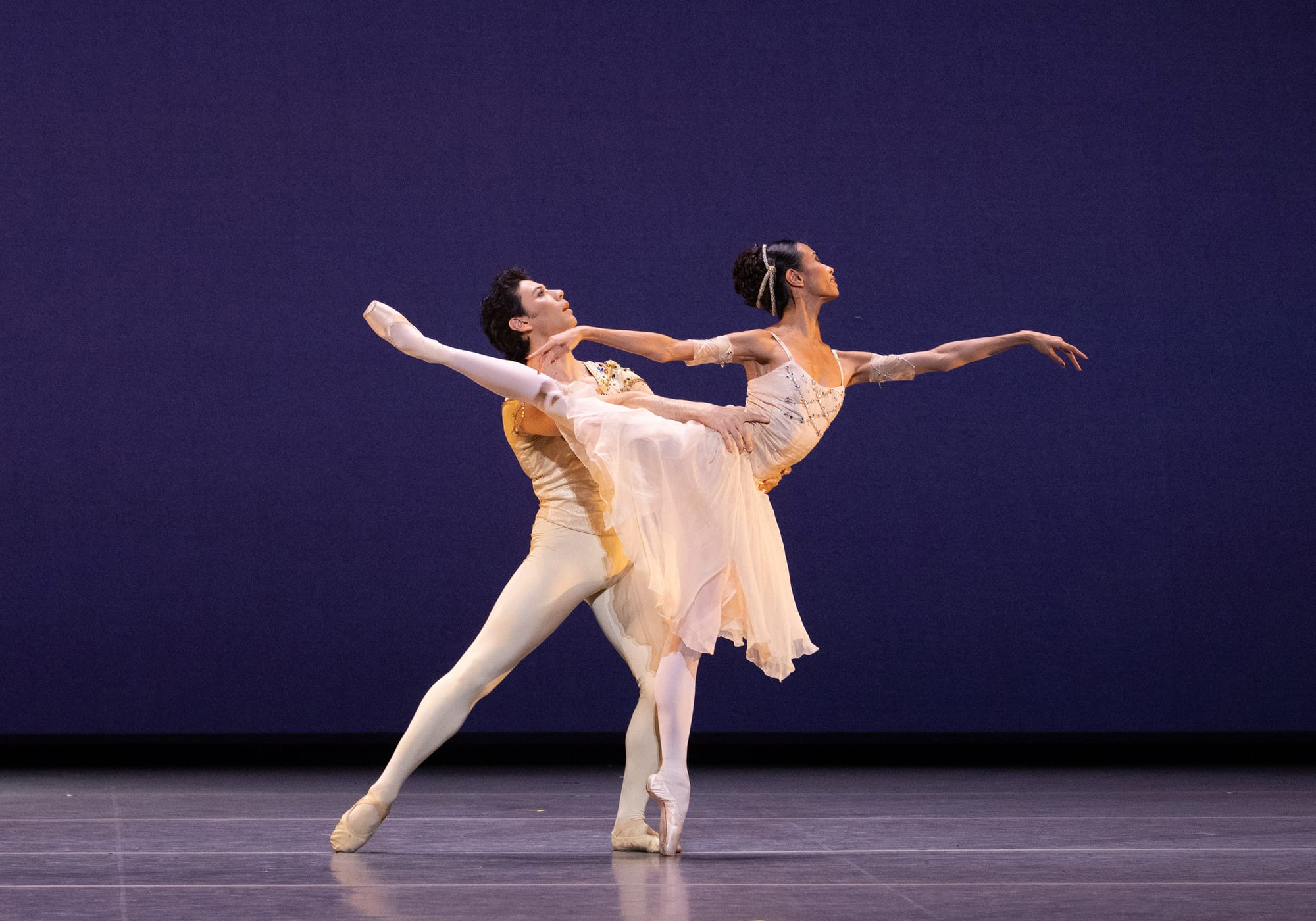
Ashton choreographed “Rhapsody” for Baryshnikov as an 80th birthday present for the Queen Mother. He used Rachmaninov’s “Rhapsody on a Theme of Paganini”, with its familiar ultra-romantic melody; ABT danced the pas de deux. Fleytoux and Herman Cornejo both debuted in the three-minute excerpt, and were on and off in a flash. Cornejo entered, looking around, while Fleytoux stood with her back towards him, sensing his presence. Once they connected, there were a series of elegant floating lifts with quick changes of direction, perfectly catching the lilt of the music, and then a charming moment where she slipped out of his arms to reappear on his other side. Fleytoux’s gentle arms wafted beautifully and Cornejo was a devoted partner, and as always, Ashton’s use of music was brilliant. The dancers didn’t compete with the familiar soaring melody, they seemed to be absorbed by it.
There is a bit of “La Bayadère” in Gsovsky’s “Grand Pas Classique”, since he used music from Daniel Auber’s 1830 opera “Le Dieu et la Bayadère”, though the poor temple dancer has been replaced by an iron-toed diva. Sunmi Park and Michael de la Nuez both made their debuts in the technical tour de force, and danced very well, though I missed a certain air of old-fashioned authoritative superiority the piece could use; they both seemed like happy, well-adjusted dancers, not god-like creatures deigning to show off.
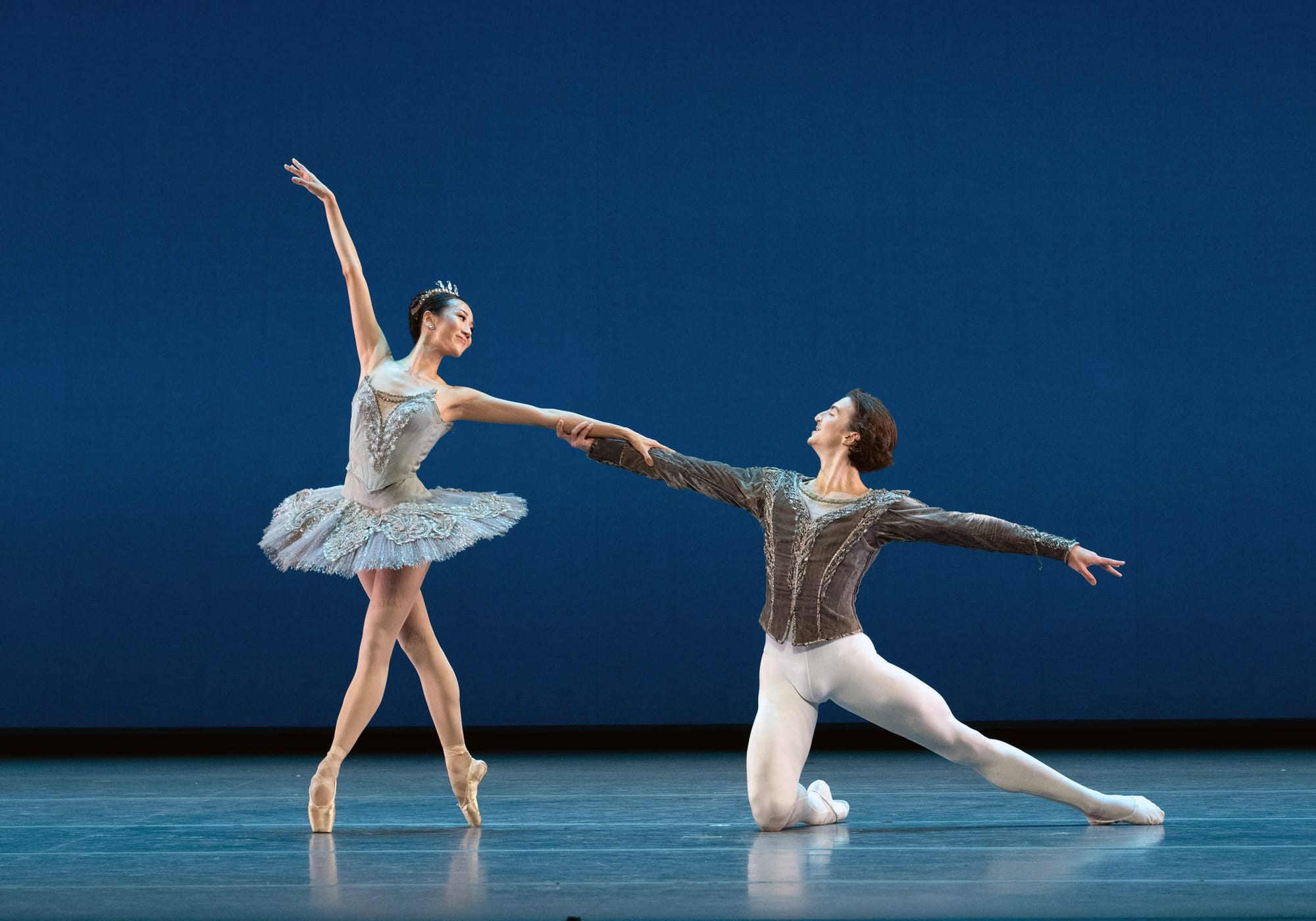
De la Nuez gave his solo an elegant, smooth flow with magnificent jumps; there was one small slip, but overall his dancing was breathtaking. Park negotiated the traveling relevés with an impressive serenity, and swept through her complicated fouettés, swinging her leg with what appeared to be joy. They did deserve more interesting choreography than this rather dry, technically flashy work.
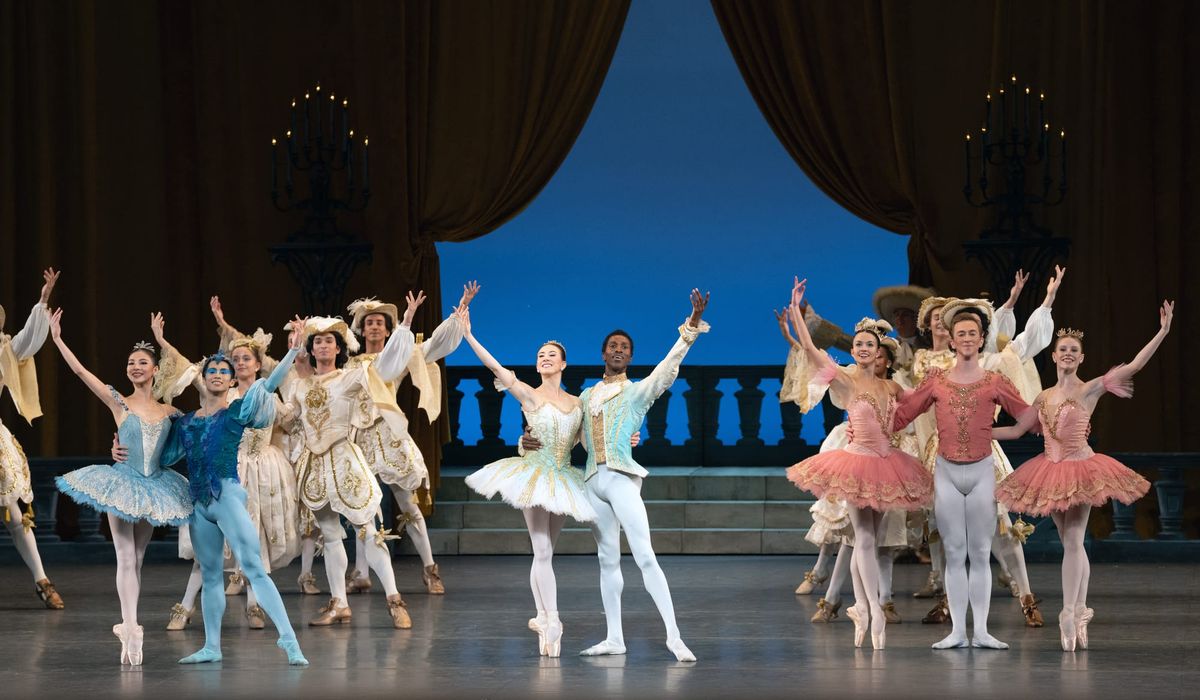
There is a lot of interesting choreography in Petipa’s “The Sleeping Beauty”, the apotheosis of classical ballet, culminating in the final act with the celebration of order and harmony, epitomized by the wedding. ABT presented this act using costumes from the misguided 2007 Gelsey Kirkland production and a rather skimpy set; it was staged by Susan Jaffe, who amalgamated several versions; there was a Rose pas de trois for two women and a partner (Camila Ferrera, Remy Young, and Joseph Markey), using the jewel fairy music which is new to ABT. She also removed the King and Queen, and had the guests and the happy couple enter separately (the poor Lilac Fairy had no attendants) at the beginning for a quick bow to acknowledge the audience’s applause, and the leave, only to return when it was time for their dances and then depart again. This saved on chairs, I guess, but it did seem ungracious of the Prince and Princess not to stick around to watch their wedding entertainment.
They did miss some fine dancing; the Roses sparkled in the traditional Petipa choreography, as did the Bluebirds (Yoon Jung Seo and Takumi Miyake). Seo’s light floating jumps were lovely, and Miyake showed off his apparently effortless springy elevation. His brisés really did seem to fly. Isabella Boylston and Calvin Royal III were Aurora and Désiré. They had a fine rapport, and the brief “I love only you” mime looked heartfelt. The dancing, though there were beautiful moments (Boylston has a luxurious backbend), lacked a bit of authority; it was careful rather than radiant. Treating this most gracious, generous, and uplifting act as a revue with the various performers just showing up to do their turn, though, would defeat any royal couple.
copyright © 2025 by Mary Cargill



