Bells on Their Toes

Bells on Their Toes
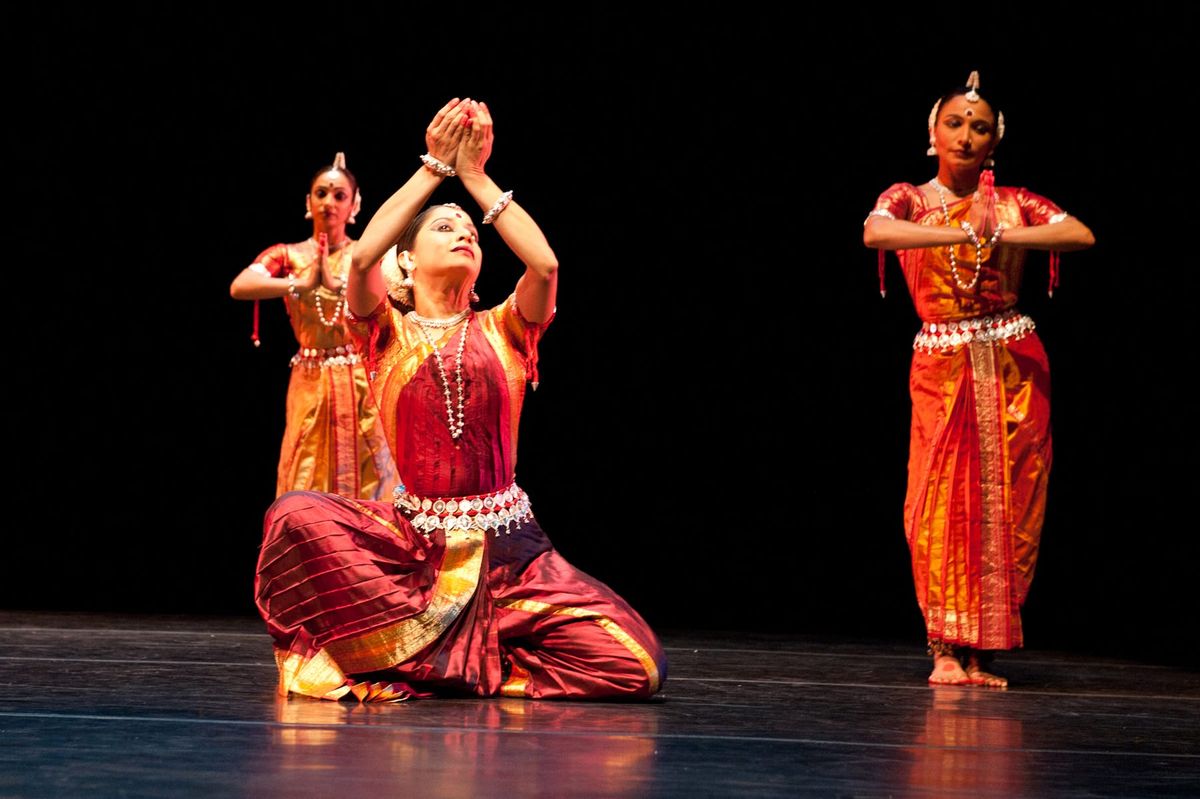
Pavithra Reddy, Surupa Sen, Bijayini Satpathy photo © Nan Melville

The Nrityagram Dance Ensemble
The Joyce Theater
New York, New York
March 23, 2012


The Nrityagram Dance Company is a hybrid, a modern take on traditional Indian, specifically Odissi, temple dances.  That is, the company uses the historical technique in a theatrical manner.  For this visit, the three Odissi dancers were joined by two Kandyan dancers (Kandyan dance is also a temple dance) from Sri Lanka, and the two related styles made an interesting contrast.  The pieces had live music, traditional Indian musicians and singers, augmented by a Sri Lankan Kandyan drum.  The music, to western ears, combined a hypnotic droning sound (the bamboo flute) with rhythmic percussive sounds.  The music was punctuated by the dancer's delicate, bare-footed stomps augmented by tinkling ankle bracelets.  As the old rhyme says, "with bells on her toes, she shall have music wherever she goes."
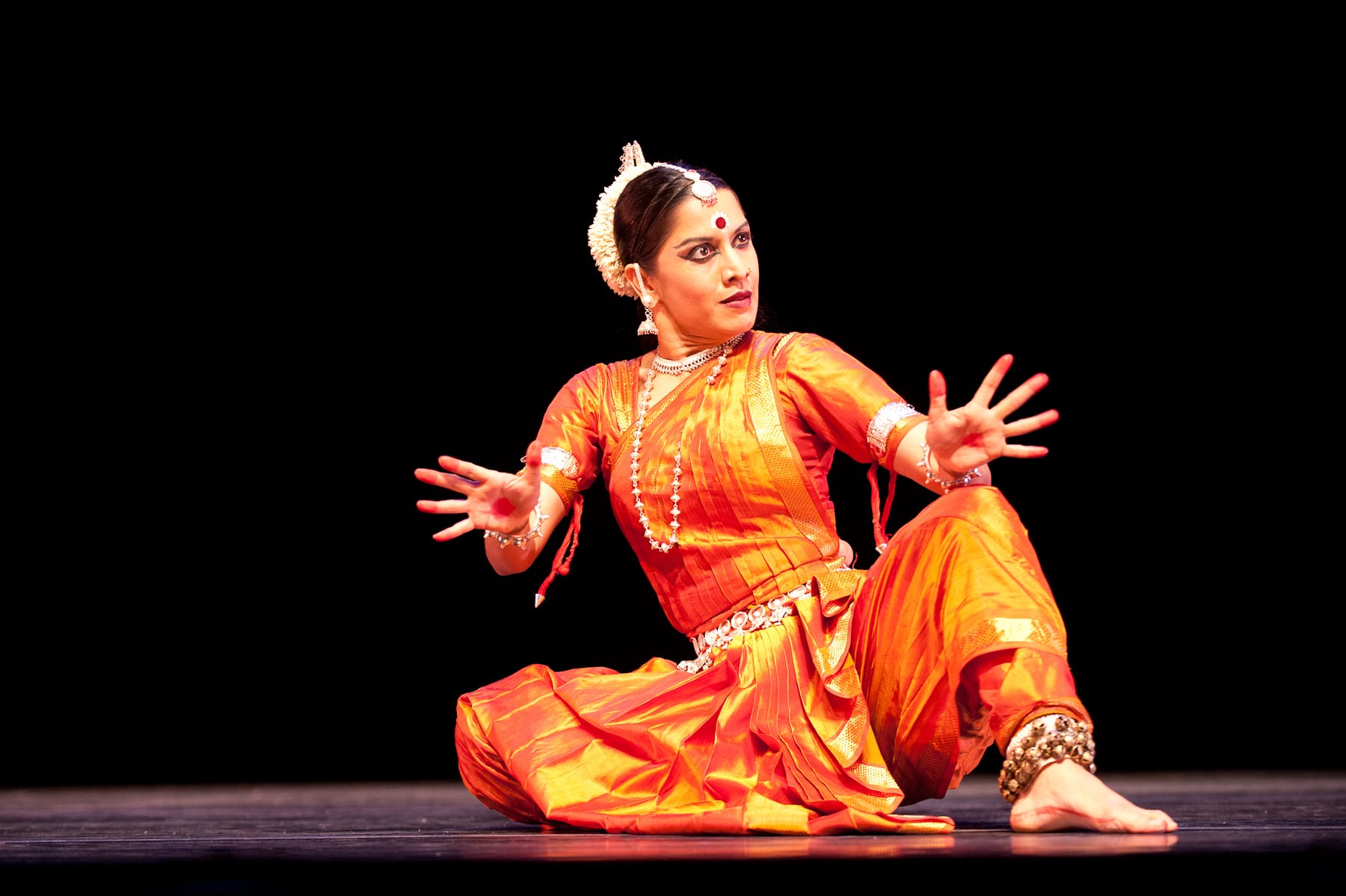
Surupa Sen photo © Nan Melville

  The Indian costumes, with their belted waists and ballooning pants, gave the three an almost Edwardian voluptuousness, and their dancing had a sculptural quality, looking like bas reliefs come to life.  The pure beauty of their dancing, with the precise, elegant hand movements (emphasized by red paint outlining their fingers, which seemed to leave a trail of light as they flicked them) and sinuous torsos, was really secondary to their stage acumen.  The dances, especially the solo by Surupa Sen to a poem about Krishna lamenting his treatment of Radha, was a vivid compendium of elemental emotions, and the dancers used their eyes and their expressions, as well as their bodies, to portray love, anger, fear, and sorrow.   This was theater at its peak.
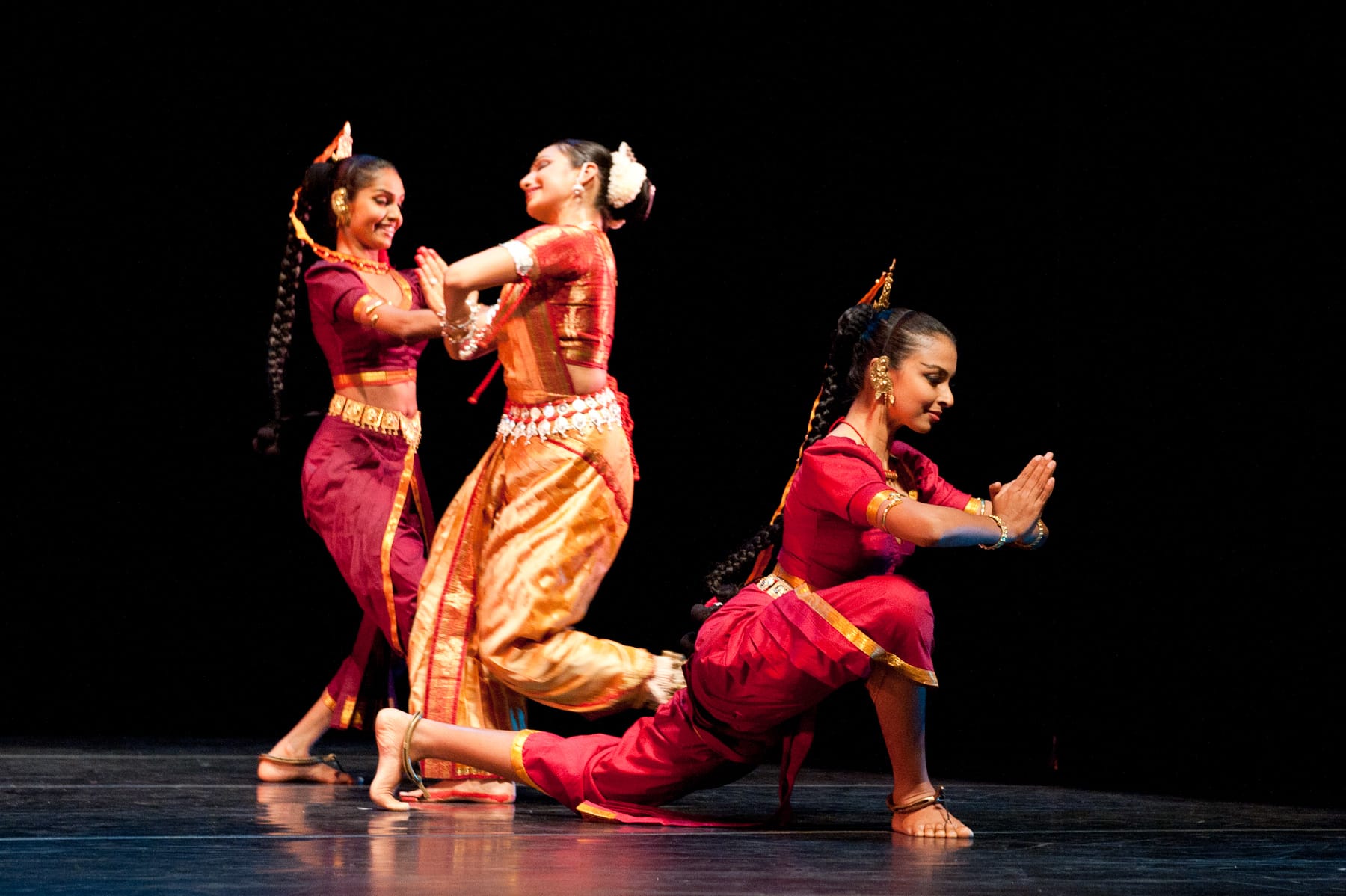
Mithilani Munasingha, Pavithra Reddy, Thaji Dias photo © Nan Melville

The two Sri Lankan dancers (Thaji Dias and Mithilani Munasingha) were rangier and less sculptural in their movements.  Their poses flowed, their movements were stronger, and their jumps were bigger.  Their eager approach gave the impression of high-spirited adolescents kicking up their heels, and their charm was irresistible.  The final work featured all five dancers in a sort of a dance off, full of good natured competition, including a version of "Etudes", as the dancers hurled from one side of the stage to another.  There were no losers in this race, only winners, with the biggest winner being the audience.

copyright © 2011 by Mary Cargill

Read more

Fresh Takes

Fresh Takes


"Walpurgisnacht Ballet," "Flower Festival in Genzano Pas de Deux," "The Wind-Up," "Opus 19/The Dreamer"
New York City Ballet
David H. Koch Theater
New York, NY
January 30, 2026


On a night abundant with debuts, including an all-new second cast for Justin Peck’s “The Wind-Up” which premiered a day earlier, the real revelations came from the repertory. While Peck's latest work stumbled through familiar choreographic territory, the dancers once again proved that a company’s greatest asset is

By Marianne Adams
The Gods Are Smiling

The Gods Are Smiling


"Serenade", "The Prodigal Son", "Paquita"
New York City Ballet
David H. Koch Theater
New York, NY
January 31, 2026 matinee


The programming gods, who can sometimes be arbitrary, provided an outstanding triple bill, a perfect example of scheduling a complete meal.  It opened with “Serenade”, a most luscious appetizer, followed by the dramatic meat of “The Prodigal Son”, and ended with a fine dessert, the Spanish frivolity of Ratmansky’s take on the Grand Pas of Petipa’s “Paquita”

By Mary Cargill
Roll Over, Beethoven

Roll Over, Beethoven


"Walpurgisnacht Ballet", "Flower Festival in Genzano Pas de Deux", "The Wind-Up", "Opus 19/The Dreamer"
New York City Ballet
David H. Koch Theater
New York, NY
January 29, 2026


The premiere of Justin Peck’s new ballet “The Wind-Up”, was the centerpiece of this program. He used the first movement of Beethoven’s “Eroica Symphony” and a cast of six of the most interesting and vibrant of NYCB’s currently packed roster.  Balanchine’s “Walpurgisnacht Ballet” which is set

By Mary Cargill
Mood Music

Mood Music


"Kammermusik No. 2", "Le Tombeau de Couperin", "Antique Epigraphs", "Raymonda Variations"
New York City Ballet
David H. Koch Theater
New York, NY
January 23, 2026


The four ballets (three by Balanchine and one—“Antique Epigraphs”—by Robbins) on this program were all plotless explorations of the different atmospheres created by the composers, ranging from the jagged tones of Hindemith’s “Kammermusik No. 2”, the classical calm of Maurice Ravel’s “Le Tombeau de Couperin”, the mysterious Grecian echoes of Claude

By Mary Cargill


