Balanchine's Tschaikovsky
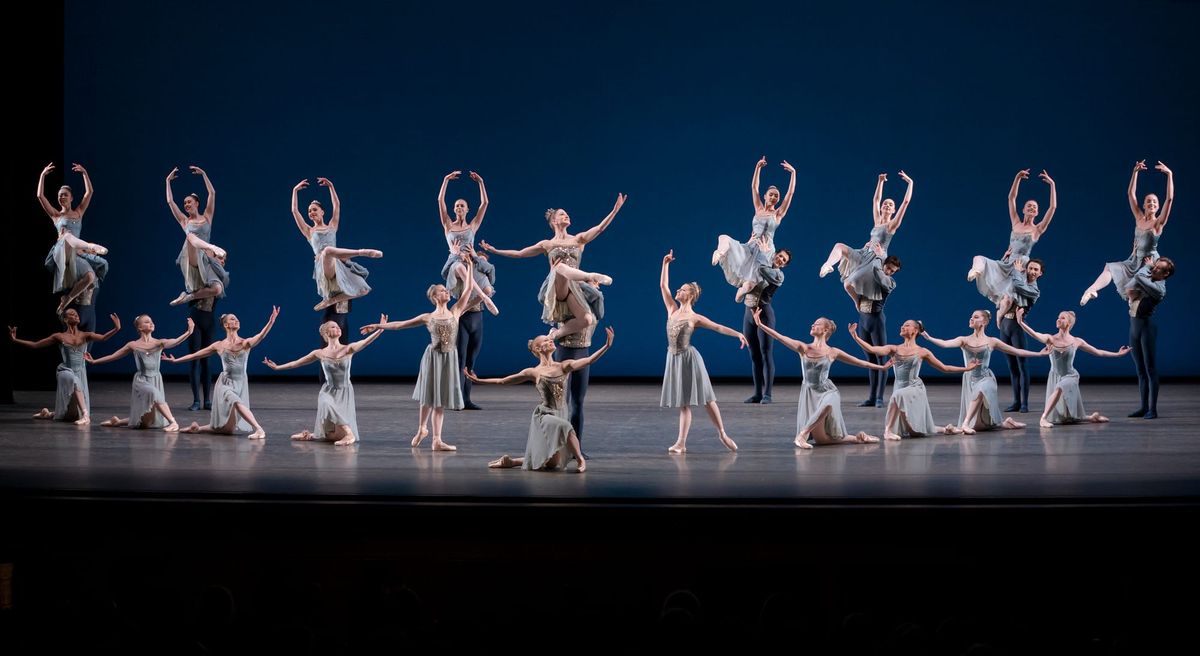
“Serenade,” “Mozartiana," “Tschaikovsky Piano Concerto No. 2”
New York City Ballet
David H. Koch Theater, Lincoln Center
New York, New York
January 23, 2019
New York City Ballet began its winter season with programs devoted to Balanchine works set to two of the choreographer’s favorite composers. The opening program on Tuesday was reserved for Stravinsky, with Tschaikovsky following on Wednesday. Repeats of both programs continue through the coming week.
It is unusual to see three Balanchine ballets to Tschaikovsky scores performed together. It proved to be felicitous programming because the works provided insights into Balanchine’s thinking on the composer and his music. “Serenade” (1935) was the first work Balanchine produced in the U.S., and he choreographed it in the neo-romantic style that interested him in the 1930s. It is danced in long, romantic tutus, and there is mystery at its heart: a ballerina falls, then recovers, only to be carried off, as if transfigured, toward an unknown future. “Tschaikovsky Piano Concerto” would seem to be the opposite of this romantic treatment. It was originally performed with a set that depicted the Russian imperial eagles above a view of St. Petersburg’s Neva River. The costumes were classical tutus for the women and military-like uniforms for the men. It was a work, in other words, that suggested the classical ballet of Russia in all its grandeur. But in 1973 Balanchine eliminated the sets and costumes, instead dressing the women in gowns with gossamer skirts and the men in simpler jackets. He also eliminated the original pantomime and added a duet. The result softened the ballet in appearance and gave it a new freedom, bringing it closer to “Serenade” in feeling, while not forgoing any of the virtuosic dancing demanded of the ballerina.
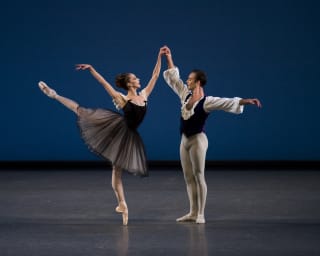
Tschaikovsky created his Suite No. 4, Op. 61 as an homage to Mozart, thus its musical subtitle “Mozartiana,” which Balanchine retained for the title of his ballet. Balanchine gestured toward eighteenth century formality in the Gigue and Menuet sections. Nevertheless, he created a work that in overall spirit was intimate and expressive, particularly in the first dance, Preghiera (Prayer), and in the central duet (Theme and Variations). The ballet was choreographed for the 1981 Tschaikovsky festival and was Balanchine’s last major work. He was already ill from the disease that would lead to his death two years later. He made the ballet for his last muse, Suzanne Farrell, and so the ballet might be read as both a farewell and a meditation on the choreographer’s own place in a ballet heritage that extended from the baroque to the modern age.
Tschaikovsky was the greatest composer of what we think of as classical ballet. While acknowledging that classicism in “Piano Concerto No. 2,” in the end Balanchine chose to emphasize the emotional core of Tschaikovsky’s music, as he did in “Serenade” and “Mozartiana.” “Piano Concerto No. 2.” is all about the ballerina and has to be one of the most difficult in the Balanchine repertory. Not only are the steps themselves difficult, with turns of various kinds ending in precise halts, but the dancer must execute demanding choreography to a series of cadenzas that have no musical pulse. Ashley Bouder more than met these challenges, looking effortless in it all, and dancing with dazzling brilliance, but also great warmth. Her partner, Joseph Gordon, who was just promoted to principal, provided stable support. Lauren King was the female soloist, her dancing strong, fleet and joyful. The three principals were backed by a corps de ballet of twenty-two dancers, who, perhaps inspired by Bouder’s performance, danced with verve. Throughout, the work was marked by a freedom that countered the formality that originally dominated the ballet.
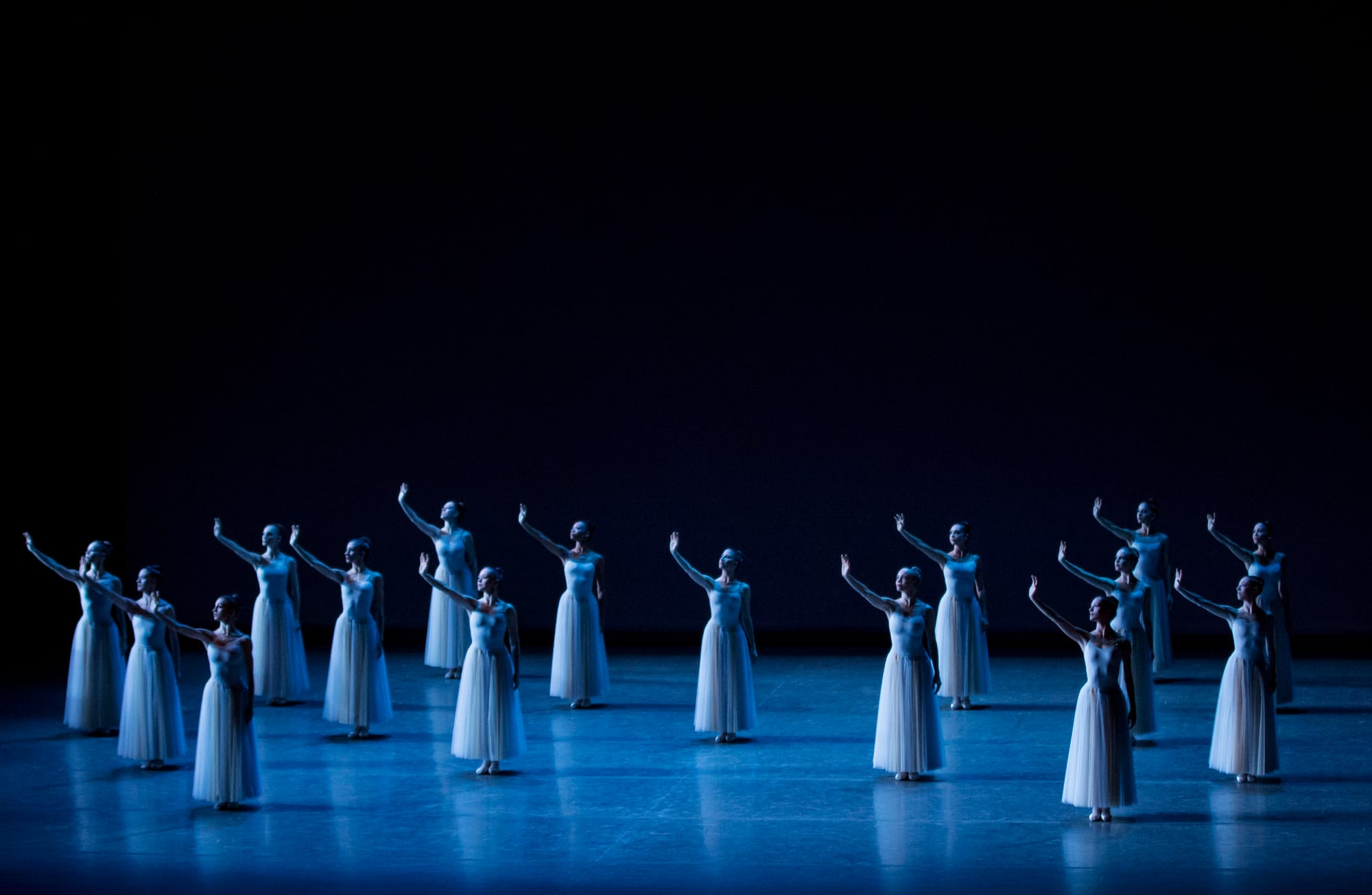
The rest of the evening was less engaging. In “Serenade,” Sara Mearns, who can almost always be counted on to perform with emotional power, seemed subdued as the leading ballerina. And although Tyler Peck danced with her usual musicality, and Megan LeCrone was expansive in the third ballerina role, the ballet as a whole looked ragged, as if under rehearsed. It wasn’t helped by the opening lighting, which was so dark it obscured the work’s dramatic beginning when the dancers gesture outward and upward, then bend their arm to touch their forehead, as if in protection from the light.
“Mozartiana,” too, lacked conviction. Maria Kowroski, who often dances the major ballerina role, was slow and slightly ponderous in her movement. Her partner, Tyler Angle, who was dancing with new found panache last season, here was getting through the steps, and little more. Daniel Ulbricht, in the wonderful male solo, seemed to be thinking mostly about courting the audience. One missed Anthony Huxley’s pristine accounting of the dance. Despite these less than sterling performances, the evening succeeded in demonstrating Balanchine’s preferred treatment of Tchaikovsky’s music, and that is something to be grateful for.
copyright © 2019 by Gay Morris



