Back to the Future
"Bourrée Fantasque", "The Steadfast Tin Soldier", "Errante", "Symphony in C"
New York City Ballet
David H. Koch Theater
Lincoln Center
New York, New York
April 24, 2024
The New York City Ballet opened it’s 75th Anniversary Spring season, subtitled “The Future”, with an all-Balanchine program of four ballets whose dates ranged from 1940’s (“Symphony in C”, 1947 and Bourrée Fantasque, 1949 ) to 1975 (“The Steadfast Tin Soldier” and “Errante”, the new name for “Tzigane”). The future, it seems, is a moving target. But the ballets looked well-rehearsed and vibrant, auguring well for whatever the future is.
“Bourrée Fantasque” is a somewhat uneasy mixture of comedy, mystery, and bravura set to delightfully chic music by Emmanuel Chabrier. The costumes, by Karinska, are also delightfully chic, with the men in black berets and the women in glorious tutus. The opening movement, danced by Mira Nadon and Andres Zuniga in his debut, plays with a tall girl and a shorter man, and their somewhat goofy attempts to connect. The pair downplayed the slapstick (Nadon didn’t whack Zuniga’s head with a dangerous vigor) and concentrated on the fast, elegant footwork and witty, elegant little hand gestures—Nadon flutters a very mean fan. The movement exploded with exuberant chic.
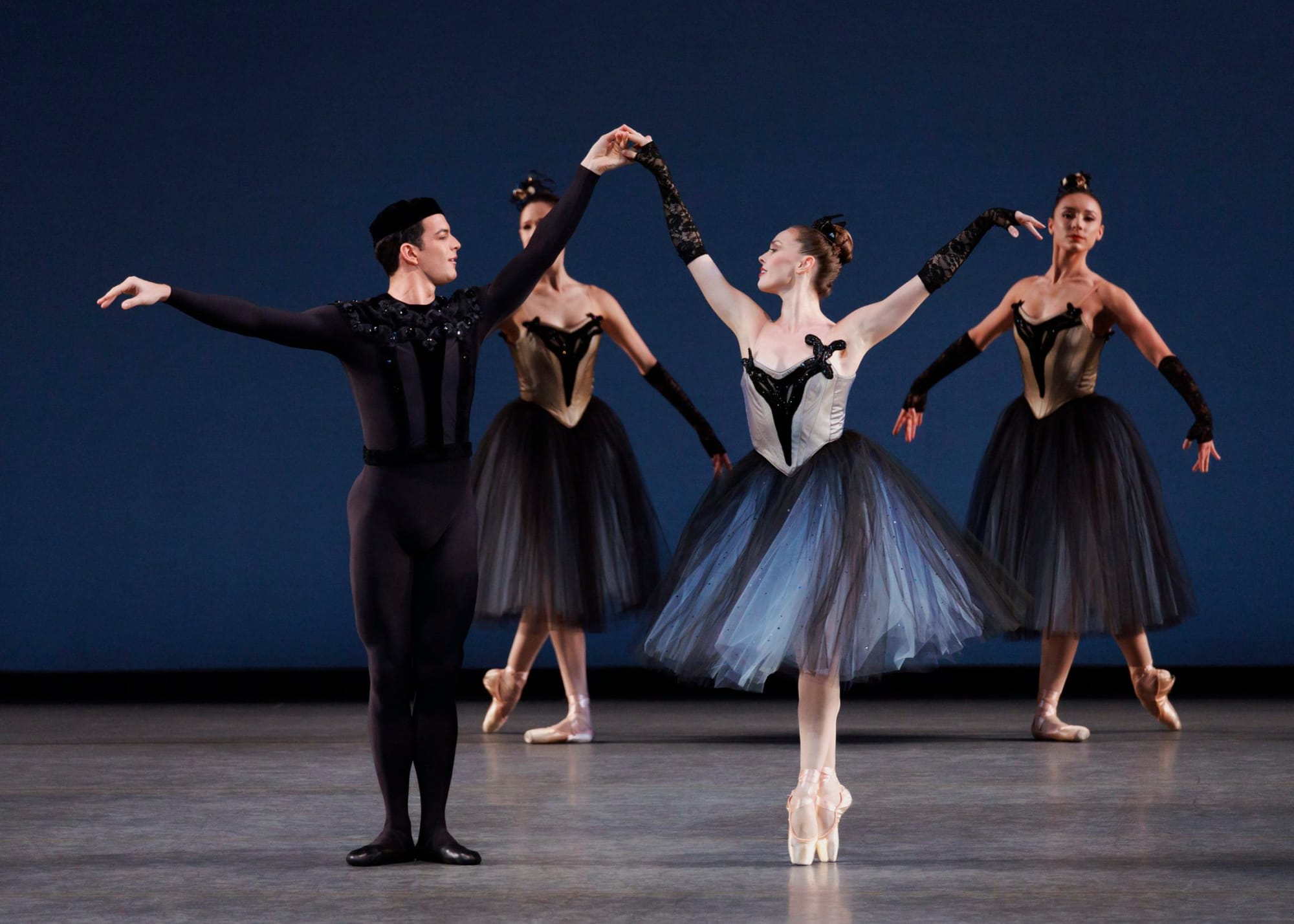
The second movement is an almost too complete shift in tone, since the audience is primed to laugh. The music has a mysterious, slightly ominous sound as the black-clad loner (Gilbert Bolden) walked slowly on, eyes staring blankly as he seems to be searching for a mysterious, invisible beloved (Emilie Gerrity). There are many lovely, haunting moments, as they meet, dance almost in a trance, and then part, the woman disappearing behind a corps member and the man walking off in the opposite direction. Bolden’s concentrated stillness and fine partnering were outstanding, especially in the series of Gerrity’s unsupported pirouettes where he rushed in and caught her mid-bend so she seemed to melt in his arms. Gerrity was a bit hearty for the misty heroine and could have used more mystery but her dancing had a smooth and confident elegance.
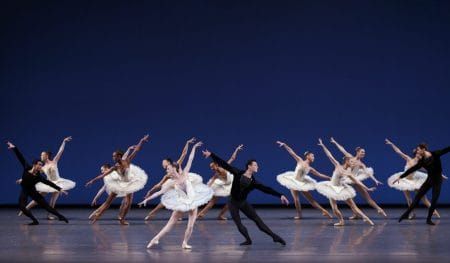
Emma von Enck and Victor Abreu led the Spanish-inflected third movement with irresistibly crisp dancing, flying through the fast little steps and quick jumps. The finale, as the first two cohorts poured on, was a thrilling, impeccably rehearsed panorama of shifting shapes, with circles and lines forming and reforming with a shimmering geometry; it was like watching a drill team in heaven.
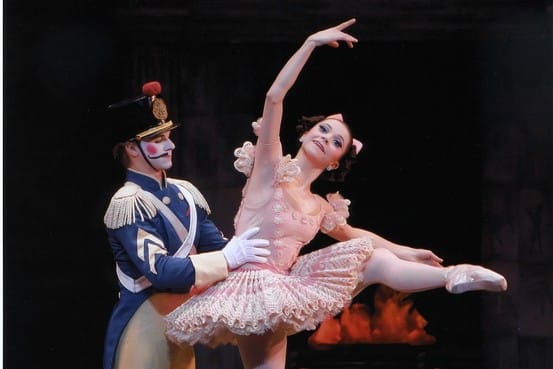
“The Steadfast Tin Soldier” was a quiet contrast, a rather bittersweet Hans Christian Andersen story of two toys under a Christmas tree who dance together until the wind blows the poor doll into the fireplace. The veterans Daniel Ulbricht and Megan Fairchild were the couple; they gave the simple dance, so full of stiff legged jumps and sweet little nods, an open-hearted sweetness that was neither coy nor cute, as if they could remember a child’s half-belief that toys do come to life. “Oh, no” I heard someone behind me gasp in shock as Fairchild disappeared; it was a vivid piece of theater.
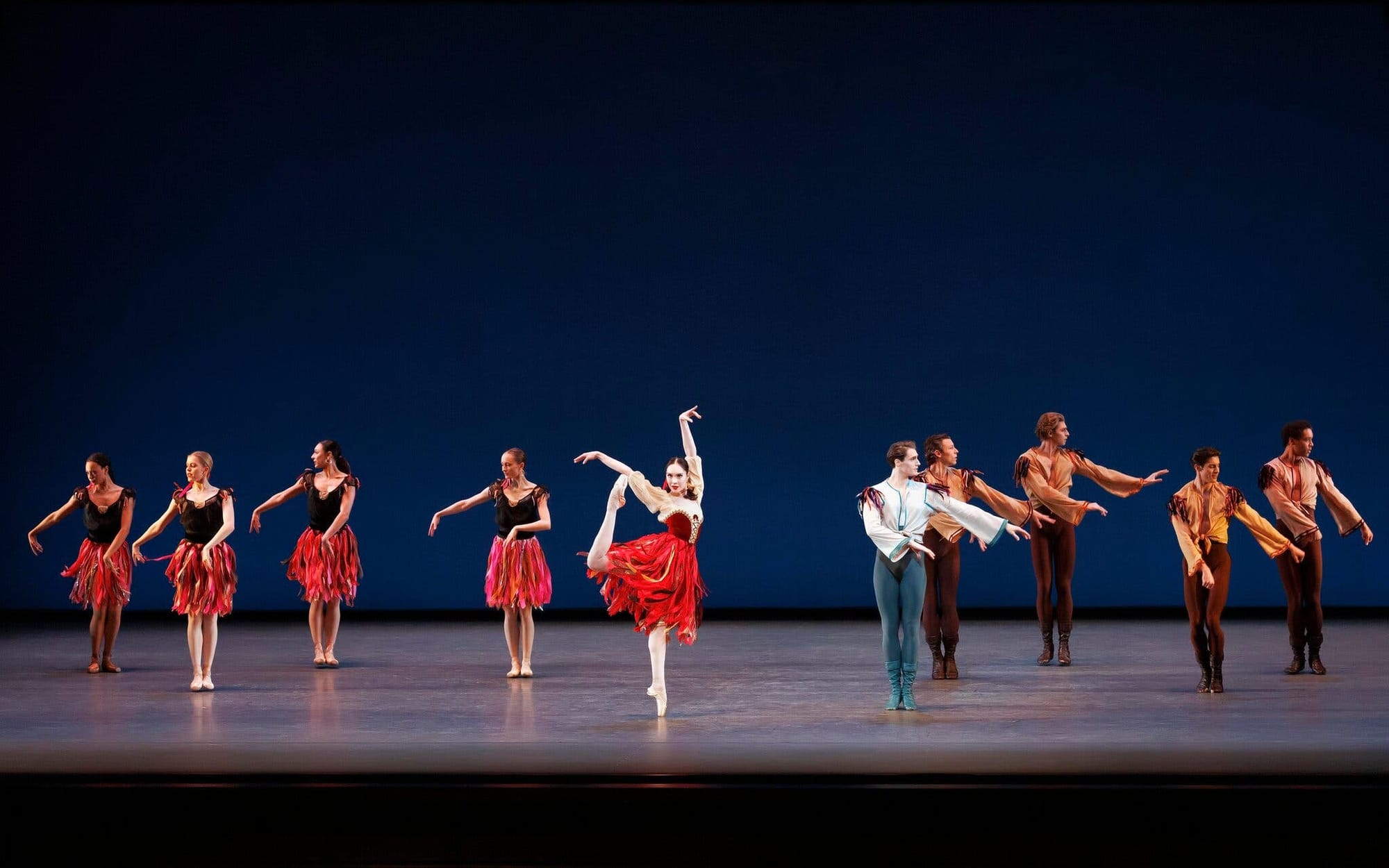
So too was Mira Nadon’s “Errante”. Suzanne Farrell, who originated it, set the ballet; if NYCB’s future includes more invitations to former dancers, then it should be bright. Nadon, a tall, gorgeous, leggy dancer, looked completely confident as the fierce, wild, occasionally sullen wanderer (I guess we can’t say gypsy), bending and turning with sudden bursts of energy. It didn’t look like choreography, and it seemed as if the sharp, staccato movements were impromptu reactions to her shifting moods pulled out of her by the Ravel music. By the end of her long solo, she seemed like a flame, attracting the helpless moth of Aaron Sanz, whom she, if only for a moment, allowed near her. This odd, haunting work hasn’t been danced by NYCB for some 30 years, and it may never become a staple but Nadon’s powerful performance is unforgettable.
“Symphony in C” is neither odd nor rare, but it is always welcome. Gerrity, with Chun Wai Chan, danced the first movement, and she looked much more at home in the warm, gracious choreography than she did in “Bourrée Fantasque”. Her soft, floating arms made her look like a generous hostess, and she danced with a regal warmth and a fine control. Chan's jumps were sharp and clear and he exuded his usual unforced charm. Charm isn't needed in the famous second movement, so redolent of Odette's lakeside reveries, but a certain underlying sense of drama is. The dancer is not Odette, fluttering her way into Siegfried's heart, but seems an abstract idealization of Odette's fate--she does end the pas de deux motionless on the ground. Phelan danced rather passively, with little nuance, giving each movement the same impetus; it was a beautiful but rather flat performance. And it is a shame the newish tutus flop over so noticeably in the 180° arabesques.
KJ Takahashi, in the third movement debut, did no flopping, and he flew through the exhilarating jumps. His partner, Baily Jones, seemed to trail in his wake; she did well but without all the technical whiz bang of some other dancers. Though the program was a glimpse of the past, the future, with the many younger dancers who were featured looks good.
© 2024 Mary Cargill



