Back On Stage: If Cautiously, Relentlessly
Precious Gems: Precious Jewels Variations from “Alladin,” “Aria,” “Tarantella,” Solo from “Lambarena,” “Variations for Four,” Sicilienne from “Emeralds,” Duet from “Concerto Six Twenty-Two,” “Paquita”
Capitol Theatre
Salt Lake City, UT
April 15, 2021
What would ballet look like on a theater stage, when it returns, has been a question plaguing most ballet lovers and insiders alike, and as one of the first companies in the world, and certainly in the United States, to bring its dancers back in front of a live audience, Ballet West confidently answered it with “resilient.” The company’s spring 2021 season was its second time performing live since the Covid-19 pandemic began, following a brief season in November 2020, and the mixed bill program of mostly classically dance was a welcome reassurance that when it comes to dance, the pandemic shouldn’t rob us of much more than actual time lost.
Unsurprisingly, the company’s Artistic Director Adam Sklute revealed that the return to the stage wasn’t without appreciable hurdles. Prior to rapid testing allowing for more liberal rehearsals and ultimately mask-less performances, the dancers primarily were cast and rehearsed with their domestic partners. (Fortunately, the company has eleven off-stage couples on its roster.) But program staging and rehearsing itself was a challenge. The company would conference in via Zoom stagers from Australia, Portugal, New York and other locations, and utilized a moving screen to allow for the process. Some of the works had to be adjusted to allow for pandemic-mandated fewer dancers on stage, and all this was happening as the local health situation remained fluid, and the resulting rules at any point could have cancelled the season. Indeed, between the November appearance and the spring season, the company had to pivot to a broadcast offering of its “Nutcracker,” and a digital winter season. So, it was with tremendous joy for the dancers, and the filled to its maximum allowed 20% capacity house, that the company did make its appearance, and even without on-stage face coverings (dancers were still required by local rules to re-don the masks once off-stage, and all in the audience had to be covered up and adhering to strict social distancing).
The program itself leaned more heavily on classical dance, and Sklute noted it was in part a vehicle to showcase the best of the dancers’ present form, and in part designed to push the dancers to continue rebuilding their performance stamina after the challenging year. A wise, and accomplished, objective.
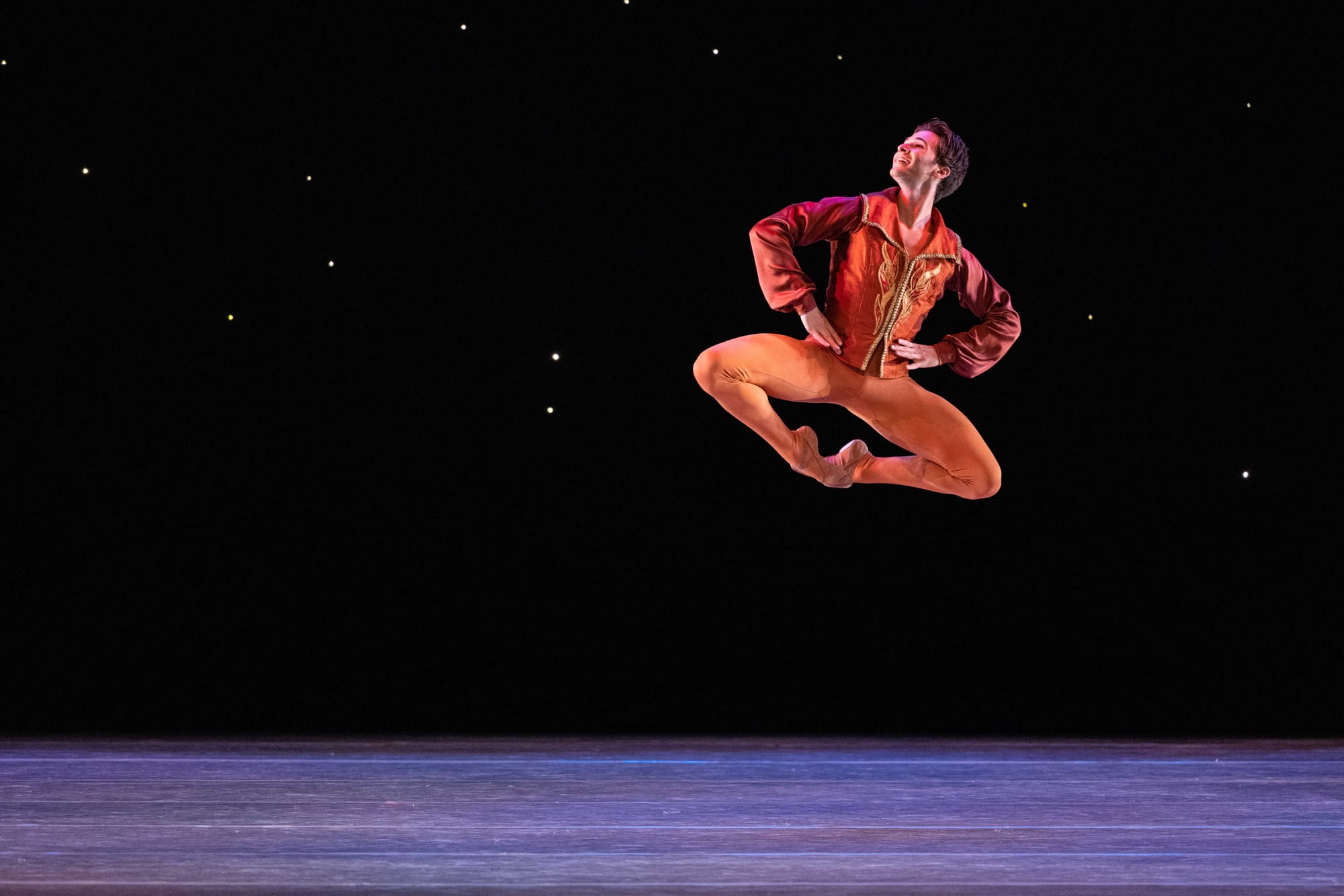
The opening work, an excerpt of variations from the company’s production of “Alladin” choreographed by Pamela Robinson-Harris in 2013, with an additional section added by Peggy Dolkas for this season only, showed many remarkably sustained balances, precise jumps, and rehearsed to perfection shoulder placements. The dancing was also beautifully cohesive, with arms echoing the phrasing introduced in the leg movements, completing those sentences. It wasn’t all skill either, as the lead couple – Allison DeBona and Rex Tilton – added to the technical aspects of the work with an emphasis on theater. Their duet was full of eye contact, lusciously lingering arms and looks to match.
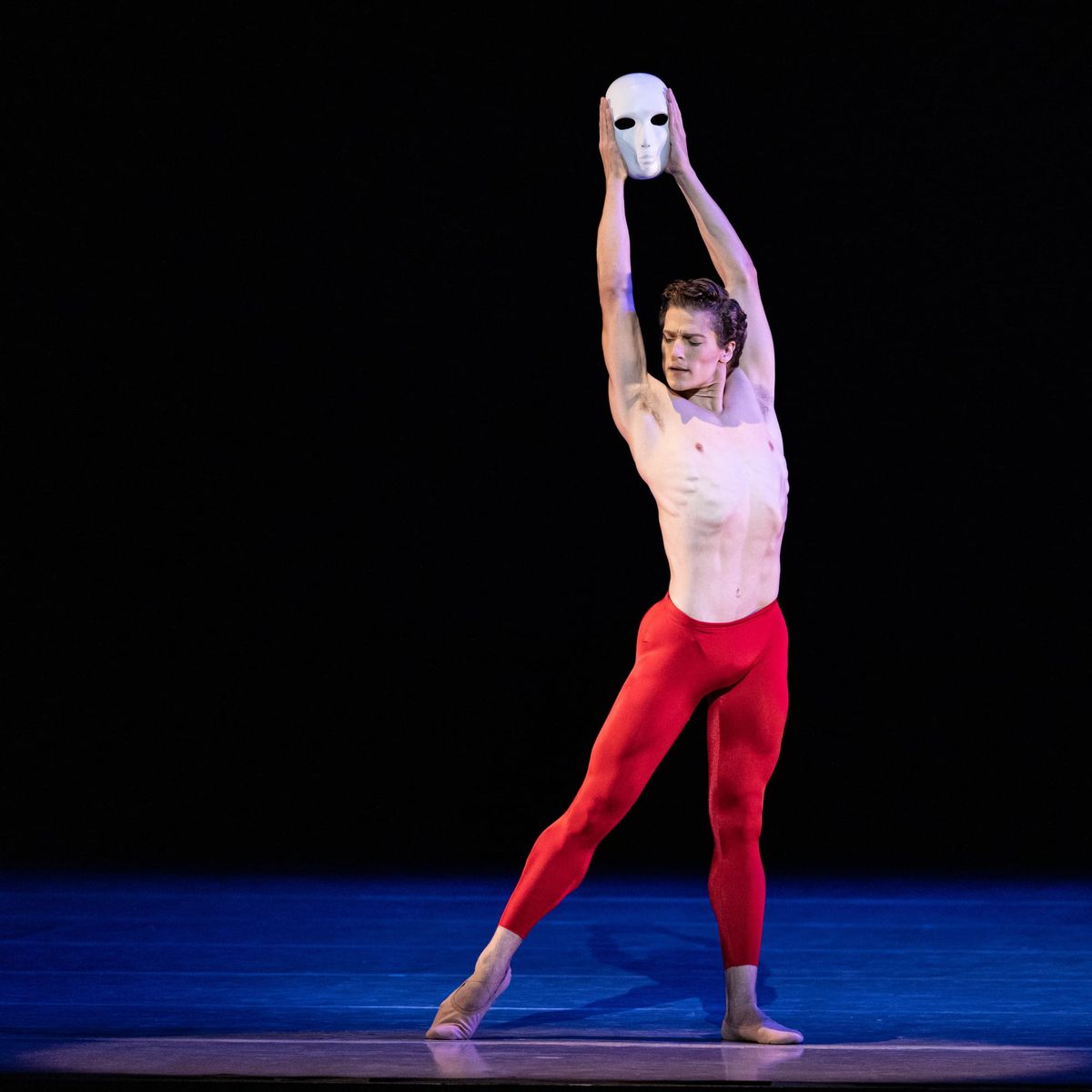
This was just a tasting though, and the performance really hit its stride with the next work. “Aria,” by Val Caniparoli, was a deeply captivating, ruminative male solo and easily the highlight of the program. The 1997 work had its company premiere a few days earlier, and at this performance, featuring Jordan Veit, it felt like a pantomime, but somehow for the entire body. Despite his face being concealed most of the time by a full-face mask, Veit’s body went through all the modulations of emotion embedded in the choreography, with earthy spinal bends, and jumps effortlessly exploding out of pliés and floating upward to the live performance of George Friedrich Handel’s Overture from “Rinaldo”, lovely live singing by mezzo-soprano Aubrey Adams-McMillan of “Almirena’s Aria” from “Rinaldo,” and sometimes to silence. In other moments Veit would take the mask off, holding it or dropping it to the floor, filling the moment with rarified plasticity that would interact with the mask and the space with nuanced movement and sentiment.
A contrast to “Aria” followed in the form of George Balanchine’s “Tarantella.” Dancers Jenna Rae Herrera and Joshua Whitehead peppered the electrifying classic with little firecrackers in the footwork from her and the perfectly timed accents of the tambourine from him, and their contagious smiles were something to smile about indeed (even if behind a face mask), in so many ways. With a different tone, the works that followed kept on focusing on the dancers’ technical prowess and musicality. In the solo from “Lambarena,” a 1995 work by Val Caniparoli with music by Johann Sebastian Bach and African selections, Emily Adams made the piece feel like a group dance, even though her runs on pointe with turned in feet, and hip shakes were directed at no one in particular. In Anton Dolin's “Variations for Four,” also a new work in the company’s repertory, Hadriel Diniz, David Huffmire, Tyler Gum, and Adrian Fry, dazzled with technical precision. Their turns and entrechat quatres started and stopped with remarkable unison, and the variations themselves allowed the men to show individuality and really fill the stage with movement. Then, the retiring from the company Katherine Lawrence’s Sicilienne from George Balanchine’s “Emeralds” was a jewel of an exquisite cut – her lines, positioning and expression of the piece never faltering.
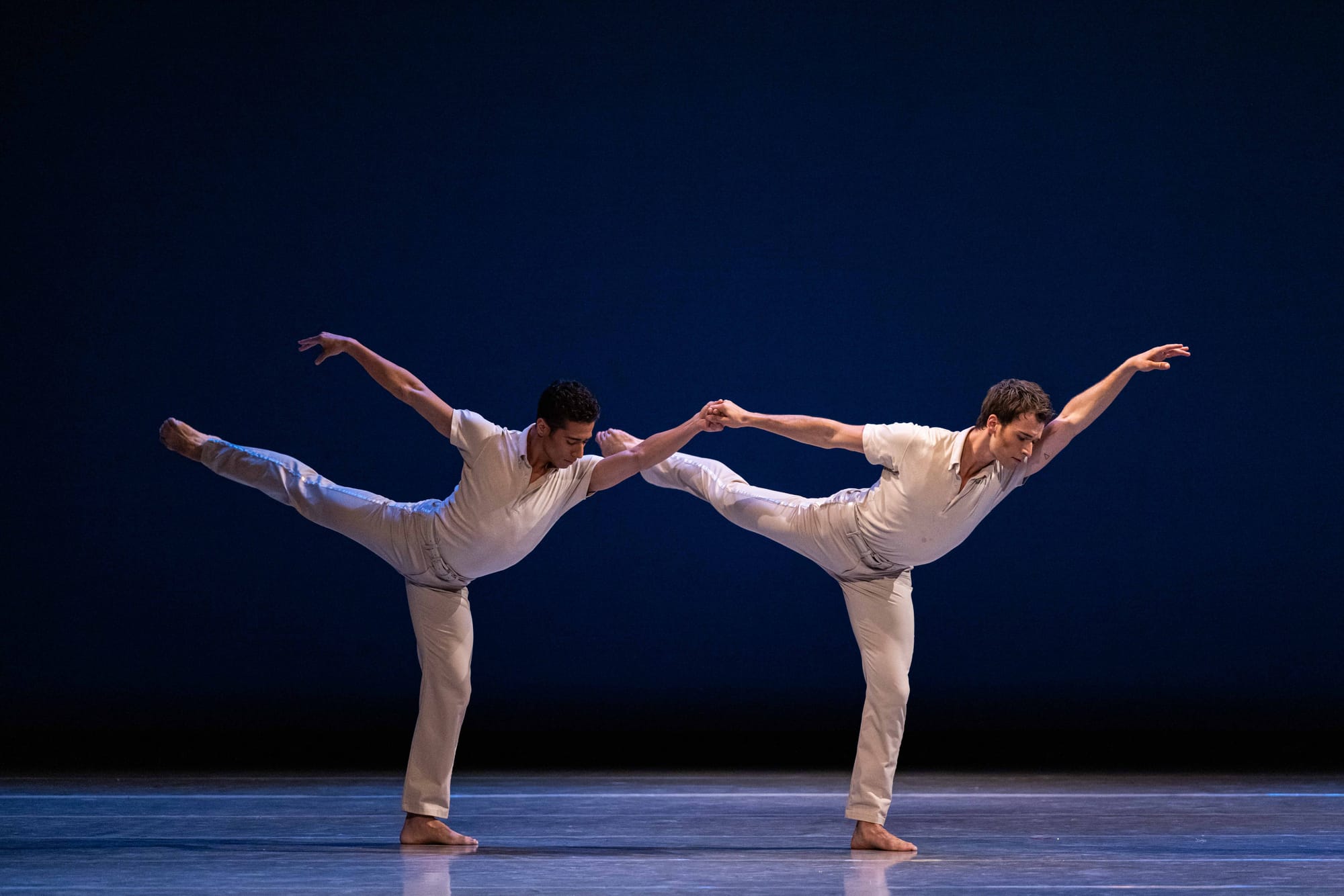
Providing contrast to these works were Joshua Shutkind and Vinicius Lima in yet another new addition to the company’s repertory this season -- Lar Lubovitch’s Duet from “Concerto Six Twenty-Two.” Unlike Adrian Danchig-Waring and Joseph Gordon of New York City Ballet whom DVT reviewed in this work as part of the digital Fall for Dance offering in 2020, Ballet West’s dancers presented this supportive duet with more focus on intensity and placidity, rather than tenderness and frailty. If the work is to be read as an emotional echo to the human experience of the pandemic, this was a fitting present-day reading. These dancers’ partnership was hopeful, resilient, strong and enduring – a partnership in the recovery phase of hardship, rather than its low points.
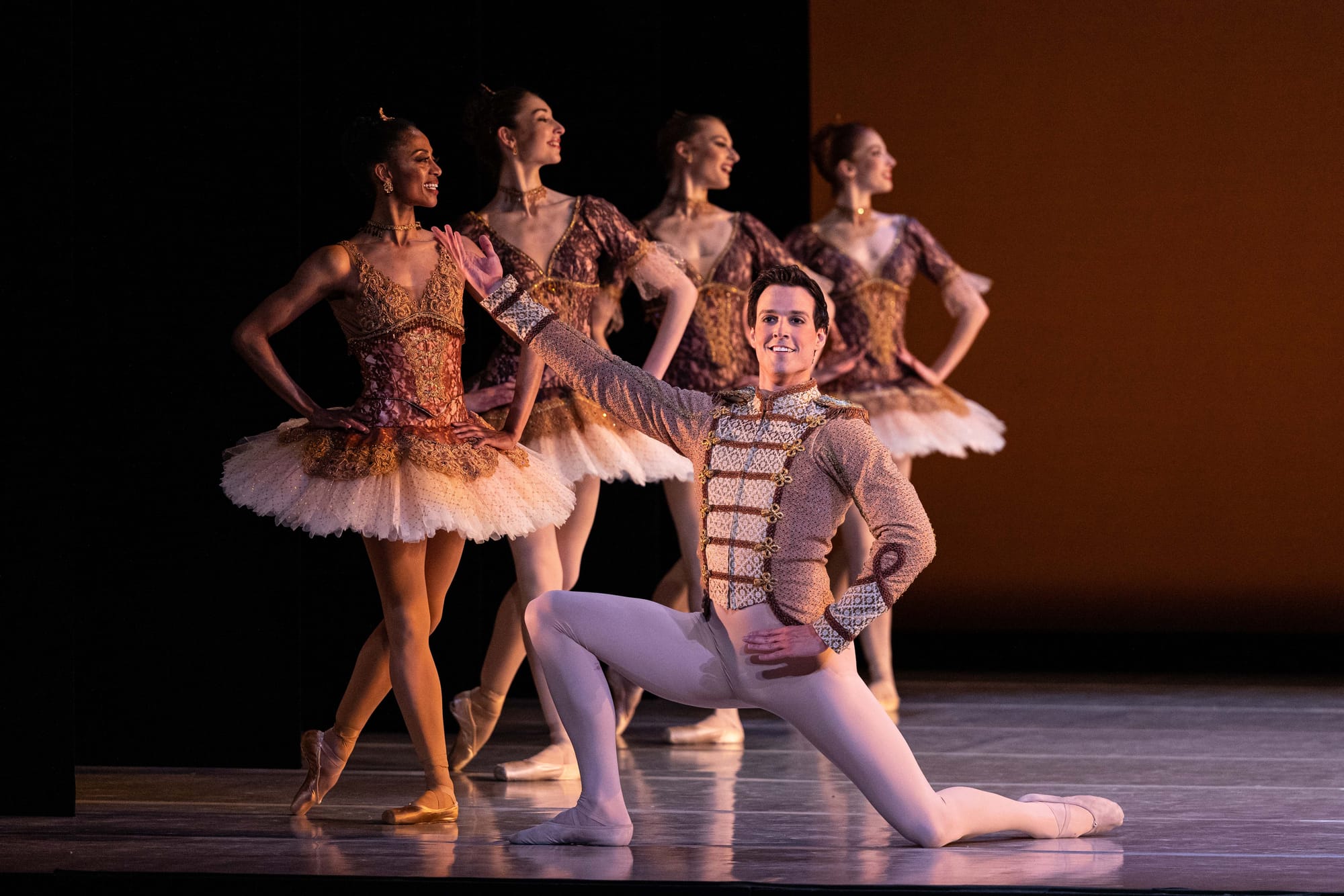
To end the night, the abbreviatedly cast “Paquita” may not have had the usual long line of ballerinas turning into position as Chase O’Connell in the male lead walked toward Beckanne Sisk to partner her in the pas de deux, but it almost did not matter. The corps moved powerfully across the stage and the pas de deux had every element of grandeur, polish and regal flair that could be drawn out from the music to make the ballet “pop”. After a few variations, the coda ended with impeccable double fuettés from Sisk. If the company is still working toward its tip top shape, you wouldn’t know it – with this program its signature statuesque dancers, incredible lines and enduring technique were on full display.
copyright © 2021 by Marianne Adams



