At the Beginning
"Serenade", "Tschaikovsky Pas de Deux", "Tarantella", "Symphony in C"
Miami City Ballet, The Mariinsky Ballet, The Royal Ballet, New York City Ballet
Balanchine: The City Center Years
New York City Center
New York, New York
October 31, 2018
When Mayor Fiorello La Guardia established the New York City Center 75 years ago, the current president Arlene Shuler's gracious opening speech reminded the audience it was New York's first performing arts center. Several years later, in 1948, it became the first home of the New York City Ballet, and the Center is hosting a five-day festival of eight companies performing 13 of the ballets originally performed at City Center. New York City Ballet, of course, joined the roster, along with Miami City Ballet and the San Francisco Ballet, both led by former Balanchine dancers. In addition, the eclectic Joffrey Ballet, and three international companies, the Mariinsky, the Royal Ballet, and the Paris Opera Ballet, represent Balanchine's universal appeal, (though, probably due to logistics, the American companies got the larger ballets and the foreign companies the pas de deux).
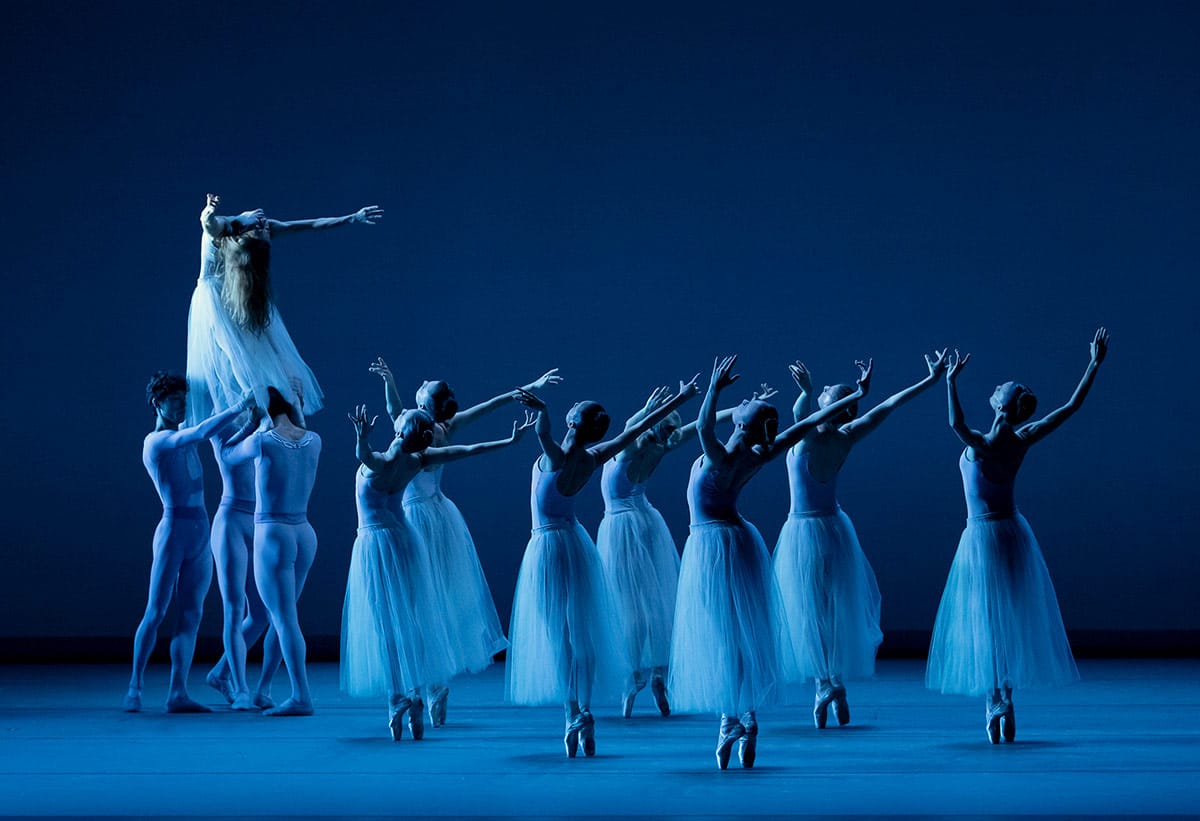
Miami City Ballet opened the festival with "Serenade"; though the ballet, the first Balanchine choreo- graphed in the United States, was not originally made for the City Center stage, it was performed in the first season and many times after that. This was a rare and welcome opportunity to see "Serenade" on the smaller, more intimate stage and it looked ravishing. The lighting seemed to give the costumes a distinctive iridescent glow and the dancing have a sense of taut immediacy.
The luminous opening, with its rows of dancers racing towards the sky had a vibrant, individual, yet cohesive energy, as the dancers swept fearlessly and soundlessly through the choreography. Simone Messmer, the dramatic and forceful former ABT soloist, danced the waltz girl with a fierce yet nuanced intensity, beginning the pas de deux with a potent stillness that seemed to turn into a ghostly memory in the arms of Rainer Krenstetter, her ardent and dignified partner.
Jeanette Delgado was warm and potent, if occasionally breathless, in the Russian variation and used her expressive face to haunting effect in the moving vignette where she offered her hand to her comrades. The connection between the dancers, the music, and the choreography, which included but did not court the audience, was intensely moving and the company deserved its ovation.
Miami City Ballet's natural, unaffected dancing was quite a contrast to the "Tschaikovsky Pas de Deux" performed by the Mariinsky dancers Viktoria Tereshkina and Kimin Kim. It may have been a lack of rehearsal time, but they seemed a bit unsure on the stage, appearing at times to run out of room. It was a distinct lack of taste, however, to milk the curtain calls so blatantly, if stopping in the middle of a performance to bow repeatedly can be called taking a curtain call.
Kim's juicy and buoyant dancing, with his effortlessly floating jumps that really did seem to hover, was beautiful to watch. However, Tereshkina, whose imperial hauteur was so effective when she danced "Ballet Imperial" at City Center in 2005, was a bit studied (every glance seemed choreographed) and I missed the joyful, musical spontaneity the pas de deux needs.
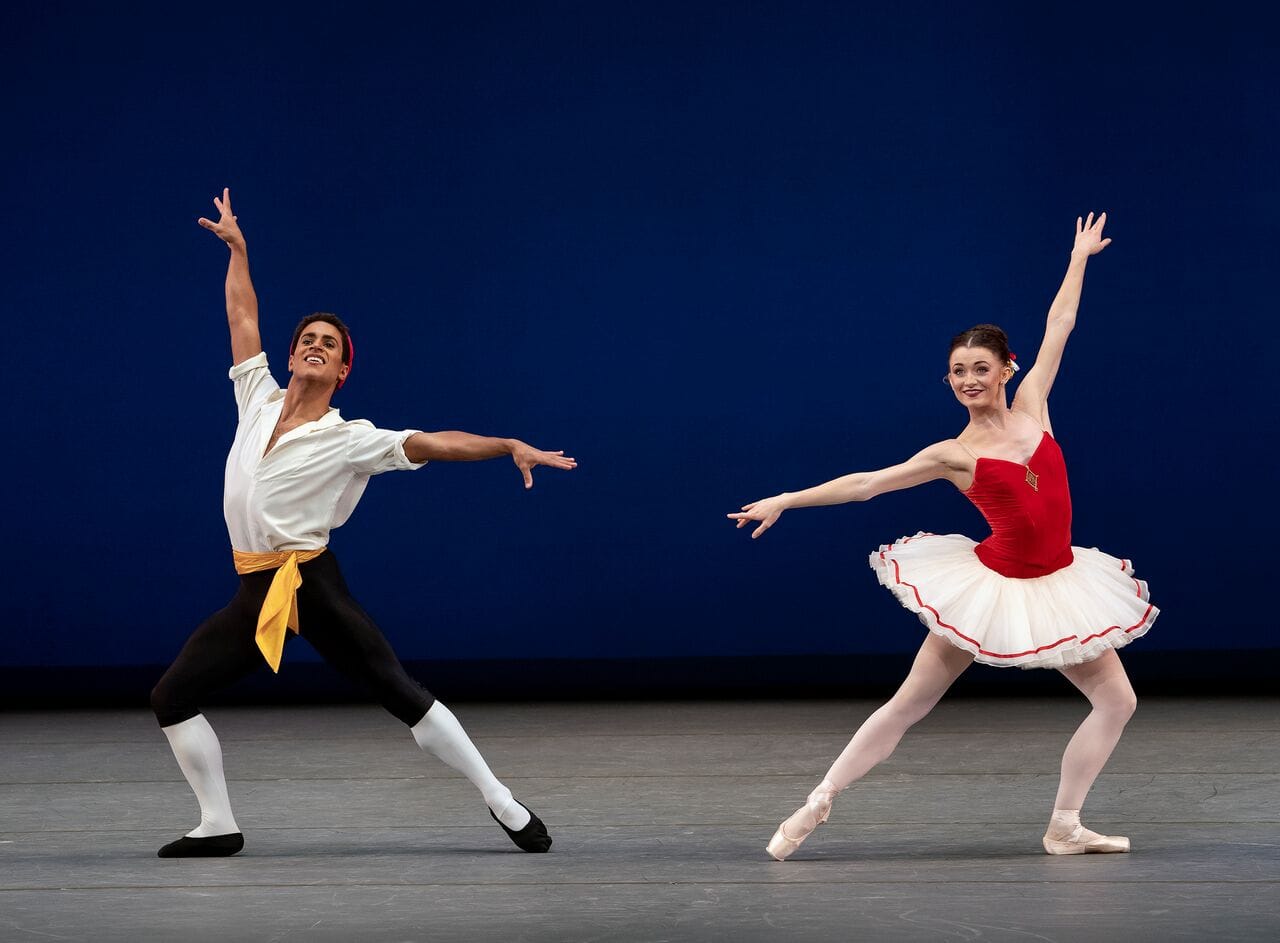
"Tarantella", another pas de deux, was the last work Balanchine choreo- graphed at City Center, and its delicate bravura, so full of fast footwork and rhythmic tambourines, danced by the Royal Ballet's Anna Rose O'Sullivan and Marcelino Sambé, was in good hands. O'Sullivan, a petite charmer, was crisp without being coy and seemed to luxuriate in the moves without overemphasizing the comedy (there were no exaggerated rubber legs).
Sambé shook his tambourine with a witty swagger, embracing the audience without selling the steps; there is a difference between selling and sharing, and even the most flamboyant Balanchine works need no extra advertisements.
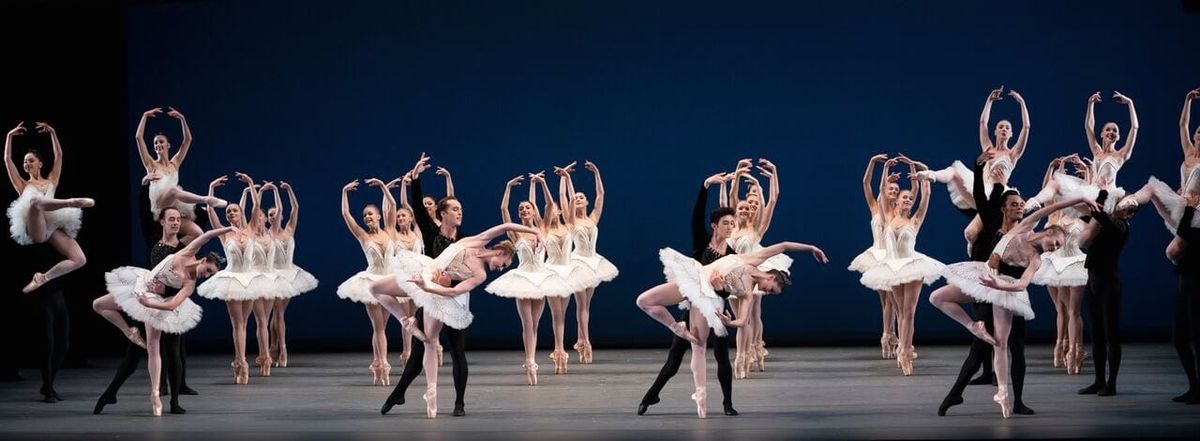
New York City Ballet closed the evening with "Symphony in C", the ballet which also closed the first New York City Ballet performance in 1948. The festival, though, was not trying for historical recreations, and the company wore the new Marc Happel costumes. Their overly ornate and rhinestone encrusted designs looked a bit out of place on the smaller stage, and the dancers had some trouble maneuvering in their fuller skirts.
But nothing could overwhelm Tiler Peck, with Tyler Angle, in the first movement and her gracious, smooth, and elegant dancing seemed to ride the crest of the music. Sara Mearns, with Jared Angle, danced the second movement with her inimitable air of floating through an alternative atmosphere. She did have a slightly awkward slip before the used and magical balances which seemed to throw her off a bit, but the City Center stage emphasized her personal, nuanced dancing. It also seemed to concentrate the ballet's energy, as the blazing dancers poured on, bursting with energy (in not always completely in sync). The evening had genuine excitement, as the audience seemed to realized that it might be another 75 years before another chance to see another celebration.
Copyright © 2018 by Mary Cargill



