Arcadian Holiday
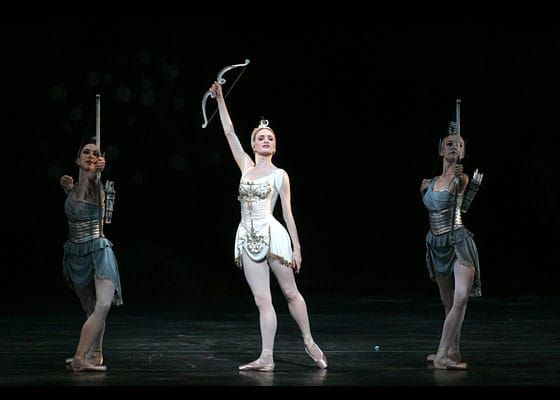
"Sylvia"
American Ballet Theatre
Metropolitan Opera House
New York, NY
May 9, 2016
"Sylvia", with its luscious Delibes music, gloriously traditional sets and delicate and inventive Ashton choreography, is a perfect spring-time gift, a calm visit to a world where love conquers all and even villains are rational. (Orion is not a dangerous force of nature, inexplicably out to destroy, à la Rothbart; he just wants a beautiful girl but has a rather rustic way of courting her.) ABT's opening night performance was a bit subdued, though there were many moments of radiant beauty.
Gillian Murphy, as the man-hating nymph sworn to the goddess Diana, was at her best in the opening act, flying around the stage in a frenzy of misandry until Eros had his revenge and she switched to tremulous little bourrées. She had an unfortunate slip in the second act seduction scene (where Sylvia dances in a skimpy sequined shift getting Orion drunk) and this seemed to throw her a bit. Her dancing, though clear was a bit subdued and she has been wittier in the past.
Murphy's solo in the final scene, to the famous pizzicato, too, has been better, and she seemed to be racing with the music rather than playing with it, though she finished with a flourish. The final pas de deux, however, was glorious, beginning with a ravishing backbend as she was carried in on Amita's shoulder, a wonderful metaphor for surrendering to love. The quick head turns, catching a little comma in the music, were perfectly timed and the backward jumps into Aminta's waiting arms for the fish-dives were fearless.
Marcelo Gomes was her Aminta, and as always, he was a magnificent and stalwart partner. Aminta, that pure-hearted embodiment of true love protected by Eros is, true to the pastoral genre, a bit passive by modern standards and Gomes, with his forthright, dynamic, and generous presence would probably be more comfortable duking it out with Orion on his island rather than waiting around the temple for Eros to rescue Sylvia. Aminta is danced in a minor key, hauting and sweet and Gomes is G Major, and though he understood the noble restraint of Aminta's first act choreography, he seemed relieved to explode in the last act and his solo, with the quick changes of direction, was tremendous.
The supporting roles were also very well danced. James Whiteside was a stylish boor as Orion, throwing himself around in a frenzy of desire. Craig Salstein was both playful and noble in the difficult role of Eros, making the god the true moral center of the ballet. The brief scene when he convinces Diana that love is truly master and that she should release Sylvia from her vow of chastity was as triumphant and transcendent as the coronation scene in "The Sleeping Beauty".
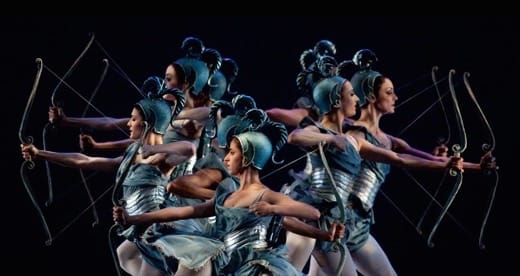
The corps, full of various naiads, dryads, and fauns, cavorted musically in the delicate, detailed choreography; Ashton matched the little shimmers in the music so well that the steps seem inevitable; he even made the cartwheels of the two slaves (Alexei Agoudine and Kenneth Easter) seem musical. This musicality makes it easy to overlook the sheer difficulty of some of the choreography. Sylvia's eight attendants have to synchronize fouettés while holding bows over their heads and make it look musical, which they did triumphantly, making the prance of the Valkyries one of the many highlights of this beautiful work.
copyright © 2016 by Mary Cargill