Anthemic and Glimmering
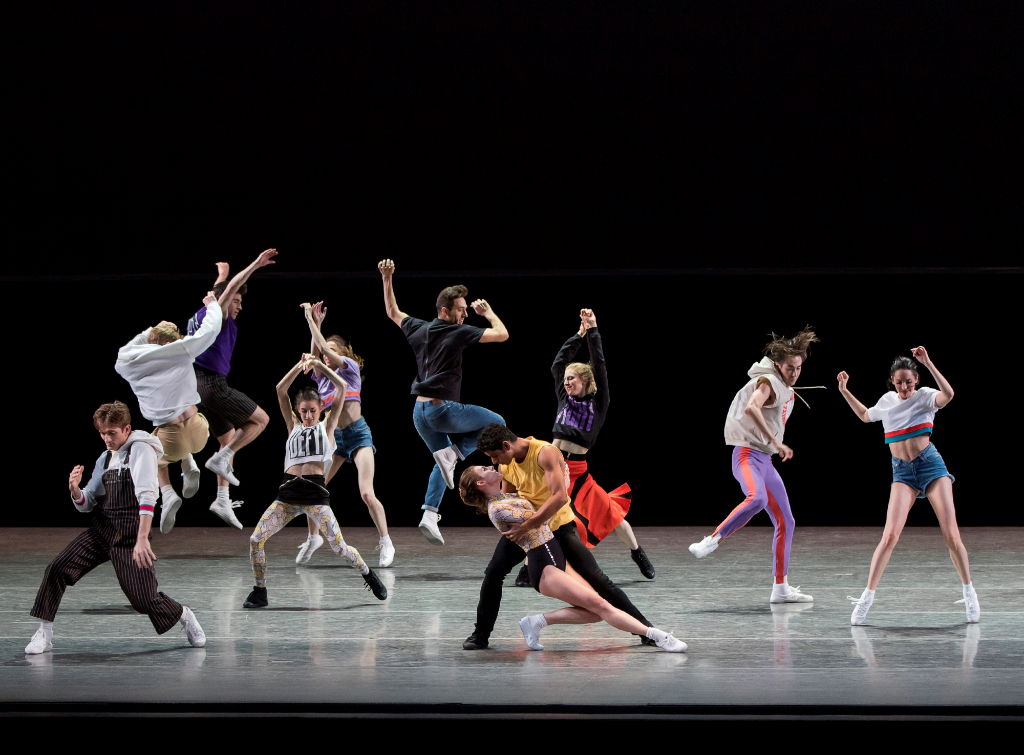
“Fearful Symmetries,” “The Shimmering Asphalt,” “The Times Are Racing”
New York City Ballet
David H. Koch Theater
New York, NY
February 1, 2017
With its winter New Combinations program, NYCB certainly saved the best for last. Starting with the tepid Peter Martins’ ballet “Fearful Symmetries,” and progressing to the different and intricate new work by Pontus Lindberg, “The Shimmering Asphalt,” the program culminated with the explosive new Justin Peck ballet that was fun, liberated and fundamentally inclusive.
The magic of Peck’s “The Times Are Racing” was rooted in the ballet’s all permeating sense of freedom. That the dancers were all clad in casual clothing (by Humberto Leon of Opening Ceremony) and sneakers instead of traditional ballet shoes, much like in Jerome Robbins’s “NY Export: Opus Jazz” from which Peck drew some inspiration, was already bound to give the ballet that quality, but the work went on to offer far more than that. Though the ballet was supposed to represent urban protest, and according to Peck was colored somewhat by the outcome of the recent presidential election, it ultimately didn’t seem like a political or social statement, but instead seemed fueled and empowered by the commitment that would normally accompany such statements. The work’s nuances appeared rebellious and definitively inclusive – hip-hop and tap and even some folk characteristics, as well as a few classical touches, coexisted in the matrix of the ballet’s steps, all lending different voices to an utterly powerful and joyful collective whole. The picture that Peck painted was so compelling and inviting that it was difficult to not want to be part of the dance and the energy created onstage.
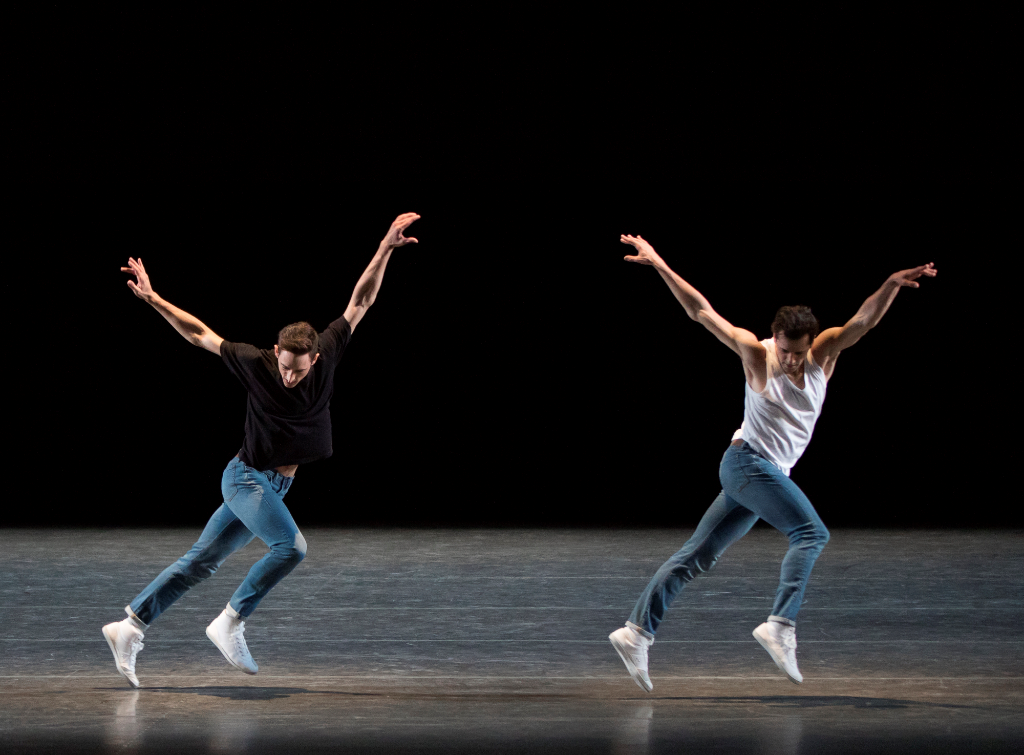
Certainly for Peck, and for NYCB, this work was a new flavor. The synthesized rock music of Dan Deacon’s “USA I-IV” quickly turned from lilting to aggressively electronic, bringing about the dancers’ dynamism to its infectious rhythms, and maintained the speed, urgency and energy till the very end, even in the slower sections. It wasn’t ballet as usual for this stage by any means, and remarkably, unlike with so many ballets, it made it difficult to pick a preferred section. A quartet for Gretchen Smith, Brittany Pollack, Savannah Lowery and Sean Souzzi, with ladies wearing matching cut-off denim shorts, offered a dynamic interplay with many interesting off-axis bends. The main duet for Peck and Robert Fairchild was littered with tap and competitiveness, apparently inspired by the video game Dance Dance Revolution that the two dancers played while they were roommates during school years (for the record, at least on the Koch Theater stage Peck clearly outdanced Fairchild). Another duet, for Tiler Peck and Amar Ramasar, laced the work with romance that started on playful notes but ended in a romantic kiss. And then there were the group dances, with their wonderful sense of inclusiveness. Though it clocked in at around 24 minutes, the ballet presented a rich world that fueled itself – the dancers’ energy regenerating the overall spirit with each reentry on the stage, and they supported each other in dance, spirit and physically, with several lifts executed by the ensemble. While dance is difficult to think of as being anthemic, the word fits “The Times Are Racing” perfectly, and the work and its expression invite the wish to be seen over and over again.
As exciting as this finale was, Lidberg’s "The Shimmering Asphalt" was an equally worthy and, one might say, necessary addition to the company’s repertory. The title of the ballet was evoked on stage in two ways – an obvious one, with the dark backdrop shimmering at the beginning and end of the work, and a far more interesting one, where the dancers themselves appeared to sparkle with movement that syncopated the steps of the various cast members. The tone of the work remained uniform, as did the grey costumes, with a tender duet for Rebecca Krohn and Russen Janzen and a moving meditative solo by Sara Mearns making the biggest statements to the commissioned string score by David Lang.
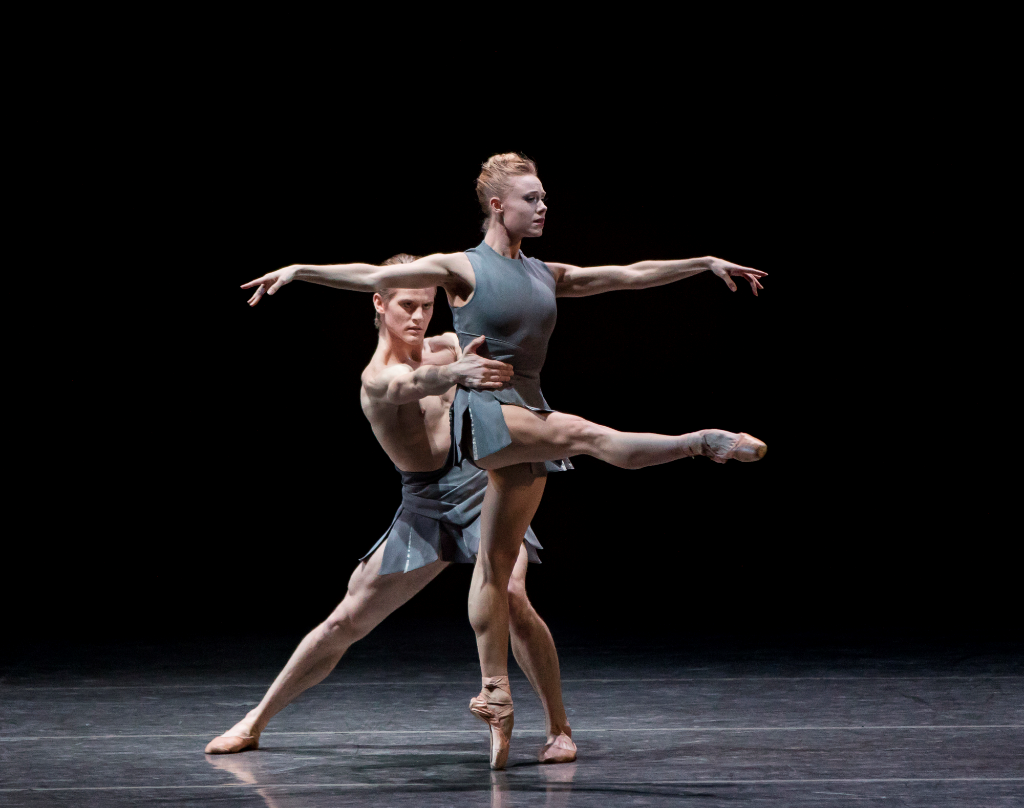
Most interesting, perhaps, here were the transitions and the reflections of the music in the dance, with the ballet’s composition going from solos, like the one for Mearns, into a group dance, such as when Mearns was then partnered by four men, to yet other storylines. In some ways this ballet was nothing new –- the dark and lilting spirit is frequently done, including by this company (last year’s “The Blue of Distance” and “Polaris” came to mind during the performance) -- but Lindberg’s interconnections and resonance in music, in his own way, seemed just different enough, and it would seem both he and the troupe benefited from this staging. The ballet may not have been all that unique, but it was memorable.
Martins’ “Fearful Symmetries” seemed like an odd choice to share the program with these two ballets, and the choreography’s steps set repeatedly on the note to John Adams’s music grew tiresome quickly. The work also wasn’t as synchronized as it could have been, and that took away the key ingredient that makes Adams' music interesting to watch as a dance. That said, it was a good vehicle for showing the rising stars of the company, particularly Unity Phelan, who danced through the motions with the goal of finding a way to make the often-jumbled steps interesting. There isn't much more to ask for with a night of great new ballets and great efforts of making an old work feel new.
copyright © 2017 by Marianne Adams



