Another Dawn
"Perpetual Dawn", "Fibers", "Troilus and Cressida (reduced)", "Black Tuesday"
Paul Taylor Dance
David H. Koch Theater
New York, NY
March 19, 2014
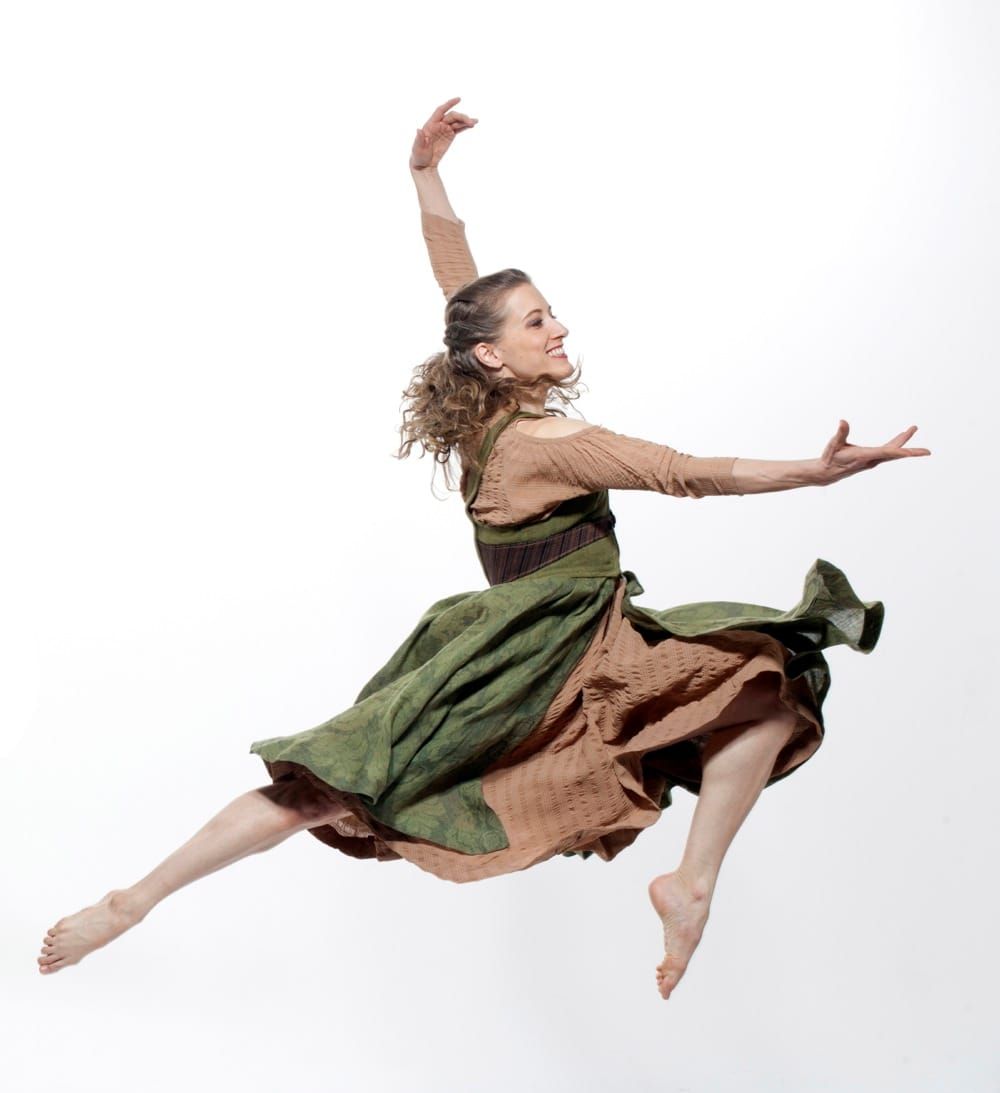
Paul Taylor recently announced that his company, previously dedicated to his works, will be changing format to include other modern choreographers, so this may be the last season of all-Taylor all-the time. Though the concentrated dose of Paul Taylor will be missed, this is actually a hopeful sign--he obviously wants the company to continue (he is 83), and it needs new works. "Perpetual Dawn" is a relatively new work (2013). It is set to the Bachish music of David Heinichen. with evocative sets and costumes by Santo Loquasto, suggesting misty fields in a bucolic heaven. The 11 dancers swirl on and off, running, skipping, and changing partners, sometimes joining in a group round dance, and showing various degrees of ecstasy. It looked a bit like a prequel for the haunting and elegiac "Eventide", with its richly defined mature couples.
It is beautifully crafted and the dancers look lovely, but it did seem a bit generic--the dancers weren't really individualized, despite the usual odd man out (in this case, Michelle Fleet, who does end up with James Samson). Michael Trusnovec and Laura Halzack, though, stood out in their formal, courtly pas de deux, and the piece had a peaceful, hauting golden glow.
The 1961 "Fibers", to music by Arnold Schoenberg, was not peaceful, though it is memorable, as the restless music propelled the two anonymous robot-like men (Robert Kleinendorst and Michael Novak, with their faces covered in masks) through slightly frantic explorations. The spare set (designed by Rouben Ter-Arutunian) suggested a tree, perhaps a sanctuary, as the dancers occasionally curled up in its trunk. The jerky moves, full of squats and curls, seemed to come from an inarticulate fury, as if they were failing in an effort to be human. They were joined by two women (Aileen Roehl and Christina Lynch Markham) in white-face, who danced with more lyrical, birdlike moves, still half-human/half-creature, trying to connect. It is a haunting, tangy work.
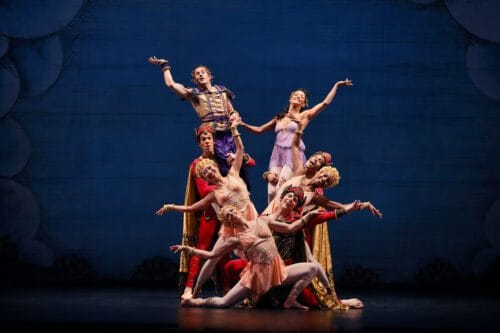
There is nothing tangy about "Troilus and Cressida (reduced), a faux-classical romp through Amilcare Ponchielli's overly-familiar but irresistible "Dance of the Hours". Taylor's burlesque is also irresistible, as Troilus, played with deadpan comic flair by Robert Kleinendorst, lumps around his Cressida despite his baggy pants and striped underwear. The three dizzy cupids (Eran Bugge, Heather McGinley, and Kristi Tornga) prop him up as needed, and prance around with impeccable musicality. Cressida (Jamie Rae Walker), another blond ditz, was played a bit broadly, with one eye on the audience, which reduced the wit a bit, but it is a light, cheerful, and musically incisive romp.
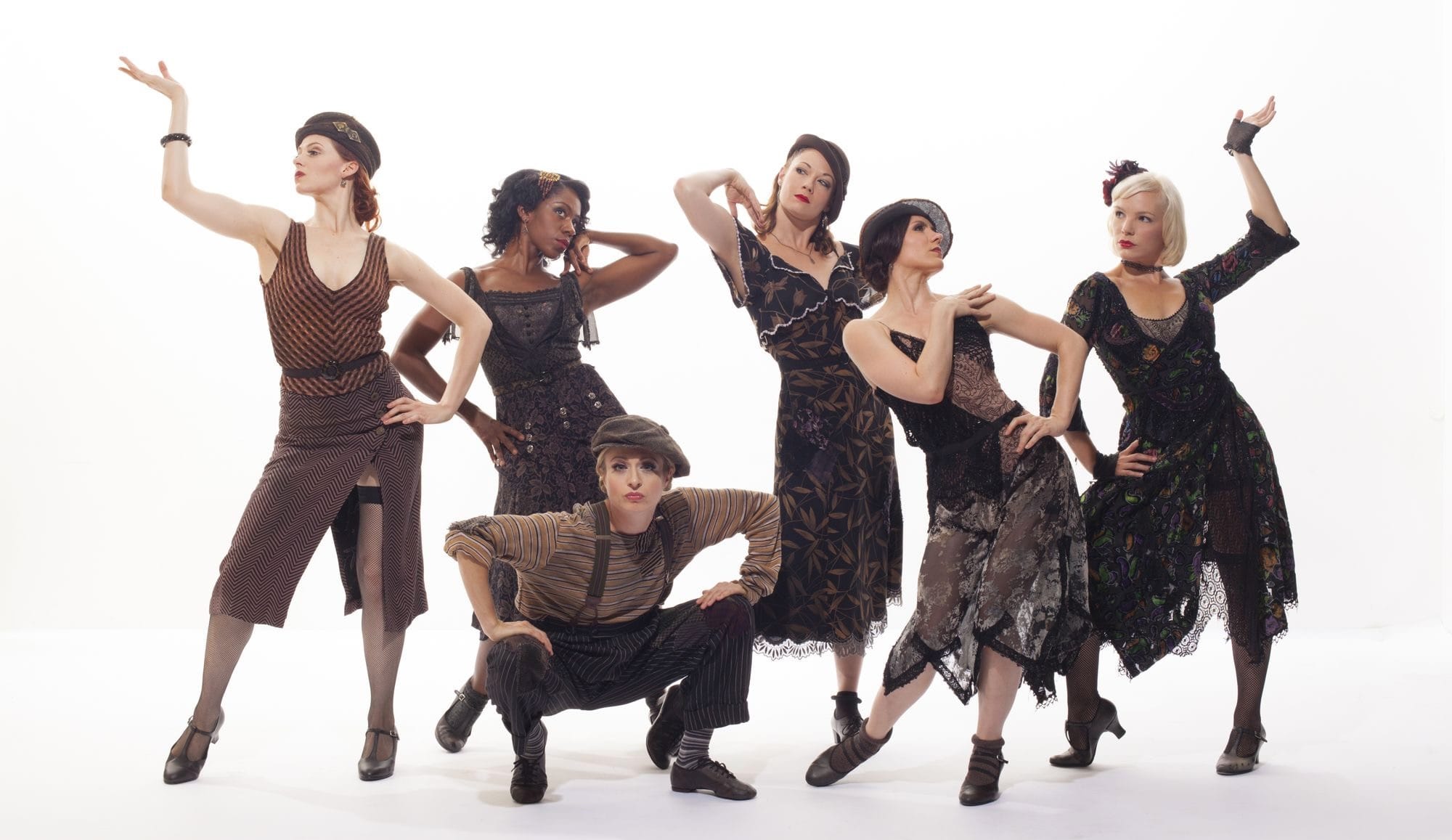
"Black Tuesday", to songs of the Depression era, uses recorded music, not as an economic requirement, but to set the scene, as the tinny, thin recordings emphasize the tawdry, desperate attempts at respectability that the dancers, in Santo Loquasto's evocative costumes. The songs have an infectious lilt that these lost souls use to whistle in the dark. The individual vignettes have a sour undertone, from the shabby soft-shoe opening "Underneath the Arches" (where traditionally homeless people slept) of Michael Apuzzo and Michael Novak to Kirsti Tornga "Sittin' on a Rubbish Can", visibly pregnant. Kleinendorst was making as much money as he could from his three charges, though the dances owe more to Groucho than to Karl, again showing a determined, almost wilful optimism.
Heather McGinley was the abused girl living on "The Boulevard of Broken Dreams". She was more strident than others I have seen, angry rather than wistful, but it suited her statuesque beauty. Michael Trusnovec danced the World War I soldier who comforted her, a decent man in the middle of squalid depravity. His all-American, open-hearted good looks and immaculate, powerful dancing made his final solo to Bing Crosby's "Brother Can You Spare a Dime" both elegiac and hopeful, a final gleam of brightness.
copyright © 2014 by Mary Cargill



