And So They Danced
“La Bayadère”
American Ballet Theatre
Metropolitan Opera House
New York, NY
June 3, 2015
by Marianne Adams
copyright © 2015 by Marianne Adams
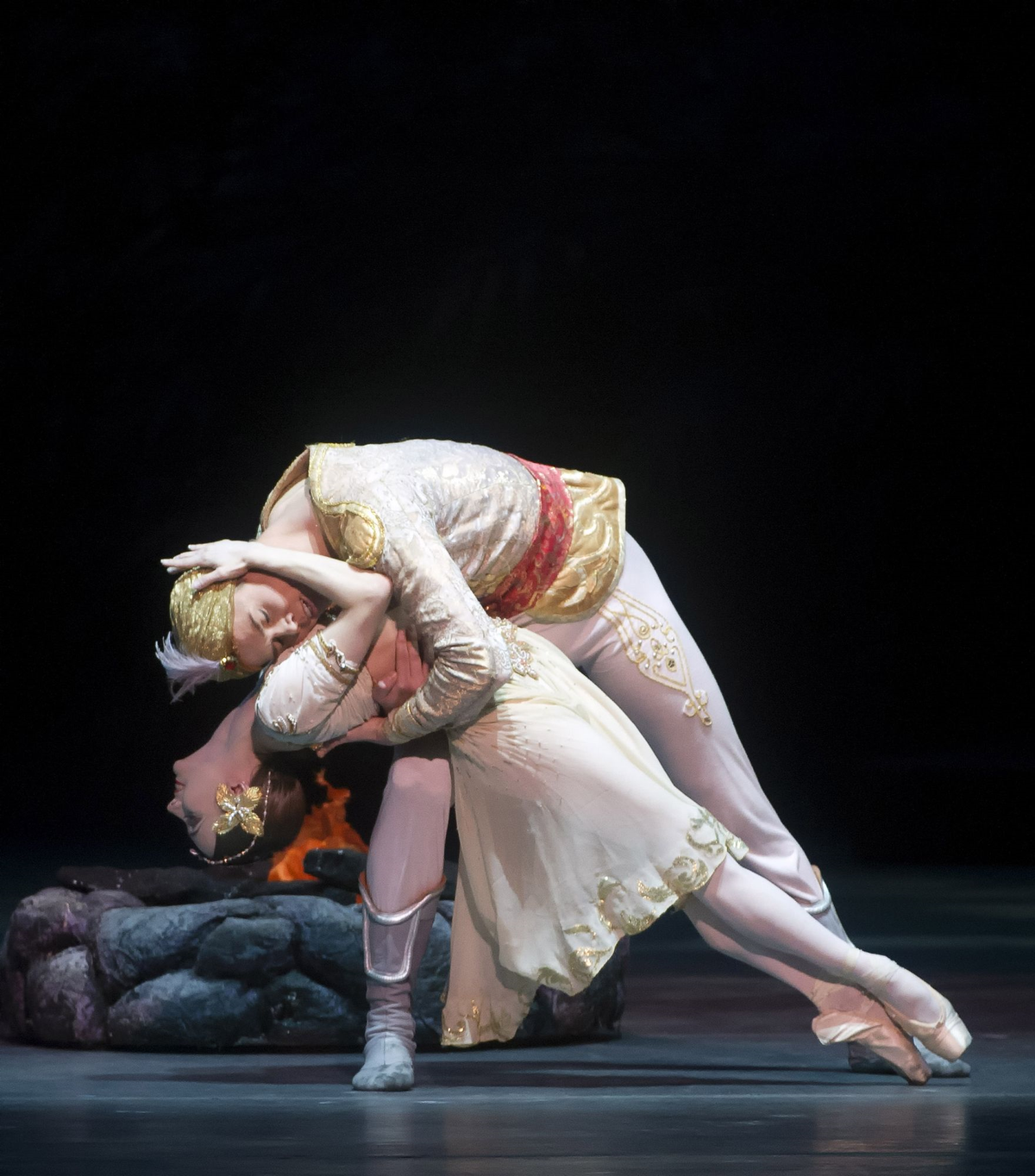
So much can be said in a span of two hours, particularly in the context of “La Bayadère,” that it is sad when the opportunity is wasted. Unfortunately, it was precisely this that became the takeaway from ABT’s performance of the pruned and tired Natalia Makarova's 1980 production of the ballet with Maria Kochetkova, who replaced the originally scheduled but injured Natalia Osipova, Leonid Sarafanov and Isabella Boylston. The ballet’s delivery was very clean and refined, but empty of much meaning or content.
The main leads, Kochetkova and Sarafanov, were both appearing in the ballet for the first time with ABT this season, but their abundant performing experiences elsewhere certainly allowed for beautiful moments, particularly in the Shades act where Sarafanov impressed with his light and limber grand jetés and Kochetkova maintained impeccable precision in the technically demanding adagio and variation, both of which are riddled with strength-testing balances and turns. But “La Bayadère” in its full version calls for more than just beautiful delivery of this white act, demanding dramatic skills, connection with the music and carefully crafted character interpretation, each of which were points of weakness for the leading couple.
Being the fastidious dancer that she is, Kochetkova made each move look accurate, not underdone nor overdone, but also empty, as though she was tasked with execution of plot-less modern choreography rather than a story ballet. If at first her emotionally vacant approach seemed calculated, with her opening scene’s walk down the temple steps looking careful but indifferent, focused on the pliant articulation through the foot because her Nikiya’s heart must have been somewhere else, as the ballet progressed the dancing seldom moved beyond such precise and focused execution. Her rendition of the ballet's signature lingering body S-curves in the first solo was quick and matter-of-fact and the duets with Sarafanov and then Boylston’s Gamzatti were similarly all business – bow, turn, bourrée, repeat. She may have filled the space given to her to express herself, but didn’t say much.
Kochetkova’s very petite stature also did not help matters, as standing at only 5 feet tall she looked dramatically smaller and younger than everyone else on stage, even Sarafanov, who hasn’t lost his young lad look despite a decade and half of dancing. If next to him Kochetkova’s height was only a slight disadvantage – after all, for most of their dancing she was an apparition, and those can come in any shapes and sizes – the scenes with others, like the one where the Brahmin asks for her hand, or where the strong-willed Gamzatti demands that she give Solor up, suffered a set-back, as instead of looking emotionally charged they looked almost inappropriate and abusive of such a small and young girl.
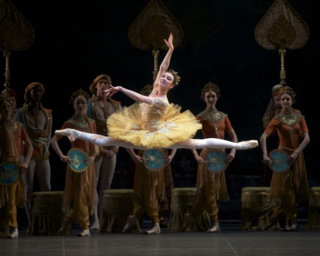
For his part, Sarafanov went with a tried-and-true for him youthful personification of his character, with frequent confused facial expressions, gentle approaches to the mime, and little passion in his resistance to the wills imposed on him. While this approach certainly works well for him next to emotionally sizzling ballerinas who dominate the role and allow him to be an elegant complement to their drama, here it only underscored the barely reactive chemistry of the leads. Despite long-honed theater skills during his time with the Mariinsky which should've helped him carry the role, if not the ballet, when Sarafanov seemed unable to emotionally connect with Kochetkova on stage he opted instead move away from acting and focus on showcasing his dancing skills. At least there his signature elegant arabesques, double tour en l’air sequences and the remarkable manege of grand jetés en tournant didn’t let him down.
And so they danced, precise, refined, but unconnected to the music or each other.
Left to pick up the slack and determined to deliver some drama, Boylston positioned her Gamzatti as a unique and strong presence, and her assertiveness and commanding use of steps and gestures were eloquent and compelling. So engrossed was Boylston in her role that at times she even allowed herself to get carried away, letting a turn or two swerve at the end of the last revolution but never dropping the character. It was refreshing to see her choose theater over ballet academics -- not only did she dance well, she actually had fun with the role!
And Boylston wasn’t alone. A powerful performance also came from Gade Stone Shayer as the head fakir Magdaveya, whose fiery dancing and jumps that bounced off the floor were as electrifying and free as the flame he and the other fakirs danced around in Act 1. No less remarkable was Aaron Scott as the Bronze Idol, delivering a humanized yet otherworldly portrayal thanks to his weightless jumps and punchy, staccato arm movements. Was he human? Was he a statue? Was he a god? It’s great when the role’s execution begs those questions.
Indeed it was hard to complain about the dancing itself, but one can hope that next time these performers show up to deliver more.
copyright © 2015 by Marianne Adams



