An Open and Adventurous Program
“Opus 19/The Dreamer,” “Lineage,” “The Shaded Line,” “Symphony in C”
New York City Ballet
David H. Koch Theater, Lincoln Center
New York
October 13, 2019
Lauren Lovette doesn’t look like a person who makes waves; the word “adorable” could have been invented for her. There is evidence, though, in her dancing, that she can recreate herself, as she did on Sunday in Jerome Robbins’ “Opus 19/The Dreamer,” where she became almost feral in a nightmarish segment of the ballet. Far more surprising is that, in addition to the intelligence and versatility she brings to roles as a principal dancer with New York City Ballet, she is a choreographer — one of the few NYCB women ever to create works for the company — and Lovette is doing all this while still in her twenties. Her newest endeavor, premiered this season and performed Sunday is titled “The Shaded Line,” and it is a startling addition to the company’s repertory.
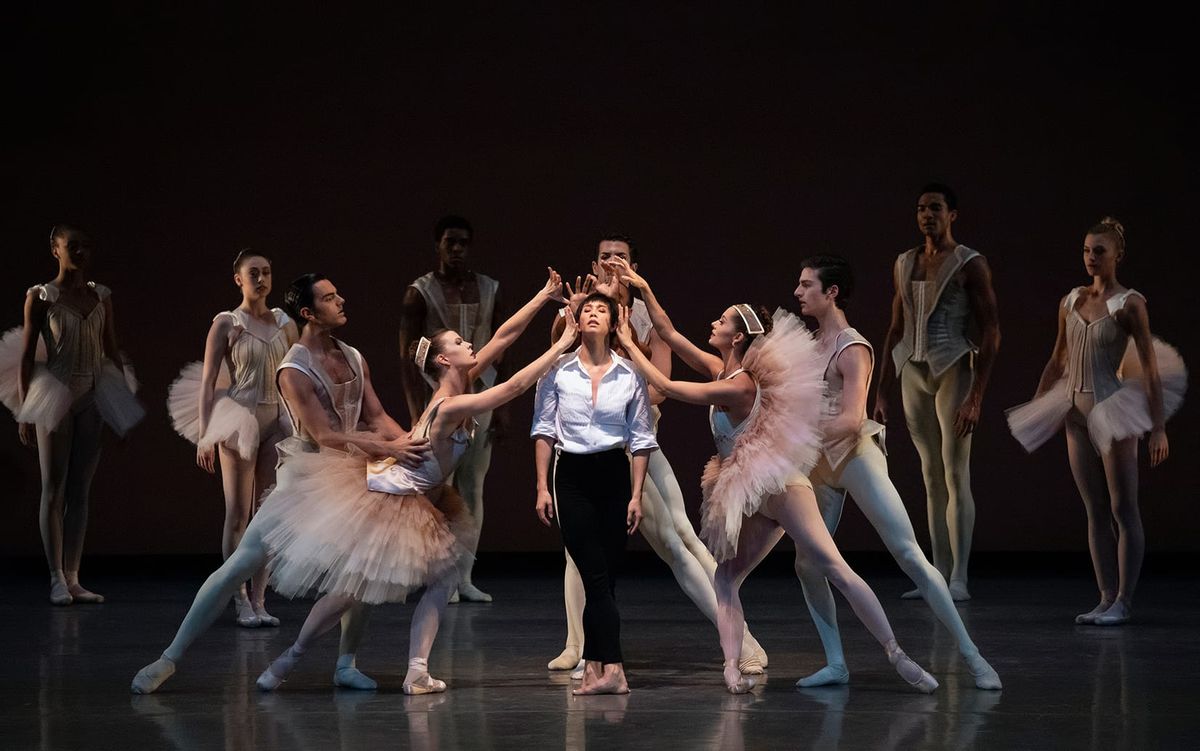
“The Shaded Line” concerns the ballet world’s gender discrimination, and it is couched in a structure that is inventive enough to keep it from being purely polemic. It stars Georgina Pazcoguin, one the of company’s most compelling dramatic dancers. The curtain rises to a blast of cymbal crashing music by composer Tan Dun, reminiscent of Chinese Peking Opera. Pazcoguin is center stage dressed in black pants and white shirt, and coiffed in a short black gamine wig. All these elements render her gender androgynous, her only overtly female sign being black pointe shoes. She is surrounded by a corps of tutu clad women and classically dressed men (the costumes are by Zac Posen). Pazcoguin struggles not only against the traditional world signified by the corps, but within herself. With the support of a male (KJ Takahashi) and two female (Mary Thomas Macinnon and Unity Phelan) protectors, she removes her pointe shoes and dances more freely, sometimes acting the role of male partner, until at the end, she replaces her pointe shoes. As the curtain falls, she once again is center stage, standing on pointe, a pillar of rigidity. Some have seen this last pose as a sign of new-found freedom. To me, it looked more like acquiescence to the status quo.
It is difficult to imagine a work with Lovette’s theme being created at NYCB five years ago. Could “The Shaded Line” indicate that the company’s new directors are taking a more open and adventurous stance? If so, it is welcome.
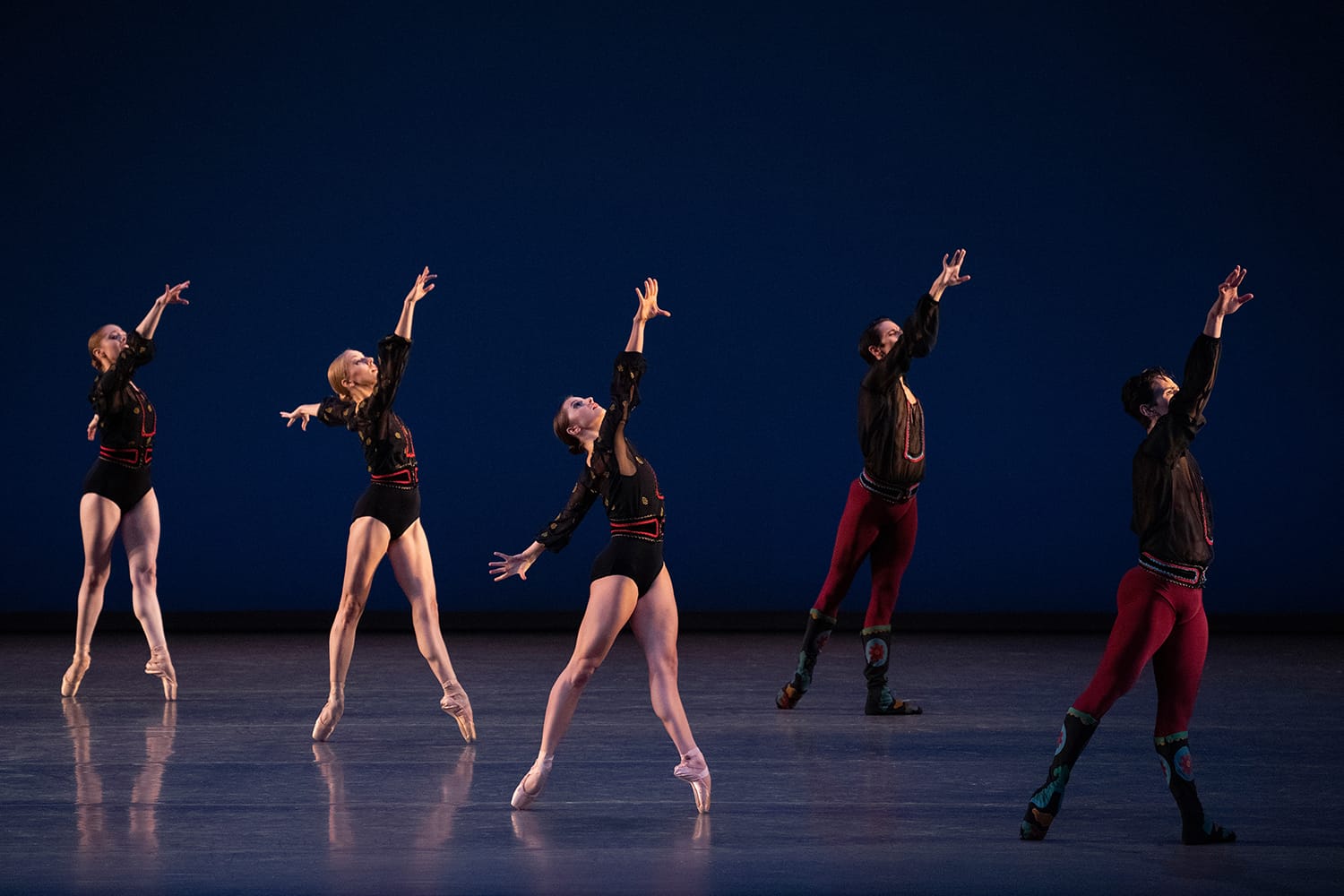
Also new this season is Edwaard Liang’s “Lineage,” with a score by Oliver Davis and costumes by Anna Sui. Both “The Shaded Line” and “Lineage” were part of the NYCB’s fall gala, which features costumes by fashion designers. The Liang work features four couples backed by a corps of eight. It is a plotless work with a vaguely Eastern European feel in occasional folk-like gestures and in the dark red and blue costumes, in which the men wear knee-high boots and women have outlines on their bodices that resemble the aprons of peasant dresses. Mostly, though, the work centers on duets for Ashley Bouder and Peter Walker, Megan Fairchild and Gonzalo Garcia, and Emilie Gerrity and Jovani Furlan that are in the hoist and grapple mode perfected years ago by choreographers like Kenneth MacMillan. This movement results in awkward transitions in and out of equally awkward lifts that often have the women splay-legged over the head of their partners or twisted around the men’s bodies like pieces of stiffened rope. Then, just to add to the spectacle, there is a showy dance segment for Roman Mejia with a lot of jumps and turns meant to get an audience cheering. Meanwhile, Mejia’s partner, Indiana Woodward, has little to do but show up. Once again, newcomer Jovani Furlan impressed with his attentive partnering and clean movement. Megan Fairchild also was notable. Cast against type, she was lovely in a slow duet with Garcia that allowed her to expand and breathe into a role rather than impress with speed and bravura technique.
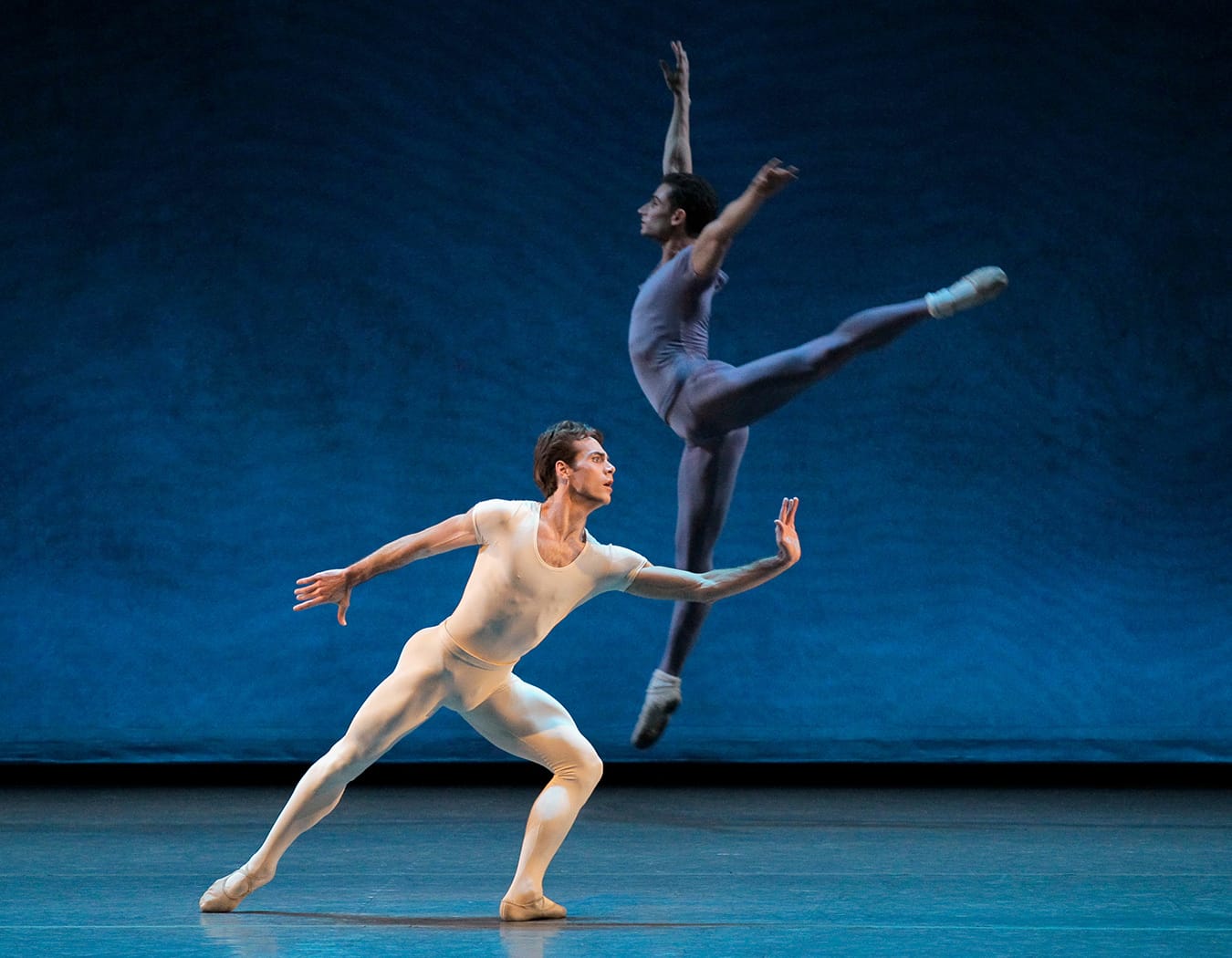
Jerome Robbins created “Opus 19/The Dreamer” for Mikhail Baryshnikov in 1979. It is an unusual ballet for Robbins, whose work generally tends to be more extroverted. Here the protagonist goes through a journey of discovery that includes nightmarish encounters, particularly with a woman who serves as a sort of alter ego, before emerging into mental and emotional calm. It is a major role for a male dancer, who is on stage for almost the entire ballet. But in this instance, it was the woman who often dominated, Gonzalo Garcia seeming almost passive in the face of Lovette’s powerful depiction of the woman.
The evening, and the fall season, ended with Balanchine’s “Symphony in C.” Bouder, dancing with Joseph Gordon, was in top form, looking happy and effortless in the first movement. Woodward and Sebastian Villarini-Velez looked equally happy in the flash and speed of the third movement, as did Brittany Pollack and Devin Alberda in the fourth. The only slight disappointment was Sterling Hyltin, partnered by Amar Ramasar, in the second movement adagio. Hyltin is a quicksilver dancer who doesn’t have quite the amplitude needed for this role. On Sunday she also was not dancing with her usual clarity. In general, though, “Symphony in C” had the right energy and the kind of grand finale that puts a nice exclamation point to the end of a season.
copyright © 2019 by Gay Morris



