An Evening of Imperfect Compliments
“Carmen Suite,” “Woman in a Room”
Mariinsky Ballet
BAM Howard Gilman Opera House
New York, NY
February 27, 2016
Mariinsky Ballet’s visit to New York this winter was incredibly short and focused, presenting only four shows of mixed-bill variety, all dedicated to the late Russian ballet legend Maya Plisetskaya who passed away last year, and spearheaded by the two biggest names of the company, Diana Vishneva and Ulyana Lopatkina. Program C of this four-part tribute was headlined by Diana Vishneva exclusively, and offered an odd pairing of the full version of perhaps the most defining ballet of Plisetskaya’s career, the 1967 “Carmen Suite,” and a solo work created for Vishneva in 2013 called “Woman in a Room.” From structure to presentation the evening raised a lot of questions, but remained enjoyable.
That it was this company, rather than the Bolshoi with which most of Plisetskaya’s artistic life was tied, that did the tribute was the first oddity, and was reinforced during the whole first act of the company’s take on “Carmen Suite.” These dancers, while excellent at their craft in their own way, are not the heirs to the reckless and daring style of Plisetskaya or the Bolshoi, and it was evident throughout “Carmen.” Vishneva tried to channel the legend in her treatment of the lead character – at times spreading her arms wide with abandon, opening her mouth for emphasis, integrating dismissive flair in her walks on stage – but it fell short of giving the character that devil-may-care attitude that looked both reckless and sexy on Plisetskaya.
When it comes to “Carmen,” however, that attitude is everything. From the ballet’s origins in 1966, when the aging, 41-year-old Plisetskaya convinced Cuban choreographer Alberto Alonso to make for her this modern and daring work, to her push for a new score that ultimately came in the form of refashioned by her own husband, Radion Schedrin, Bizet music after both Dmitri Shostakovich and Aram Khachaturian refused to take on the project, the whole work was forged by a rebellious and defying attitude. When the ballet was completed, Plisetskaya was called a traitor to classical style. That didn’t stop her, of course, and when her Carmen tilted her shoulder, or sat deep in her hip, she may have been taunting Torero on stage, but it’s hard to imagine some of that attitude wasn’t also meant for her critics. Plisetskaya went on to perform “Carmen” over 300 times, making the work a classic, and it is difficult to think about one without thinking of the other.
It's hard to think of a better ballet for a tribute to the late ballerina, but coincidentally, the role of Carmen was defining for Vishneva as well. It is this character, with new choreography (to Shedrin’s music) created especially for her by the late artistic director of the Vaganova Ballet Academy, Igor Belsky, that helped her win the Prix de Lausanne competition in 1994, launching her career. Her Carmen, however, was sweet and tempered, rather than radiantly obnoxious, and Vishneva’s performance here, especially of the first solo, only reinforced how much better she inhabits her own, simpler version of the character.
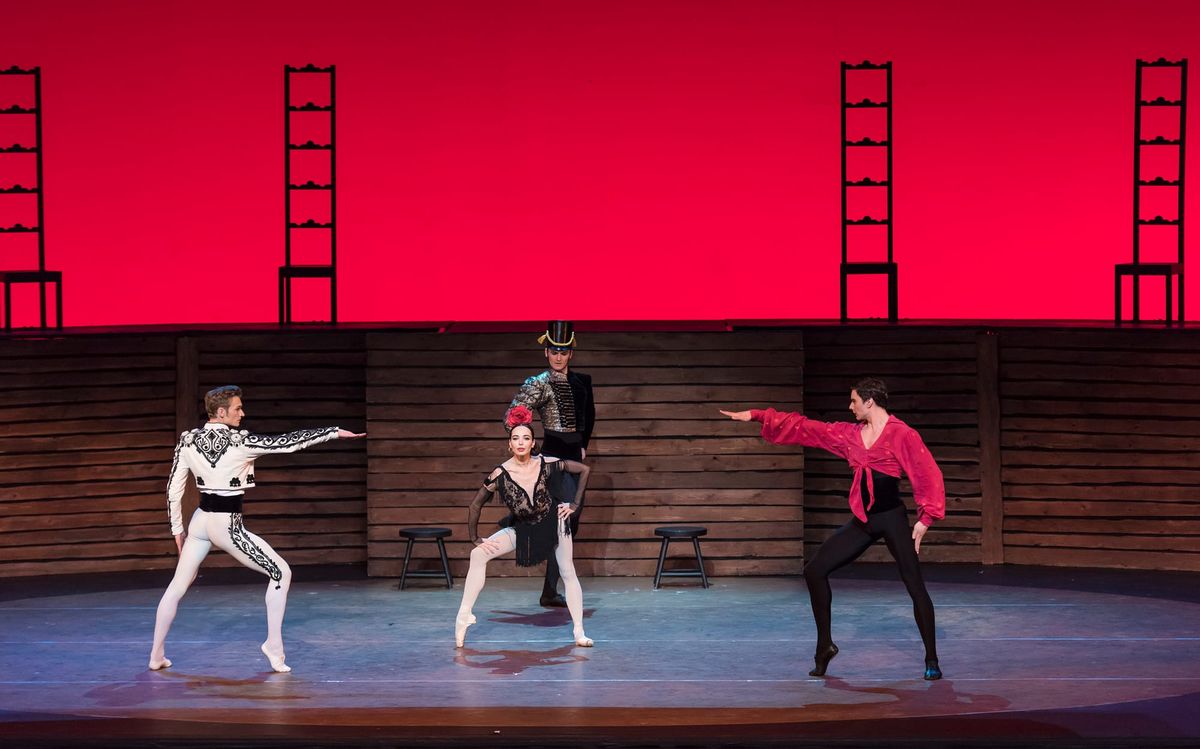
Amid this, and a few other misses, the “Carmen” performance did have several hits. Vishneva’s duet with Alexander Sergeev as Torero, where Carmen seduces the bull fighter, possessed scrumptious emotional tension, particularly in the section when the dancers move in near synchrony side-by-side, facing the audience to the gentle but persistently punctuating notes of the orchestra’s string section. Her second duet with Ivan Oskorbin as Don Jose, which followed the scene with Torero, was equally enjoyable. The dancers there took full advantage of the abundant lifts and broad use of the stage space in the choreography in their expression of love’s fleeting passion. Independent of Vishneva, the men's own dancing also wasn't free of foibles. Oskorbin in his first solo after his character encounter with Carmen presented a disproportionate reaction to their meeting, appearing far more moved alone than he did in the duet; Sergeev for his part looking confident, but lacking true matador fierceness. Flaws aside, it was a good and rare treat to see this ballet in its full version.
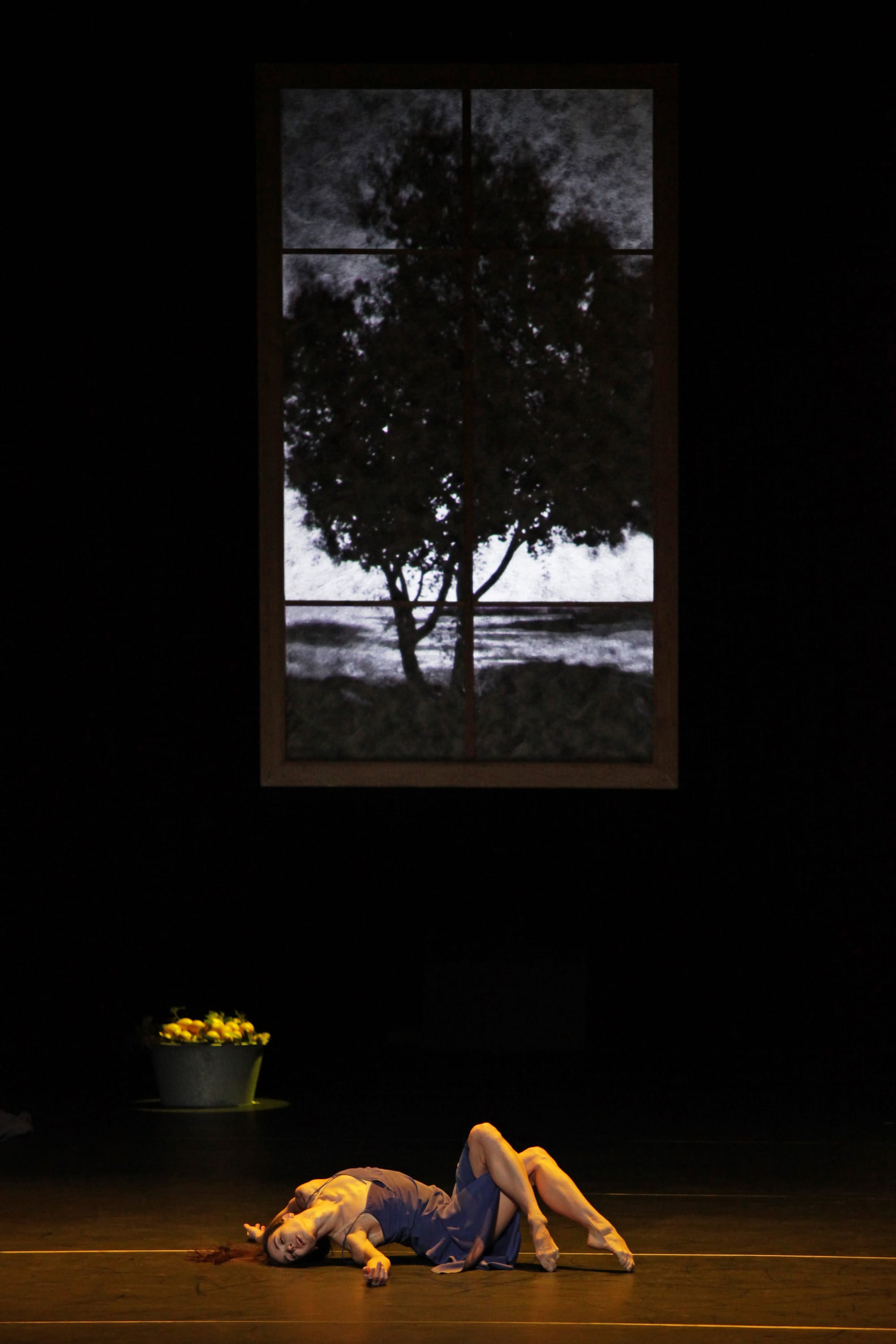
The second act was Vishneva’s one-woman ballet, the 2013 work created for her by Carolyn Carlson. “Woman in a Room” is a simple enough piece: there’s a woman, a room with a window view of a tree, a large table, a crate of lemons and some sartorial props, with the ballet's substance all coming from Vishneva’s dramatic expression of various haunting and overtaking moods. Unlike in “Carmen,” where she was working hard to deliver a particular type of performance, here Vishneva truly let loose and gave the audience a moving glimpse into not only her character’s complex psyche, but also her own extensive dramatic range.
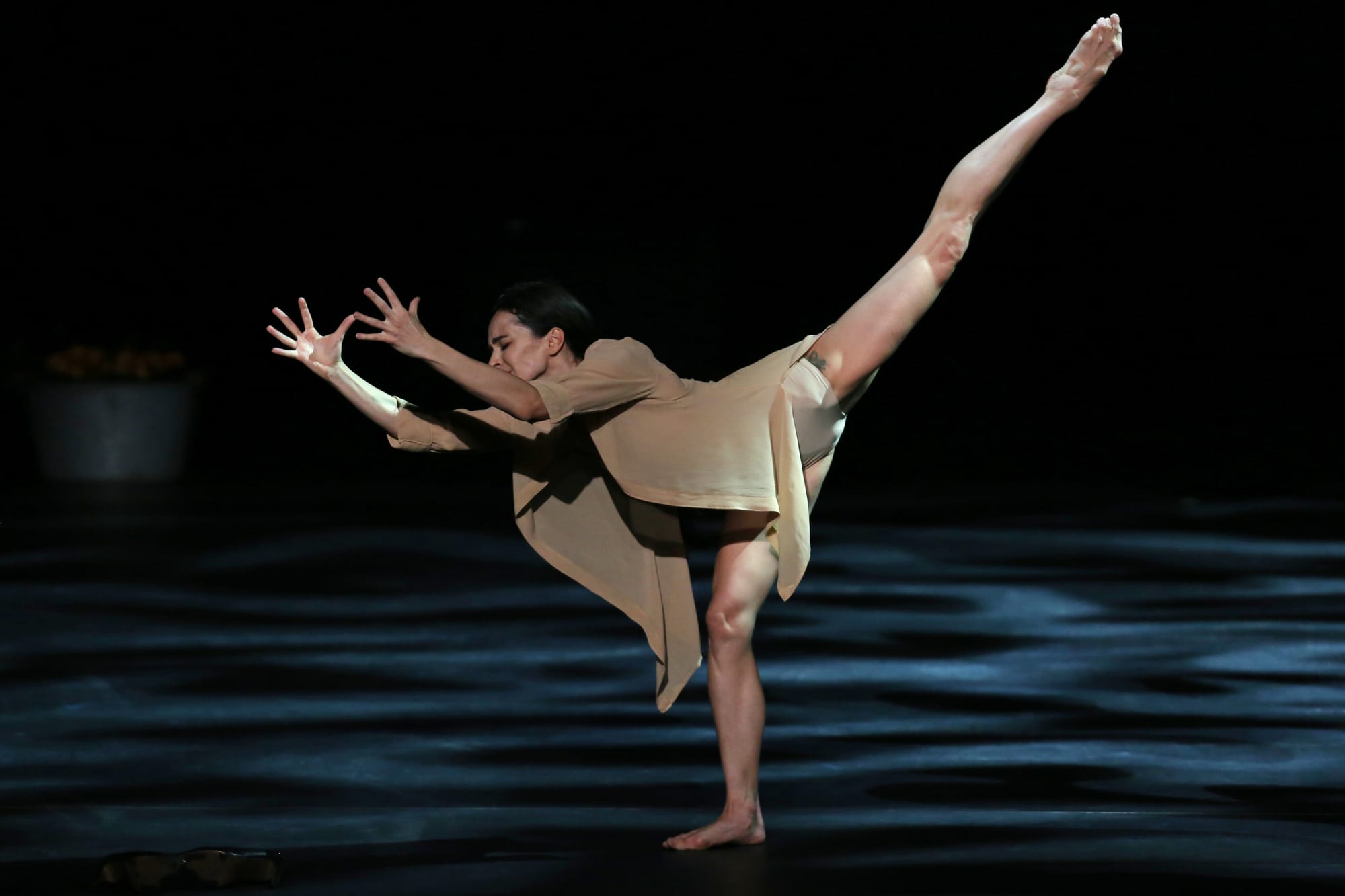
For nearly 40 minutes Vishneva would lean on the giant table, lifting her legs in the air and moving them as though running on a fast paced treadmill, failing to outrun her demons, she would remain still on the table, then move around, change clothing, stop lost in thought. The dancing sections of her appearing barefoot in a trench coat, then in an evening dress and high heels, or merely a nude leotard, offered sequences that were as varied as the clothes and the emotions that went with them, though, remarkably, the work often felt improvised rather than choreographed. Toward the end, Vishneva cut a lemon in half, dancing with it in a moment of liberated joy. As the ballet took another somber tone, the realization that happiness lay in slicing through the lemons she was given led to a jubilant finale in which Vishneva stepped off the stage and into the audience hall to share that joyful moment and those fruits with the crowd.
It was a refreshing performance, and in many ways probably a far better tribute than “Carmen.” Like Plisetskaya, Vishneva is a bit of a rule breaker and a trailblazer, and this quality of living her artistic life by her own rules and wishes is perhaps the one thing the two ballerinas have in common. Vishneva’s forte is not the great classics but the interesting modern works she ushers to the stages that sometimes flop and sometimes delight. With “Woman in a Room” there was less dancing but far more drama, and though this ballet and the evening as a whole seemed to be more about the ballerina on stage, rather than the one departed, presenting this type of work, in which Vishneva thrives, was the better way to honor Plisetskaya.
Still, there is something to be said about the fact that ultimately the evening’s biggest compliment to Plisetskaya was in what Vishneva hasn't done –- emulate the legend.
copyright © 2016 by Marianne Adams



