Amor Vincit Omnia
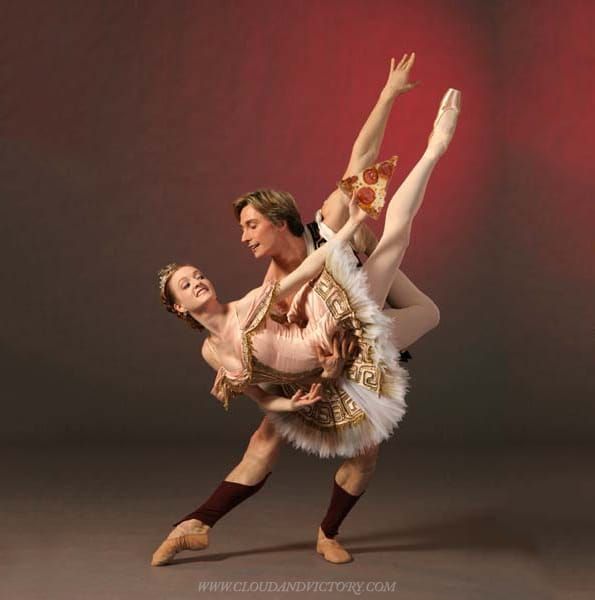
“Sylvia”
American Ballet Theatre
Metropolitan Opera House
New York, NY
July 3, 2006
Several critics have referred to Sir Frederick Ashton’s “Sylvia” as the “surprise hit” of ABT’s last season. Hit, yes, but surprise? Given the piercing and triumphant sweetness of the score, the brilliantly realized, classically inspired designs of the London production, and the choreography by one of the greatest and most musical of dance makers, it would have taken some truly awful dancing to have destroyed this beautiful work, and ABT does not have truly awful dancers. The real surprise is that it was only given a niggardly four performances over a holiday weekend this year.
The very limited run may have contributed to the slightly disheveled opening, where the various naiads, dryads, fauns, and sylvans seemed to have some trouble with the precise and elegant timing needed to make the quick little head movements and arm flickerings look like the steps bubbling up from the music, and not overly cute little flourishes. But that, and the orchestra’s horns, were the only slight missteps in a glorious performance.
Maxim Beloserkovsky danced the shepherd hero Aminta, who is in love with the nymph Sylvia, sworn to chastity by her leader Diana. His plaintive and wistful dance of unrequited love was a portrait of heroic innocence. There have been some slightly dismissive comments about the passive character of Aminta, who has only to worship Cupid to be rewarded with Sylvia and can leave all the heavy fighting to the gods. But that was the literary convention which Ashton, using the original libretto, built on, and with Beloserkovsky’s quiet authority and noble line Aminta became a natural hero.
Sylvia, choreographed originally for Margot Fonteyn, gets a variety of moods. Gillian Murphy seemed most at home in the first act “I am woman, watch me shoot” choreography of the fierce and chaste nymph, backed up thrillingly by her attendants. But she seemed more comfortable with the more lyrical moments than last year, and her gentle little bourées around the lifeless Aminta, surely meant to echo her heartbeat, had a true expressive beauty. She bounded through the seductive second act, dazzling the audience as well as Marcelo Gomes’ evil hunter.
The final pas de deux seemed a bit under rehearsed, with some awkward phrases, and the melting, head on his shoulder moments could have used more time to register the heart stopping beauty of Ashton’s choreography, but she negotiated the quick changes of direction in her final pizzicato solo very well.
One of the glories of ballets like “Sylvia” is the roles it gives supporting dancers, both for the audience, which gets to see a variety of styles, and for the dancers themselves, who get a chance to develop. Eros was Carlos Lopez, who was especially funny as the fussy Eros in disguise, pretending to discover that Aminta was dead. I missed Herman Cornejo’s majestic dancing as Eros in the final act, where he made it clear that Eros was powerful and possibly dangerous; as yet Lopez concentrated on doing rather than characterizing the steps. The frisky goats, Anne Milewski and Craig Salstein, were audience favorites, and give a wonderful variety to the celebration. Veronika Part was type cast as Terpsichore, dancing what must be a very difficult variation full of little jumps while holding a lyre in the crook of her arm with the grace and ease of a hostess pouring cream.
Carmen Corella, as Diana, made an indelible impression in her brief appearance. Unlike many classical ballets which end with a wedding (we do assume that Aminta and Sylvia will tie the knot), the pas de deux is not the climax—Ashton possibly followed the glorious example of “The Sleeping Beauty”, where the moral climax follows the pas de deux, with the crowing of Aurora and her prince. The emotional climax of Sylvia comes when Diana acknowledges Eros’ power, and the audience sees this fierce goddess kneel before him. Corella’s brief mime scene after Eros reminded her of Endymion, her shepherd love, was a gripping portrait of longing for a lost love, and one of the most moving few minutes I have ever seen on stage. But love, and Ashton, conquer all, and even for a brief time, reason and light showed clear.
copyright ©2006 by Mary Cargill



