American Stories
"Preludes", "Homage to Edgar Allan Poe", "Are We There Yet?", "Frida"
Sokolow Theatre/Dance Ensemble
The Theater at the 14th Street Y
New York, NY
December 7, 2014, 3:00
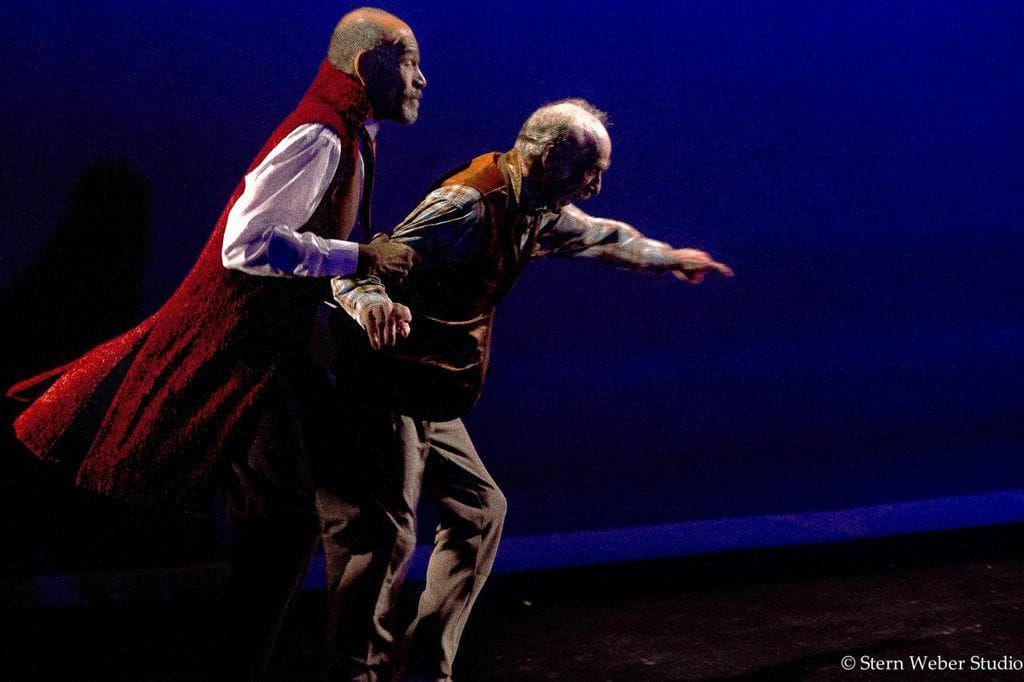
The Sokolow Theatre/Dance Ensemble presented a group of dances by modern choreographer Anna Sokolow with American themes; George Gershwin, whose music was used for her 1984 "Preludes" represented the cheerful, optimistic side, while "Homage to Edgar Allan Poe" (1986 and 1993) and "Frida" (1997) focused on the artistic struggles of two American artists. This Americana was leavened with "Are We There Yet?", a duet by Alan Danielson danced by Jim May, the company's artistic director, and guest artist Clay Taliaferro.
The piano music, by Satie, was played by Amir Khosrowpour, a luxury in this era of taped music. The two dancers moved through the duet with a spry dignity, an elegant Mutt and Jeff collaboration, two old friends re-fighting old battles and re-arguing old disagreements, and supporting each other against outside forces. It was an elegant, delicate, and gently moving portrait of old age and its discontents.
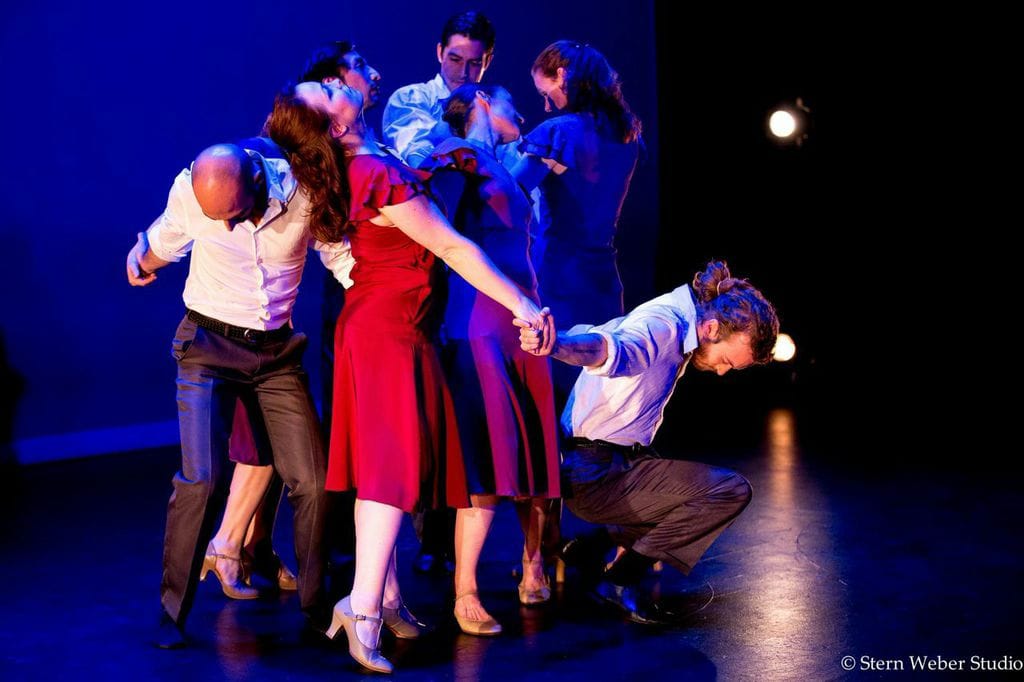
Youth was the focus of "Preludes", as four couples danced to the bluesy Gershwin music, again played live by pianist Khosrowpour. There was a slightly '40's feel about the casually elegant costumes, with the men in black pants and crisp white shirts and the women in slinky silky dress and heels; there was even hint of cigarette smoking to reinforce the hazy afternoon feel of these chance encounters. The causal groupings, often clustered around the on-stage piano, had a glorious sense of fun as the men seemed occasionally to channel Fred Astaire, flicking their hands in perfect time.
"Homage to Edgar Allan Poe", to swirling piano music by Rachmaninoff, was a meditation on three of Poe's best-known poems, "The Raven", "The Bells", and "Annabel Lee", with selections recited by Jim May. This was daring--how many times have the "tinkle, tinkle, tinkle of the bells, bells, bells" been warbled by high school students? But May's diction, seriousness, and phrasing made the poems seem fresh. The piece opened with a group of dancers in a gloomy circle, surrounding the poet (Gregory Youdan), who suffers alone. He faces the world "weak and weary" with stylized movements which avoid cliches and the combination of the poem, the music, and the simple movements is stunning.
"The Bells" is a more celebratory group dance, a communal gathering, as the bells seem to summon up a wedding. Again, the music, the words, and the simple line dances merged into a seamless whole. The final piece, inspired by the mournful lyrics of "Annabel Lee" was a pas de deux for Lucy Sydel and David Glista. May's slow, ruminative delivery avoided the trap of the over-familiar words and dance had a haunting, timeless quality.
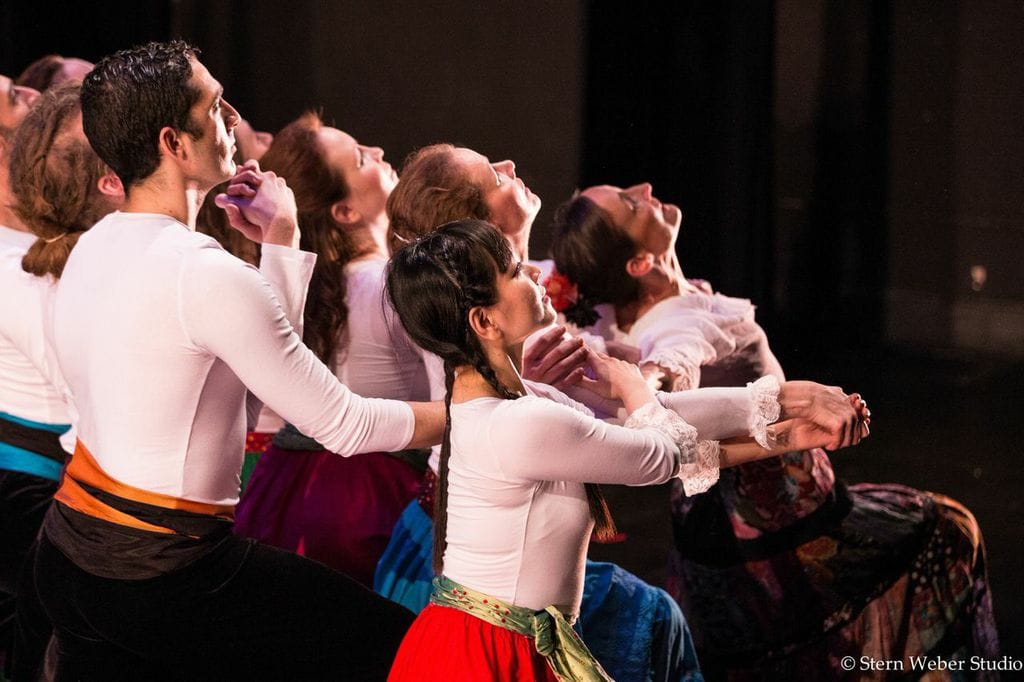
"Frida", Sokolow's 1997 meditation on the life and death of the artist Frida Kahlo, was the only work that relied on recorded music, an amalgam of traditional Mexican melodies and excerpts from several Mexican and Spanish classical composers. It was divided into various scenes, each beginning with a projection of a Kahlo painting, setting the mood. The piece was earnest, clear and stately, but choreographically rather static; even the Mexican fiesta, complete with long colorful skirts and lively music and a pinata, felt inert. Lauren Naslund, as Kahlo, gave a dignified and intense performance and there were some striking vignettes, especially the brief depiction of Kahlo's difficulties with Diego Rivera (a fiercely understated Luis Gabriel Zaragoza), as he just held out his arms to block her way. But unlike the other works, this did not seem to get under the surface of the subject, though it did show the dancers' many strengths--their easy and free movements, their straightforward, unmelodramatic approach, and their belief, completely justified, in the power of these dances.
copyright © 2014 by Mary Cargill



