America Hurrah

"Kirana", "Consider Water"
Ragamala Dance Company and Davalois Fearon Dance
American Dance Platform - Program C
Joyce Theater
New York, NY
January 5, 2017
by Mary Cargill
copyright © 2017 by Mary Cargill
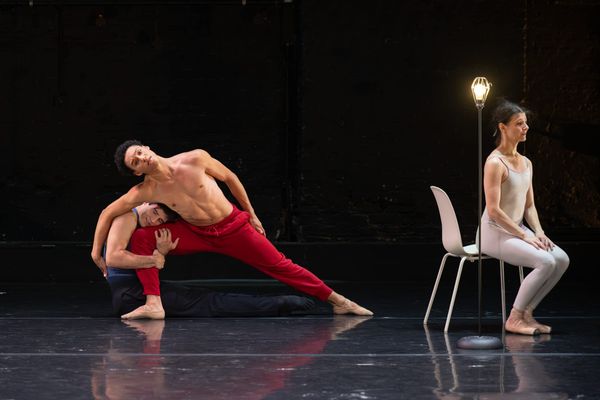
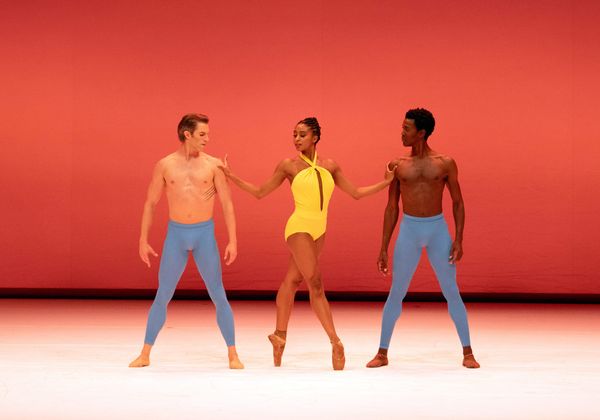
The second American Dance Platform, a week-long, multi-company program presented by the Joyce Theater Foundation, was curated by Alicia Adams of Washington D.C.'s Kennedy Center. She wanted, she writes in the program, to show "a representative portrait of American Dance"; Program C showcased the current melting pot with the Ragamala Dance Company which infuses traditional classical Indian dance with an American sensibility and the Davalois Fearon Dance, founded by the Jamaican-born, Bronx-raised Fearon.
The Ragamala Dance Company, led by the mother/daughter team of Ranee and Aparna Ramaswamy, performs dances based on the Bharatanatyam training. "Kiran", choreographed by the Ramaswamys (including Aparna's sister Ashwini, also a member of the company) reflects, according to the program, cosmic energy and enlightenment. To my Western eyes, it was a controlled and stylized set of movements led by the warm presence of Ranee Ramaswamy and her extraordinarily beautiful daughters.

The elder dancer had a solo to a keening song, sung by Preethy Mahesh (the music was live). The detailed and expressive movements looked like a spontaneous mimed reaction to the words, so it was a shame that there was no translation. The directness and clarity of the movements, though, seemed to reach the audience without needing words. The group dances, often led by Aparna Ramaswamy, were both sensuous and intense, as the dancers used their shimmering hands with a gleaming control. Aparna Ramaswamy used her beauty, especially those dark luminous eyes, to share all the glorious details, the little head trills, the quick changes of direction, and most of all the pure fun of moving, which was cosmic enough for the audience.

Davalois Fearon's "Consider Water" also had its cosmic aspects as it was inspired, according to the program, by a conversation between the choreographer and a United Nations ambassador about the issue of water, both its scarcity and its power. Fearon used four dancers and impressive videos to bring that essential element to the stage. Of the four movements, "Thirst", danced by Morgan Anderson, was the most focused and gripping, as the powerfully built dancer crawled against an arid background. The contrast between the dancer's strength and the hopeless attempts to find water was profoundly moving.
Too much water was the issue in the "Storm" section; the large jagged lightening on the dramatic video, though, tended to overpower the dancers as they rushed through the waves. Fearon's movements are both gymnastic and natural, as the dancers combined crouching and running with sudden bursts of dynamic, leg-thrusting energy, and the work was a haunting reminder that Americans are so lucky to be able to take our water for granted, turning on a tap without effort.
Copyright © 2017 by Mary Cargill