All The Colors Fit For Stage
“Law of Mosaics,” “This Bitter Earth,” “Herman Schmerman Pas de Deux,” “Love Letter (on shuffle)”
New York City Ballet
David H. Koch Theater
New York, NY
May 23, 2024
In its second of two programs featuring works by contemporary choreographers, New York City Ballet dazzled and dazed, leaning heavily on the quality of its dancers to bring forward the more vibrant elements of the presented ballets’ expressive palettes, both physical and emotional. The best of the evening – the absolutely devastating “This Bitter Earth” and the energetic “Herman Schmerman” - were bookended by the less inspiring Pam Tanowitz’s ballet “Law of Mosaics” and Kyle Abraham’s “Love Letter (on shuffle),” both 2022 creations. Still, even those two works had their memorable moments thanks to the cast.
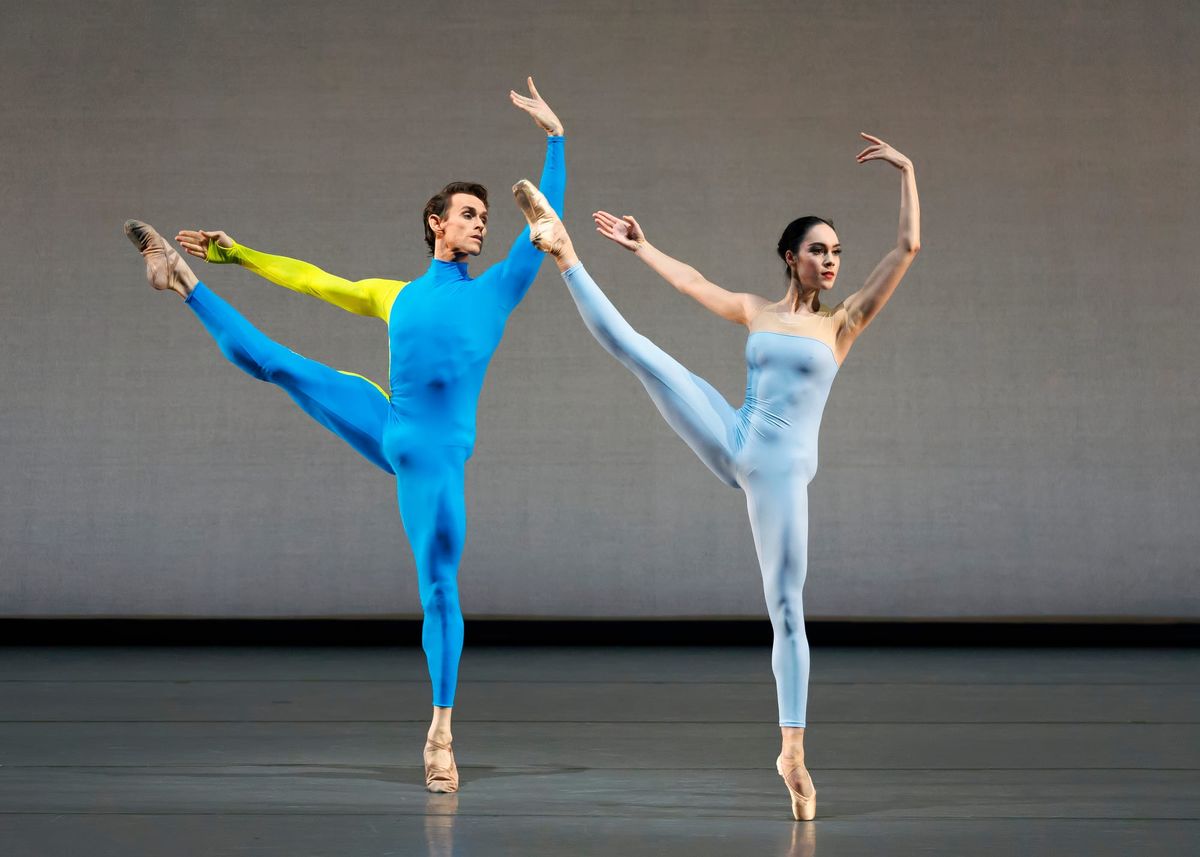
“Law of Mosaics,” with its simpler and frequently repeated deconstructed classical ballet moves, lacks richness despite the brightly hued costumes, but in that was an opportunity for the dancers to breathe meaning into the formations. Dancing the duet role, Mira Nadon answered the call, stylizing the poses with femininity, lingering lines and lyrical head placement. This ballerina has had a statement-making season, and what she was able to craft out of the simple constraints of Tanowitz’s text was well near poetic. It was a contrast to the approach taken by another stand-out of this ballet – Miriam Miller. Miller seems particularly well-suited to this type of unitard-clad, geometrically-focused ballets, which give her impeccable physique and presence center stage, and she didn’t miss an opportunity to appropriately capitalize on that during this program. Her treatment of her more or less lead role was less emotional than Nadon’s, focused mainly on the purity of her lines. The held poses, commitment to even the dullest of steps, particularly in her music-less solo with insistence that even they find meaning on the stage, was admirable. It didn’t work everywhere, such as in the sequence of many jetés that make it seem like the dancer is in class, trying to figure out the steps (Miller of course knows the move quite well, so the steps seemed like a waste of a dancer there), but one can’t fault her here, where the choreography doesn’t go far enough to be interesting.
The highlight of the entire evening came second, with Sara Mearns bringing the kind of heartbreaking but subdued drama into Christopher Wheeldon’s “This Bitter Earth” I cannot recall seeing on the Koch Theater stage in many years. Her treatment of the role, dancing opposite the originator of the male part, Tyler Angle, was full of so much pensive melancholy and longing, that sometimes it felt like her embraces of Angle were of a memory or a ghost, not a real person. It helped that narrative that Angle in comparison seemed often disengaged, appearing almost unseen to support Mearns in the beautiful poses of the choreography.
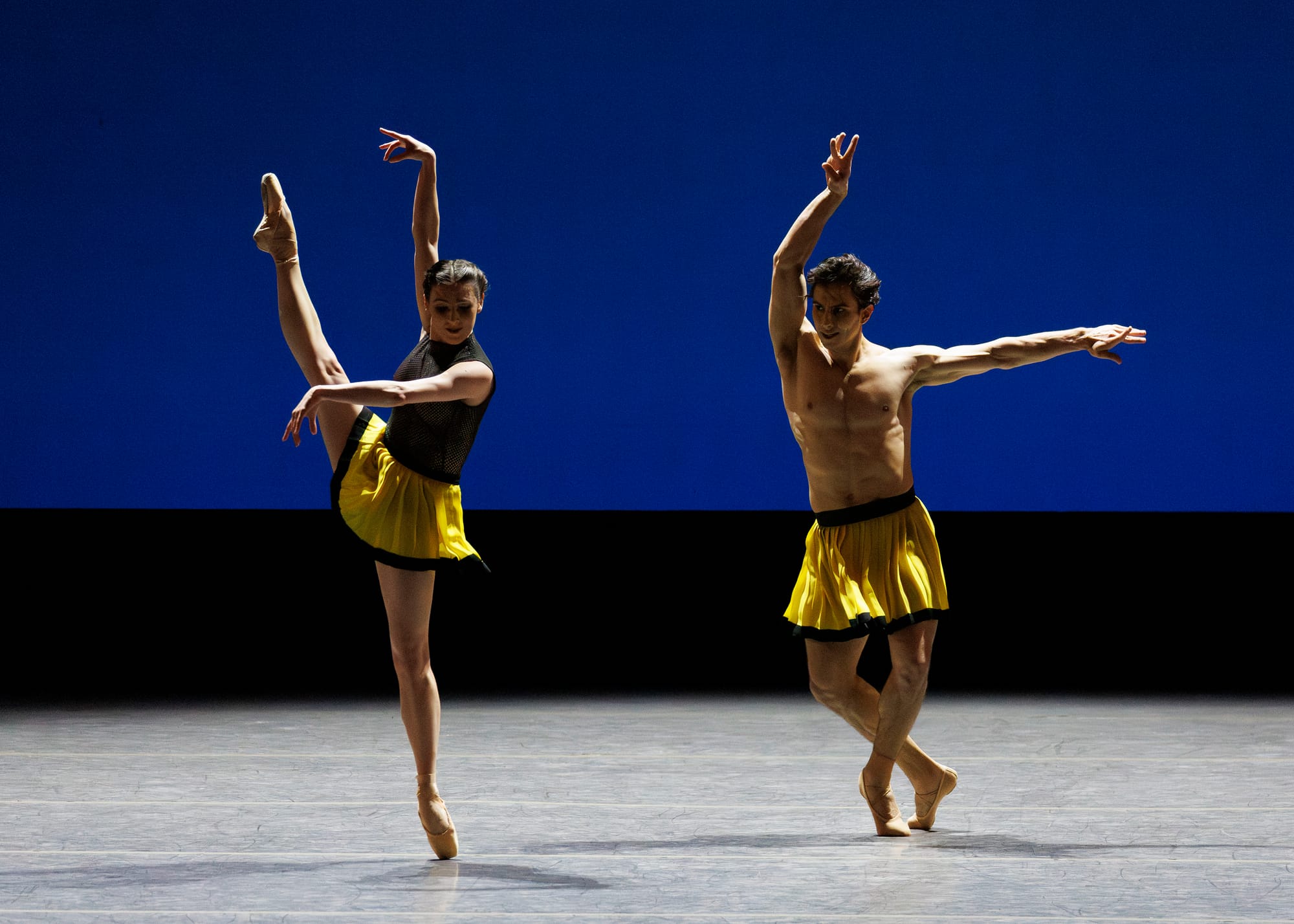
Almost rivaling them were Tiler Peck and Roman Mejia in William Forsythe’s “Herman Schmerman Pas De Deux,” shifting the audience’s mood with the playful and energetic choreography. Like Mearns before her, Peck was right at home with the syncopated, frequently off-balance steps, taunting looks and movement complexity she made look easy. Mejia kept up, but at least until he changed into the skirt, he danced the steps too much like a tango, his shoulder and hip placement missing the angulated mark of Forsythe’s flair.
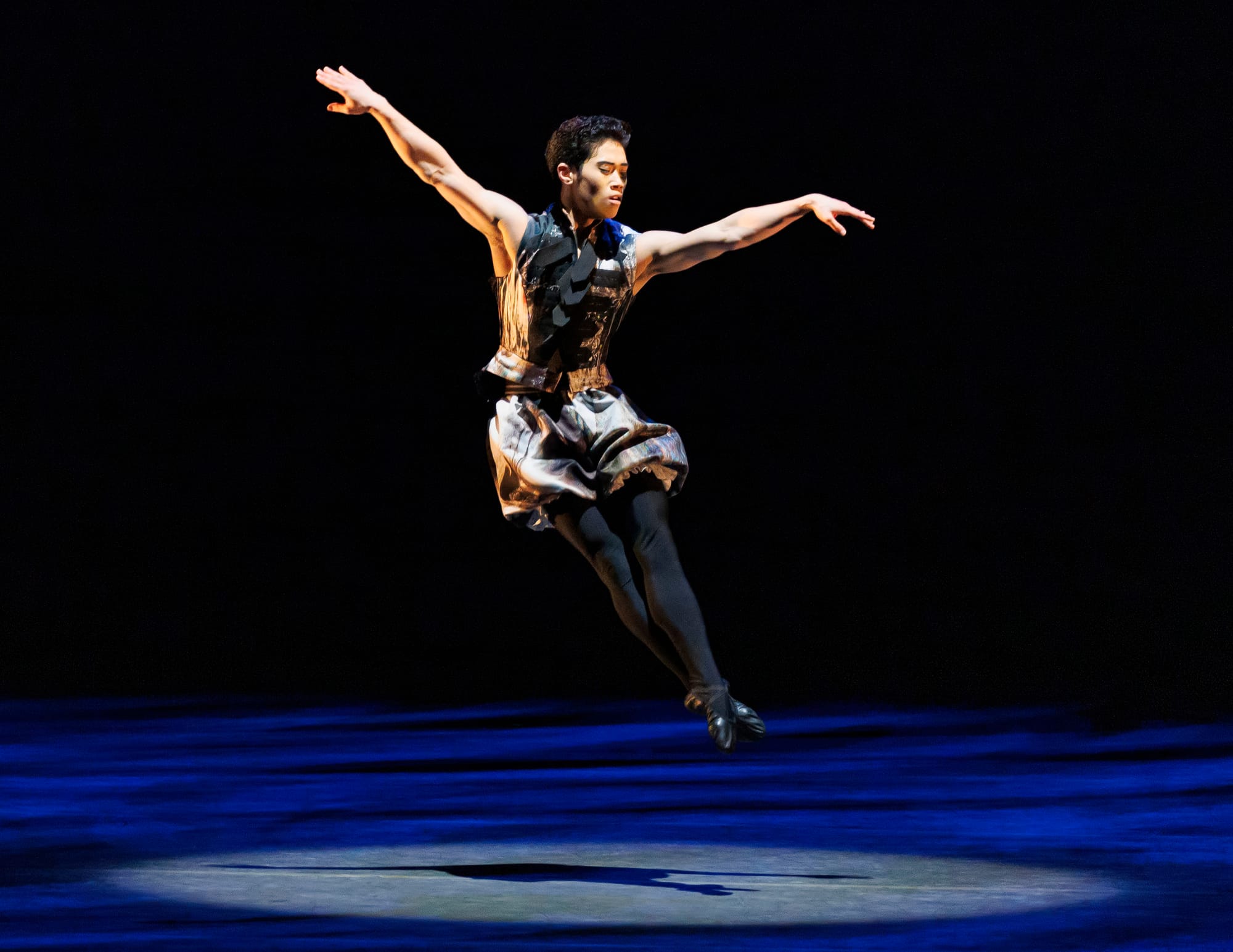
The evening ended with “Love Letter (on shuffle)” – a Kyle Abraham thematic sequel to his quirky but compelling “The Runaway” of 2018. All the same elements are in play here: cameos by odd headpieces, earth-toned, but intricate costumes, music by a hip-hop musician in the form of James Blake and even plenty of solos and duets for Taylor Stanley (and one cannot have too much Stanley when it comes to this particular, elastic style of movement). Yet, as one frequently sees with Hollywood, sequels are rarely as good as the original. The ballet felt bland, even with predictably exceptional performance by Stanley, magnetic dancing with assertive presence from KJ Takahashi and an uninhibited, flirtatious solo by the lovely Olivia Bell. Try as the dancers did, it was evident that even in the best of hands, not all works can be carried by dance quality alone.
copyright © 2024 by Marianne Adams



