All That’s New and Nothing Old
“Reclamation Map,” “Balamouk,” “Midnight Raga,” “The Crane Calling (exerpt)”
Fall For Dance Festival – Program 3
Tayeh Dance with Heather Christian, Dance Theatre of Harlem, Nederlands Dans Theater 2, National Ballet of China
New York City Center
New York, NY
October 5, 2018
In the middle of this year’s Fall For Dance Festival, Program 3 was an assembly of all premieres – two of the works were new to the U.S. audience, the other two altogether new creations. It may not have been the strongest offering of the festival, but it was eclectic and, by omitting any tried and true favorite from the mix, also a bit daring and remarkable.
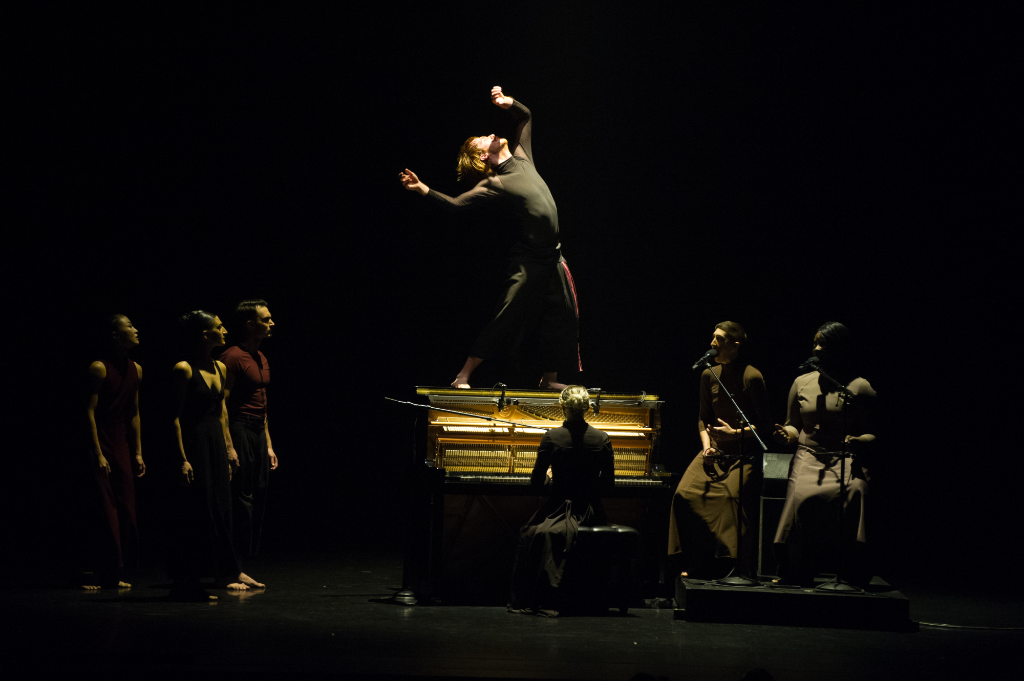
The first piece of the night, a world premiere of Sonya Tayeh’s “Reclamation Map,” a City Center commission for the Festival, showed promise from its first few moments with its rawness and theatrical tone. It began with a pitch-black stage and only the voices of Heather Christian, and her two fellow musicians, filling the darkness. The singing was soulful and fluid and seemingly willed with its intensity the light to come on and illuminate the trio on the corner of the stage. The light expanded to reveal the dancers, and while they shared the somber mood of the singers, and at first were very alluring with earthy, crouching steps, unfortunately it didn’t take long for the choreography to start to falter, becoming repetitive without a cause.
For most of the piece it seemed the physically impressive Peiju Chien-Pott, Austin Goodwin, Reed Luplau and Ida Saki spent their stage time kneeling and snaking around a partner, or in odder choreographic passages. At one point, in the background of a tortured duet, a dancer walked across the stage in the back, entirely in a forward fold, both hands and feet on the ground. It wasn’t until the end of the piece that the work got its choreographic highlight when Goodwin performed a passionate solo on top of the piano, weaving around an unseen axis and really merging with the music, all as the other dancers watched. Alas, it was too late to salvage the overall impression and wasn’t enough to decipher the “why” of the work. Perhaps, if piece were shorter it would seem less dreary and come into focus.
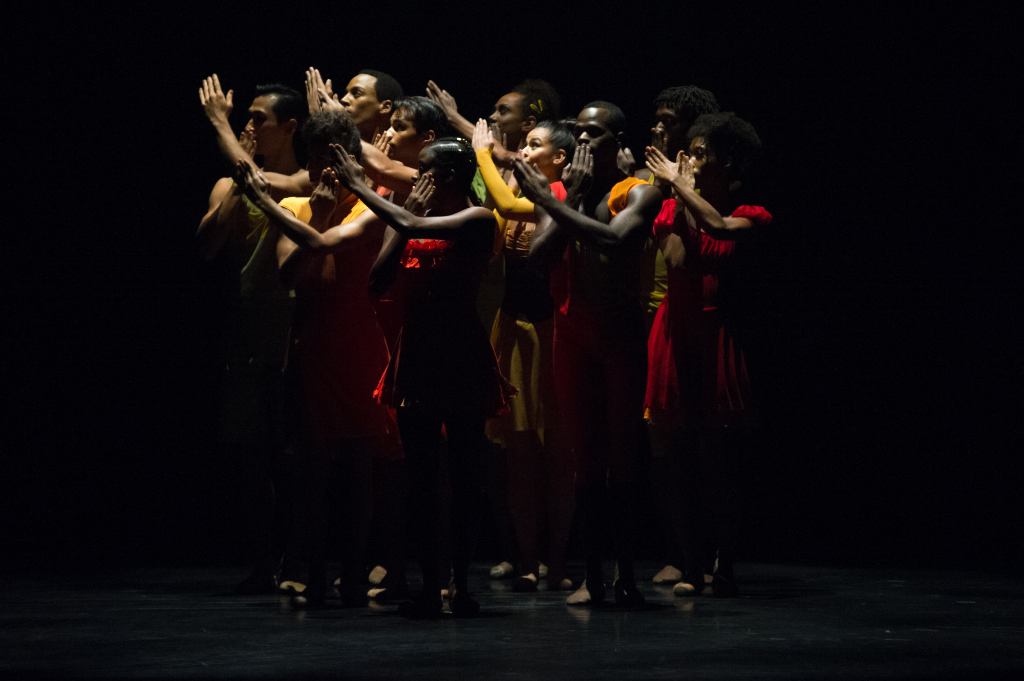
By contrast, the world premiere of “Balamouk” by Annabelle Lopez Ochoa was a kaleidoscopic assembly of different dance styles bursting to get out and sucking the viewer in. The ten Dance Theater of Harlem performers began in a group in the center of the stage, moving their hips and arms, and bringing their hands to cover their mouths in a silencing motion. Soon enough one of them rebelled against that silence and conformity erupted from the mix and set the work in motion. For the rest of the ballet, the different dancers and couples varied their moves from classically inspired steps to those laced with rumba, and everything in between (there was even a brief moment with swan-like arm movements!). The music was a recording by Les Yeux Noirs, Rene Abry and Lisa Gerrard, and the layering of styles was as colorful as the costumes, and really showcased the dancers well.
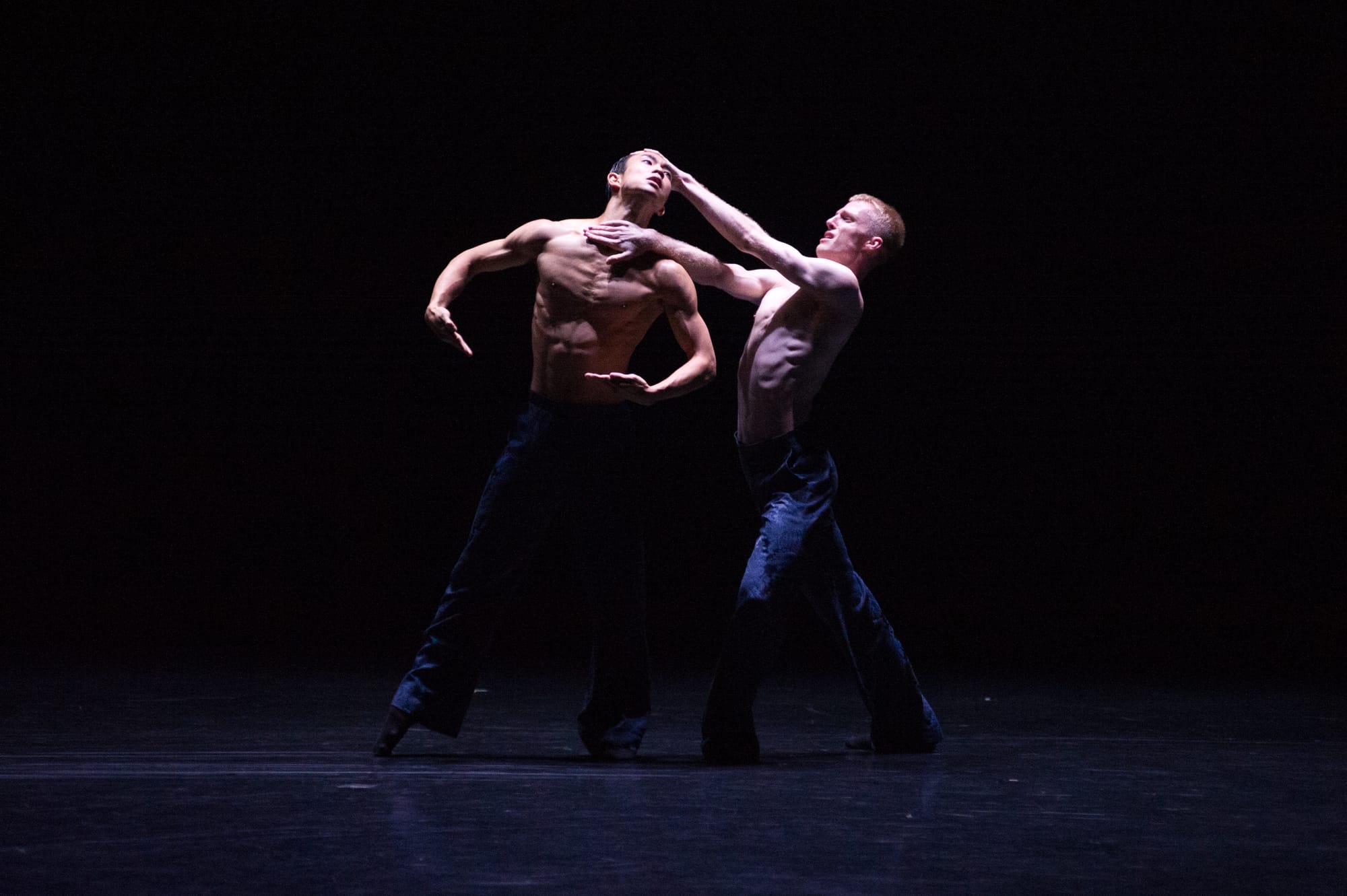
Later, Marco Goecke’s “Midnight Raga,” performed by Nederlands Dans Theater 2’s Surimu Fukushi and Adam Russell-Jones, offered a much darker and unconven- tional performance. The work was an interpretation of Ravi Shankar’s music, replacing traditional Indian dance with punctuated, rapid, shaking movements that permeated two independent solos and ultimately weaved into a duet to Etta James’s “I’d Rather Go Blind.” The quick jerks of the hands, abrupt pauses and periodic repetitions that looked like a stutter in this dance language were very foreign, almost uncomfortably so, but the odd aesthetic, coupled with excellent execution by the dancers, kept the work engaging.
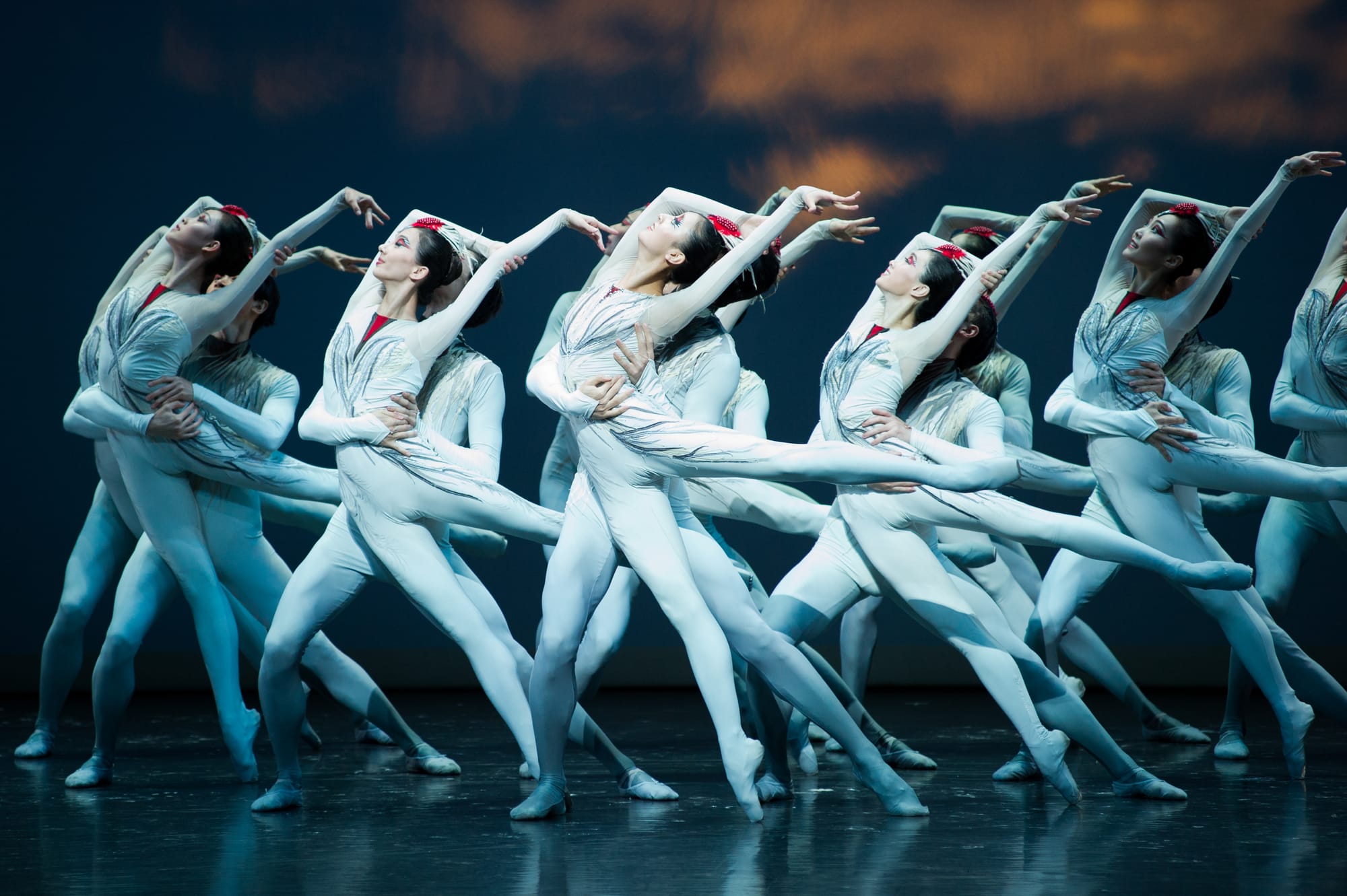
The final dance of the night was National Ballet of China’s gorgeously performed excerpt from Ma Cong and Zhang Zhenxin’s “The Crane Calling.” The dancing was in classical ballet style and featured a large cast of male and female crane characters, four female dancers performing other birds, and a central duet of humans. It was a shame that all the New York audience got to see was an excerpt, as the pieced-together dance seemed not to do justice to the overarching story that remained elusive. What was obvious though was the uniform excellence of the company. From physique to technique to expressiveness, every aspect of their dancing was superb – the lifts of the females in the group ensemble was perfectly uniform and accented, the lead duets had expansive ports de bras and gorgeously presented lines. It an unexpected treat.
copyright © 2018 by Marianne Adams



