All Shostakovich, All Ratmansky, and All ABT
"Symphony #9", "Chamber Symphony", "Piano Concerto #1"
American Ballet Theatre
Metropolitan Opera House
New York, NY
May 17, 2016
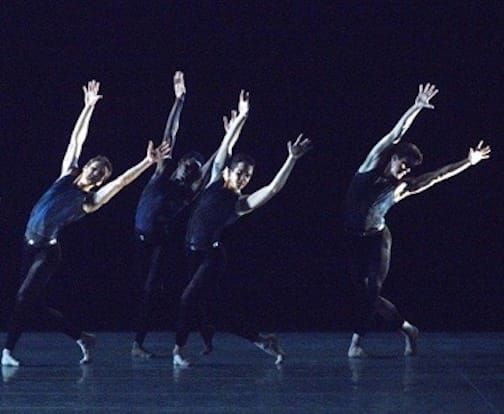
ABT continued its admirable commitment to its dancers in the Alexei Ratmansky "Shostakovich Trilogy", performing the three works together for the first time in the 2013 premiere. The company included a program note tying the works to Shostakovich and the Soviet period, describing the arc from the "hero's struggle in Symphony #9 to the triumphant glorification of Piano Concerto #1". These multi-layered works, though, seem to evade and elude the straightforward upward march promised by the notes. Ratmansky's constantly shifting, asymmetrical corps patterns (so different from the comforting and beautiful harmonies of classical ballet) offer no cheerful, easy optimism.
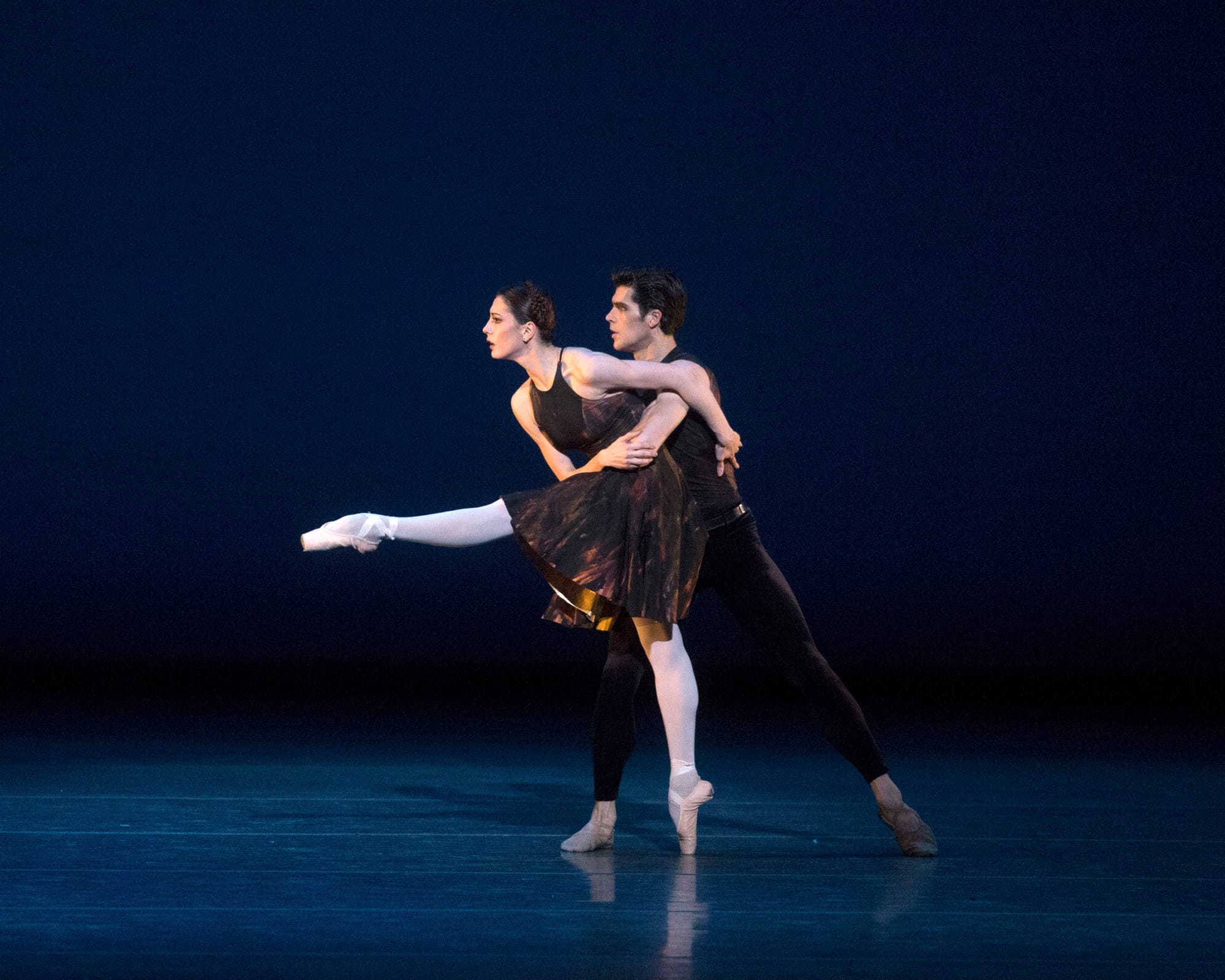
These works do offer many chances for ABT dancers from the corps to the principals to shine, and they seemed to thrive, as the performances were electric. Veronika Part and Roberto Bolle were the wary lead couple in "Symphony #9". The costume, darker and richer than the original, seems designed to show off Part's noble carriage and long legs, and she moved with a taut plushness. Bolle's straightforward nobility avoided any melodrama as he let the choreography, with its hints of danger and death, create its own mood.
Luciana Paris and Arron Scott were the military-flavored couple, dancing with a snappy precision and Scott is an unerringly musical dancer. Their role seems to vary with each viewing; at times they could be happy warriors, supporting the troops, or instigators disrupting the process. A work as complex as this can have many interpretations.
Joseph Gorak dance the role originated by Herman Cornejo, the enigmatic messenger. Gorak's purity set him apart from the more earthbound corps and it seemed that Gorak may be the name of an ancient, forgotten God of the Dawn. But in the end, darkness won, and the ballet ended with Gorak alone in a pool of night, falling to the floor.
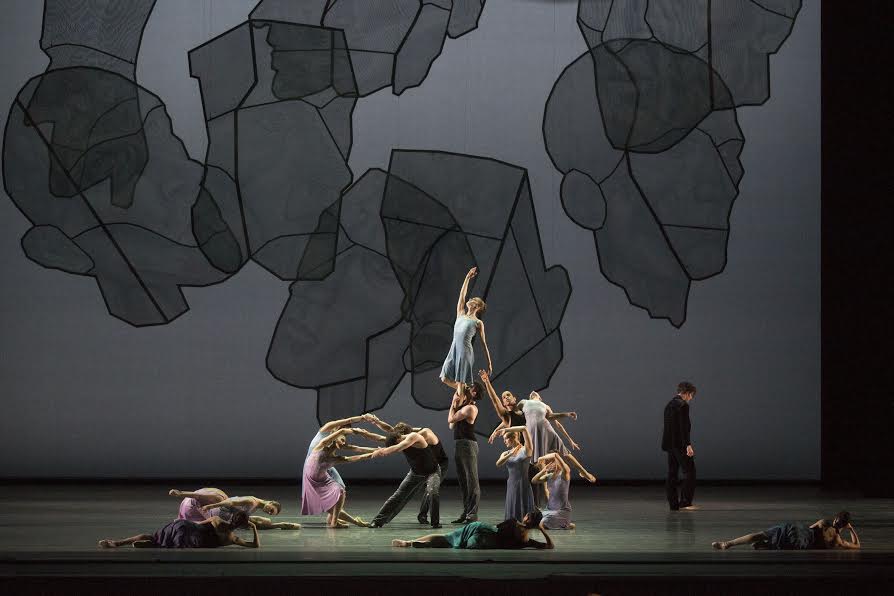
"Chamber Symphony" has the clearest narrative of the three, as it examines the composer, his three wives, and the agony of inspiration. There have been other ballets that portray the solitude of a specific creator, most notably Robert Schumann in Balanchine's “Davidsbündlertänze” and Sir Edward Elgar in Ashton's "Enigma Variations". These works are oblique and illusive, making their most powerful statements with small gestures and powerful music--walking away or looking at the twilight. Ratmansky's Shostakovich (Jeffrey Cirio in the performance) tends to roll around in agony, showing off his chest. Cirio shaded his performance well, dancing with a powerful commitment, but I missed a feeling of defeated heroism. His final walk off the stage, stunning though the stage picture was, seemed a bit hangdog, a defeated man rather than a genius wronged.
The three women (Cassandra Ternary as a flirtatious young thing, Isabella Boylston as the tragic girl dying young and Devon Teuscher as the patient helpmate who is abandoned) also gave fine, detailed performances, especially Boylston whose ghostly presence was both vivid and transparent. But the choreography only allows them to be incidents in the composer's life, not contributors to his creativity.
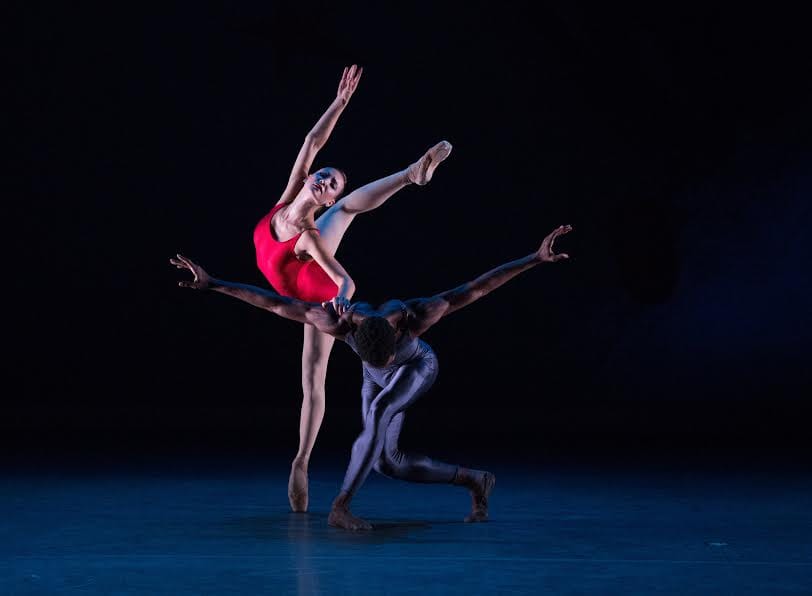
"Piano Concerto #1" returns to the malleable ambiguity of the first work and is a haunting ballet. The two main couples (Christine Shevchenko with Calvin Royal III and Skylar Brandt with Gabe Stone Shayer) resemble each other, especially now that Brandt's hair is dark, and may be siblings or doubles. To me, this performance suggested an older and younger self, watching each other through some trick of time. The dancing was stellar; Royal has a strong presence, a striking wingspan and a beautiful, clear arabesque. Shayer seemed to float through those Bolshoi jumps originated by Ivan Vasiliev. Vasiliev made them look difficult and heroic but Shayer made them look beautiful.
There are so many haunting moments in the ballet but I was especially struck by the grey and red of the corps' costumes, shifting colors as they turned backwards and forwards, as if the Soviet society required a public and a private persona. The ending is somewhat hopeful as the Soviet symbols on the back drop disappear but the darkness and danger seems to linger and the end offers no cheerful, mindless optimism.
The performances, though, are an optimistic look at the depth and richness of ABT's dancers; the principals of the last work are soloists and corps members and they absolutely owned the stage. The audience seemed to appreciate the complex choreography and the dynamic dancing so perhaps this won't be the last time a challenging program without starry guests is given a chance.
copyright © 2016 by Mary Cargill



