All For Love
"Pilot", "Allegretto", "II", "Midnight Oil", "Just Passing", "Morning Will Break"
Columbia Ballet Collaborative
Miller Theatre
Columbia University
New York, New York
April 13, 2012
The Columbia Ballet Collaborative was founded in 2007 by a group of professionally trained dancers who were studying at Columbia University. The original founders have graduated, but the idea has taken root, and the current group (again made up of dancers attending Columbia or Barnard College, many with professional experience) meets regularly to take and give classes, and to put on an annual show. Their training and experience gave the dancers a polish that traditional student performances lack, and their current status as students meant that the slickness and competitiveness of the current competition circle wasn't an issue; these dancers performed simply for love, and the program was a fine reminder of what a joy dance can be.
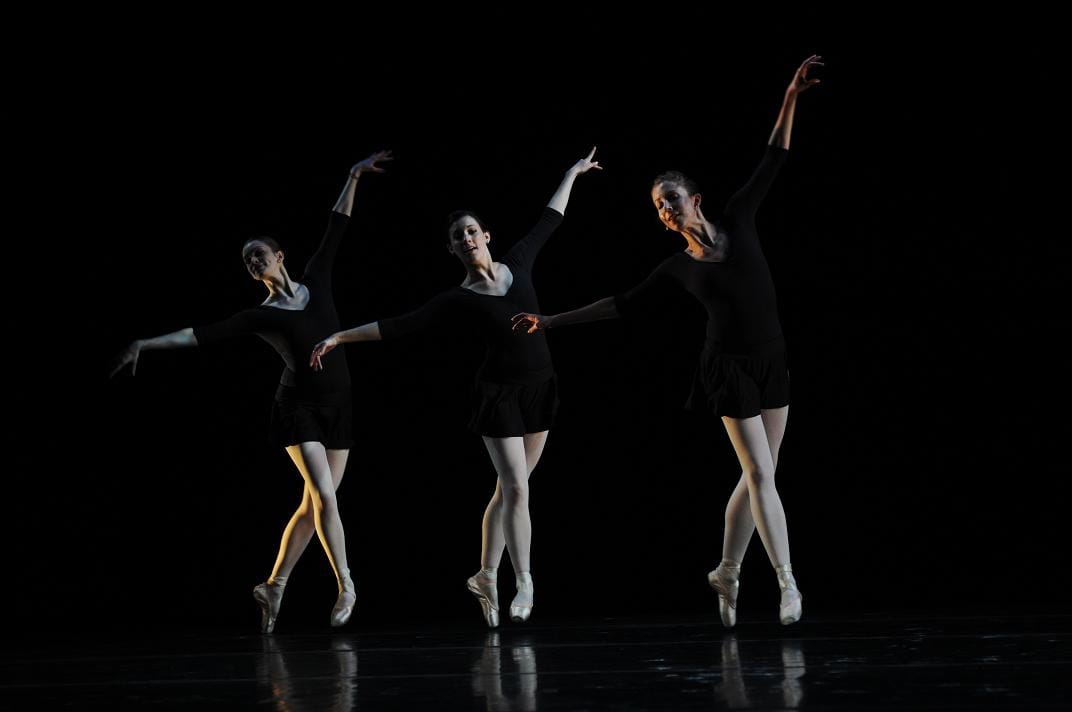
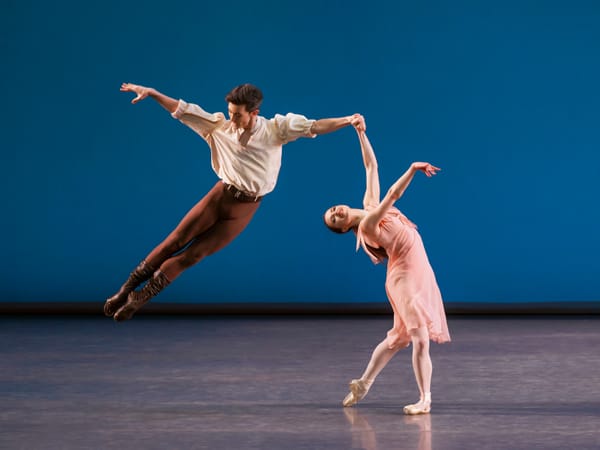
Richard Isaac, a member of the company, choreographed the opening work "Pilot", to some generic minimalist music by Max Richter. This was, for me, the weakest part of the program, a group of four dancers in black and grey apparently weaned on Jorma Elo There were lots of swayed backs and jerky movements combined with stylized violence and dancers creeping in and out of a pool of light. The second work, "Allegretto" by Anne Milewski Cary (who, as Anne Milewski was a luminous corps dancer at ABT and who, as Anne Cary is a student at Columbia) was a neoclassical work set to neoclassical music by Karl Jenkins. It was clearly influenced by "Concerto Barroco", and featured a confident use of the stage, a lot of fast and elegant footwork for the four supporting dancers, and a fine pas de deux for John Poppe and Meredith Hinshaw. Cary didn't over-choreograph, and showed off her dancers very well, especially in the sweeping finale.
The two other student choreographers, Eleanor Barisser and Kimi Nikaidoh, both had interesting takes. Barrisser's "Midnight Oil", a solo, was the choreographer/dancer's senior dance thesis. It was set to an old recording of Cab Callloway's "Kickin'the Gong Around". Barisser, with her lovely face framed by a crown of braids, dead-panned her way through the song, seeming to be spasmodically pulled and pushed by various phrases of the music. Trying to explain its humor would be a bit like parsing a Gertrude Stein sentence to see what it means; her rare and off-beat take on dance showed a wry and subtle wit. It was an absolute joy.
Kimi Nakaidoh's upbeat finale used Barisser and eight other dancers, in black biker shorts and candy-colored tops, swinging to rock classics. Nakaidoh, like the other choreographers, showed a fine understanding of pacing and use of space, and the dancers wove in and out. Dan Pahl had a pseudo-angst-filled solo in "Ain't No Sunshine", and the entire cast erupted in "Joy to the World".
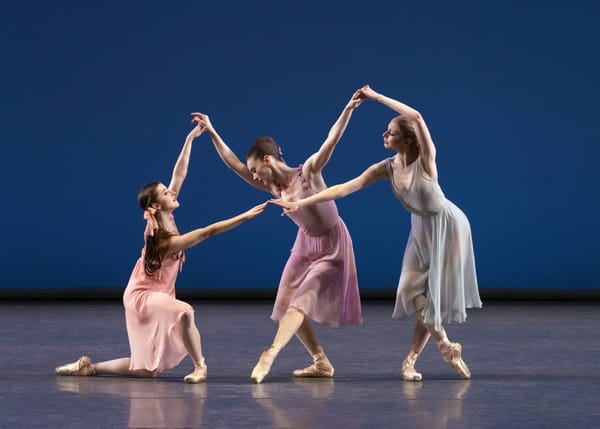
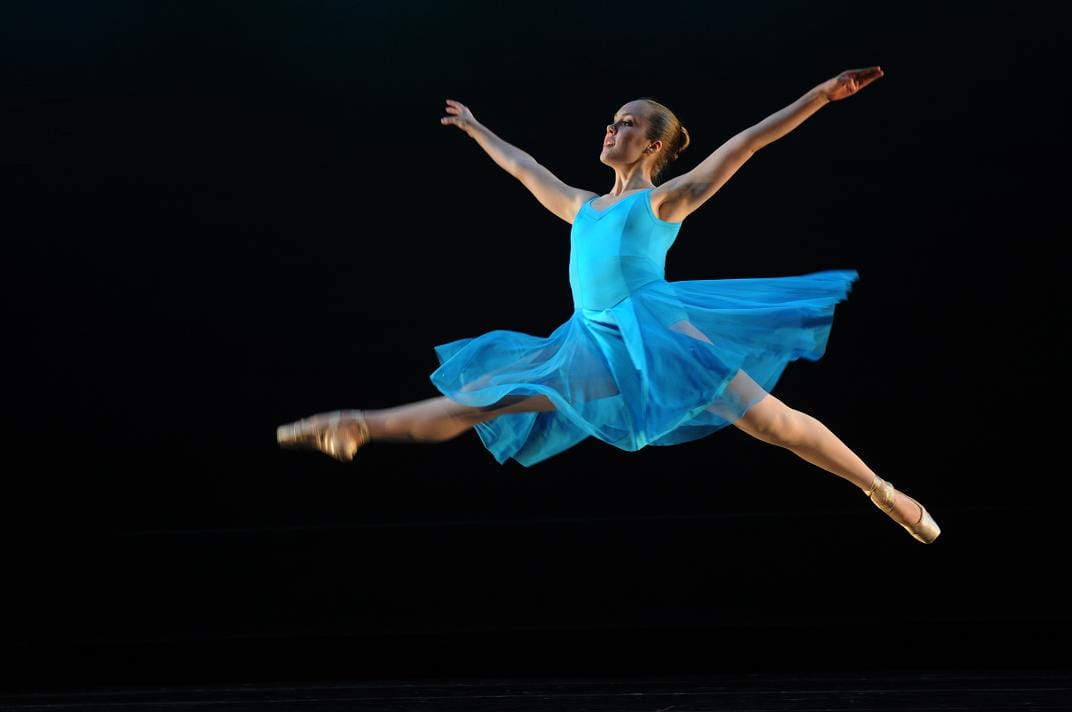
The Collaborative commissioned two pieces from outside choreographers, the rather obliquely titled "II" by Emery LeCrone, and "Just Passing" by Avi Scher. The LeCrone work featured Lauren Alpert and Dan Pahl in a pas de deux to music by Bach. They danced side by side, each doing the same, slightly quirky steps; it was so nice to see such free and easy movements by both the man and the woman. The second part had them both laying on the ground, looking like cheerful little flies caught in a web. They were back on their feet for the third part, and LeCrone seemed to be experimenting with various classical poses, slightly squishing them in unexpected ways. Avi Scher's "Just Passing" was a pas de trois for Rebecca Azenberg, Ariana Lott, and Rachel Silvern, wearing colorful chiffon dresses. As is usual with this choreographer, there were gleams of emotion in the dances, as one girl seemed off on her own, until she joined the others. There was an elegant use of the upper body, and the choreography was challenging and interesting, without being too difficult. All in all, it was a beautifully shaped program; collaboration at its best.
copyright © 2012 by Mary Cargill