Uneven Showcase
“The Kingdom of the Shades,” “Grand Pas Classique,” “Known by Heart (“Junk” Duet), “The Sleeping Beauty, Act III”
American Ballet Theatre
David H. Koch Theater
New York, NY
October 26, 2025
It was a showcase of individual talent at ABT’s mixed bill titled “Classics to the Contemporary,” with plenty of solos to dance in Natalia Makarova’s “Kingdom of Shades,” Victor Gsovsky’s “Grand Pas Classique,” Twyla Tharp’s “Known by Heart” duet and the entire third act of “Sleeping Beauty” in Susan Jaffe’s staging. While it was welcome in the ways it allowed so many of the dancers to take up center stage, it was almost too much variety at the expense of cohesion and artistic depth.
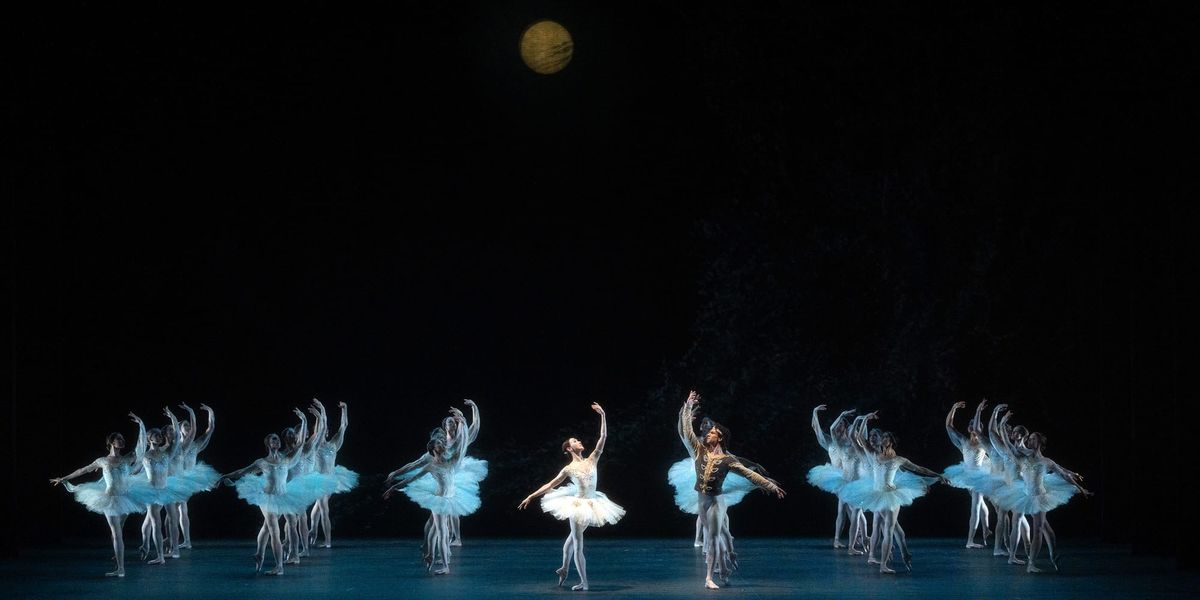
“Shades,” traditionally Act III of “La Bayadère,” opened promisingly. Ormsby Wilkins gave Ludwig Minkus’s music an extra luxurious swell that complemented the splendid opening arabesque moves of the corps. By the halfway point, their impeccable precision, slow yet steady pace and exquisite unison in fixating poses created enough of a theatrical spell to signal they were the true stars of the act. Rising deliberately on pointe in fifth position to perform crisp, quick bourrées, this was corps work of a quality seldom seen in New York, or anywhere.
The principals, unfortunately, broke the spell. Issac Hernández entered without much power in his jumps, compensating by exaggerating accents in the poses and gestures, and his duet with Hee Seo quickly felt labored rather than ethereal. She approached the choreography with visible caution, landing her first grand jeté à la seconde in two distinct movements, as though clearing an obstacle rather than floating through space, before rising on pointe even more cautiously for the developpé. Her face remained impassive, bourrées lacked sharpness and none of the love story at the ballet's heart ever materialized -- perhaps acceptable given the act's isolation from its narrative context, but unfulfilling nonetheless.
The three Shades offered mixed relief. Yoon Jung Seo's variation provided respite with generous jumps and delicate turns, while Sierra Armstrong danced with calibrated caution during the écarté holds and Ingrid Thoms with some minor imprecisions. It was all better than Hee Seo's solo variation, where the ballerina’s eyes remained fixed on the floor throughout, and the iconic scarf arabesque turns were consistently under-rotated. One wondered if the leads got anywhere near the same rehearsal time as the impeccable corps.
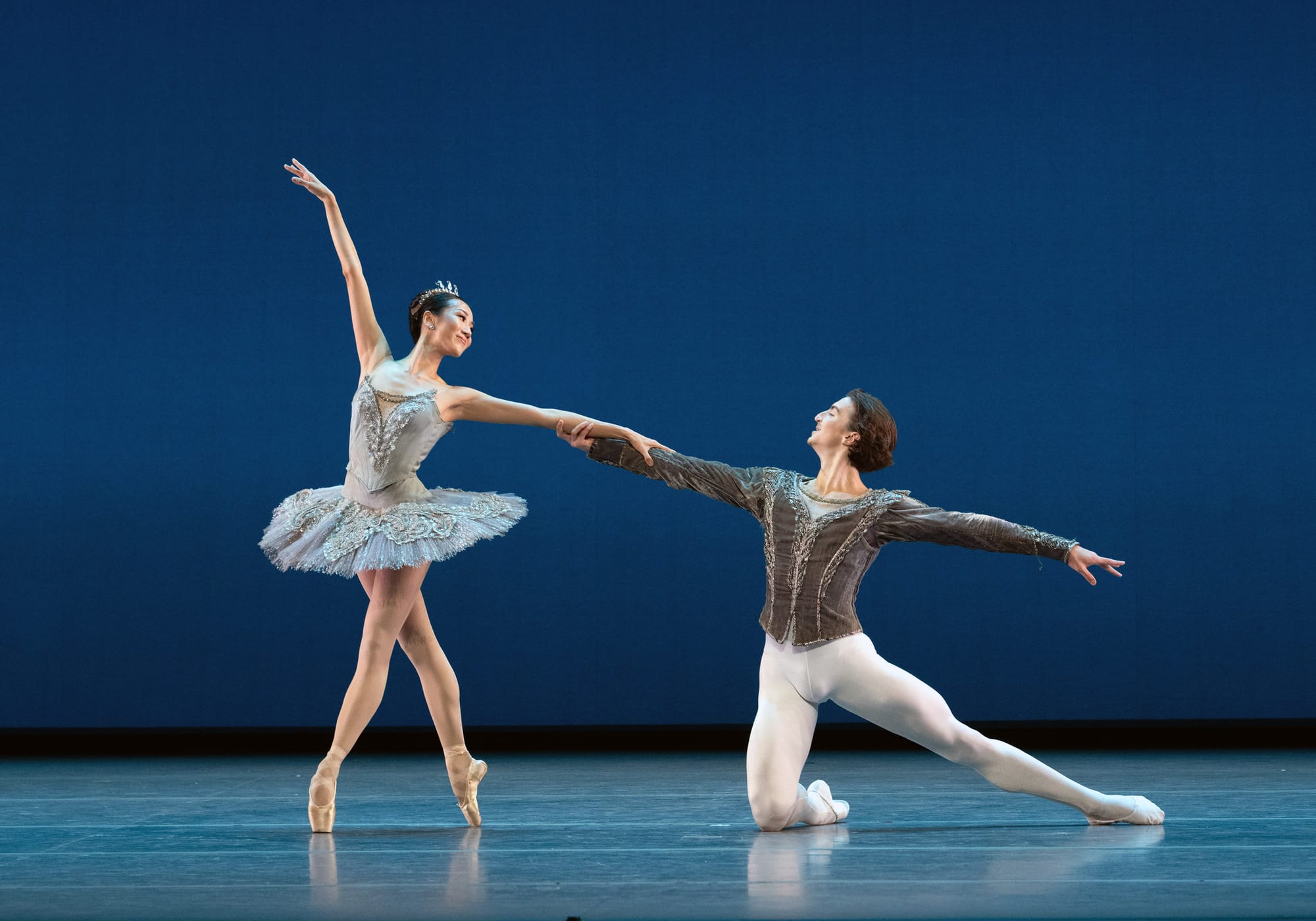
After intermission, the famously technique-focused "Grand Pas Classique" to Daniel-Francois Auber’s potent music allowed SunMi Park and Michael de la Nuez to reclaim the evening's energy. Both delivered powerful jumps and confident technique, though Park took uncommon liberty with the variation’s diagonal, performing it toward stage-left rather than the traditional stage-right. It didn’t detract from the overall impression, and if any complaint could be lodged, it would be for fresher costumes, worthy of these performers – a lament extending across most of the program.
If the “Grand Pas” reestablished technical authority of the leads, Tharp's work injected contemporary artistic flair. Breanne Granlund and Herman Cornejo made direct, playful eye contact with the audience, their partnering full of theatrical gestures -- including a pointed finger-gun -- that felt spontaneous and genuinely fun. Here was a work fully realized!
And then came Jaffe’s staging of the third act of “Sleeping Beauty,” and with it a series of questions. Just a decade ago, ABT invested substantially in Alexei Ratmansky's full-length production, received to mixed reviews, so Jaffe was a conspicuous by-line. Was this choice a question of licensing rights and royalties, intentional return to the ironically (given Ratmansky’s historic reconstruction billing) more traditional in modern times presentation of the ballet or an introduction of Jaffe as a stager rather than just artistic director? And with the new staging so cautiously arranged, why stage anew at all?
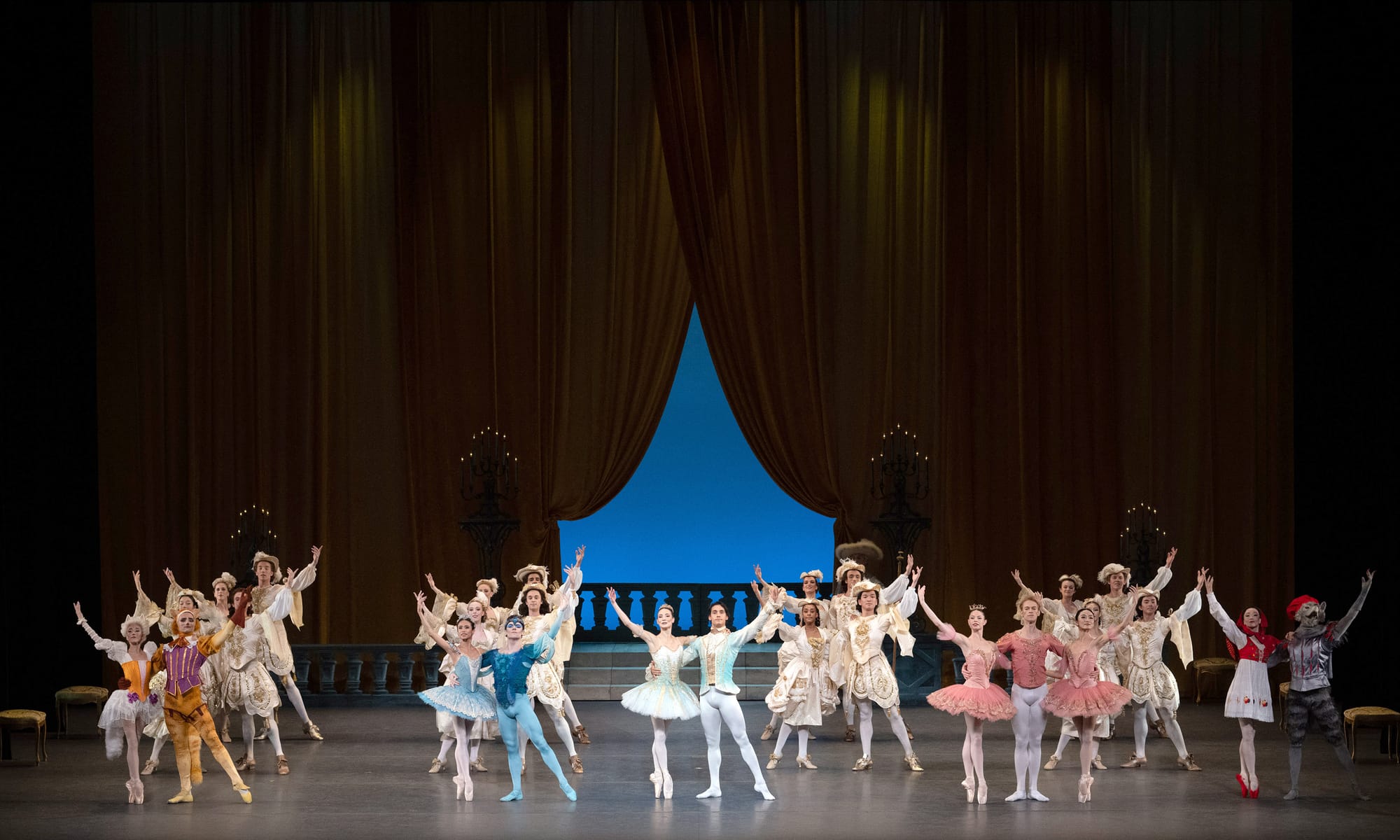
A not fully responsive answer would be that the company wanted to showcase its many promising artists, and the act contains countless feature roles of different character allowing for just that. In that way, it was a glowing success. A quick appearance and variation by Remy Young as the Lilac Fairy showed a contained, yet powerful dance. The Rose Pas de Trois – what normally would be the Jewels to that music – seemed odd and almost like it belonged in the first act of “Swan Lake,” but was salved by Jarod Curley who dutifully partnered exquisite dancing by Fangqi Li and Sierra Armstrong, and seemed on the verge of a breakthrough. This dancer’s honed presence is ripe for prime time, and at this rate, the spring season could well be his breakout moment.
Then, Lauren Bonfiglio and Melvin Lawovi brought feline agility and predatory charm to the White Cat and Puss-in-Boots, while Zhong-Jing Fang slightly oversold Red Riding Hood's fear opposite Tristan Brosnan's commanding jumps as The Wolf. The highlight here came from Lea Fleytoux and Jake Roxander, whose Bluebird pas de deux sparkled with finesse. Fleytoux's every movement -- particularly her jumps and luscious extensions -- combined a lilting upper body with razor-sharp legs, and by the time Christine Shevchenko and Daniel Camargo appeared as the rather tired and passionless Aurora and Prince, I wished for a swap in their casting.
In all, this evening proved one thing clearly: ABT has the dancers. That corps alone could justify bringing back "La Bayadère," and the young artists in "Sleeping Beauty" showed they are ready for larger roles. Let’s hope the company gives them the productions – and the rehearsal time – to fully shine.
copyright © 2025 by Marianne Adams



