All American Dance
“Slaughter on Tenth Avenue,” “Barber Violin Concerto,” “Diamonds”
New York City Ballet
David H. Koch Theater
New York, NY
May 5, 2019
New York City Ballet’s “Barber, Broadway & Balanchine” program, showing Balanchine’s “Slaughter on Tenth Avenue” and “Diamonds,” and Peter Martins’ “Barber Violin Concerto,” at first seemed like an odd mix of repertory give the ballets’ vastly different styles. But combining dance hall theatrics, strong American modern dance flavor, and of course one of the best examples of Balanchine’s nod to classicism, actually made a point about the company itself and its fairly unique ability to present such varied, all-American works.
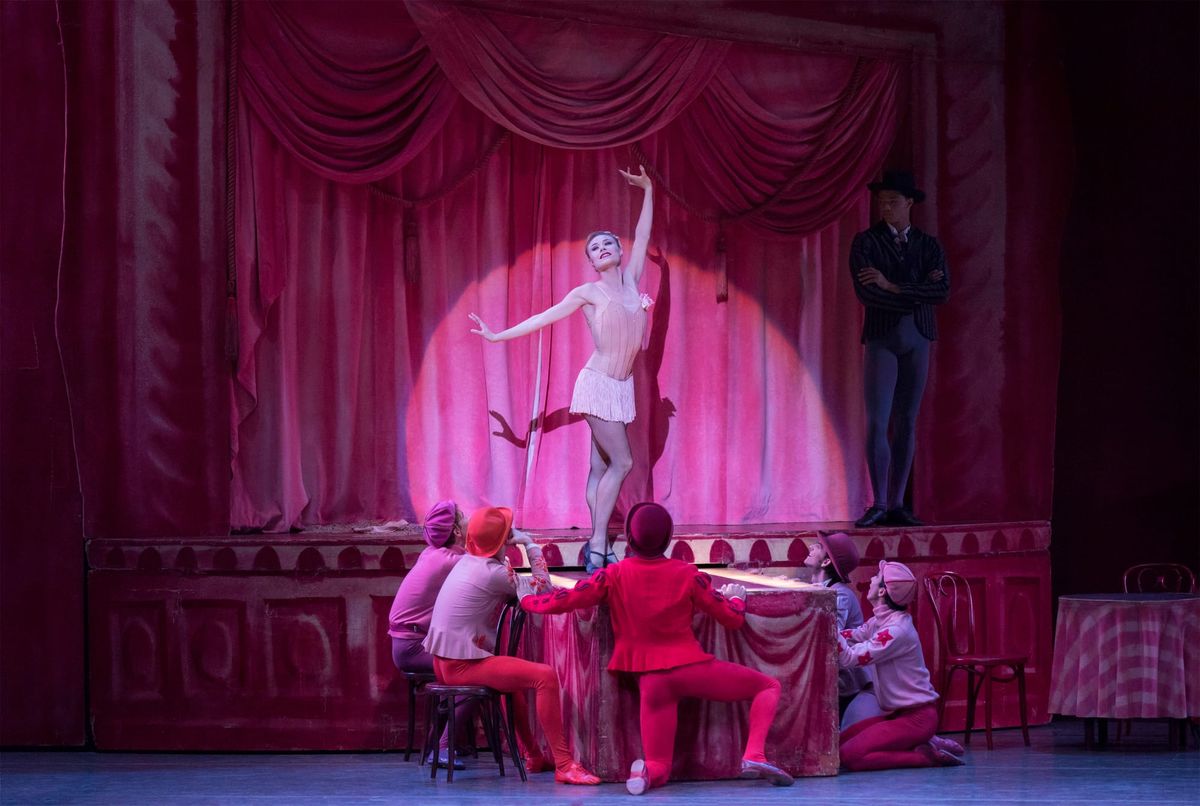
Opening the program, with a newly refurbished set and costumes, was “Slaughter on Tenth Avenue,” and Daniel Applebaum, as Morrisine, and Silar Farley as the Gangster, wasted no time in launching this ballet’s full comedic effect. Applebaum’s posing and faux Russian accent was so perfectly calibrated for humor that it almost risked being over the top, while Farley fleshed out his character with many cunning looks and slow, exaggerated swagger. The dancing cast also held nothing back, and as the lead couple Sara Mearns and Peter Walker really went for drama, particularly in the second duet that contrasted nicely with their more flirtatious first dance. Mearns, perhaps tapping deeper into her recent musical theater experience (a role in Rodgers & Hart’s “I Married an Angel” this year), made her Striptease Girl less elegant and more engaged than usual. At times, it almost seemed like she was taking too much liberty with the role, as the flair did affect some precision in the steps, but if there’s any role to take that risk with, it’s this one.
Martins’ “Barber Violin Concerto” benefited from a robust introduction from the company’s musical director Andrew Litton in the “See the Music…” talk that preceded it, as Litton built up anticipation for the ballet by going in-depth into the various passages of musical composition, highlighted section repetitions and other aspects of Samuel Barber’s score and suggested that Martins sought to reflect those elements. In some spots, it really did look like Martins did the score justice, but the introductions also helped see the many opportunities Martins missed in the music: in many a spot the turns and lifts and pauses on pointe seemed to add no visual benefit to the actually complex composition.
The cast was all-new, with debuts by Taylor Stanley and Emma Von Enck in the “modern” roles and Sterling Hyltin in the “classical” duet and only the second performance of the “classical” role by Aaron Sanz. The modern roles, originally set on dancers of the Paul Taylor Dance Company, are arguably the more difficult ones in this work as they demand from ballet dancers a very sharp departure from classicism. Here though, they actually looked more interesting. Von Enck looked like a completely different ballerina, fully shedding her usual cuteness and appearing limber and powerful. Even in the last duet, with Sanz, her jumps around him looked almost feral in their aggressiveness, where they could have looked light and playful. While Sanz at first appeared distracted by this modernism, it was almost no surprise that he ultimately followed suit. Stanley too made his mark, really drawing out the ports de bras and molding the movement to the music as his arms moved and chest curved in. The one disappointment came from Hyltin, usually an expert at Martins works and more importantly an expert at making them look good. Perhaps she will hit her stride in later performances, but for now her angular shoulder placement and enunciated hand movements detracted from the choreography and somehow seemed out of place here.
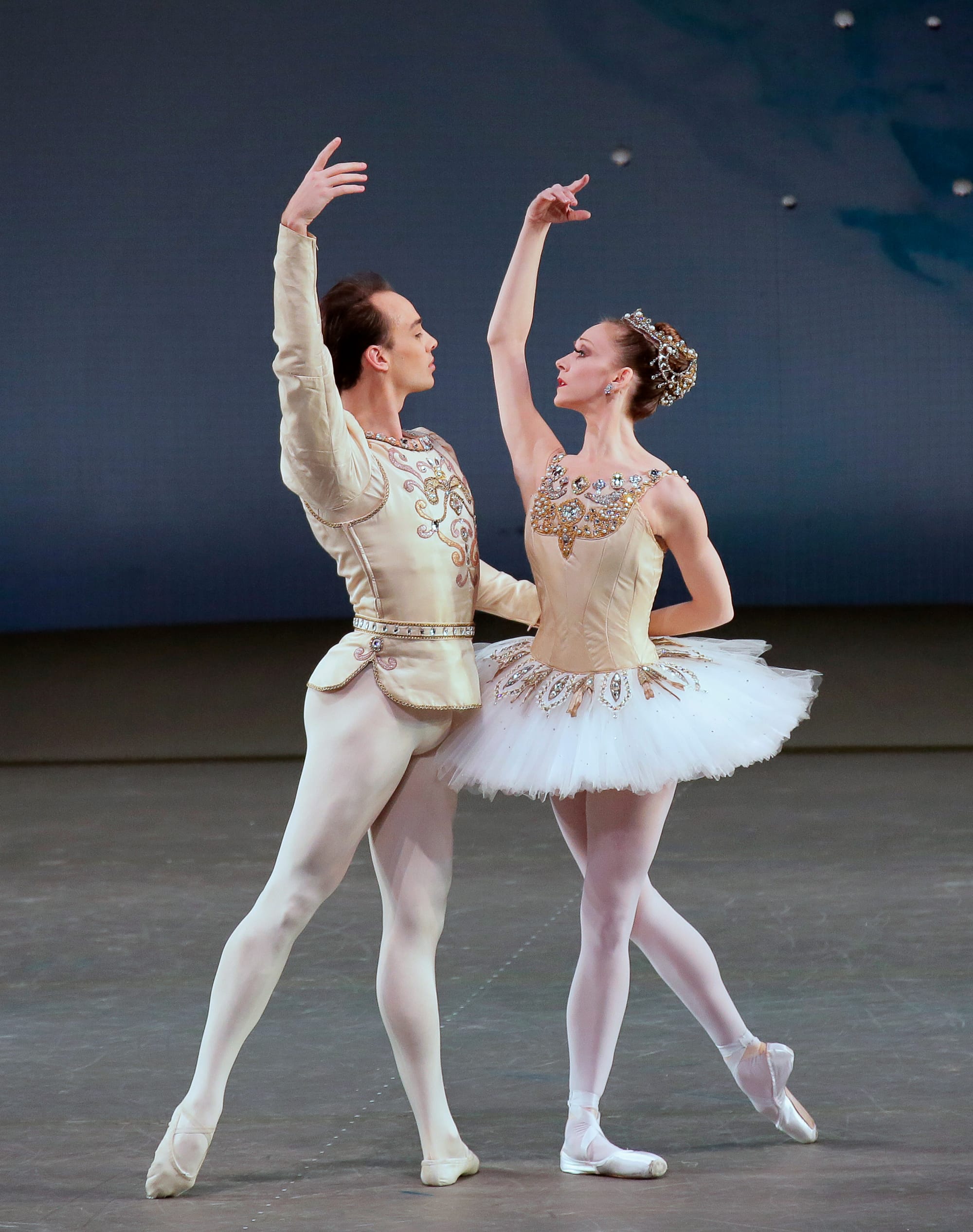
The bigger miss was in Balanchine’s elegant “Diamonds,” which closed the program with Maria Kowroski and Tyler Angle in the lead roles. While Kowroski adorned the adagio with her usually attractive lines, it was perhaps the least engaging performance of the ballet I’ve seen in recent years. There was no life at all in her arms, the looks across the stage and at Angle were merely head turns, and the dancing overall looked uninspired and tired. Next to her, Angle was a dignified and attentive partner, with almost a prince-like demeanor, but this choreography is focused on the ballerina, who unfortunately all but reduced it to a series of arabesques.
copyright © 2019 by Marianne Adams



