Aesthetic Introspectives
“Show.Girl.,” “Conquer,” “El Beso”
Ballet Hispanico
The Joyce Theater
New York, NY
April 14, 2015
Visual, visceral and sublimely delightful, Ballet Hispanico’s opening night delivered a powerful display of liberated movements expressing complex subjects. From the opening presentation of “Show.Girl.,” a 2014 work by the Miami choreographer Rosie Herrera about Latina identity, to the world premiere of Mexico-based Miguel Mancillas’s “Conquer,” exploring the various ways in which humans affect their possession of people and things, to the darkly hued yet whimsical 2014 “El Beso” by the Spaniard Gustavo Ramirez Sansano, that showed off the many forms and contexts of kisses (and their impetuses), the show was a layered blend of aesthetics and content, hitting all the right notes.
Herrera’s “Show.Girl.” is a feminist take on how we view women of Latin origin delivered through a varied range of movement styles to various pop and modern musical arrangements. Unapologetically, the work presented a parade of stereotypical clichés – making the seven women of the cast appear as submissive, servile, loudmouthed, bickering and, of course, as sexual objects – but, through this imagery, managed to first illuminate the stereotypes and then chip away at them by showing these women as so much more than that. The piece’s deconstructive goal also seemed to extend beyond its subjects of stereotypes or misconceptions of identity to the strictures of dance. Stepping away from the traditional dance presentation form, here the women spoke (in English and Spanish), sang (a portion of the ”Burt the Turtle” song from the 1951 civil defense film, of all things), and combined a whole range of dance moves to music and silence, from 1980s inspired disco moves to showgirl zig-zags, to more modern and free-flowing steps.
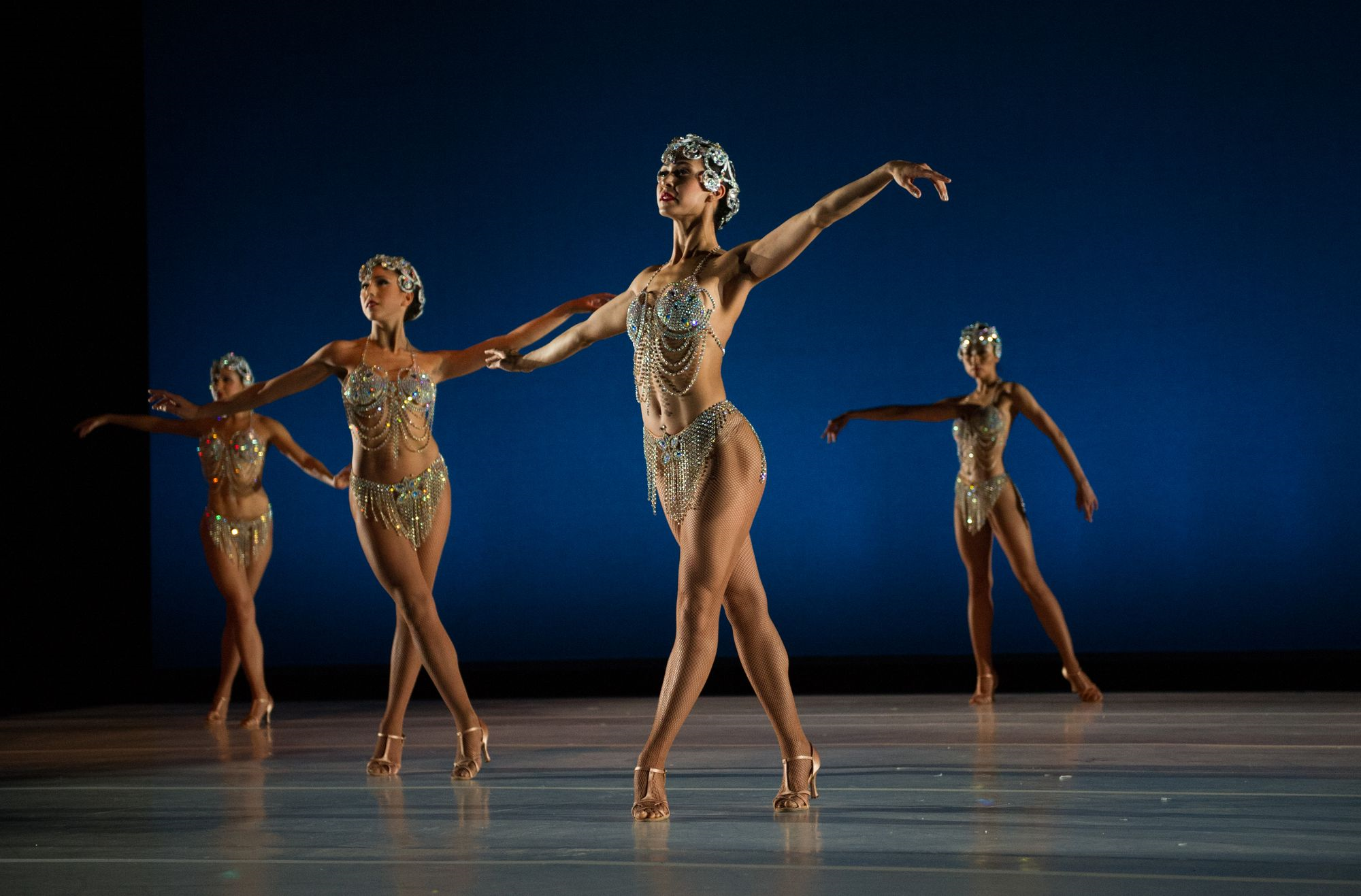
As “Show.Girl.” progressed from the first section, where six of the women dressed alike in simple long nude dresses moved in silence and unison and projected their individuality despite the concealing uniformity, to the second section, where a female soloist with an entourage of five feather-fan toting males appeared at first worshiped, but then actually tortured by their over-attentive feather pampering, it became apparent that there were deep stories behind the roles these women played, and they were bigger, and richer, than the context within which they were placed. By the third section, when the work stripped away both costumes and dancing and exhibited these women in overly revealing showgirl outfits standing like dazzling statues with the lighting effects eerily making them appear both goddess-like and trapped, it was difficult to admire their objectified presentation, but impossible not to admire their selves.
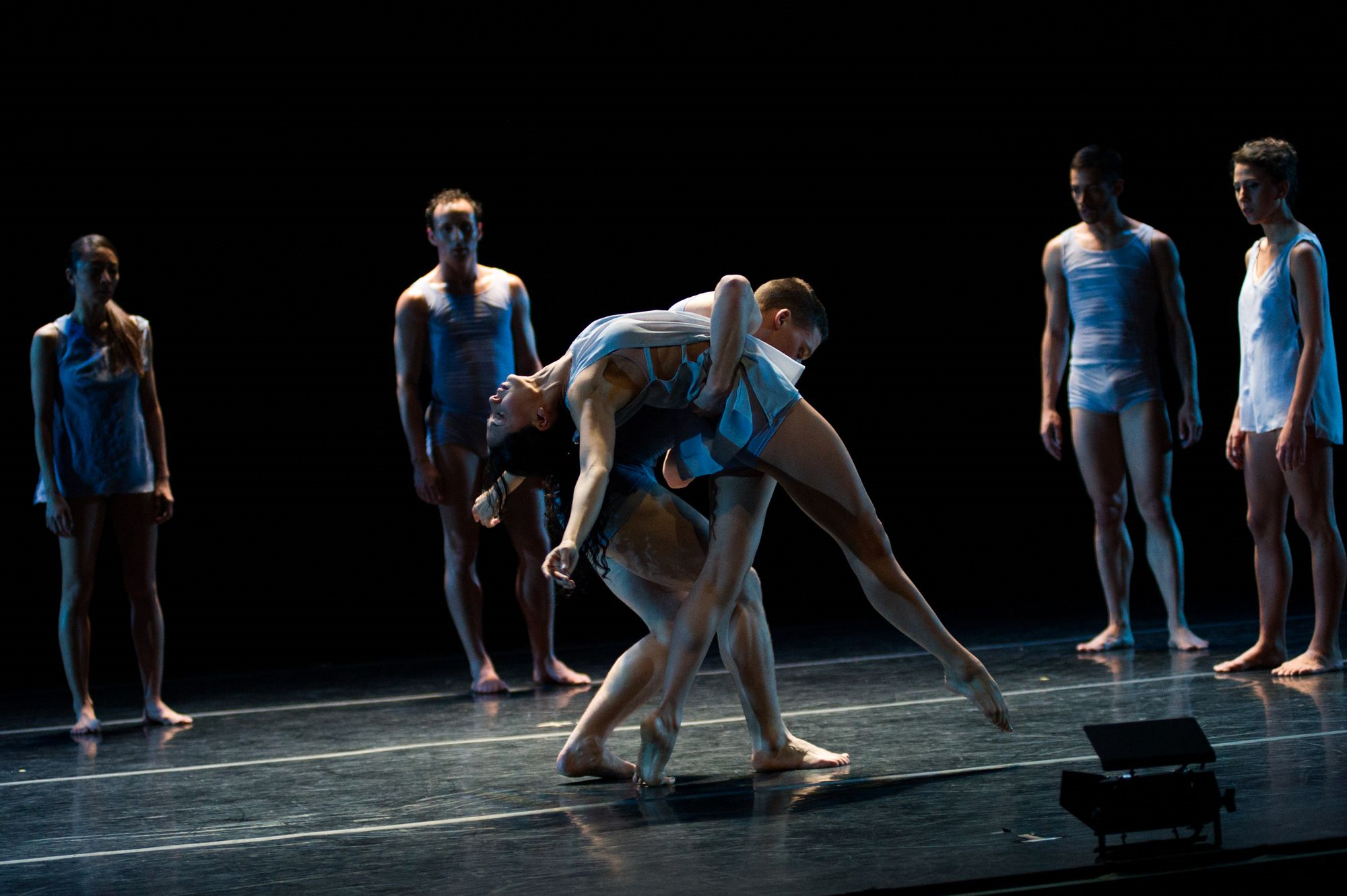
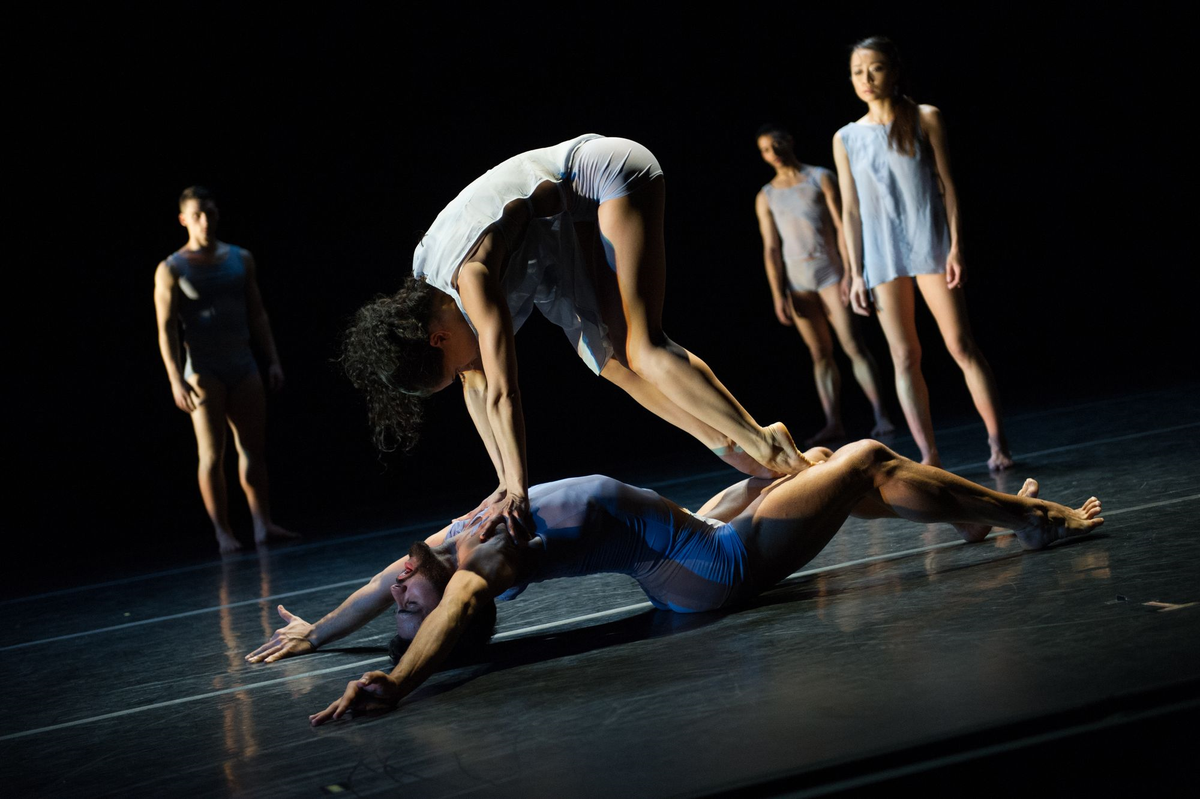
The world premiere of Mancillas’ “Conquer” was less literal in presenting its subject of conquests of space, attention and people, and the eloquence of the elastic use of the body was designed to make the audience feel the work’s message as much as be told what it is. This highly visual ballet set to hypnotic music by Ricardo León places extreme demands on its dancers’ stamina, athleticism and plasticity in expressing the primal impulses of domination, and the nine dancers in similar light blue costumes expressed the quests for partners, space, control and place in the world simultaneously with obvious determination and impulsive drive. The many interactions of the cast and their connections often felt feral, sensual, predatory and in some sections even violent, and the conquests were not merely physical. At one point early in the ballet, when a man succeeded at seducing a woman he was after, she found herself unable to escape his binds as she tried to crawl away and he blinded her with his hands. The rest of the cast watched as this duo dominated the stage space, and when the woman’s eyes were free of his hands to see again, she seemed transformed, experiencing her world differently as a result of her partner’s influence.
The hypnotic quality of the repetitive music contributed to a psychological angle of the piece, and added a peaceful familiarity within which one could experience the display of these primeval impulses. But for all it added to the work, this repetitiveness also contributed to the biggest problem with the ballet, which ultimately felt like it should have been at least half as long as it was. For most of the second half, instead of allowing and inviting the audience to explore the work on a different sensation level, the music, and the piece, grew monotonous enough to risk rendering the viewer indifferent. Still, until that point the ballet went down as smooth as good reposado, with great intoxicating power.
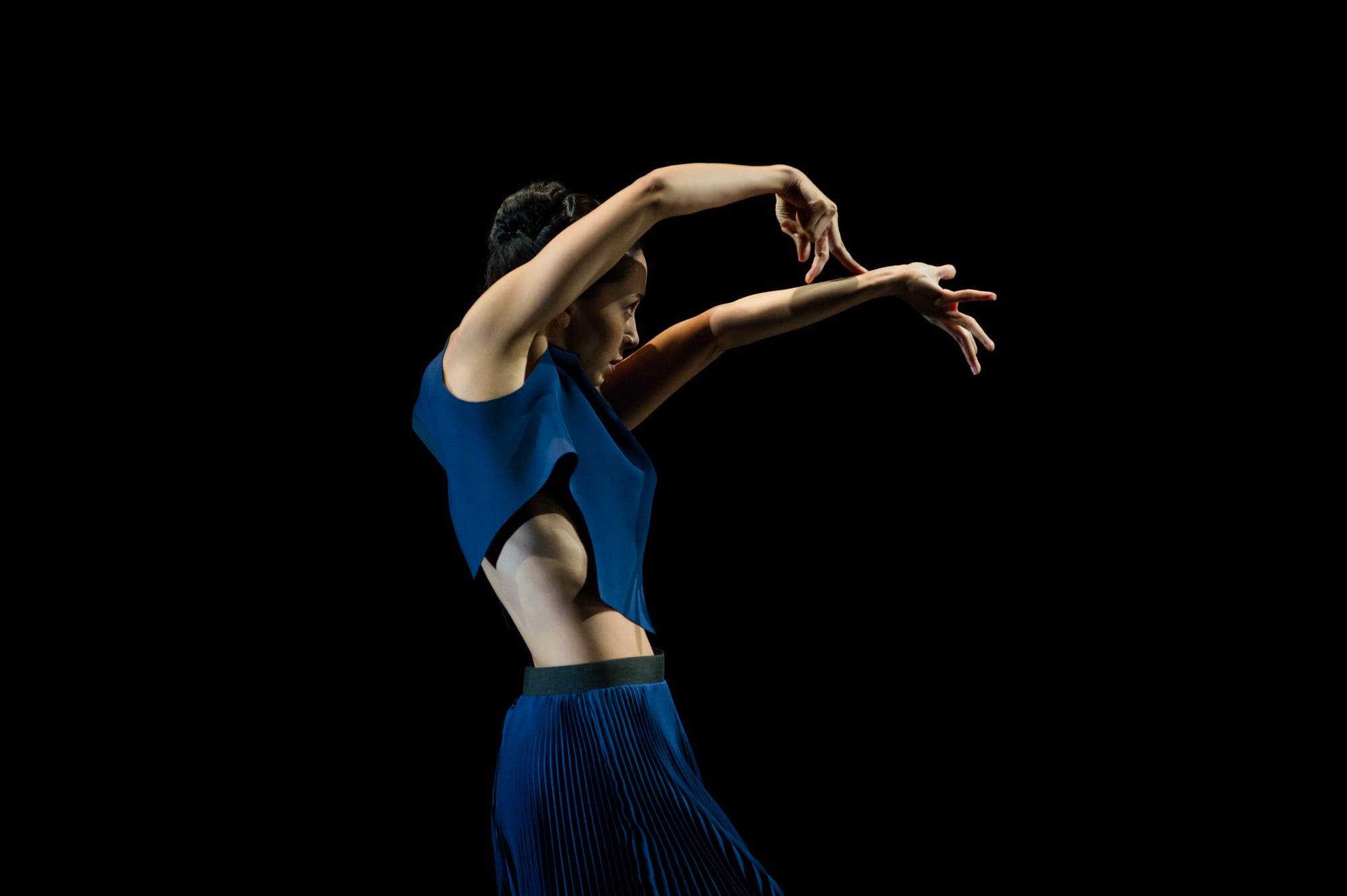
Following these works, the company ended the night with the lighter “El Beso” set to a collection of different music, and showing distinct flairs of Spain. The ballet was full of rich and broken geometric lines, from the creatively cut-off costumes by Venezuelan designer Angel Sanchez to the movement trajectory, which in the first section of a trio placed the women in a quest for a kiss from one of her two male partners on a distinctly horizontal plane, where she moved linearly and aggressively (enough so to make the man backtrack with his steps away from her) across the stage and replicated the movement by walking her fingers on her hand. The piece’s subject – the kiss – happened differently in each section, with the first demonstrating its aggressive pursuit followed by disappointment, and other sections presenting friendly, romantic and passionate contexts. Despite the dark décor adorned only with a few Spanish fan inspired detailing, the work felt light, and, in a way, allowed the evening to end on a stylish but lighter note.
copyright © 2015 by Marianne Adams



