Accent on Youth
" First", "The Saloneers", "thunder rolling along afterward", "Walk Me Through"
New Dances: Edition 2016
The Juilliard School
Peter Jay Sharp Theatre
Lincoln Center
New York, NY
December 7, 2016
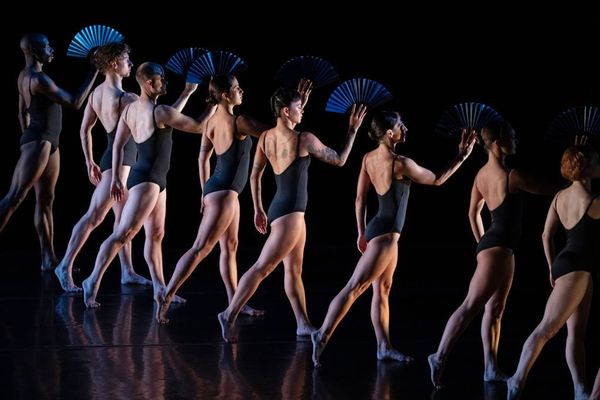
Juilliard Dance presented new works choreographed for each of their four classes. Since the choreographers (John Heginbotham for the 2020 class, Katarzyna Skarpetowska for the 2019 class, Pam Tanowitz for the 2018 class, and Matthew Neenan for the 2017 class) needed to use all of the dancers, the works tended to resemble each other, as they all had large casts moving in unison. They were also similar in that the dancers moved clearly, with articulate upper bodies and clean, juicy dancing.
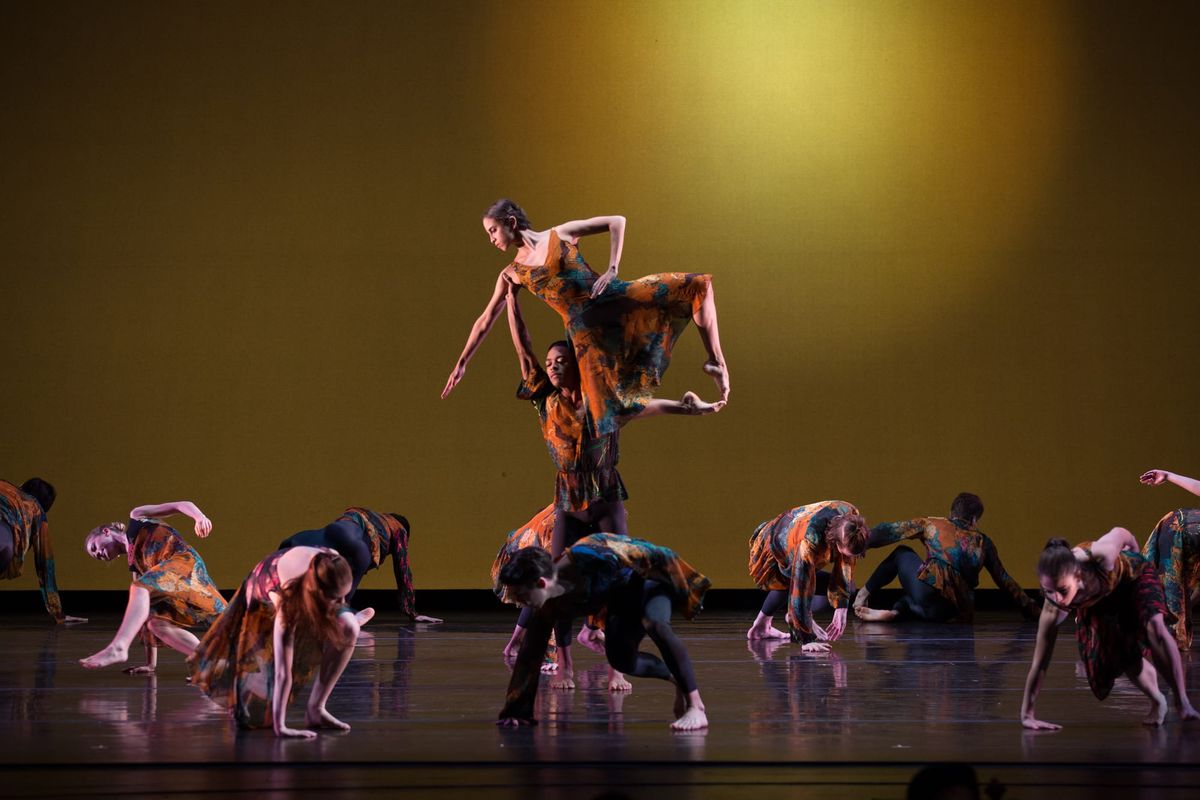
Heginbotham set "First" to the first movement of Schubert's string quintet, played live by Juilliard students. This isn't music that cries out for choreography, though certainly some choreographers have been able to use musical masterpieces effectively. One is Paul Taylor and Heginbotham used many Taylorisms; his work was full of low, crouching runs, unexpected lifts, and straight-armed jumps. But the busy, active piece didn't connect with the music, especially the elegiac melody, and the choreography often looked jerky and unfocused. The costumes (designed by Fritz Masten) were lovely, with the girls in autumnal-colored dresses, but the choreography was about movement, not mood.
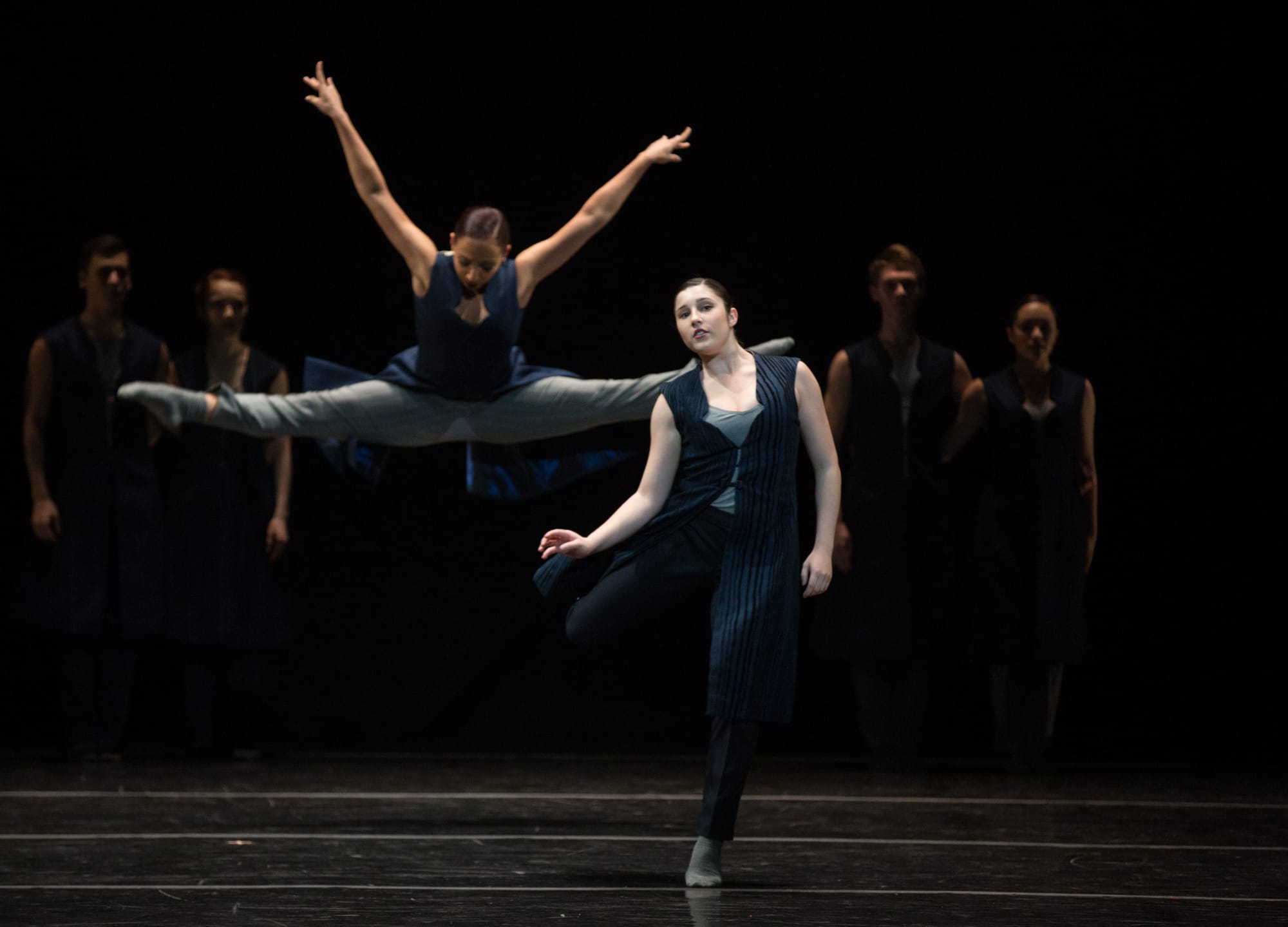
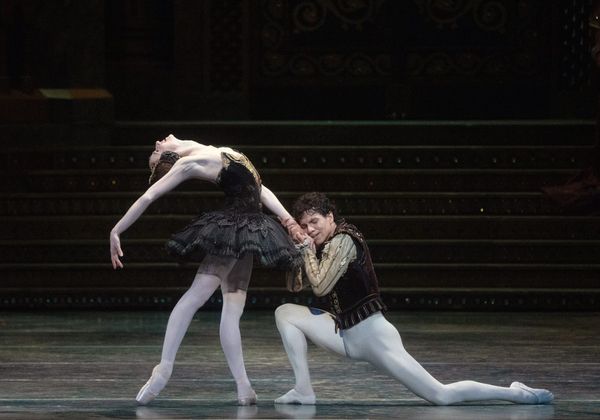
Skarpetowska's "The Saloneers", to the first movement of Chopin's Cello Sonata in G Minor (played live by Juilliard students) also had very effective costumes by Masten. He used flattering dark frock coats for both the men and the women which helped their arms and faces stand out from the moody, dark background. The choreography reflected and reinforced the melancholy unease of the music, without imposing a narrative, and the dancers swept through some unusual and constantly shifting formations. She used the dancers' pliant backs and articulate upper bodies to emphasize the music; it was a very effective piece.
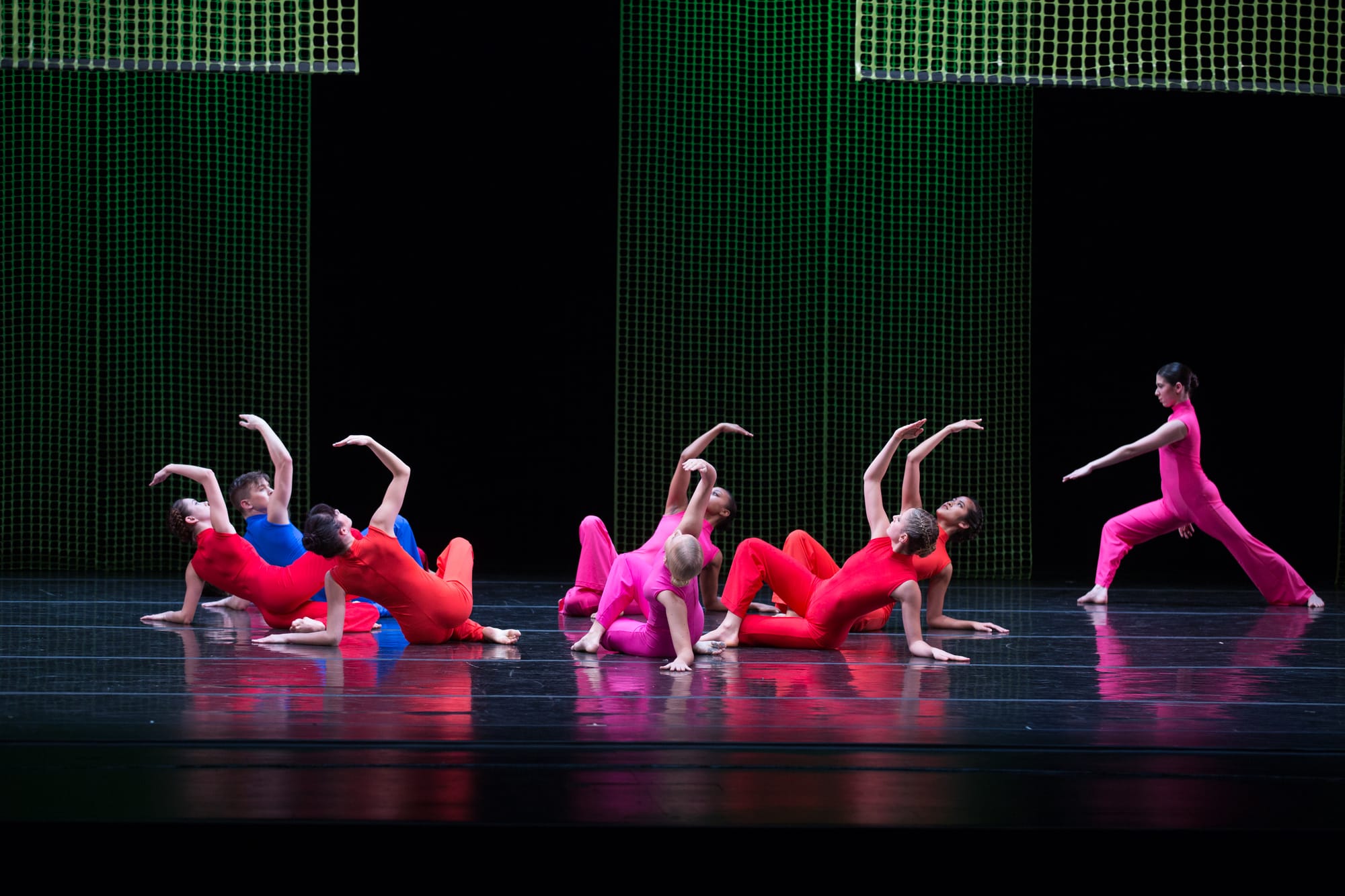
Tanowitz's "thunder rolling along afterward" was a complete change of mood, which Masten's colorful jumpsuits captured. The work, set to Andrew Norman's 2010 "The Companion Guide to Rome", based (according to his website) on his impressions of various Roman churches, may have used his architectural inspiration as a starting point. It was geometrical, unexpected, and without human emotion, celebrating the dancers' impeccable technique. It seemed to be about contrasts, with quick jumps followed by calm balances; the women were in warm colors and the men in cool ones. The dancers were pure shapes and forms--according to the program the men and women will switch roles in some performances. This cheerful lack of meaning went on a bit too long, but it's unexpected quirkiness was a lot of fun.
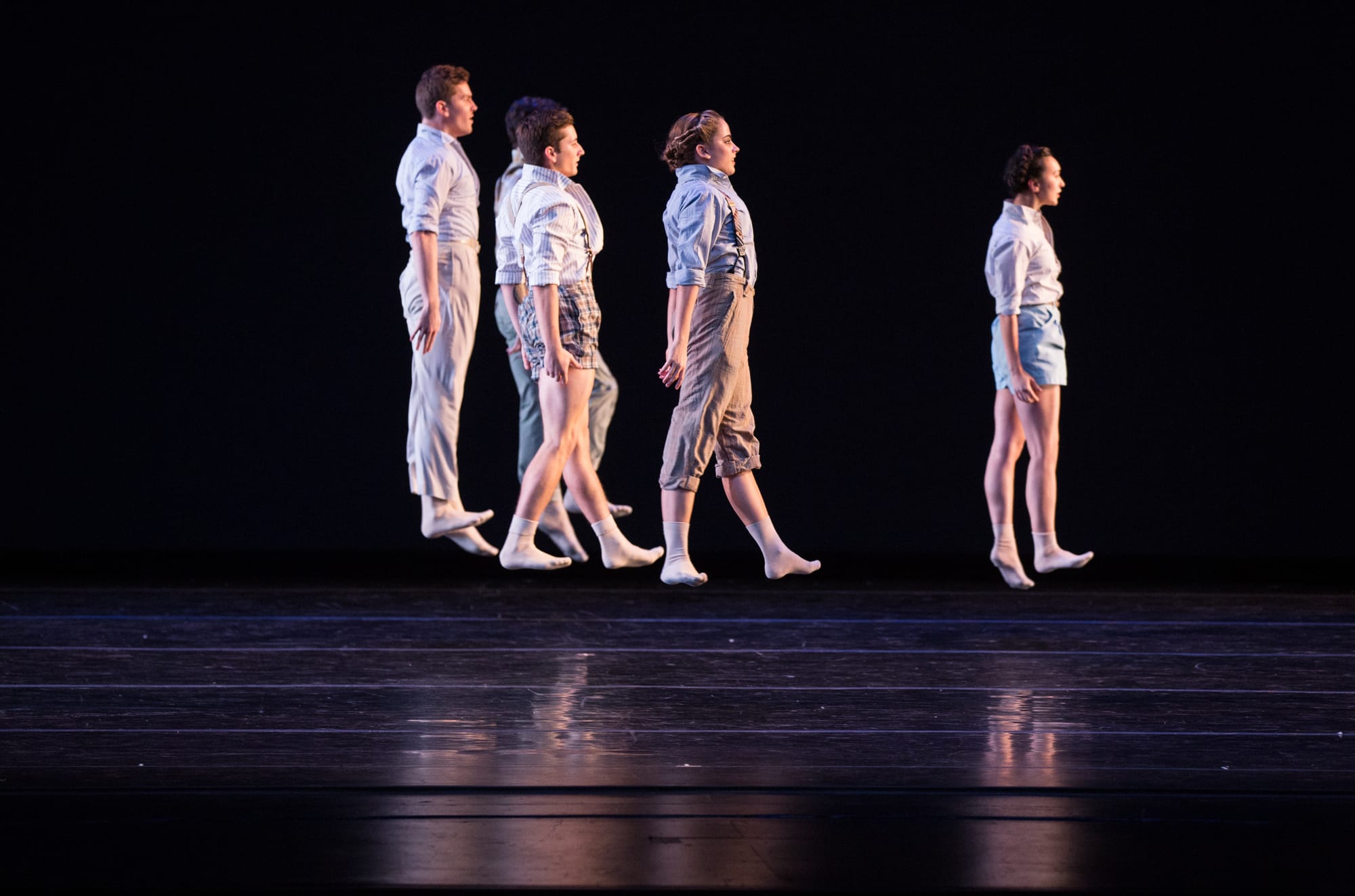
Matthew Neenan's "Walk Me Through" to recorded songs by Rufus Wainwright also had very costumes by Masten. The very flattering women's dresses suggested the 1940s and the opening song "Beauty Mark" had an infectious, country-like sound, which suggested a rip-roaring Lindy hop. But Neenan generally had his dancer stand in groups or walk with an exaggerated stiff-legged chicken imitation; he just ignored the rhythm. He also ignored the slightly lugubrious self-pity of the later lyrics as the singer ("Leaving for Paris") reminisced about a failed love affair. Neenan made the dancers look terrific, but he, like the other choreographers, made them look like great movers rather than interesting people.
Copyright © 2016 by Mary Cargill