A Star is Born
“Don Quixote”
The National Ballet of Canada
Four Seasons Centre for the Performing Arts
Toronto, Canada
June 1, 2024
The beloved classic “Don Quixote” has not been seen in Toronto since 2011. At that time, it was the Petipa/Gorsky/Beriozoff version, which was fun but perhaps in need of a refresh. Prior to that, in 2007, the company performed the George Balanchine one act version, which is a different work entirely as it is centred more on the title character and his relationship to his ideal woman or Dulcinea. In securing Carlos Acosta’s production (created in 2022 for Birmingham Royal Ballet), the National Ballet of Canada has the privilege of being the first North American company to perform this updated version – a dazzling showpiece with the ability to capture the interest of balletomanes and new audience members alike. This ballet felt similar to Rudolf Nureyev’s “Sleeping Beauty” which he brought to the NBoC in 1972 – the company was galvanized by the presence of an international star whose production provided a vessel within which the dancers could really grow. In watching the opening night performance of Acosta’s “Don Quixote”, one could really feel the excitement of the dancers collaborating with such a renowned artist.
“Don Quixote” is jam packed with highly technical choreography that is intricate, stylized and energetic. This is a refreshing change from many of the newer full length ballets the NBoC has presented, which feature elaborate sets, video projections and special effects often at the expense of choreographic depth. The leading roles of Kitri and Basilio are truly marathon roles, requiring tremendous stamina as the dancers are on stage for the majority of all three acts. There are several meaty supporting roles as well to showcase the depth of talent within the company. Similar to Nureyev’s “Sleeping Beauty”, Acosta’s “Don Quixote” has created additional opportunities for virtuoso dancing for the male lead especially. After all, Basilio was his calling card as a dancer and he knows this role inside out.
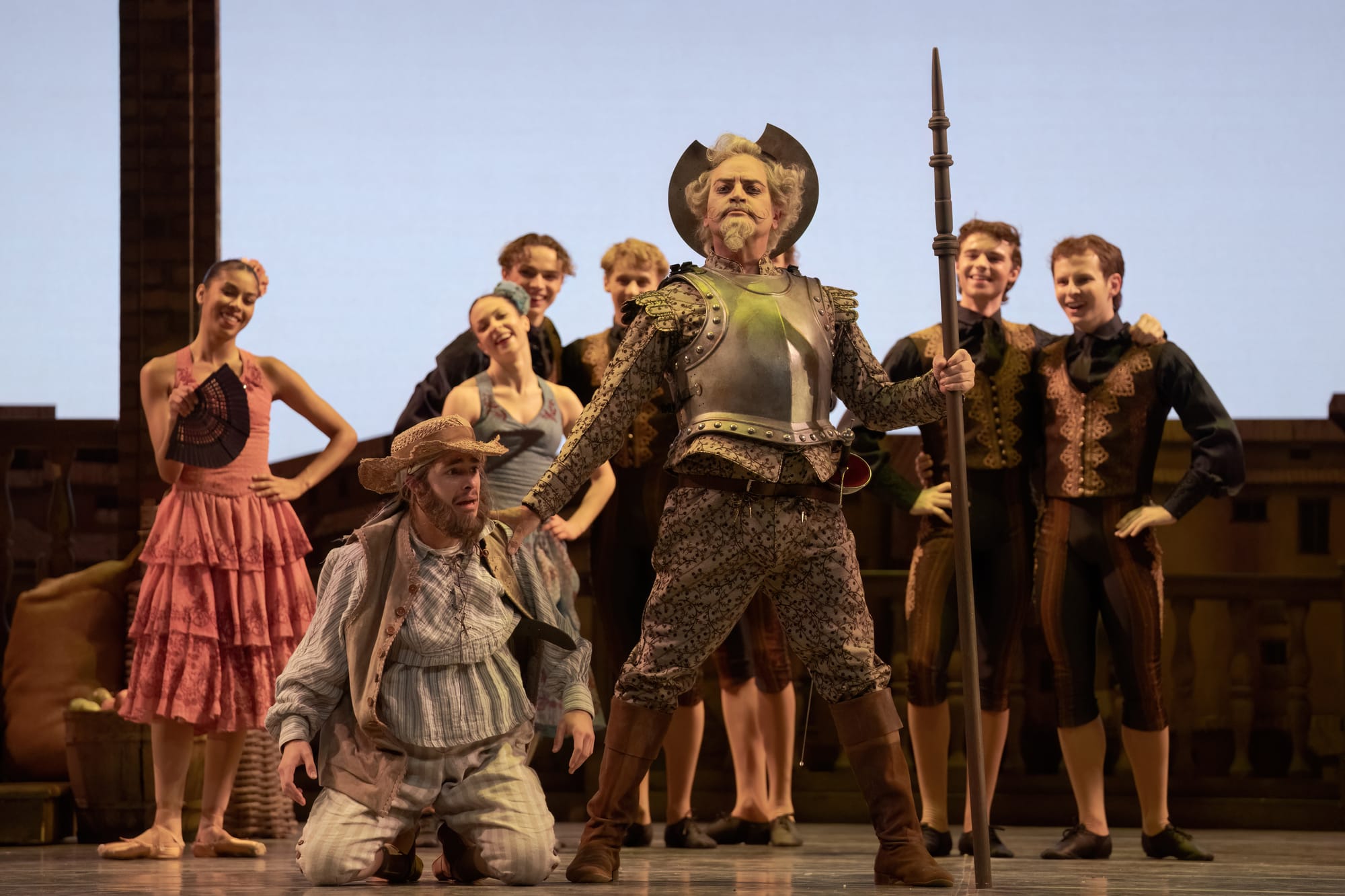
The first act set in the town square is slightly too long at 50 minutes. Nonetheless, it introduces all the important characters and features enough back to back variations that it goes by quickly and keeps moving. It also includes a short prologue of the noble minded yet delusional Don Quixote, with his squire Sancho Panza, preparing to set out on his knightly mission. Beloved former principal dancer Rex Harrington brought dignity and pathos to the title role, toeing the line between endearing and ridiculous.
Acosta’s production brings lovely touches of Spanish everyday life into the production. The dancers vocalize on several occasions, shouting and calling to each other and reacting to the action on stage. Props like fans, matador capes (muletas) and tambourines are used to great effect. The corps de ballet are often active even when on the sides, chattering, drinking and flirting with each other. The overall feel is more modern and colloquial compared to some more formal versions. The motif of dancers pretending to be bull and matador is a bit overused and tiresome, but otherwise the town scene is vibrant and colorful.
The second act features a lovely new pas de deux for Kitri and Basilio featuring rarely used music and a large Spanish shawl called a mantón which is often used in flamenco dance. It is somewhat reminiscent of the scarf pas de deux in the second act of “La Bayadere”. The scene in the Roma encampment (thankfully they have done away with the term “gypsy” in the program notes) also features original music composed by Hans Vercauteren, who also did the arrangement of Ludwig Minkus’ score for the rest of the ballet. In a unique twist, live flamenco guitarists perform on stage with the dancers gathering around a campfire, lending authenticity to the scene. While the guitarists are unfortunately not credited in the program, they are major artists in the Toronto flamenco community – Nicolas Hernandez, Benjamin Barrile and Luis Angel Medina. Meanwhile, in the background, there is a video projection of towering windmills that later torment Don Quixote as they morph into monster-like creatures, each windmill blade becoming a grotesque arm. Here the video design by Nina Dunn is used effectively to demonstrate Don Quixote’s loosening grip on reality. Selene Guerrero-Trujillo and Josh Hall brought plenty of spice to their dancing as the lead Roma couple.
The dream sequence is gorgeous. Set and costume designer Tim Hatley really hit it out of the park with hanging vines and weeping willows in front of a video projection of gently rippling water, creating a serene utopian atmosphere. The leaves are reflective, so as the lighting changes, there is a magical shimmering effect. The costumes, however, could turn it down a notch. There is so much glitter and sparkle that the tutus evoke more of a tacky pageant vibe rather than a dream. Nonetheless, Calley Skanik was a radiant queen of the Dryads. She showed refreshing restraint. For instance in a section of repeated extensions, she showed a nice progression with the leg getting higher each time, rather than whacking her face with her leg just because she can. Her Italian fouettés were exact in placement -- a perfect exemplar of classical technique. Amour is a genderless role here with both male and female dancers cast. In this performance, it was the compact and light on his feet David Preciado. The role is an ideal outlet for his technical gifts. He demonstrates impressive speed and precision in his petit allegro and pirouettes with movements as sharp as Cupid' arrow.
Act 3 is set in a warm and inviting tavern lined with barrels and iberico ham legs, before transitioning to Kitri and Basilio’s flower adorned wedding venue, which appears inspired by Seville’s Plaza de España with its beautiful arches. A soft pink sky evokes a sunset on a warm summer’s day. The happy couple are showered in flower petals and the ballet ends with a nice grand ensemble piece.
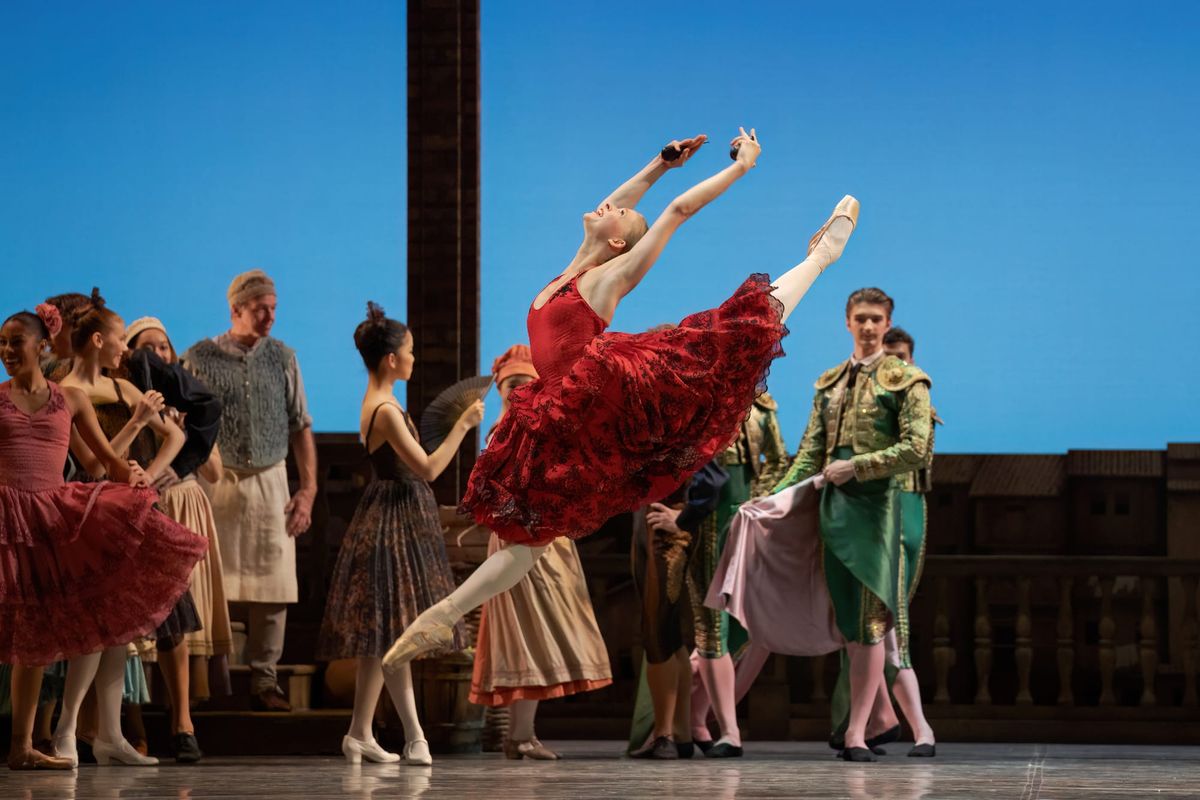
In addition to Acosta’s brilliant production, the most newsworthy aspect of opening night was Genevieve Penn Nabity’s debut as Kitri. She gave an outstanding and well-rounded performance that made it looks like she has been dancing this role for years. Her technique is rock solid and allowed her to appear relaxed in even the most difficult sequences (of which there are many!). She is a well-rounded dancer with a natural warmth and way of connecting with an audience as well as other dancers on stage. She understands the importance of details such as épaulment and how to use her eyes to add flourishes and drama to her movements. Her solo with castanets in the first act was crisp and flirtatious, yet she was able to totally change gears in the dream scene with effortless hops en pointe and a dizzying double manège of rapid piqué turns. She did not play it safe in any part of the wedding pas de deux which she made both exciting and joyous. She took risks and it paid off with a dazzling display of bravura dancing including solid fouettés alternating singles and doubles with hands on her hips. One can't help but smile watching Penn Nabity perform because there is something special about seeing such a talented artist doing what they are clearly meant to do. She is no longer a "star in the making" – she has arrived.
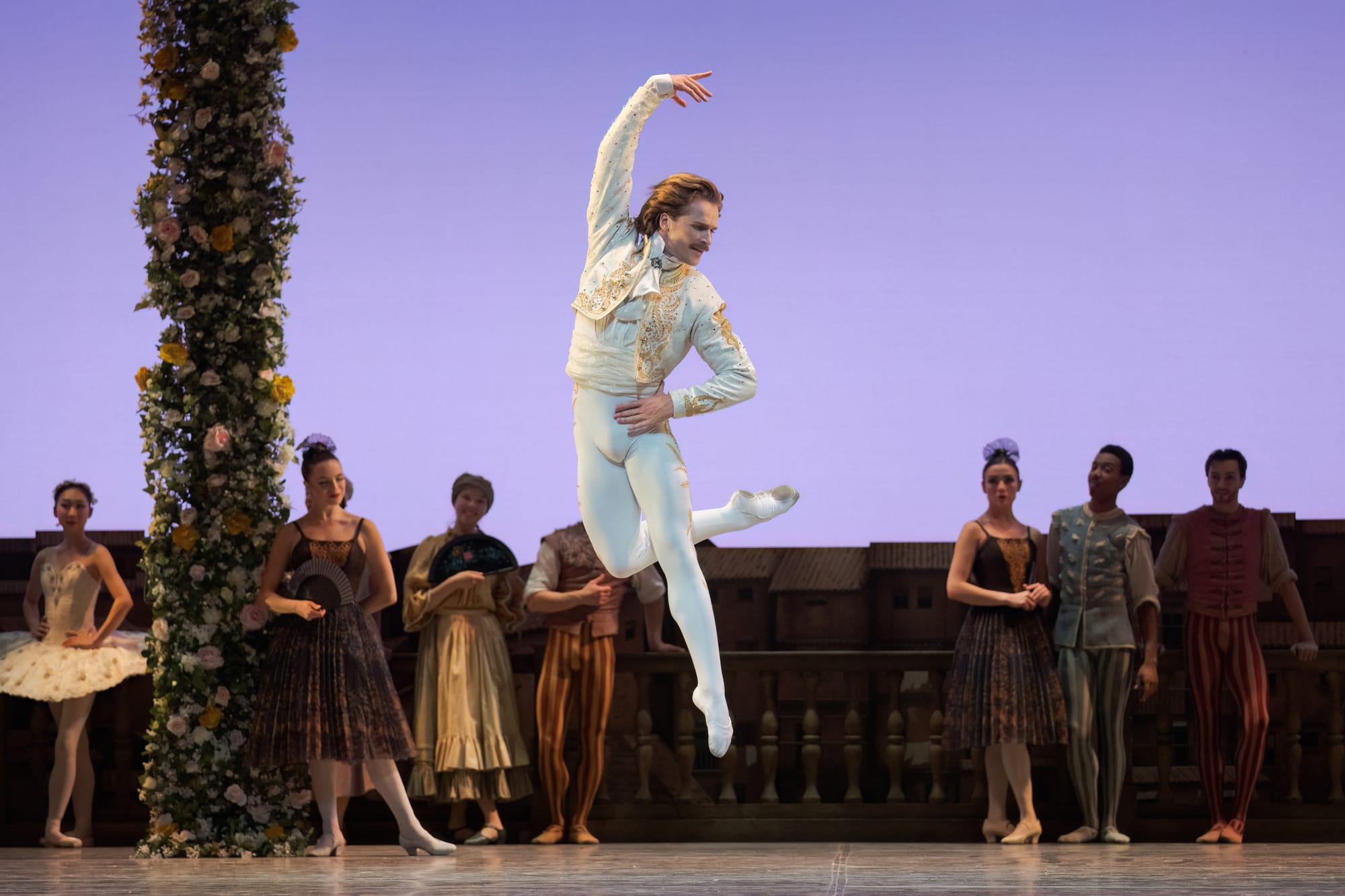
Her Basilio was the dashing Harrison James. He found comedic moments and his mime was clear and readable. His fake death was hilarious with one leg kicked straight up like an involuntary movement every time he lay down. While his jumps do not have quite the same height or extension as they once did, he dances very intelligently, pacing himself and creating clean pictures and positions in the air. In the pirouettes à la seconde, he played with different hand positions (on his chest, in his pockets), showing control and style. In a pre-performance public ballet talk, he mentioned Penn Nabity being so strong that she basically partners herself. However, I would say he was being modest. The partnering in "Don Quixote" requires a lot of skill including the one armed overhead lift or moments where she literally dives into the air and he has to catch her. He was a steady partner, which allowed her to shine.
Christopher Gerty had a lot of fun as Espada, blowing kisses and moving with exaggerated machismo energy. Mercedes was danced cleanly by Monika Haczkiewsicz, a tall corps de ballet dancer that is certainly one to watch. As Gamache, Donald Thom brought physical comedy as he hobbled around in a ridiculously huge and floppy hat. Everyone stayed in character until the very last curtain call. Acosta's production of "Don Quixote" is a triumph for the NBoC. Hopefully it will be back sooner rather than later and perhaps on tour.
copyright © 2024 by Denise Sum



