A New Cinderella is Born
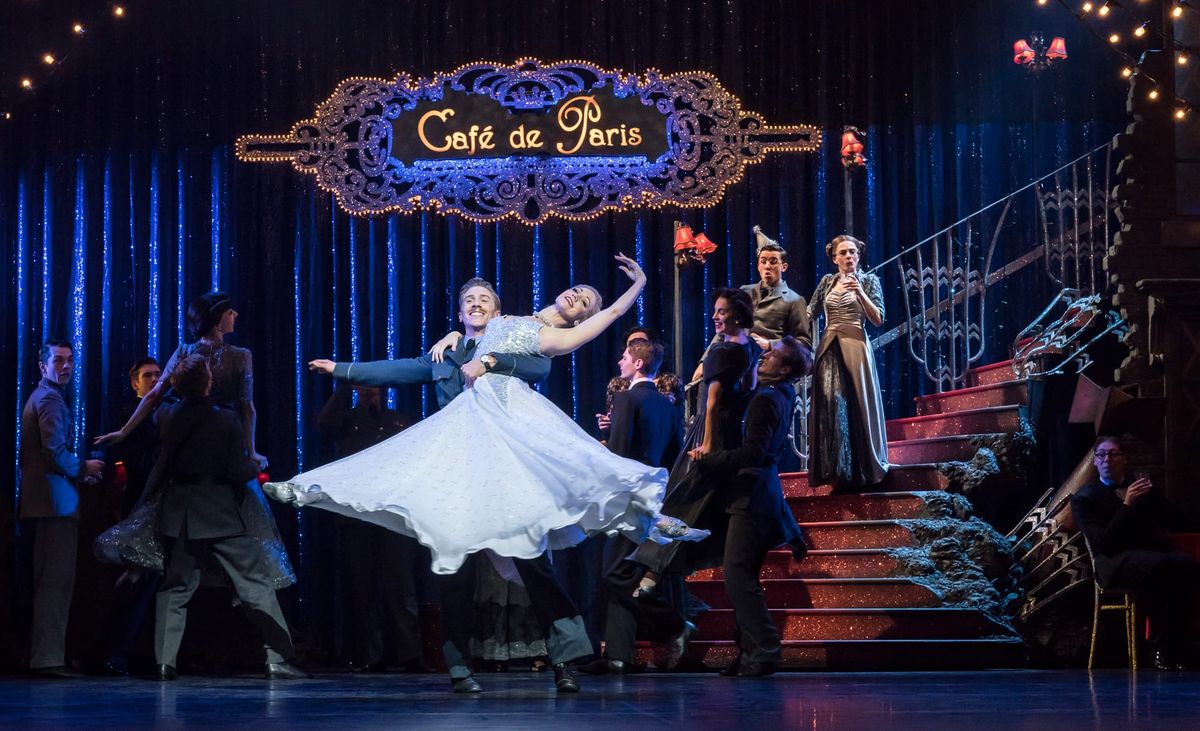
“Cinderella”
New Adventures Company
Opera House
The John F. Kennedy Center for the Performing Arts
Washington, DC
January 16, 2019
The New Adventures Company showcased a new appreciation for a well-known fairy tale at the Kennedy Center this past week, sparked by Matthew Bourne’s reinvention of the Cinderella story. With Bourne’s artistic vision and a cast of brilliantly talented and expressive dancers, the company took the iconic character ballet, while maintaining much of Prokofiev’s original score, and placed the popular story in a novel context — the city of London during World War II. Transplanting the story of Cinderella into an often romanticized time period was a risky move, making certain elements of the story a bit jarring when Bourne’s artistic decisions differed greatly from the traditional and expected. In the beginning of the performance some of the characters seemed more like caricatures than real people, and Bourne had Cinderella ride a white, celestial motorcycle instead of a horse-drawn carriage. Still, the choice to set Cinderella during WWII had its own payoffs due to the romanticism and intrigue of the era, making it the perfect setting for a fairy tale revamp.
Right from the opening scene, it was clear that Bourne paid a great deal of attention to the introduction and characterization of each member of Cinderella’s family, and each performer employed complete unerring devotion to the embodiment of his or her unique character. Cinderella had a violent drunk for a step-mother (Madelaine Brennan), two pompous air-heads as step-sisters, and three step-brothers, one of whom fostered a rather concerning and creepy foot fetish. Her father (Alan Vincent) harbored a broken and turbulent emotional state and was confined to a wheelchair, offering little aid and reassurance to his daughter.
This innovative artistic decision concerning the historical setting also promoted a sense of curiosity and intrigue to the story of Cinderella, and allowed for a bit of flexibility in how Cinderella and her Prince Charming were portrayed. Bourne’s Cinderella (Ashley Shaw) was pretty dorky, sporting a conservative cardigan and a pair of glasses. Shaw’s portrayal of Cinderella was heartwarming and inspired, showing her innocence as she danced with a mannequin, daydreaming about her pilot, and later demonstrating a stubborn determination and tenacity when finally overcoming the malicious abuses of her evil step-mother. She worried and fidgeted, depicting an anxious demeanor, and even revealed a sense of humour as she comically mimicked the actions of her overwhelmingly bizarre step-family.
In this revised story, Cinderella's prince is a pilot named Harry played by Andrew Monaghan. The two dancers performed with a beautiful chemistry, particularly in the second act where Cinderella and her pilot danced a riveting and romantic pas de deux in Harry’s bedroom with spiraling, stylized lifts that capitalized on the power of momentum to make every movement appear natural and effortless. Instead of a fairy-godmother, divine intervention in the tale is characterized by an angel played by Liam Mower. Mower’s marvelous performance demanded attention the moment he appeared perched on top of the mantel above Cinderella’s fireplace. Decked out in metallic garb, he exuded a commanding yet amicable stage presence and proved his technical abilities with breathtaking extension and suspended, breathy turns. Every move Mower performed was refined and intentional from the curvature of his hands to the tilt of his head, and this deliberate poise further illustrated the angel’s role as a higher power.
This new version of “Cinderella” was successfully executed in large part because of Bourne’s detailed characterization and moving storytelling through the usage of these characters and their definable qualities. Although placing the story in London in 1940 led to some surprising moments and elements, it also provided the opportunity to further connect with the emotion behind the tale. The performance was no longer just about a maiden called Cinderella in an abstract world, but instead the human experience of daring to love during a time of war.
Copyright © 2019 by Arielle Ostry



