A Matched Pair
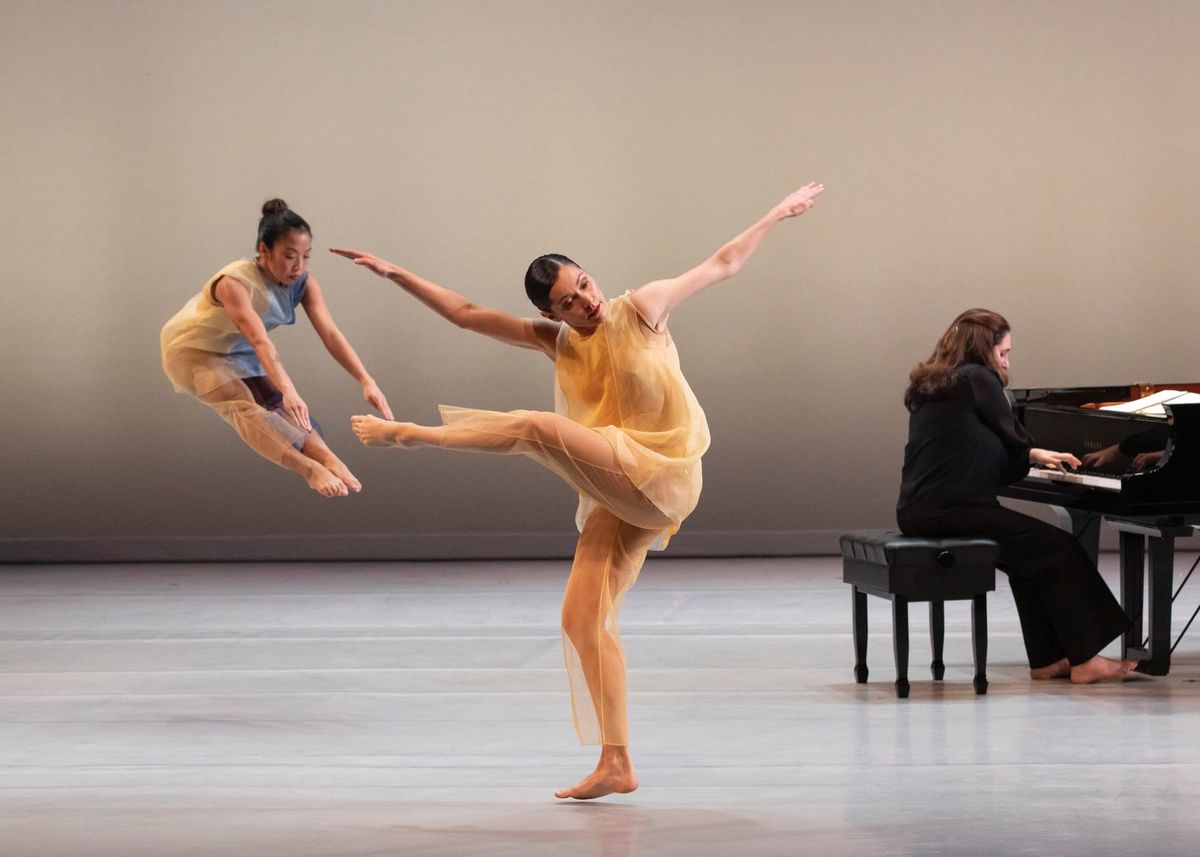
“New Work for Goldberg Variations”
Pam Tanowitz & Simone Dinnerstein
Joyce Theater
New York, NY
December 10, 2019
Choreographer Pam Tanowitz is a serious headliner in the world of contemporary dance, but in "New Work for Goldberg Variations," her stunning collaboration with pianist Simone Dinnerstein, Tanowitz put the award-winning pianist at the center. Dinnerstein sat at a grand piano in the middle of the stage, and, from the first image, the dance revolved around the music. The first light to break the stage blackout illuminated only Dinnerstein’s fingers, dancing along the piano keys in a soft opening variation; next the light caught Dinnerstein’s profile. The rest of the stage lights came up oh so slowly, to illuminate the profiles of still dancers, who were facing the pianist, listening as raptly the audience. That first emerging stage light was tinted a pale orange; it was a collaborative sunrise.
Tanowitz’s dancers moved with her signature style, disciplined and balletic on the one hand, but threaded with unusual quirks and body shifts. With the range of rhythms and dynamics in Bach’s variations, Dinnerstein offered an array of tempos and energies that made every scene unique. Tanowitz’s simplest movement phrases were magnetic. In the opening scene, one dancer, then two and more, filled the stage just by shuffling around the piano across the stage with three steps forward, one step back (a life metaphor, to boot.) The steps also echoed Dinnerstein’s fingers on the keyboard. Often, when the musical variation included a canon, the movement, too, echoed with rolling start times – or created a physical canon with each dancer giving a new look to the same movement phrase.
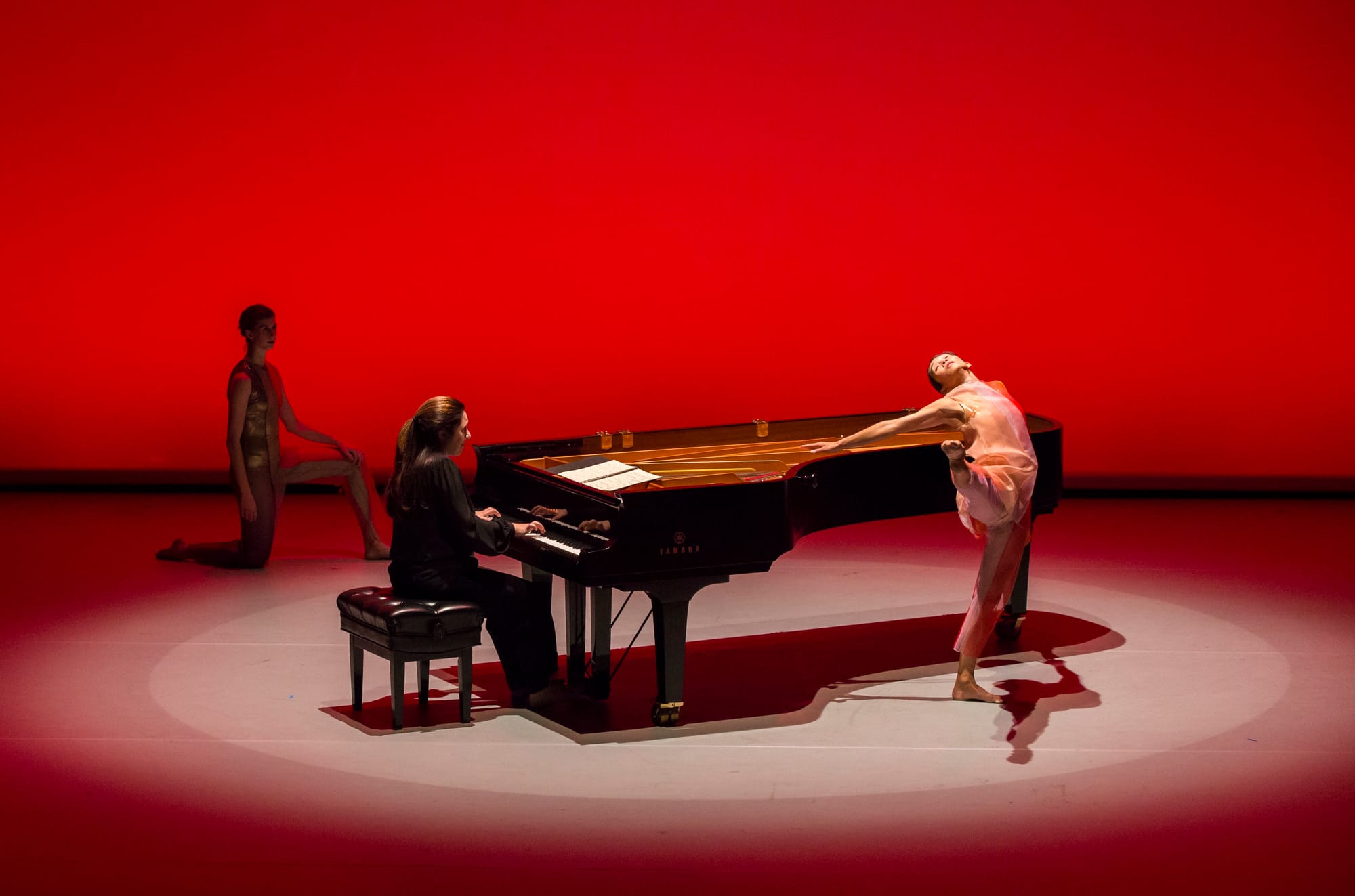
Bach’s gentle variations filled the hall with light; the energized variations were dramatic, complex, and played with fun (the dancers allowed themselves to smile and meet each other’s eyes when the tempo shifted, and the music bolted forward.) In her responding homage to the choreographer who made her the work’s center, Dinnerstein played this most classical of pieces as Tanowitz’s dancers dance: barefoot.
The dancers’ physical differences also allowed Tanowitz to create variations of her own. Lindsey Jones’ and Melissa Toogood’s long limbs were a matched set; smaller Christine Flores was matched not in height but in energy with tall, loose-limbed Jason Collins. When groups of dancers filled the stage, they often were in separate, individual movements then a trio or quartet would slide into a parallel pattern, as one dancer balanced them in a separate solo. Tanowitz also used the floor, as a few dancers stretched back, lying flat or casually seated with a raised bent knee, to watch whoever else was moving onstage. Tanowitz’s dance rhythms sometimes were linked to the musical notes, but just as often to the musical rests; the complex duet between the music and the choreography was a tumble of intersections.
The costumes and lighting offered rich sensory dimensions to the work. Reid Barthelme and Harriet Jung’s colorful costumes operated in their duet with the lighting design by Davison Scandrett. The lighting was as striking and changeable as the musical movements, and the interplay with with the costumes was delicious. After the sunrise of the opening scene, the lights often turned the stage the color of the soloist's (or duet's) costume – a pale yellow stage for Melissa Toogood and Jason Collins; the oranges connecting several of the duets. The floating costumes, striped in different pale shades, came alive with whatever color the light brought most to life – figure and ground playing in colorful alignment, just like the choreography with the music.
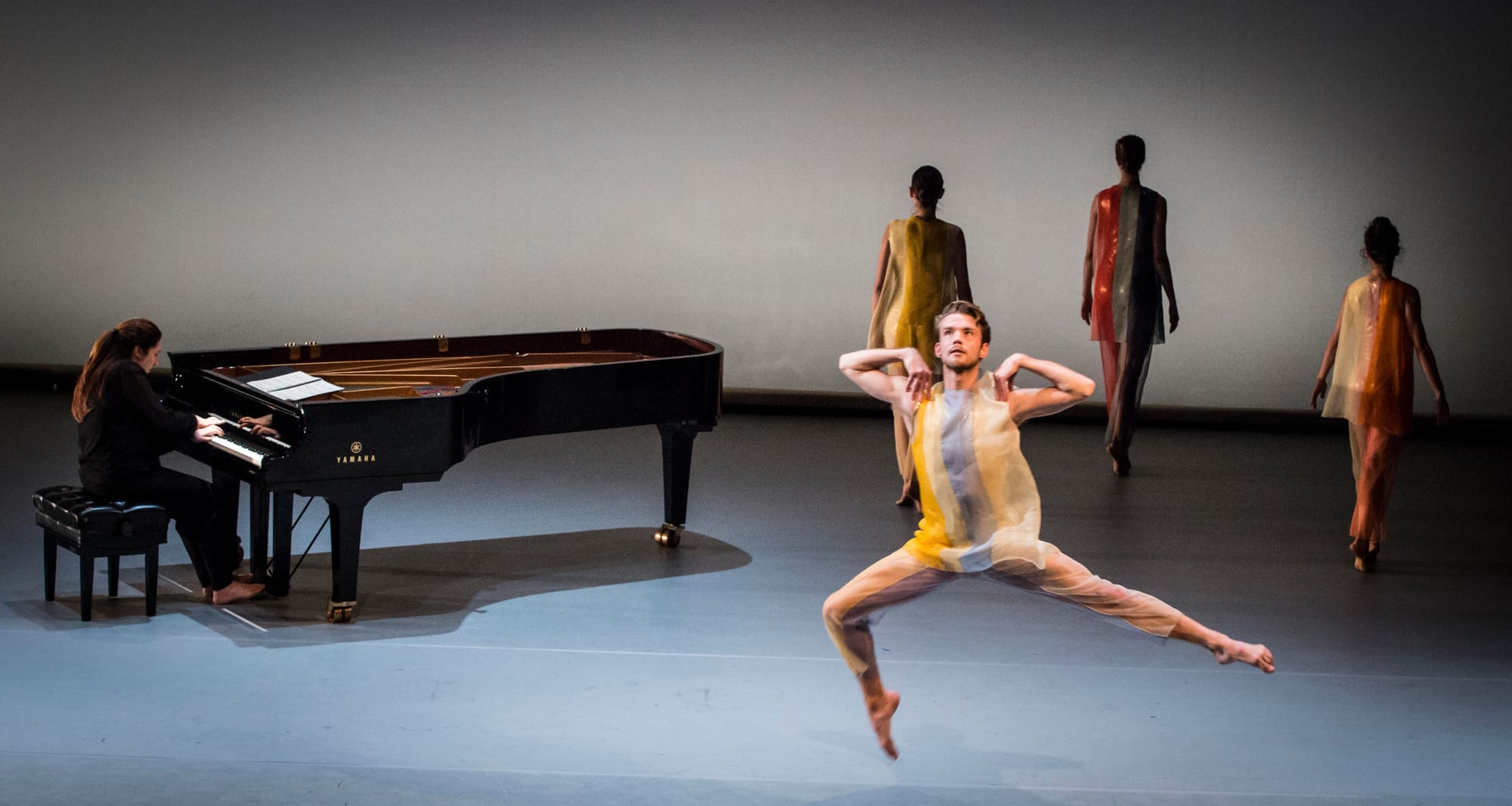
Sometimes the movement was a literal representation of the music, as three women dancing together were a three-note chord. In one variation, all of the dancers huddled closely around the piano in a rich closing measure, like a studio photo shot representing the final harmony. In one scene, the dancers traversed the floor with one knee sunk in a deep squat while the other leg stayed straight, propelling themselves in simian-like bounces. In another brief movement, several dancers lightly clasped hands, weaving in and around each others arms and backs, creating a moving sculpture of their linked bodies. Tanowitz’s movement varied as dynamically as the musical tempos.
In the final movement, the parallel dancers created a simple pyramid arrayed in rows on the stage. The light, again, focused on Dinnerstein’s hands and face as they’d been in the start. Now, though, she was gazing right back at the dancers. Not a note was false in this beautifully constructed evening.
copyright © 2019 by Martha Sherman



