A Glimpse of the Future
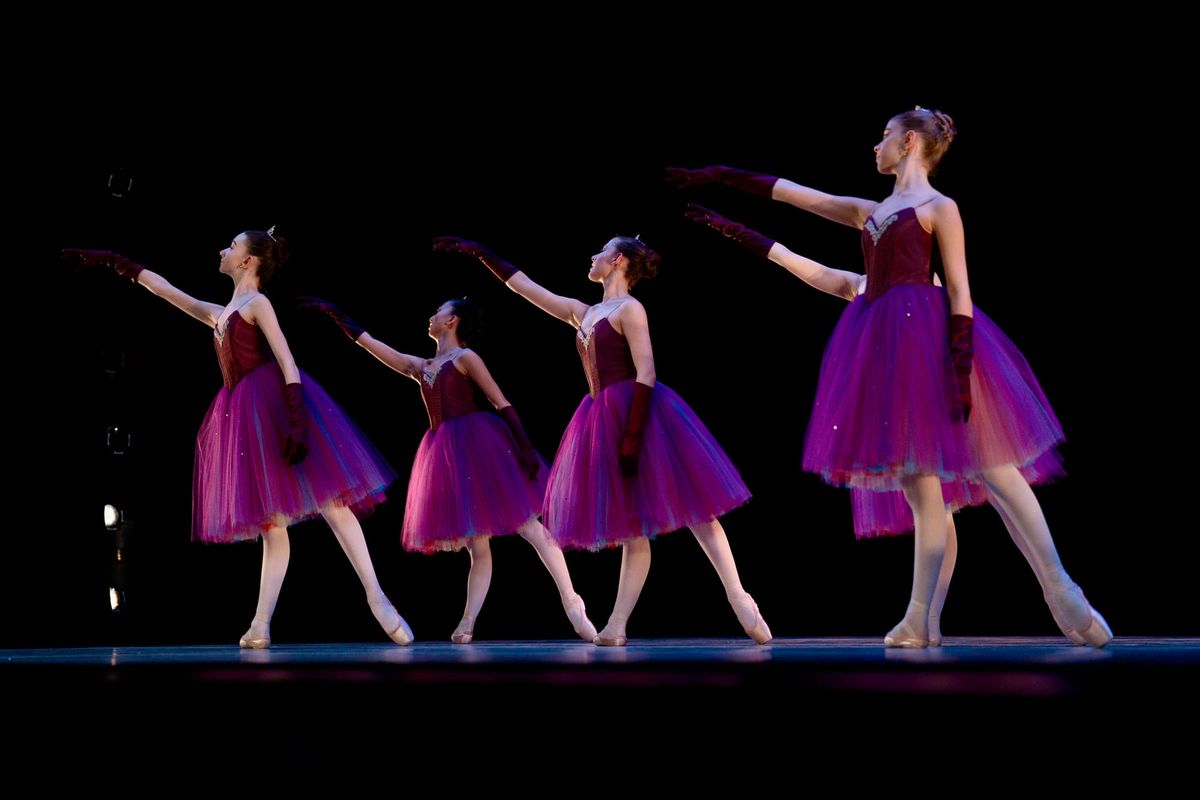
"La Sylphide" (excerpts), "au début", "Un Petit Menuet", "Rosine", "Tritsch Tratsch Polka", "Der Rosenkavalier", "Élégie from Tschaikovsky Suite No. 3", "Bizet Volé", "Petite Suite Ballet", "Dreamers"
Ballet Academy East 2026 Spring Performance
The Kaye Playhouse
New York, NY
May 29, 2026
The 2026 Spring performance of the New York based Ballet Academy East was dedicated to Francis Patrelle who had taught at the Academy for over 40 years, showing his sweeping choreography set to the waltz of “Der Rosenkavalier”. It also celebrated all of its students, from the younger ones showing off their aplomb and engaging stage presence in simple exercises in several works, all danced with a serene dedication and admiral lack of coyness, to their older students in more challenging pieces. This included an abridged setting of Bournonville’s “La Sylphide” set by Nikolaj Hübbe, one of New York City Ballet’s great Danes, Balanchine’s soulful “Élégie” from his “Tschaikovsky Suite No. 3”, and two vibrant works by the NYCB principal Daniel Ulbricht.
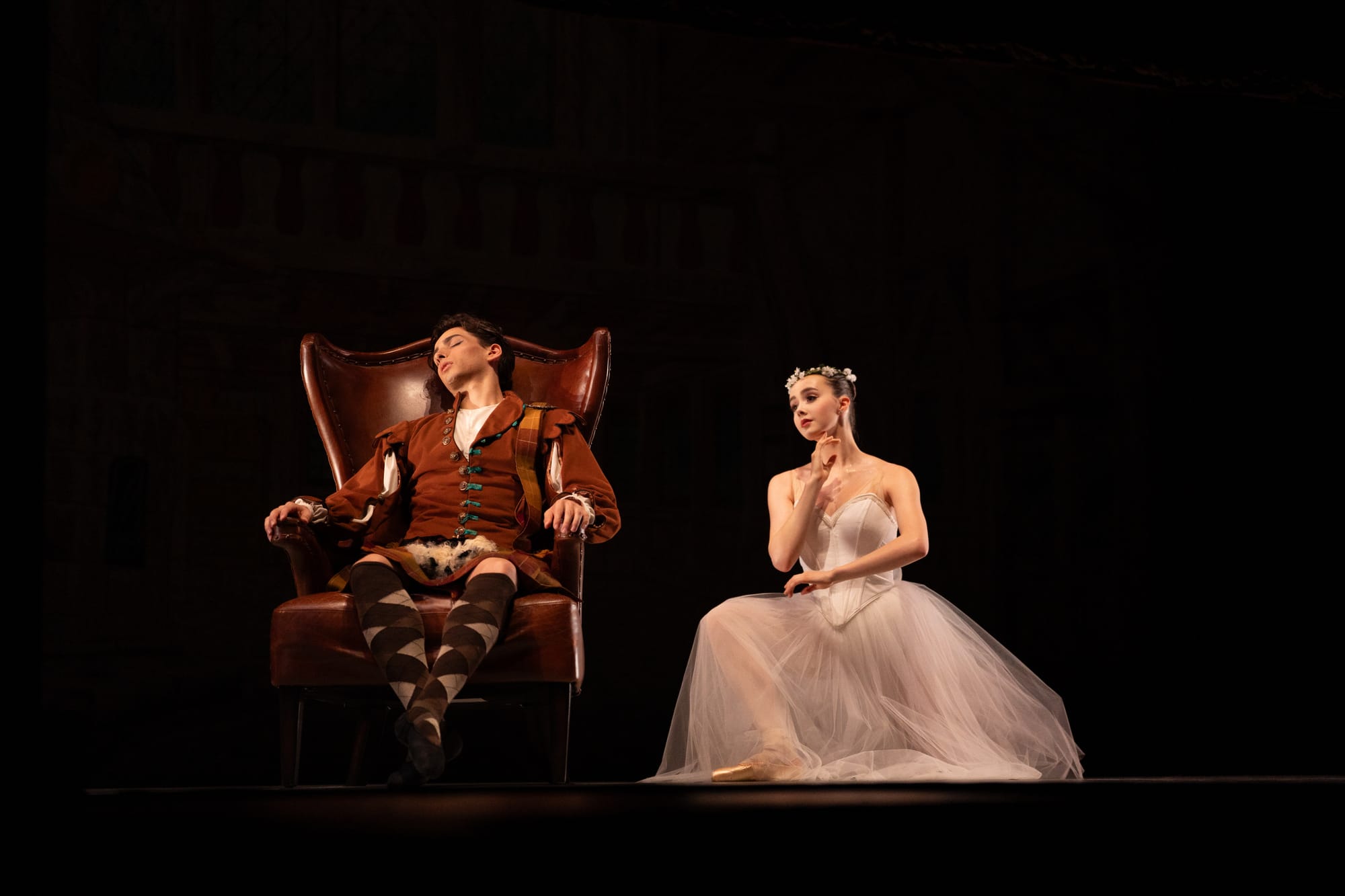
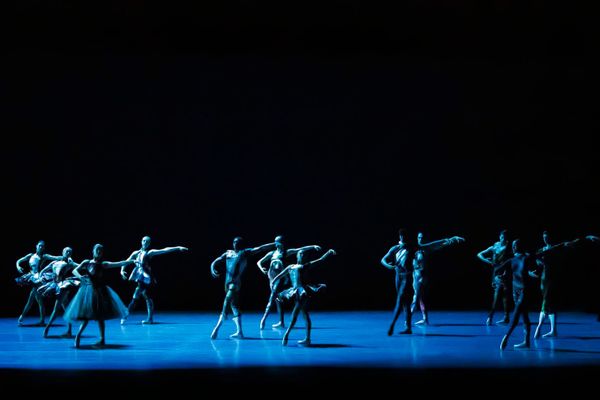
The program opened with “La Sylphide”, with a properly kilted James (Giuliano Ruocco) sleeping in a chair observed by the sylph (Charlotte Gray), who danced around him. Gray had an appealing innocence, clear mime, and a soft, effortless way of dancing, gently turning her head to look at her working foot in the elegant Bournonville style. Hübbe abbreviated the first act—no villagers, Gurn or Madge, and James and his sylph decamped immediately to the forest, where they were surrounded by many other sylphs in an atmospheric forest produced by the scenic backdrop.
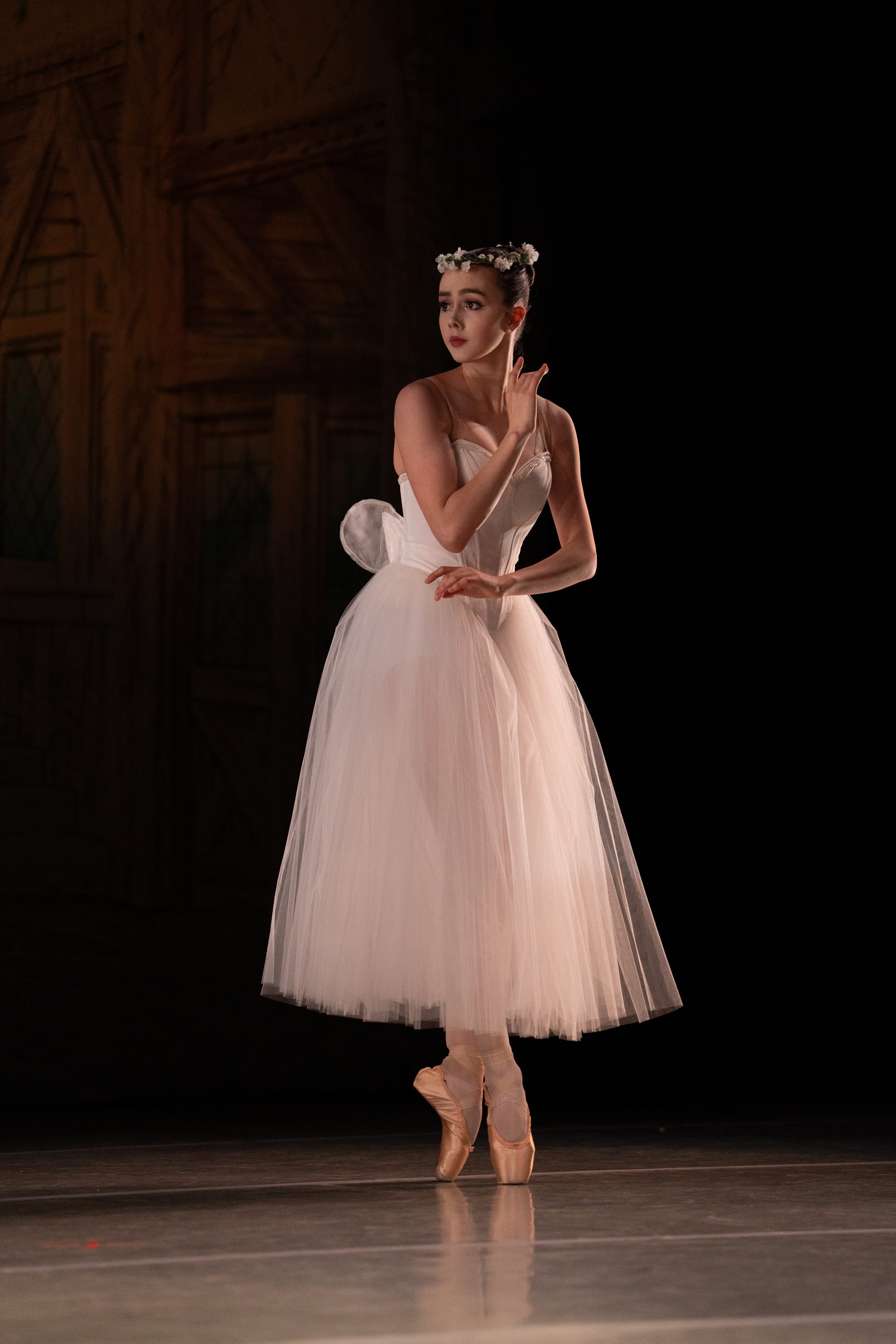
Gray was in her element, running delicately through the forest, picking berries for James, showing him the captured butterfly, carefully evading his touch (according to the original story, if he touched her she would loose her wings and die, a powerful metaphor for his hopeless dreams). This James did not have to worry about the witch’s curse, and after his strong, happy solos, so full of little beats and generous jumps and low arms, he and his sylph had a joyful finale and got to stay in the forest forever. Hübbe, it seemed, concentrated on the style rather than the tragic story, and it was a lovely introduction to soft, gentle, but very difficult choreography—all those jumps with no arms to help the elevation.
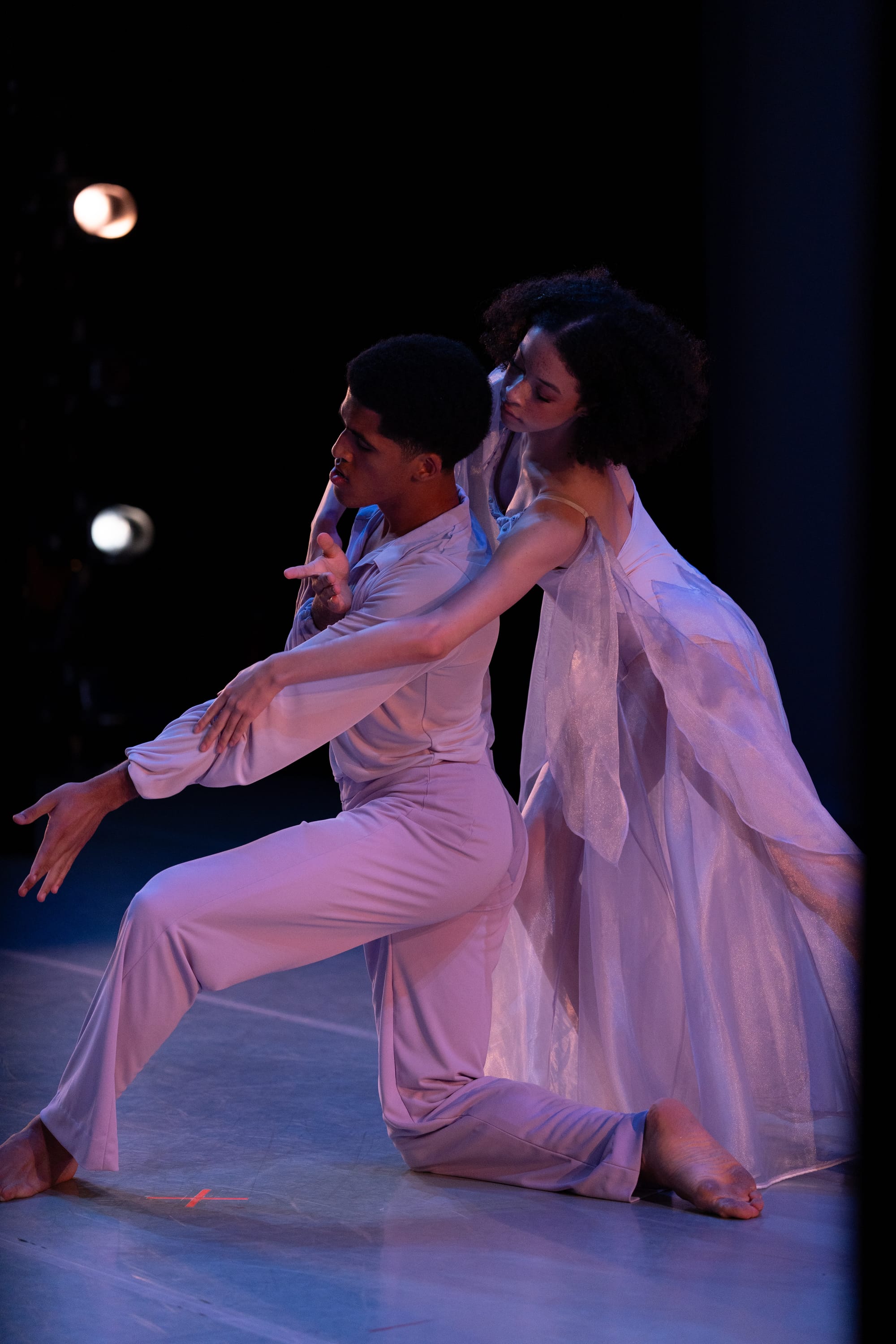
There was plenty of melancholy in Balanchine’s atmospheric “Élégie”, danced by Darien Gottlieb and Malcolm Moran and staged by the former NYCB dancer Deborah Wingert. Though the company did not have the mysterious smokey ballroom that the NYCB uses, they did have floating the Nicolas Benois costumes (borrowed from High School for Performing Arts). Seeing the work up close, without the smokey scrim, highlighted so many of the little dramatic details, the pauses, the subtle changes in mood, and the urgency of the moves. Gottlieb seemed absorbed in her role, focused only on Moran, as she rushed forward, only to be pulled back. The firm angle of her hand, as she signaled “halt, this can’t be” was extremely powerful, as was the final sad, resigned drop of Moran’s as the poor poet surrendered to his loneliness.
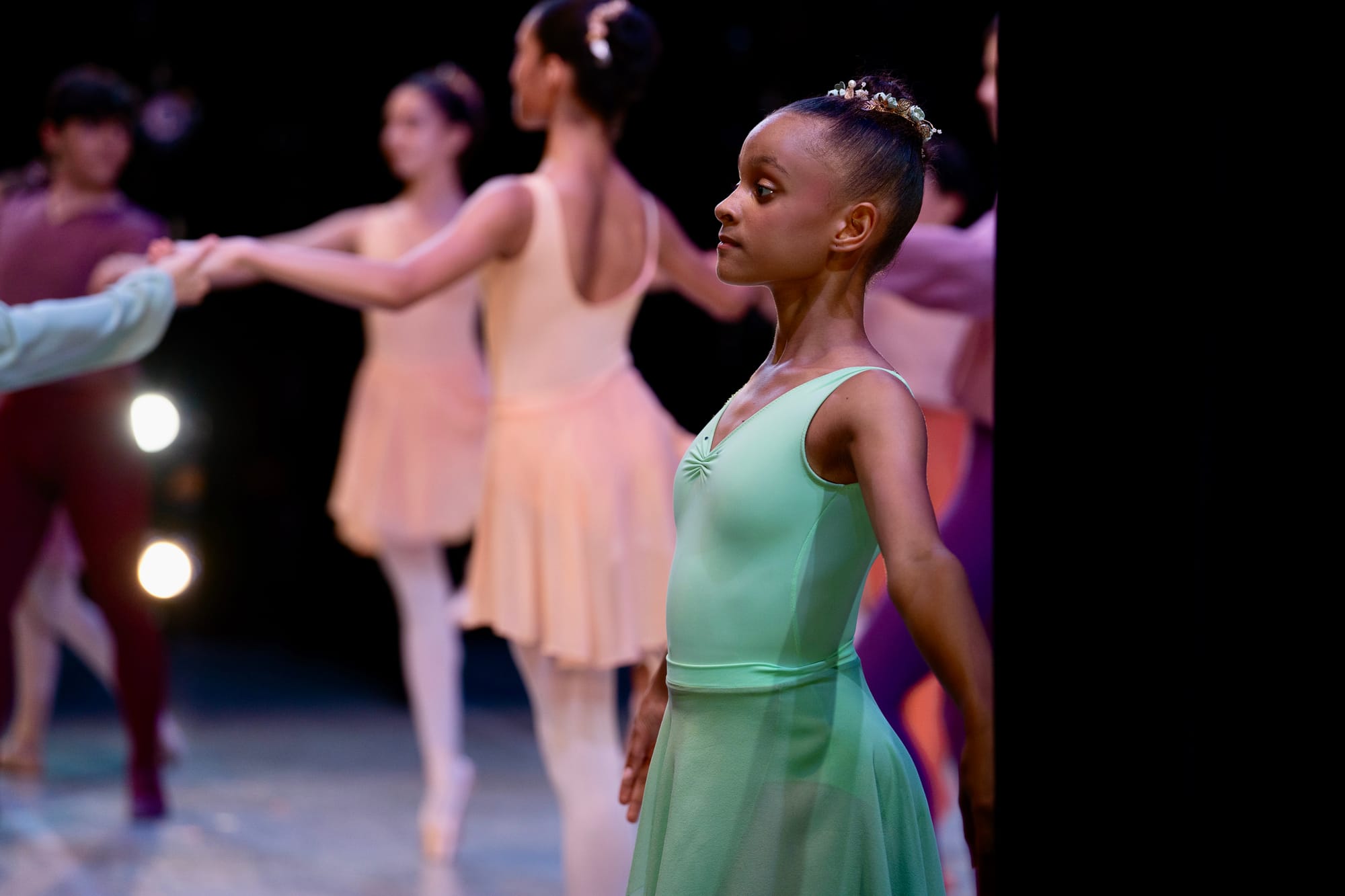
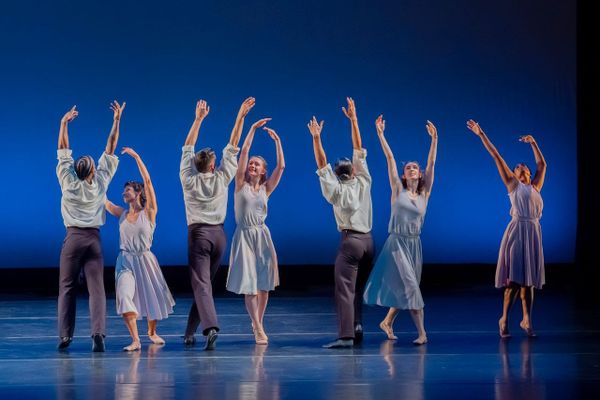
Ulbricht’s new “Bizet Volé”, to selections from his infectious “L'Arlésienne Suite”, and his “Dreamers”, made for the Academy in 2022, were much more cheerful. The Bizet was a group work for 17 dancers, dressed in pastel practice clothes by Amy Page. Ulbricht’s choreography had a vibrant vigor which matched the music, with small of dancers emerging from the throng to show off some fine and controlled jumps and turns. He often had the stand in horizontal lines, with the choreography rippling through from front to back, with unexpected and interesting arm movements and the dance had an easy, breezy air and a casual formality.
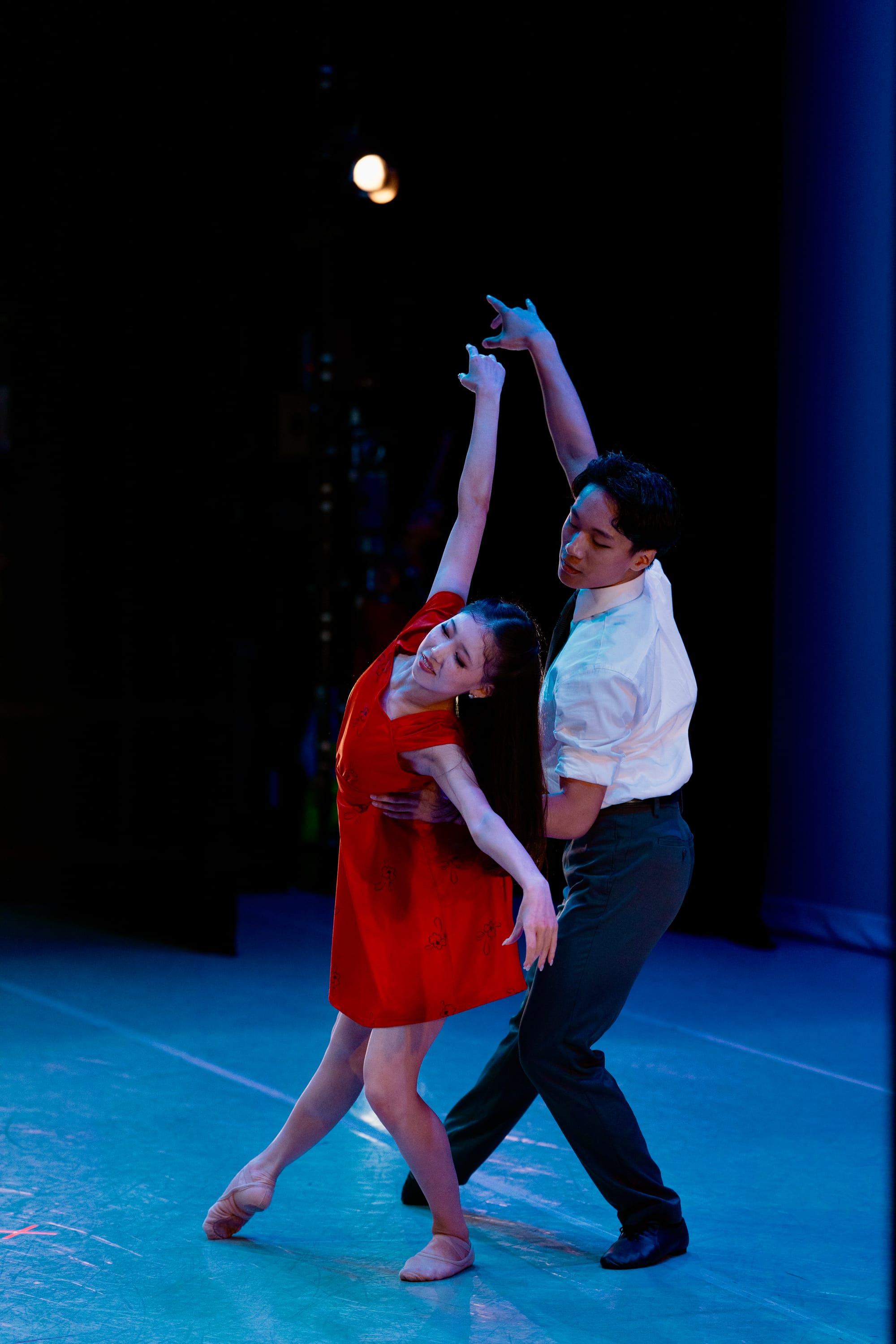
“Dreamers”, set to songs by Justin Hurwitz from the film “La La Land”, closed the program. It was a large work (25 dancers), with, despite the women’s practice shoes, an air of sophistication; the men wore white shirts and ties and the women bright red, green, or yellow dresses (costumes by Amy Page). It opened with a pas de deux for Ayne Kim and Ben Xu who were then joined by Oleksandra and Giuliano Ruocco, dancing a casual soft shoe with an distinctive air of friendliness. The group enlarged for more constantly shifting shapes to more jazzy music, based on social dancing; there was a bustling Broadway air to the work as it built to a crescendo with moves again rippling through the lines. Ulbricht clearly has a fine sense of structure and the ability to craft steps to make younger people look not only like fine dancers but also like interesting individuals. It was a terrific thrill to see the dancers having such a good time; the audience agreed wholeheartedly.
© 2026 Mary Cargill