A Gift from Florida, by way of Britain
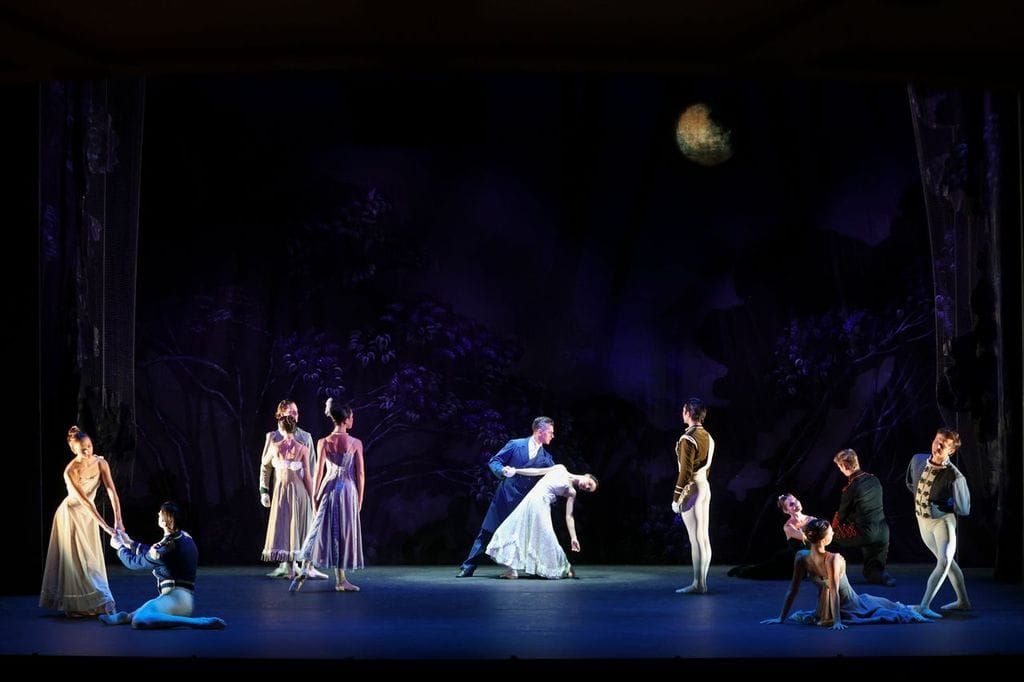
"Lilac Garden", "Ashton Divertissements: Meditation from 'Thaïs', Pas de Trois from 'Les Rendezvous', Pas de Cinq from 'Illuminations', Balcony pas de deux from 'Romeo and Juliet'", "Summertide"
After a year’s absence, the Sarasota Ballet returned to the Joyce with an collection of works by British choreographers. The program opened with Antony Tudor’s intense, too rarely seen “Lilac Garden”. Frederick Ashton, the Royal Ballet’s greatest choreographer, many of whose works have been frequently and joyously danced by the company, was, rather tantalizingly, represented by brief excerpts from rarely seen works; only one, the pas de deux “Meditation from Thaïs”, was choreographed as a stand-alone work. Peter Wright, the long-time director of the Birmingham Royal Ballet (the former Royal Ballet Touring Company) where Iain Webb, Sarasota Ballet’s director, choreographed “Summertide”, the final ballet, for Webb and his wife Margaret Barbieri, the ballet’s Assistant Director.
Unfortunately, the Joyce’s arrangement doesn’t have room for an orchestra, even a small one, so the dances were performed to taped music. It also doesn’t have room for many sets, and “Lilac Garden” was danced in front of a backdrop of purple haze, only indicating the atmospheric bushes of the original staging. The costumes, though, were based on the original simple and evocative Hugh Stevenson designs and despite the taped music and the rather vague background, the dancers gave powerfully understated performances. It was staged by the former ABT dancers Amanda McKerrow, a powerful Tudor dancer herself who had worked with the choreographer, and her husband John Gardner. The subtle details—the tight torsos, the stylized but evocative gestures, the emotional undercurrents—filled the theater.
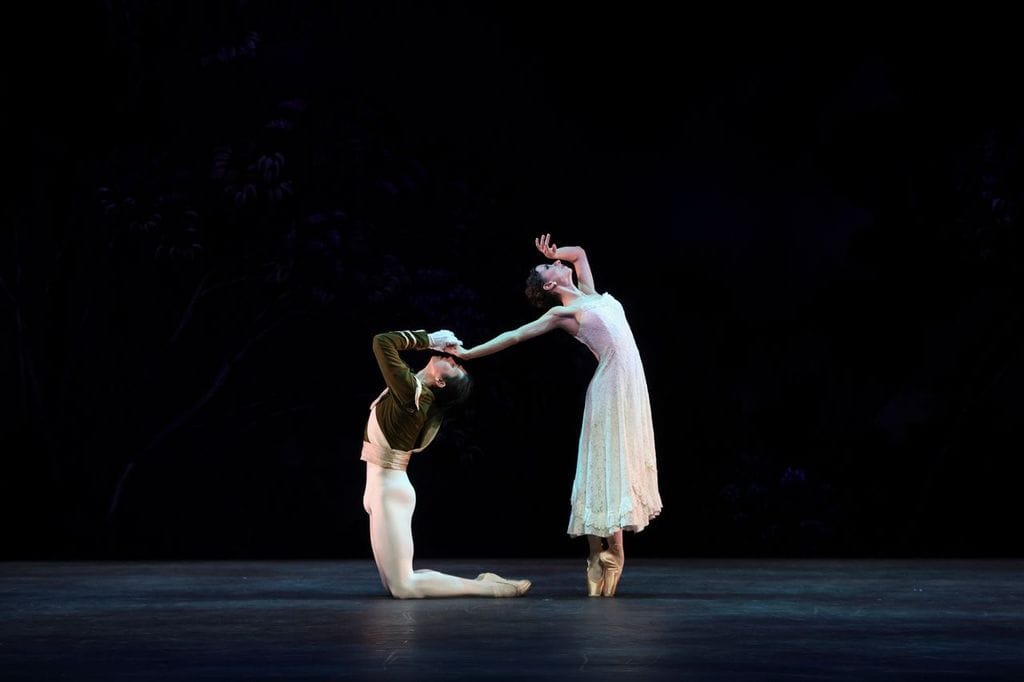
The simple story, such as it is, of a young woman named Caroline (Marijana Dominis), who must marry an older man (Ricardo Graziano) with a disappointed mistress (Brooke Wilson), despite loving a young soldier (Samuel Gest) has moved audiences for almost 100 years (it was first performed in 1936). Dominis was a particularly delicate and fragile Caroline with a very expressive upper body, tight and controlled in public with wary, glancing eyes, but melting with desire in her few private moments with Gest. Graziano, with his greying temples, gave the Man She Must Marry a heavy and sightly awkward dignity as well as an ominous power; he did seem like a nouveau riche industrialist marrying into the faded gentry knowing his new family looked down on him and determined to make his new bride pay for his wounded pride. The sullen triumph on his face as he walked off with the helpless girl shuddering slightly at his touch was absolutely chilling and Graziano, always an exciting dancer, made standing still speak volumes.
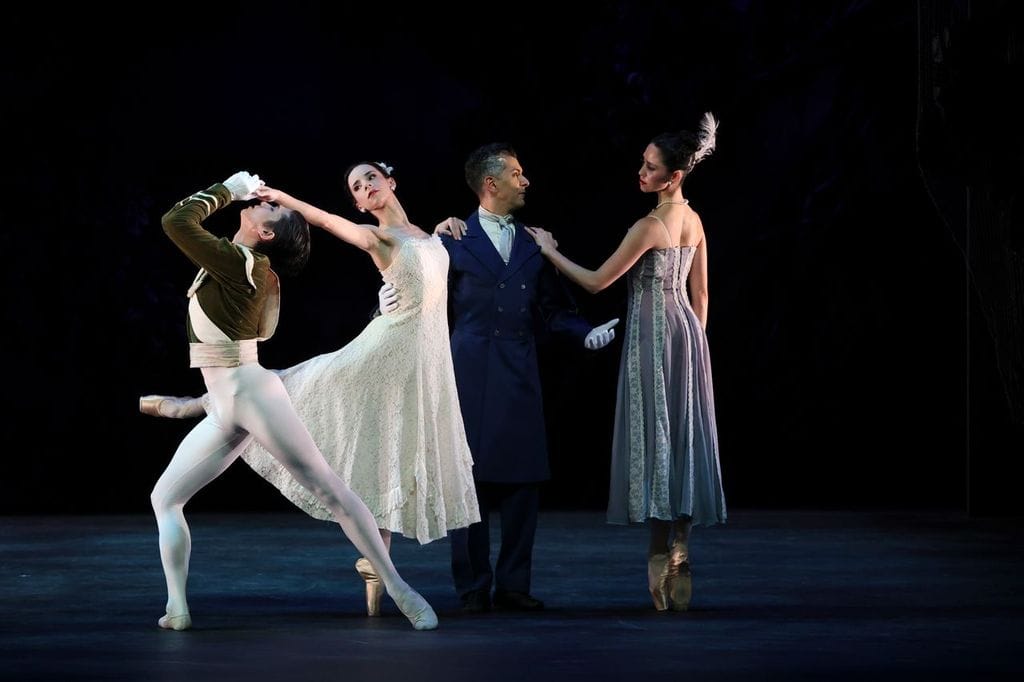
The unhappy couple’s two former partners were equally imposing. Gest underplayed the romantic yearning, letting his body rather than his face act. He was a fine partner, lifting Caroline in their few moments together with restrained but urgent rapture and light, effortless jumps. Wilson was an enigmatic Woman in His Past, happy to flirt with the young men, but demanding Graziano pay attention to her; pride, it seemed, rather than love motivated her, but it was a desperate and despairing pride.
The small corps, too, looked very well rehearsed, dancing together with a cheerful disregard of all tragedy around them. The only exception was Paige Young as the girl in white, sometimes thought of as Caroline’s sister, who hands her a comforting cloak as Caroline and her fiancé walk off. Young’s quiet understanding and sympathy as she gently wiped her tears away was a haunting reminder that this moving work still had all its power. It was a fine performance.
The Ashton tidbits opened with his pas de deux set in 1971 to Massenet’s famous “Meditation from Thaīs” from the opera. It was originally made for a gala, but its wispy exoticism, complete with a wafting veiled ballerina, has endured. Kaitlyn Casey and Ricardo Rhodes danced the couple with a lush, romantic concentration. The breathtaking line that its first couple, Antoinette Sibley and Anthony Dowell, had is had to recapture, and the moment when their arabesques float into a miraculous harmony was a bit mistimed, but Ricardo’s partnering—the piece is full of complicated lifts— made everything look easy.
Pasha Levy, Andrea Marcelletti, and Gus Payne made the next piece, the pas de trois from “Les Rendezvous” look equally easy, as they bounded through Auber’s cheerful, bouncing music with a stream of beautifully matched petit batterie. The pas de cinq from “Illuminations” was a complete change of mood; Ashton choreographed the surreal work to Benjamin Britten’s song cycle using some poems from Arthur Rimbaud’s “Les Illuminations” in 1950 for the New York City Ballet where it remained in repertoire for some years before being dropped. With surrealist designs by Cecil Beaton it obliquely tells the story of the poet’s absinthe and opium infused life. Sarasota has danced the complete work and this excerpt, called “Sacred Love”, is a haunted dream, let by the spikily crowned Iku Okura in white supported by four men in various stages of undress.
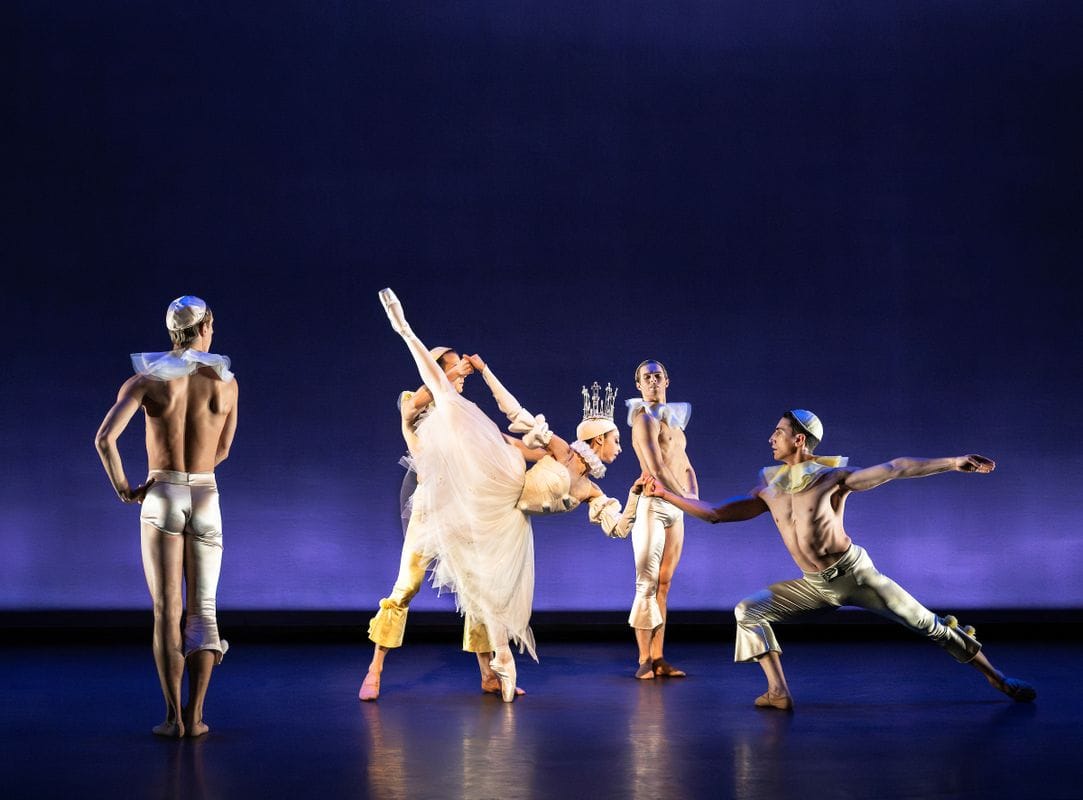
Okura moved with a dignified isolation, often floating just out of reach of the four men; even with no context it had a tantalizing mystery. It is may be no coincidence that Tanaquil Le Clercq, the original woman in white, also danced the mysterious woman in white who never touches the ground in Balanchine's “Ivesiana”, made four years later—great choreographers will take good ideas from anywhere.
When Ashton choreographed “Romeo and Juliet” to the now familiar Prokofiev score, though, he had no ideas to take. He made it for the Royal Danish Ballet in 1955, a year before the Bolshoi brought their Leonid Lavrovsky version to London, so Ashton had no pre-conceived ideas. Unlike the ubiquitous dramatically expressionistic Kenneth MacMillan 1965 version for the Royal Ballet, Ashton’s is more quietly classical; Sierra Abelardo and Samuel Gest were shyly ecstatic lovers. Ashton used the “palm to palm” phrase from the play with poetic literalism, a playful moment before their emotions swelled.
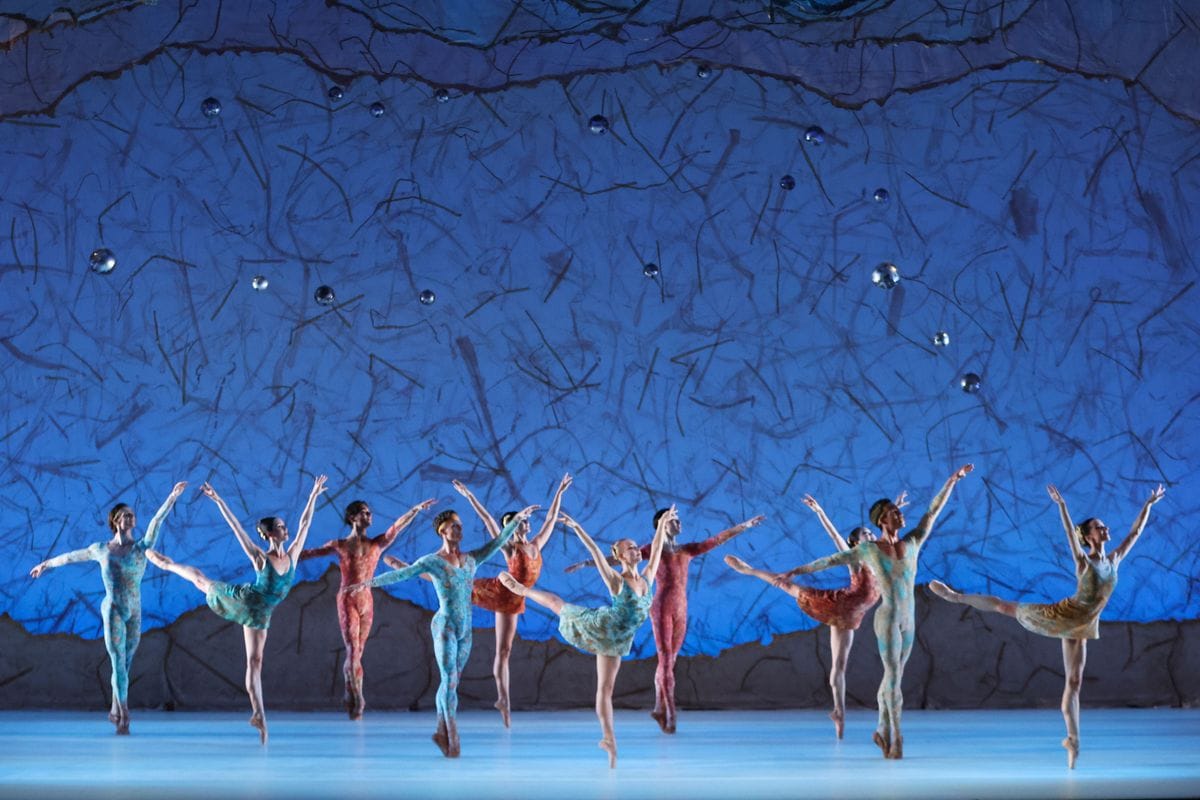
Peter Wright’s “Summertide” also has a playful feel, as if the large cast looks like it is somewhere on a heavenly beach. Wright used the three movements of Mendelssohn’s “Piano Concerto No 2” and the dancers, led by Ricardo Rhodes and wearing colorful pointillistic leotards, wove in and out. The fast, energetic, and playful opening and closing movements bookended a quieter section, led by Rhodes and Dominis, who had a series of shimmering bourées. The dancers showed off their luxurious lines with many stretched arabesques and their control forming the elegant statuesque shapes Wright set for them. The choreography didn’t seem to dive into the heart of the music but the work was a playful, if at times a bit repetitious, demonstration of the eloquent style of the company; I hope they come back soon.
© 2026 Mary Cargill