A for Effort
"Echo", "Vespers", "Piazzolla Caldera"
Paul Taylor Dance Company
David H. Koch Theater
Lincoln Center
New York, New York
November 4, 2023 evening
This triple bill showed the Taylor Company expanding its repertoire offering a new work by Lauren Lovette (“Echo”) with an all-male cast and “Vespers”, choreographed in 1986 by Ulysses Dove for the Dayton Contemporary Dance Company with an all-female cast. Both of these works got committed, fierce performances, showing off the company's thrilling technique. But, when compared with the final work, "Piazzolla Caldera", Paul Taylor's smoky exploration of isolation, with its vivid vignettes of various emotions, these dances seem a bit anonymous, with exciting dancing but sometimes indistinct emotions.
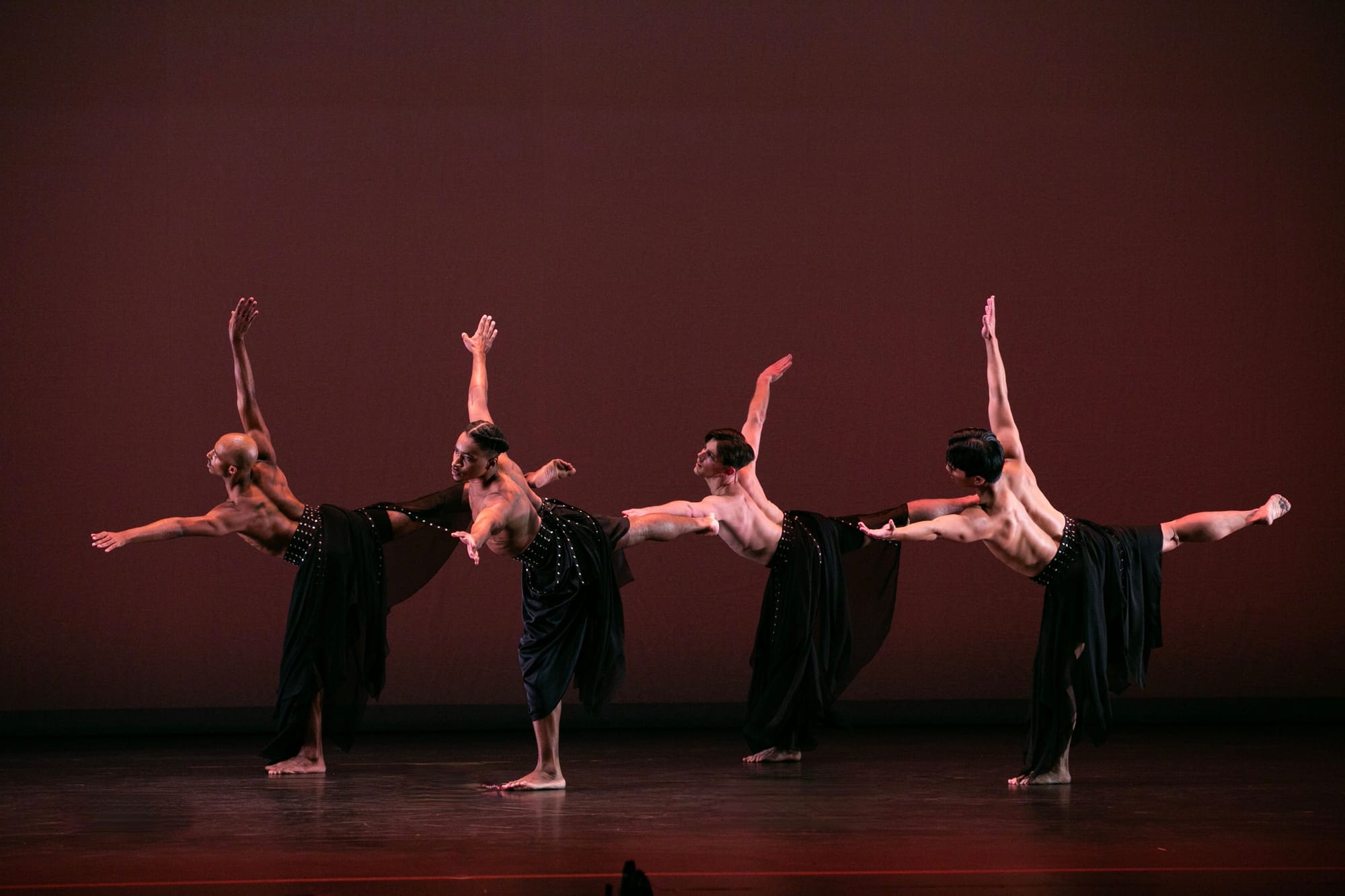
“Echo” is set to Kevin Puts’ “Contact” and, like Lovette's other new work “Dreamachine” each of the four sections uses the composer’s titles: “The Call”, “Codes”, “Contact”, and “Convivium”, though in this case, these titles seem to have little to do with what is going on in the actual dancing. The piece opened with the orchestra floor rising, generating a generous round of applause for the orchestra, with the string trio, Time for Three, who originally inspired the work singing a haunting vocalise. The eight dancers entered the theater prancing through the aisles, perhaps to break the fourth wall, though it is a bit of a cliche. Mostly bare-chested, they all wore black gauzy skirts designed by Zac Posen which shimmered as they moved.
And they did move, constantly. As the curtain opened, Shawn Lesniak, who seemed to be some kind of leader, twirled enthusiastically showing off his elegant long limbs, as the other dancers poured on. They danced in waves, always on the move, often with quirky, unexpected changes of direction—a quick somersault here, a jump out of nowhere there. It was fascinating to watch, though it did grow a bit monotonous, especially since their expressions were uniformly glum.
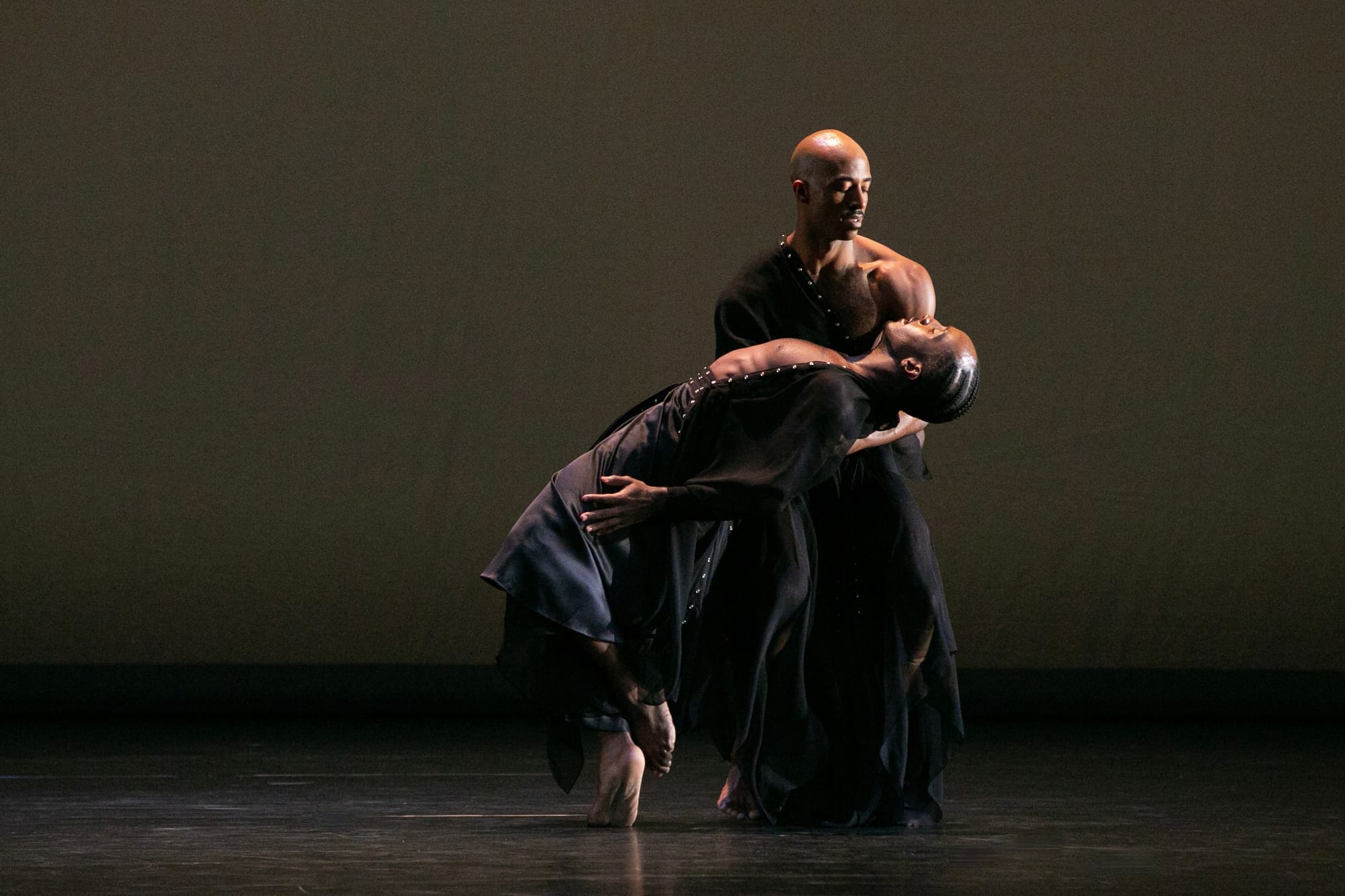
This changed in the third movement, which Lee Duveneck opened with a fixed grin, breaking into an odd, harried dance, as if he were struggling against something. Kenny Corrigan showed up to comfort him, and they had quite a long back and forth, including some fighting. A group of men surrounded Duveneck, seeming to threaten him, until he walked off alone. Though somewhat puzzling, the episode was brilliantly and energetically performed.
So was the final movement, where the whole cast reappeared dancing to some lively and infectious music, based according to Puts’ notes (https://www.kevinputs.com/works/contact) on a Bulgarian folk melody. The dancers ran and jumped with an aggressive lyricism, legs flying and backs bending, though it did seem as if Lovette were more interested in movement than in meaning, and though tremendously exciting, it was not especially moving; there was no afterglow.
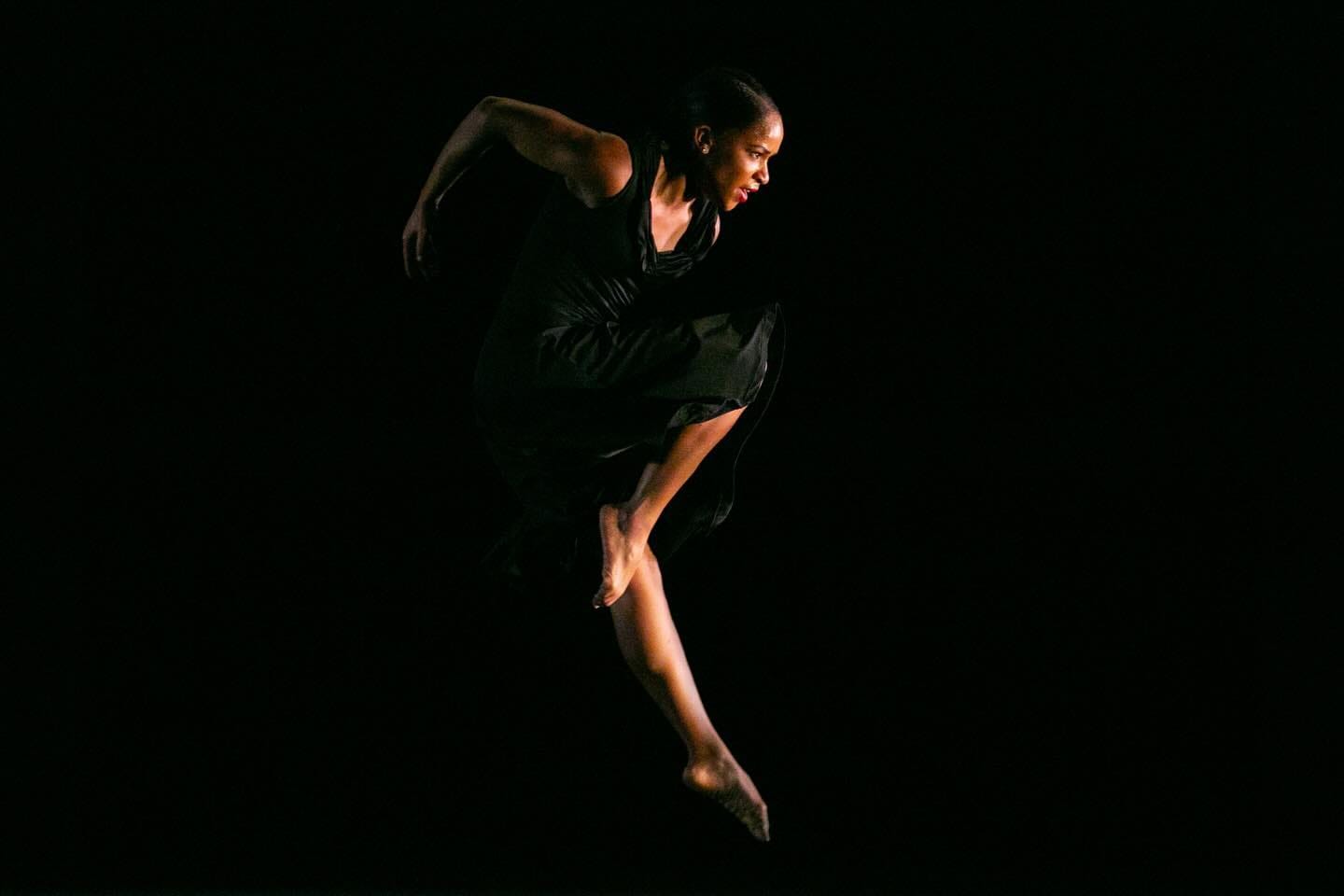
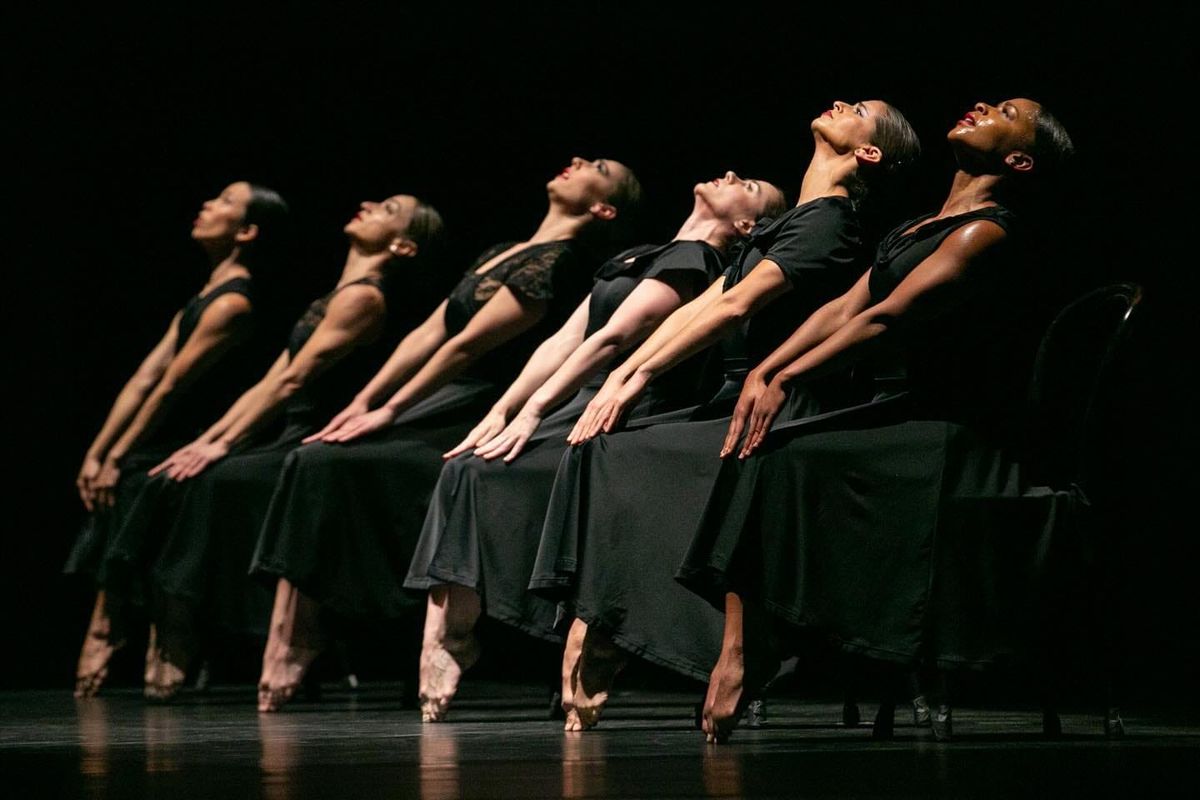
“Vespers” gave Taylor’s women their own chance to shine. Set to insistent, unvaried, percussive music by Mikel Rouse (recorded), it is a stark work for six women (Maria Ambrose, Lisa Barres, Eran Bugge, Kristin Draucker, Jessica Ferretti and Jada Pearman) all in black, and two rows of chairs. It was inspired, Dove has said, by his grandmother’s church, and the women alternate between sitting sedately and fierce, passionate outbursts. It opened with a solo for Pearman sitting quietly until she was pulled by some unseen power, pointing upwards and dancing in a shaft of light. Pearman was a powerhouse of controlled energy, dynamic and hypnotic.
She was joined by the five other women, who got their own powerful solos; these were stunning, though the emotions all seemed similar. The power came through but they did not seem to have individual stories; perhaps he was emphasizing the universality of women's suffering. Ferretti was especially memorable in her agonized solo, with beautifully controlled extensions, and Borres was a ball of concentrated pain.
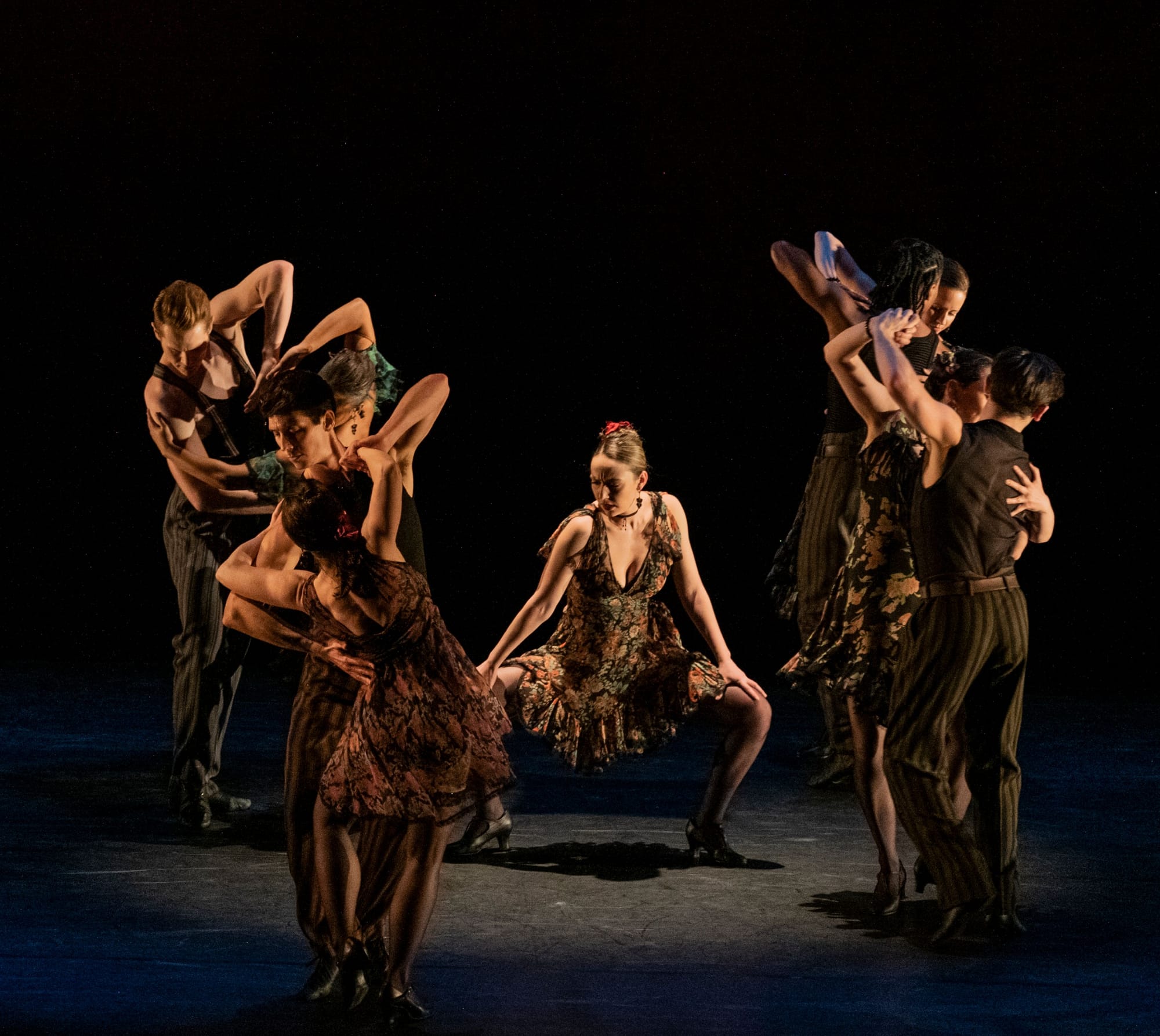
There is a great deal of pain in Taylor’s “Piazzolla Caldera” as well. The sets and costumes by Santo Loquasto evoke a seedy tavern full of lost souls trying to find some comfort, and reinforce the mood of the sometimes raucous, sometimes plaintive tangos by Astor Piazzolla (played live with a haunting bitterness). Ferretti was magnificent as the desperate girl looking for love in all the wrong places, and her solo had a weary, bowed down feel, with a tinge of anger. She wasn’t the sultry seductress of some earlier interpretations, but she was no innocent betrayed; she had an air of having seen too much, so she could be disappointed but not surprised at her treatment. Duveneck danced the man who left her. He did not have the sharp attack of his predecessors (it was made for Andrew Asnes, and Michael Trusnovec danced it for years) and his softer, lighter dancing reduced the strutting arrogance of the choreography.
Alex Clayton and John Harnage were the two drunken pals. They let a tinge of comedy color their dance, playing funny drunks (the audience laughed through the dance), so the original underlying sadness of two men trying to forget their troubles became more of a gymnastic routine, impressively danced (they had no trouble with the double cartwheels or the backward bends) but the effort became an end in itself.
© 2023 Mary Cargill



