A fine triple bill
“Symphonie Concertante”, “Drink To Me Only With Thine Eyes”, “Rodeo”
American Ballet Theatre
City Center
New York, NY
October 21, 2006, Matinee
This family-friendly triple bill was a big hit with the many youngsters in the audience, who ooed and awed and laughed at all the right times. And to ABT’s great credit, there was no shortage of fine dancers performing at the top of their game.
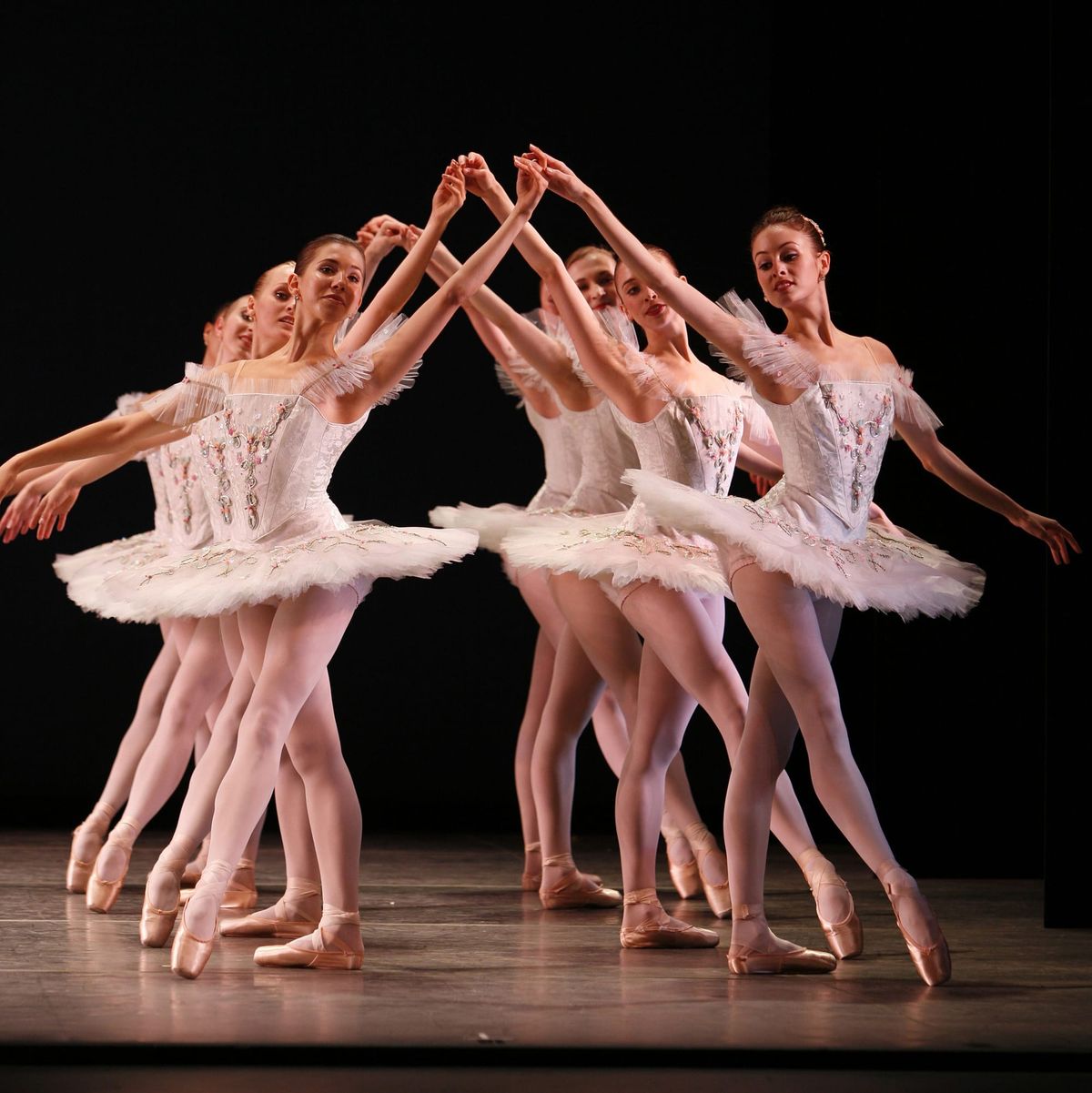
“Symphonie Concertante” is early Balanchine, and has many echoes of more familiar works, but as usual, the pure craftsmanship is eternally rewarding. It is a formal ballet to Mozart, with Balanchine’s celestial geometry for the female corps. The stage looked crowded, but the resulting somewhat small-scale dancing had its own rewards, because the little grace notes of the corps choreography — the delicate leg movements going back and forth, the small head and arm movements — were more noticeable.
The two lead dancers were Michele Wiles and Veronika Part. Wiles is forthright, brisk, and crisp, with secure turns, but lacks a certain mystery. Part is all mystery, with her own magical musicality that seems draw the audience to her. The contrast, though, was almost too great; it was not, as in the music, an interplay between violin and viola, it was like watching dancers from two different worlds.
Marcelo Gomes was their cavalier. The man’s part can appear to be something of an afterthought, but Gomes turned the adagio into a mini-drama, hinting at a dilemma of choice. But there was no extraneous acting with a capital A, no over-indulgent emoting, just a slight pull of the body and an intense, private look, all within the bounds of the choreography, which echoed and amplified but did not exaggerate Mozart’s plaintive music. He was a perfectly classical but very real prince.
There are no princes in Mark Morris’ “Drink To Me Only With Thine Eyes”, just dancers. But what dancers! It is as if Morris saw them as a group of fun-loving angels dancing in the sun. His choreography is abstract in a way that Balanchine’s is not; there are no emotional relationships between the dancers, just a sublime joy of movement that has a quirky, improvisational quality. The twelve dancers ranged from the established stars like Paloma Herrera, to new corps members like Kenneth Easter. There was no real hierarchy, though Herrera stood out for her frisky little solo, and Craig Salstein merged his always engaging stage presence with a refined and subtle way of moving.
Agnes de Mille’s “Rodeo” is not really subtle or refined, at least to modern day audiences, where the “grow up and get a man” morality tale can seem a bit dated. (And those horses cavorting over the entre’act curtain still look as if the designer had read either too much or too little Freud.) But, given sincere performers, it has an enduring charm. Xiomara Reyes is very appealing as the tomboy Cowgirl. She managed the contrast between slapstick and pathos without exaggerating either emotion.
Kelley Boyd was the Ranch Owner’s Daughter. She was more lyrically elegant than the usual spoiled, dimpled dimwit, who gets her man on looks alone, and her air of reticent warmth made it seem as if she were worth imitating. This seemed to sweeten the Cowgirl’s decision to go femme; it was an inevitable growing up, not a surrender. Jared Matthews was a handsome Head Wrangler, and Sascha Radetsky an attractive Champion Roper, though I missed the feeling that his exuberance was masking a vulnerability that can give his character its flavor and gentleness.
copyright 2006 by Mary Cargill



