With Feathers
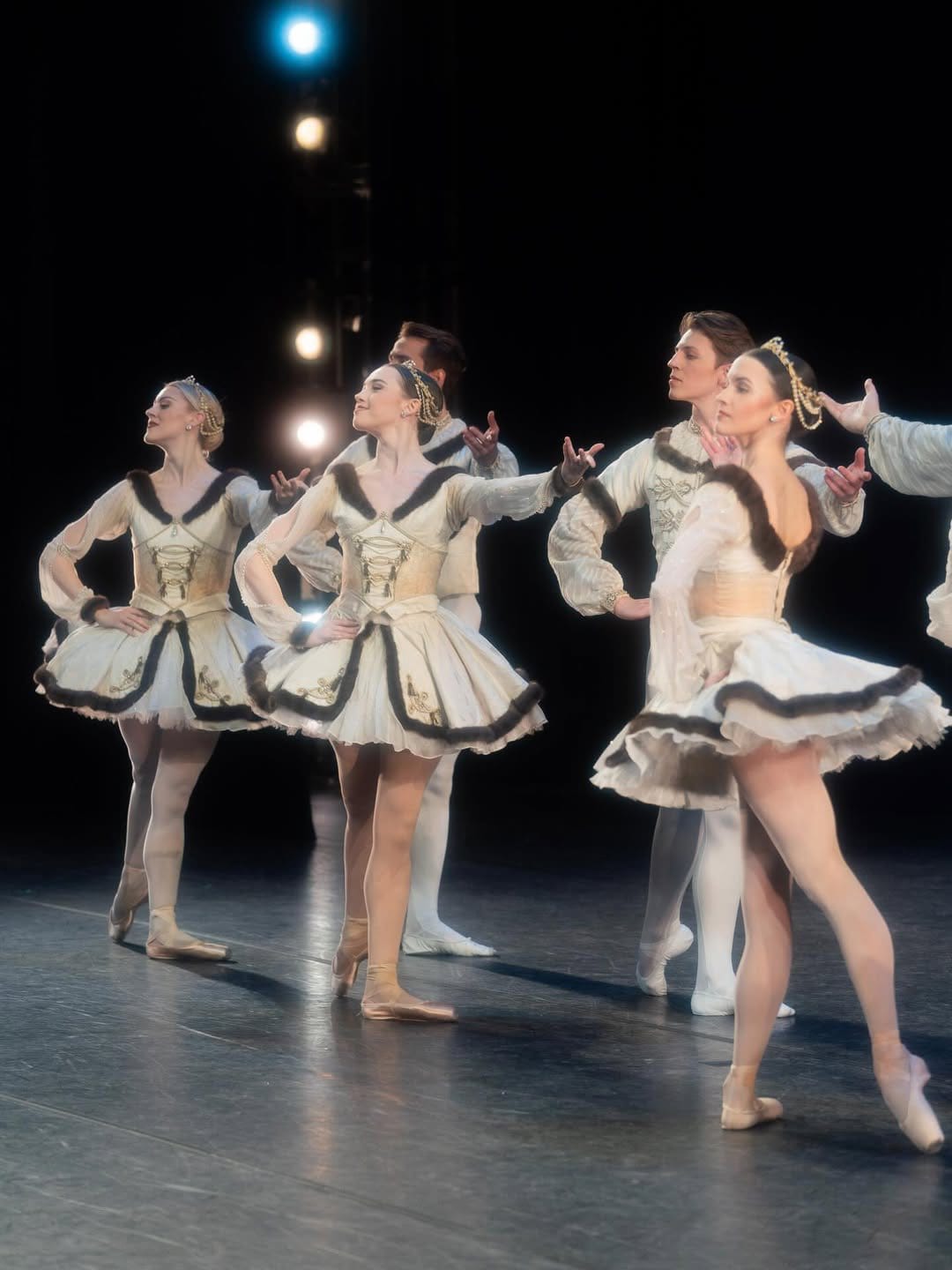
"Raymonda: Grand Pas Hongrois", "Firebird"
American Ballet Theatre
David H. Koch Theater
New York, NY
March 21, 2026, matinee
There were feathers in both ballets danced at the Saturday matinee—lots of feathers in Ratmansky’s “Firebird” and a feather in Raymonda’s hair in Susan Jaffe’s new staging of the Grand Pas from Petipa’s “Raymonda”. The feathers in “Firebird” (costumes by Galina Solovyeva) had a flashy exoticism, so appropriate for Ratmansky’s post modern take on the old fairytale ballet. Jaffe’s setting of “Raymonda” uses Barbara Matera’s beautiful costumes originally designed in 1987 for Baryshnikov’s version of the “Raymonda” Grand Pas, though the men no longer wear their hats, making them look a bit incomplete, more casual and less dashing. The plain backdrop, too, looked a bit casual—a few curtains and a chandelier would have set off the elegant choreography with more style.
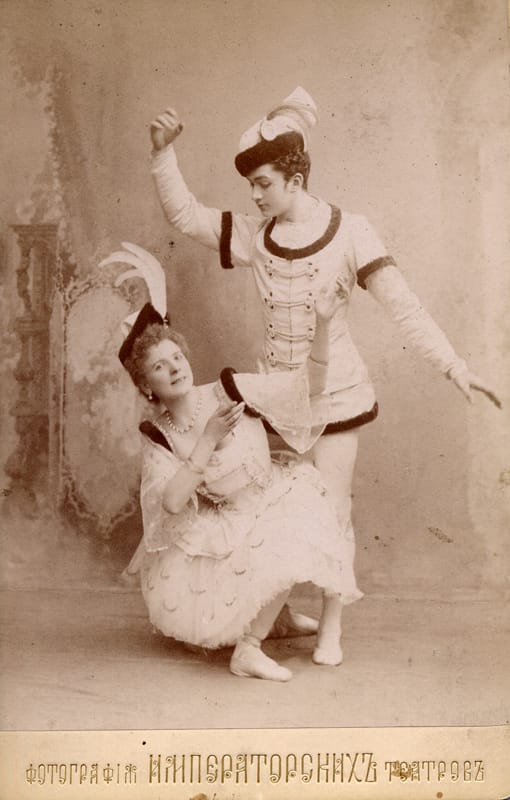
Christine Shevchenko and Thomas Forster, in their joint debuts, danced Raymonda and her unnamed cavalier. Shevchenko’s feather did bring to mind Antony Tudor’s “Gala Performance”, his satirical take on grand ballerinadom, where the ballerinas sported elaborate headdresses; Shevchenko had lapped up her role in that piece. Her dancing was a bit emphatic, with a firmly uplifted chin, though technically she was luxurious, accurate, and exciting. Her solo, with its floating bourrées and Hungarian arms, didn’t have all of the smokey atmosphere it can exude; with its apparent simplicity and musical sophistication it is one of Petipa’s most beautiful explorations of the mystery and grandeur of female beauty, and it works best when danced with a sight reserve, as if the dancer were whispering a secret. It was disappointing though, that ABT has adopted the current style where Raymonda barely indicates the hearty Hungarian claps, and Shevchenko looked like she was wiping something icky off her hands.
Forster was a strong and sympathetic partner, and the difficult shoulder lift was seamless. The corps, too, made the lifts look effortless and were perfectly timed; it was a very impressive sight. Forster didn’t get a solo (it was dropped for some reason), but his few jumps in the finale looked elegant. So to did the male pas de quatre with Sung Woo Han, Takumi Miyake, Alejandro Valera Outlaw, and Jake Roxander delivering a robust and elegant performance. The dancing was synchronized, with strong double air turns. Though everyone danced together, Miyake stood out for his ability to turn the stage into a trampoline, bouncing into the air as if gravity didn’t exist. Roxander, too, was notable for his dignified carriage.
The full-length “Raymonda”, with its gloriously rich Glazunov melodies and rather insignificant plot, can seem like a magical box full of dances that can be plucked out, rearranged, and presented to an audience, knowing that the dancing, music, and choreography will win the day. This production chose, in addition to Raymonda’s iconic solo, and the male pas de quatre, three other dances. Léa Fleytoux and Kanon Kamera danced their duet with sparkling Hungarian accents (including some discrete but audible claps). Breanne Granlund’s solo, originally part of the inevitable vision scene, was soft, with a lot of demi-pointe work and turns into arabesques. The young corps member Yung Jung Seo, got a solo of Raymonda’s from Act II, which she danced with admirable and gracious aplomb, with pirouettes into arabesque and a phenomenally strong diagonal Sung Woo Han hopping on point with shifting feet while her upper body floated through the melody. It was breathtakingly beautiful performance.
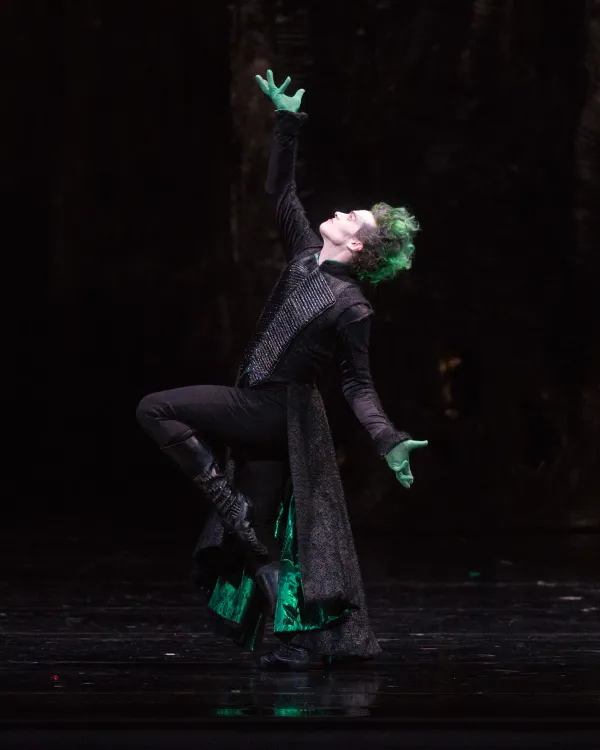
Led by Daniel Camargo as Ivan, Catherine Hurlin as the Firebird, Skylar Brandt as the narcoleptic Maiden, and Andrew Robare as the slinky Kaschei “Firebird”, for all its eccentricities, was also very well danced. Camargo is an impressively clear dancer, expressing his thoughts and feelings through his movements; he crossed himself before entering the ominous garden with a slow, thoughtful sincerity, and for once this gesture didn’t generate a laugh.
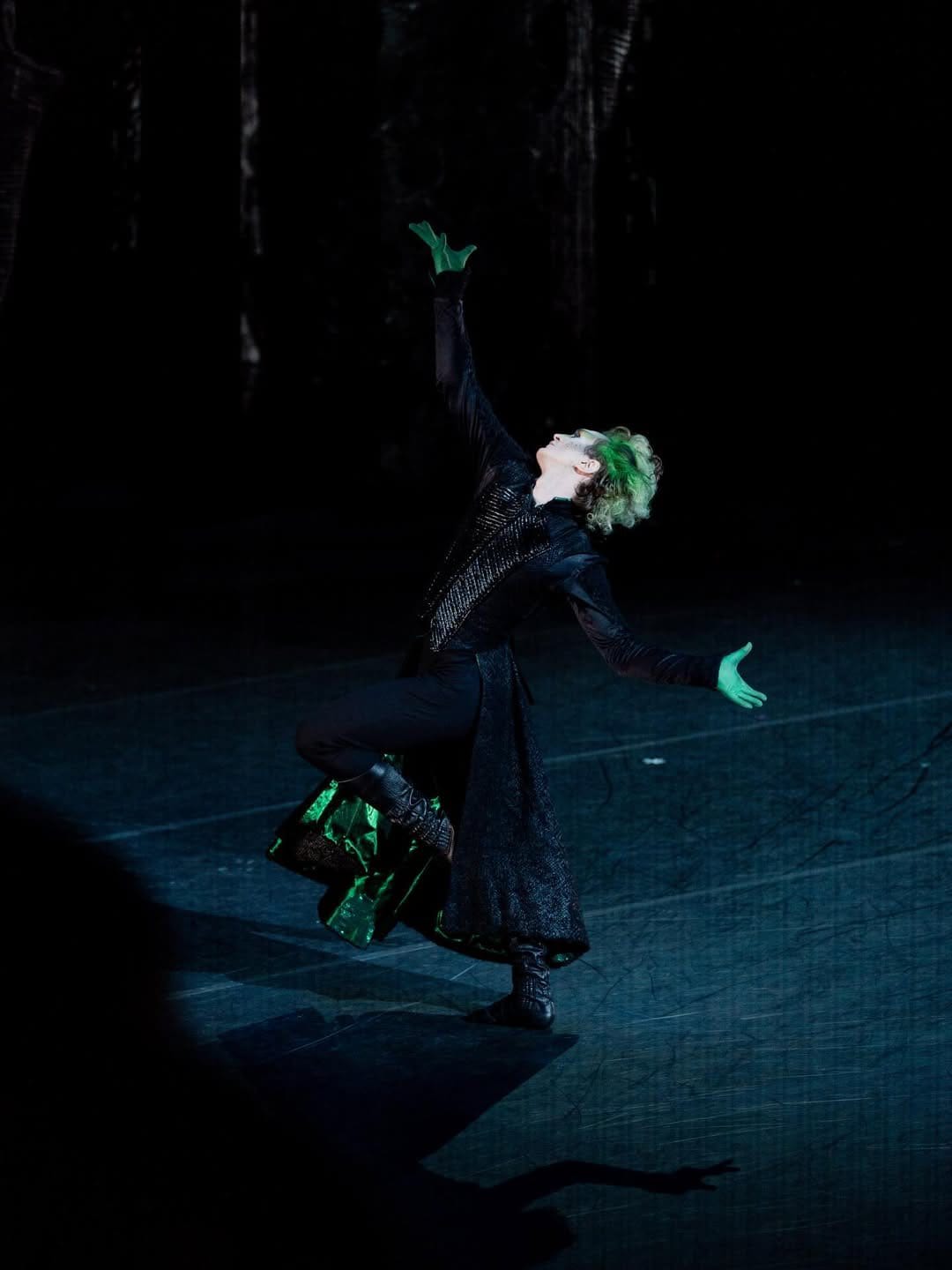
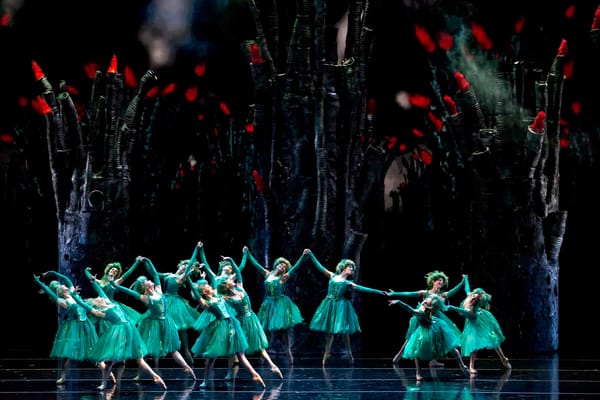
Unfortunately, many of the moves intended to be funny tended to fall short, despite Brandt’s enthusiastic knock-kneed mugging, especially the awkward dances of the maidens, whose chug-a-lugs looked like a hoe-down in the forest. Hurlin was a blazing red streak as the Firebird, especially in the infernal dance with her rapid fire fouettés and quick jumps. Robare made a vivid Kaschei, almost birdlike in his quick moves. His disgust when he smelt Ivan’s kiss on the maiden and his sniffing around to find the source was worthy of the slimiest of the mustachioed villains in a melodrama, though Stravinsky’s dramatic music doesn’t suit comedy; it was a shame that the Firebird’s feather couldn’t call forth a more magical work.
© 2026 Mary Cargill