Treasures
“The Call,” “Shelter,” “In/Side ” “Revelations”
Alvin Ailey American Dance Theater
New York City Center
New York, NY
December 4, 2018
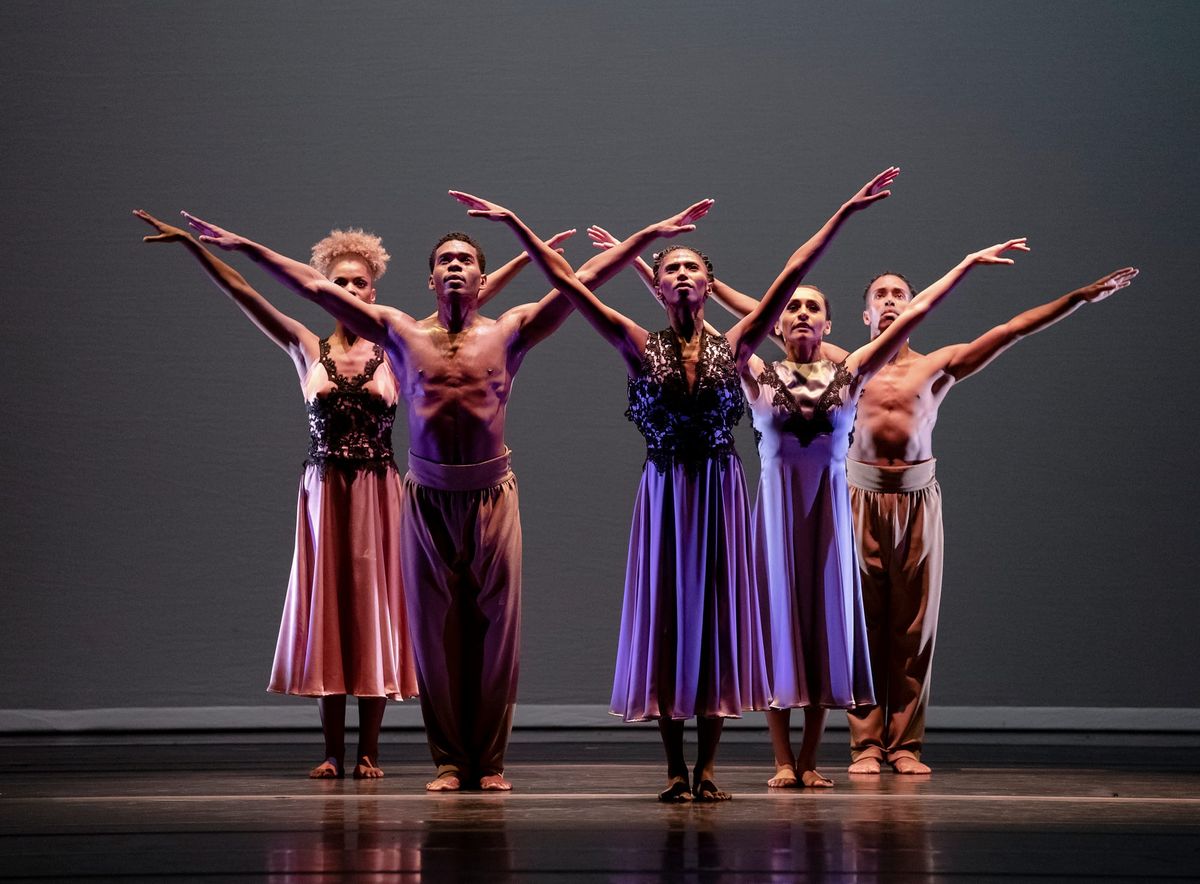
Alvin Ailey American Dance Theater continued its long-running tradition of beautifully choreographed and danced gems, with the addition of an homage to its founder. Ronald K. Brown’s “The Call,” premiering at Ailey’s winter season at New York City Center, was a soulful addition to a program that packed power from beginning to end — what Brown called a “love letter” to Ailey, his mentor. This company was built by its visionary founder to focus on the importance of the African-American voice in dance art; Brown’s new work, celebrating the troupe’s 60th anniversary, offered a beautiful addition to their canon.
The Brown premiere wasn’t without competition in the program, which included a heart-rending “Shelter,” the powerful ensemble work for six women, about homelessness and uncertainty, by Jawole Willa Jo Zollar (the founder of the contemporary troupe Urban Bush Women.) The program ended with the signature “Revelations,” no less powerful for its history and repetition, a landmark of choreographic vision, including a trove of Ailey movement inventions that were evident in every other piece of the program.
Ron Brown gets Ailey like few others, and has built on not just the movement but the underlying honor Ailey paid to the African DNA baked into his art. To a Bach Sonata in the delicate opening of “The Call,” the women swayed in wide floating skirts (shades of gold and green by Keiko Voltaire,) and each barefooted twirl was a sigh of elegance. The five dancers moved masterfully in the balletic disciplines of balance and lift -- every arched foot, turn and arabesque -- perfectly executed. Just as comfortably, they slid into the Ailey/Brown vocabulary of deep squats, torso swaying, and the popping rhythms of the dance’s African and Caribbean roots.
The music changed to a jazz number and a sexy duet for Jacqueline Green and Solomon Dumas, who boogied in rapid, wide twirls, as if the music’s downbeat were playing directly through their bodies. In an overhead lift, Green’s body arched up instead of down, a gentle challenge to gravity. The other dancers joined them, in brief expressive solos that transitioned with elegant energy from one body to the next.
The third segment of “The Call” began as a solo to the African lilt of “The Love” by Yao Ababio and Kofi Osei Williams. Dumas, bare-chested, undulated as his arms led the muscles of his chest and back, slithering like a snake through air. When he was joined by the other dancers, their chests moved in and out with the concave and convex body hypotheses so familiar from Ailey. Throughout, the shifts from duet to ensemble to solos and back were beautifully fluid. And, just as in Ailey’s choreography, the work ended with the preeminence of the ensemble, the family. The five dancers, in a brief silhouette, turned their arms up in the iconic “V” pattern we would see later in “Revelations.”
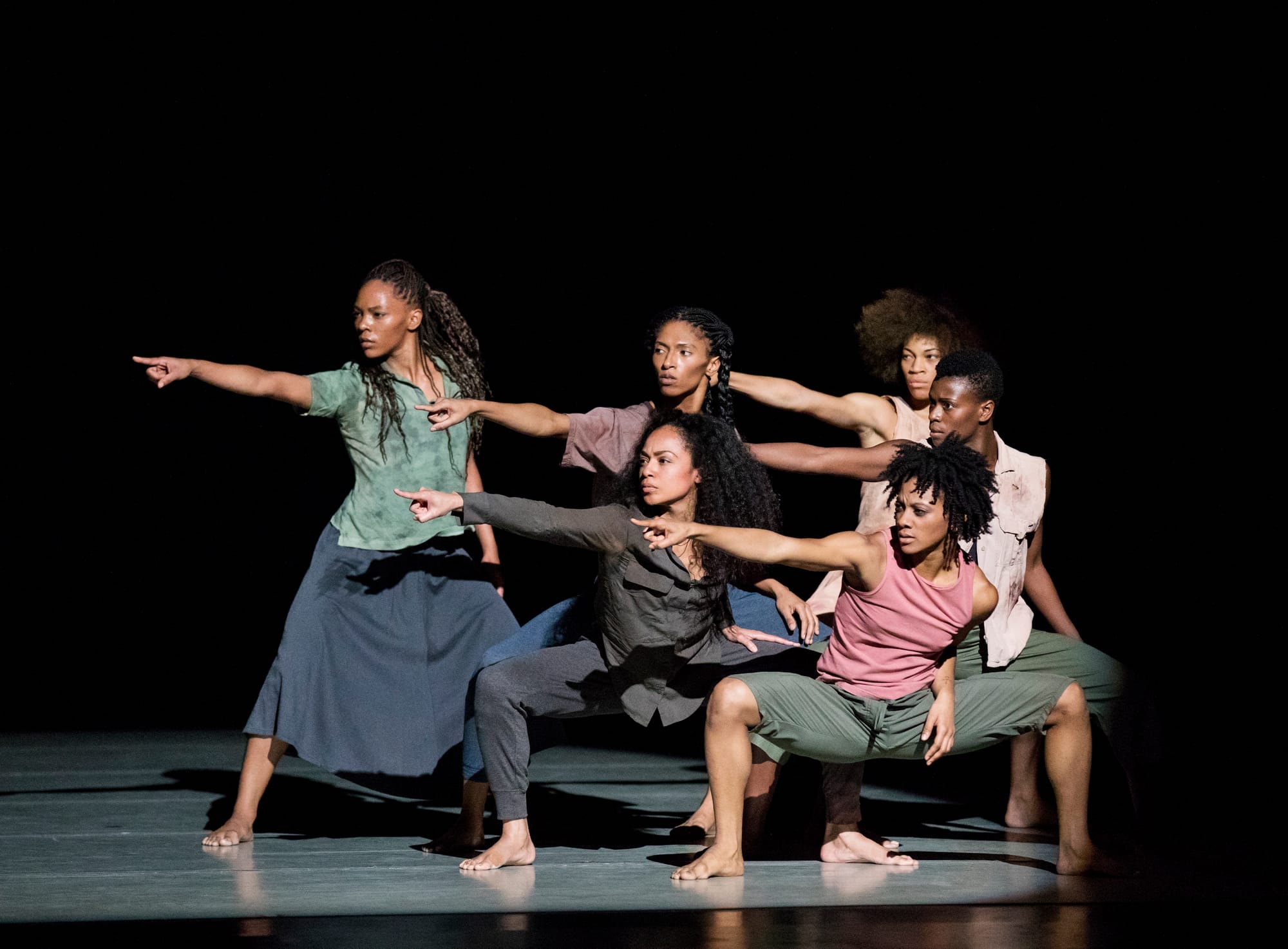
Zollar’s “Shelter” is a piece with very different movement and sensibilities than AADT’s classic work, but it also played beautifully on the six women who danced as both tormented individuals, and a powerful community in search of something better. The voiceover texts (especially Zollar’s final spoken texts) offered a mix of poetry and politics; this is a dance about life in America, and, finally, about the human condition as we wear out our welcome on the planet -– destroying the shelter of us all.
The dancers started collapsed on top of one another in a heap. Each exploded energetically to the intoned script of “reduced resources and reverberating rage,” only to fall back in their heap. As each one, finally, collapsed into the arms of the next, they fully transformed from a heap into a tribe, lost but not alone. One of them pointed a condemning finger across the audience, as Zollar’s voiceover warned about climate change, the accusatory metaphor apt, but abrupt and a bit overdone.
“In/Side,” the short solo that played after “Shelter” was choreographed in 2008 by Ailey’s current artistic director, Robert Battle. Although beautifully danced by the expressive Samuel Lee Roberts, the work leaned toward the maudlin. Writhing in athletic pain to Nina Simone’s “Wild is the Wind,” Roberts’ moves were eerily familiar; many a direct line from those seen later in “Revelations” – like the silent scream and tortuous floor body twisting of the “I Wanna Be Ready” segment of the Ailey classic. Mainly danced in a the up-left corner of the stage, Roberts folded his body over in a deep curve, and crept in small motions, every muscle visible and activated. This piece was also overly dramatic, but there was power in its gorgeous articulation.
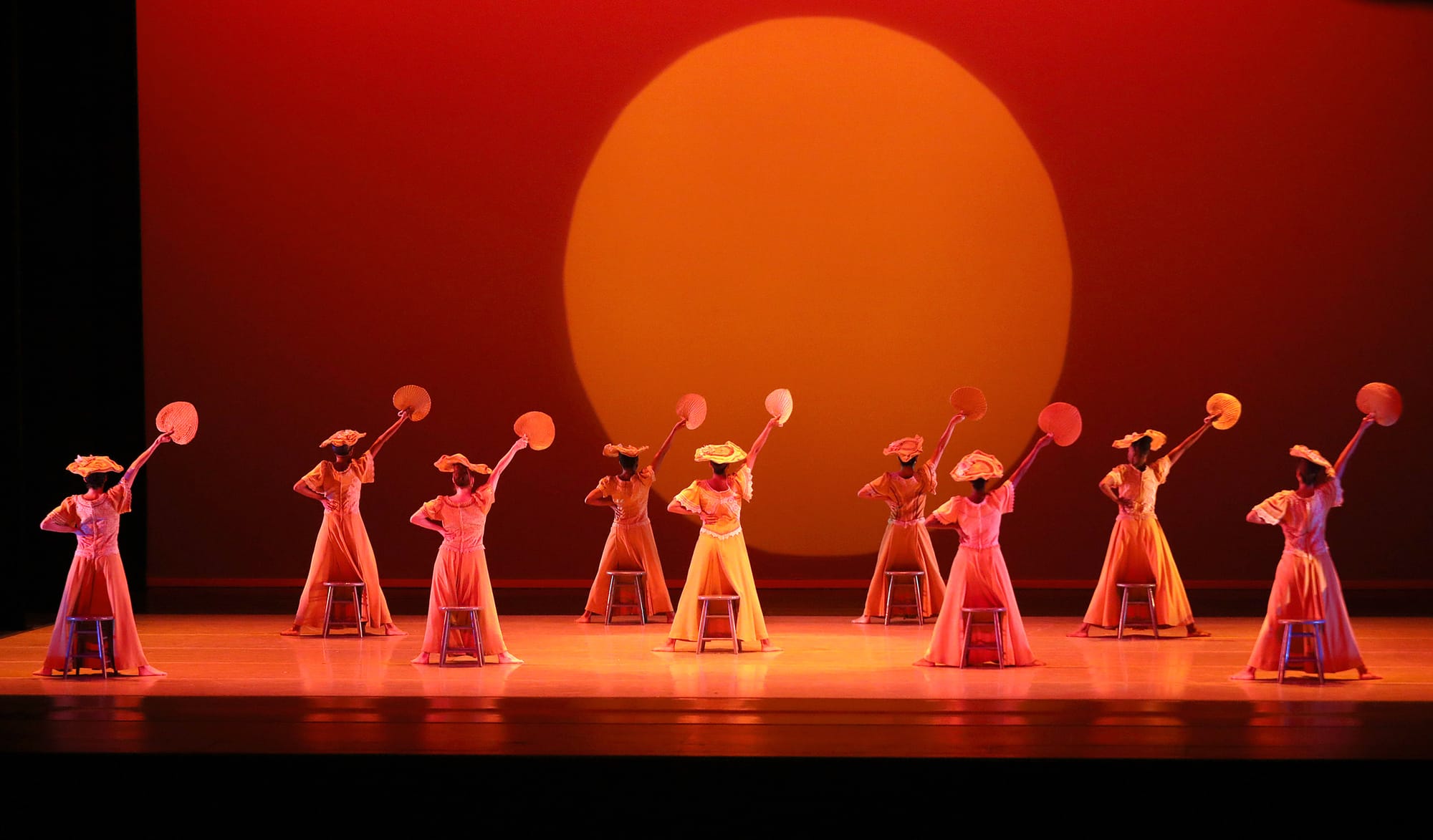
“Revelations,” the evening’s closing work, continues to pack deep, abiding power. The simple structure of ten traditional spirituals divided into three themes allows the music and the dancing of each scene to shine individually, as they build to the rousing “Rocka My Soul in the Bosom of Abraham.” The athletic anguish of the trio in “Sinner Man” is still breathtaking. The Ailey movement phrases – that “V” of arms that Brown recalled, the twirling fans and wrists of the company’s women, the swaying rhythms of hips and arms – are treasured, evocative Ailey signatures.
The news of the evening was its generous opening, in Brown’s “Call” of love and homage. But the anchor was the still beloved “Revelations,” so deeply identified with the company that it takes on an energy built over decades. Given the continuing struggle of African-American voices to be heard, “Revelations” is one of those rare works that regularly demands –- and deserves –- its encore, the full repeat of the final rapturous scene. The response of the audience (always, for AADT, more diverse than any other arts audience) was a hand-clapping, foot-stomping connection between choreographer, dancers, audiences, and America’s history. It is powerful; and it’s hard to beat.
copyright © 2018 by Martha Sherman



